Martin Austermuhle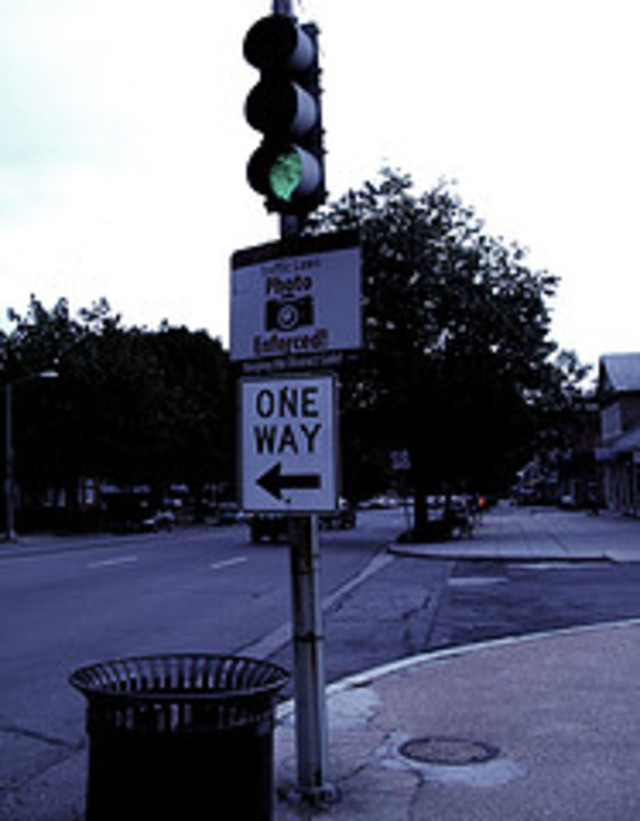
 Photo by katmaresin
Do you have a sneaking suspicion that traffic cameras are being used more to suck money out of your pocket than to promote safe driving habits? You’re not alone.
According to WTOP’s Beltway Poll—which yesterday discovered that suburbanites think D.C. drivers are the worst—64 percent of the region’s drivers see the cameras as cash cows more than they do as safety measures.
In D.C., there’s probably some truth to that, according to a February report from WMAL:
According to city records on radar and red light activity, in fiscal year 2010 the district collected nearly $51 million in revenue from 547,131 paid speeding and red light tickets. More than 71,000 tickets were unpaid that fiscal year. In the first seven months of fiscal year 2011, the district collected nearly $37 million in revenue from 239,330 speeding and red light tickets paid. In these 19 months, the automated cameras issued about 900,000 tickets.
D.C. speeding cameras—which are expanding across the city—are especially egregious, with fines starting at $75 and climbing steadily depending on how fast you’re driving above the speed limit. Maryland speed cameras charge $40 per offense, though the Washington Times recently reported that new speed cameras in Prince George’s County raked in $8 million worth of fines from 200,000 tickets issued in eight months of operation.
Of course, safety and revenue don’t have to mutually exclusive. If you’re driving 75 mph down a residential road and get slapped with a $250 ticket from a speeding camera, both ends are met—D.C. would get some money and you might learn a lesson. (And let’s be fair—there’s always a case of sour grapes when we get tagged by a speed camera. Who doesn’t hate those tickets, irrespective of they speed they were driving?)
Still, as Mt. Pleasant ANC Commissioner Jack McKay recently wrote on Greater Greater Washington about the Porter Street NW camera, speed cameras have to be calibrated to speeds that reflect the road they’re on. In the Porter Street case, McKay found, the cameras are set for 30 mph, between five and 10 mph lower than the road should be able to handle.
We have to hope that D.C. officials respect this middle ground, because more cameras are coming to the city—as part of Mayor Vince Gray’s 2013 budget, enough new cameras and related technologies will be coming to D.C. streets to produce an additional $30 million worth of fines a year.