Martin Austermuhle
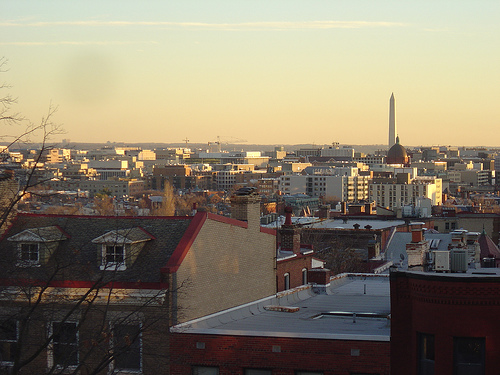 Photo by Cickatoes
Tomorrow afternoon D.C. officials, congressional leaders, architects, and historic preservationists will gather on the Hill to discuss changing the city’s longstanding height restrictions on buildings. And while opponents of the idea may worry that D.C. officials are looking to scrap the 130-foot limits altogether, D.C. Director of Planning Harrier Tregoning will propose a much more modest change to the height act.
According to prepared testimony submitted for tomorrow afternoon’s hearing, Tregoning proposes changing the 1910 Height Act ever so slightly to allow for rooftops to be more liberally used for human purposes.
“As you may know, roof top structures are already permitted under the Height Act. While allowed, these roof structures have been limited in their use to mechanical purposes (elevator overrides, building mechanicals) and are currently prohibited from uses that qualify as ‘human occupancy’ such as recreation rooms or office space. Allowing their use for more active purposes will have no real impact on the overall maximum heights of buildings as permitted by the 1910 Height Act and will not impact the District’s recognizable and historic skyline,” she wrote in her testimony.
Tregoning admits that the existing height restrictions have helped create D.C.’s iconic skyline, but also says that “restricting the use of roof structures to purely mechanical purposes forbids peoples’ enjoyment of some of the city’s greatest spaces and most striking views.”
She won’t be alone in making that point. Christopher Collins, the counsel for the District of Columbia Building Industry Association, similarly argues in prepared testimony that additional flexibility on the use of rooftops would benefit the city without risking its skyline. “Allowing habitable space in a roof structure in addition to normal roof top machinery, while retaining the current roof structure setback requirement, would allow a wide variety of uses, such as restaurants and lounges, health clubs, community rooms, and enclosed swimming pools as well as other residential and non-residential uses,” he wrote.
As much a compromise as the position may seen, Laura Richards from the Committee of 100 for the Federal City isn’t impressed, saying that the proposal “risks the creation of visual clutter.”
“One building may develop its rooftop space while an adjacent building elects not to, creating a ‘pop-up’ effect. Also, during task force meetings held in conjunction with the District’s ongoing work of rewriting its zoning regulations, rooftop pools and party rooms were mentioned frequently as desirable uses of roof space. These ends may be achieved in new construction by providing for these uses within the permissible height, but are party rooms a sufficient reason to disturb the Height Act?,” she wrote in her testimony.
The hearing will take place tomorrow at 1:30 p.m.