Martin Austermuhle
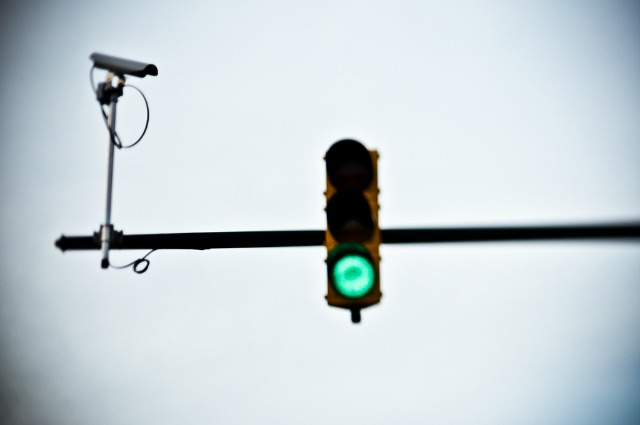 Photo by Chris Rief
In some not-too-distant future, all those speed cameras popping up around town may only spit out $40 tickets. Maybe.
At the third and last meeting of a D.C. Council task force on the city’s growing network of automated traffic cameras and the hefty fines they dole out, D.C. Councilmember Tommy Wells (D-Ward 6) yesterday floated an initial proposal: fines for driving between 11-20 miles an hour above the speed limit would drop from between $125 and $150 to $40, the same amount charged in Maryland. Speeding between six and 10 miles an hour over the speed limit would produce warnings for the first two incidents, followed by $40 tickets thereafter.
Red light camera fines would drop from $150 to $75, D.C. would stop publicizing the exact locations of speed cameras—they provoke drivers to slow suddenly, risking accidents—standards for where cameras are located and how speed limits are set would become public and more transparent, and the proceeds from the fines would go into a fund aimed at maintaining the system, instead of being used to close budget gaps.
According to Wells, who supports the cameras, the changes would be aimed at creating a broader base of support for their increasing use across the city. “I don’t want to lose the legitimacy we have with the public,” he said, fretting that high fines were creating resentment among drivers, especially as more and more cameras are added.
Wells’ proposal—which he likened to “throwing a hung of spaghetti against the wall”—provoked a number of responses from task force members that portend the challenges he and Councilmember Mary Cheh (D-Ward 3) might face in changing how the city’s cameras work. A DMV representative said that the entire network of cameras would have to be retooled to issue warnings and graduated fines, while Lisa Sutter, MPD’s point person on the cameras, wondered what would happen if a driver got a second ticket before the first arrived in the mail.
“There’s lots of moving parts,” she said, noting that there’s often a 25-day delay between when a cameras catches a violation and the violator actually gets the ticket in the mail.
The debate went deeper, with the task force debating whether or not certain levels of fines best deter future violations, whether fines from cameras should be different to those handed out by cops and whether or not an existing 10 mile-an-hour cushion on speeding violations should be equally applied, regardless of the road the camera is on.
Wells and others seemed to stress the importance of the public better understanding why speed limits are what they are. In response to discussion at the task force’s second meeting, the D.C. Department of Transportation said yesterday that it expects to analyze speed limits on 200 major roads within the next year.
There was seeming consensus on one point, though. Despite Wells’ initial proposal to lower fines for red light violations, every group around the table—from AAA and the AARP to the Pedestrian Advisory Council—agreed that fines should remain at $150, if not climb higher.
Then there’s the revenue part. D.C. expects to bring in $91 million over the next year from the cameras; a recent $140 million budget surplus was driven by $23 million in cameras fines. Any changes to existing revenue expectations will leave the D.C. Council the unpleasant task of finding money elsewhere, a challenge not lost on Wells. “How can I keep this from causing a revolt on the council?”, he asked.
The safety issue may also produce some headaches. MPD Assistant Chief Patrick Burke said that despite complaints, the cameras seem to working in forcing drivers to slow down. For him, the principal concern moving forward is what can help save more lives: “What can we do better to save lives? This is working,” he said. There’s also the question of who’s doing all the complaining: according to Sutter, out-of-state drivers get 75 percent of the tickets, and for every complaint she hears about them, she also gets regular requests from residents for cameras on their streets.
As for Mayor Vince Gray, who expanded the use of cameras in his most recent budget, safety has to be the deciding factor. “We’re very open-minded on this,” said Gray’s spokesman Pedro Ribeiro on the task force’s proposals. “This has never been about revenue, it has been about safety,” he added, saying that maintaining the safety of D.C. residents would shape Gray’s response to whatever Wells and Cheh put forth.
Wells didn’t give away much of what would could eventually make it into a bill, but he said that he was hoping to have an initial proposal for the council before the end of the year.