 Rachel Sadon
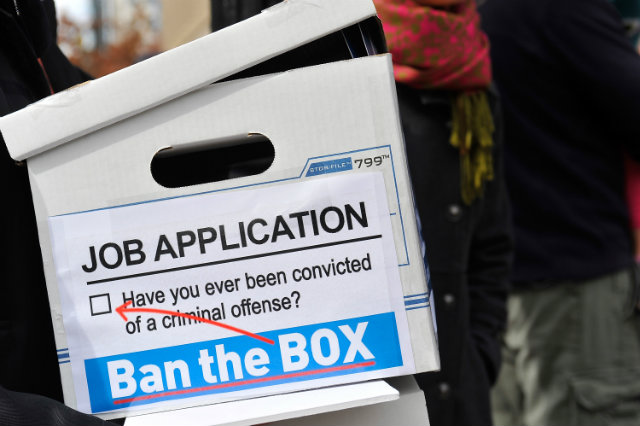 Outreach materials are seen at a press conference for a Ban The Box Petition Delivery to The White House on October 26, 2015. (Photo by Larry French/Getty Images for ColorOfChange.org)
In its first full year of enforcing D.C.’s Fair Criminal Record Screening Amendment Act—better known as “Ban the Box” legislation—the Office of Human Rights docketed 365 cases alleging violations of the law.
The bill, which was approved by the D.C. Council in June of 2014, says that an employer is only allowed to ask about an applicant’s arrests, criminal convictions, or accusations after a conditional offer of employment has been made. Since December of that year, District employers are required by law (as in 13 states and more than 100 other cities or counties) to remove the box on application forms that requests information about a prospective employee’s criminal background. President Barack Obama also issued an executive order in November that requires federal employers to remove the question.
But enforcement of D.C.’s version of “ban the box” has been among the strongest in the country. “The law itself was very well-written,” said OHR spokesman Elliot Imse, explaining that relatively high fines are divided between the government and the complainant. In other jurisdictions, the fines are often too low (or they all go to the government) to encourage people to come forward. “When you’re someone who’s looking for a job and maybe struggling, you need an incentive to file a complaint and go through the process. It does takes a bit of time, and if these people’s rights have been violated they deserve compensation,” Imse said.
The result has been some of the highest complaint rates in the country, which experts believe is correlated to the implementation of the law rather than the District simply having more violations. “The impressive turnout is likely due to the exceptional outreach of OHR and the fine structure,” concludes a case study by the National Law Employment Project.
Indeed, in the months leading up to the legislation’s implementation, OHR put a priority on getting the word out about the new law. “What we have found time and time again with marginalized communities is that they don’t trust governments, so building trust with these communities and their advocates is absolutely key,” Imse said.
The 365 “ban the box” cases are either making their way through mediation or have already been resolved (an additional 120 people made inquiries but the cases didn’t proceed). Those filings contributed to a 113 percent increase in the number of complaints that OHR investigated from the year prior.
Of the total 1,075 cases that were docketed in fiscal year 2015, more than half were filed under the District’s non-discrimination law, about a third alleged a violation of the Fair Criminal Record Screening Act, and the remainder were related to either the D.C. Family and Medical Leave Act or the city’s language access laws. In total, 634 cases were mediated with settlements in 48 percent of them; they totaled $3.69 million, according to OHR’s annual report.
Of allegations of employment discrimination, the most were related to disability, followed by race and sex.