 Rachel Sadon
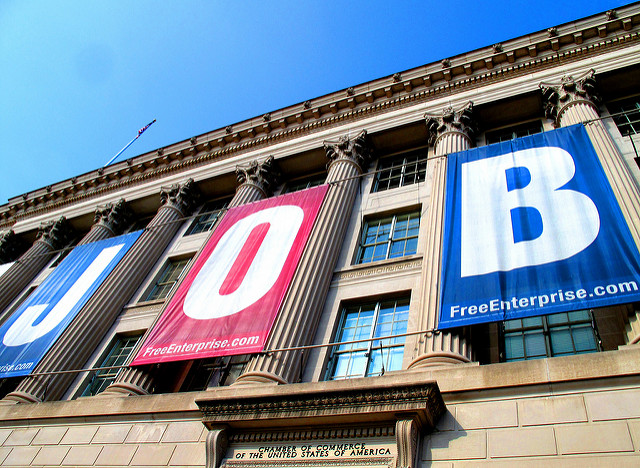 (Photo by LaTur)
One of the prevailing narratives in the wake of the presidential election is that the result can, in large part, be attributed to the white working class of middle America being left out of the economic recovery from the recession enjoyed by the coasts. Frequently left out of that story, though, is how wildly uneven those gains have been in many cities.
A new report from the D.C. Fiscal Policy Institute looked specifically at the District’s unemployment rate, highlighting inequities that have been exacerbated amid the city’s overall recovery. The city’s unemployment level is still higher than it was pre-recession, when it stood at 5.6 percent, but it has made steady progress—falling from a peak of 9.3 percent in 2010 to 6.4 percent in the first 10 months of 2016.
Yet while college-educated residents are nearly at the same unemployment rate in 2016 (2.7 percent) as 2007 (2.5 percent), black college graduates and residents with a high school degree both still have higher unemployment rates today than they did before the recession hit.
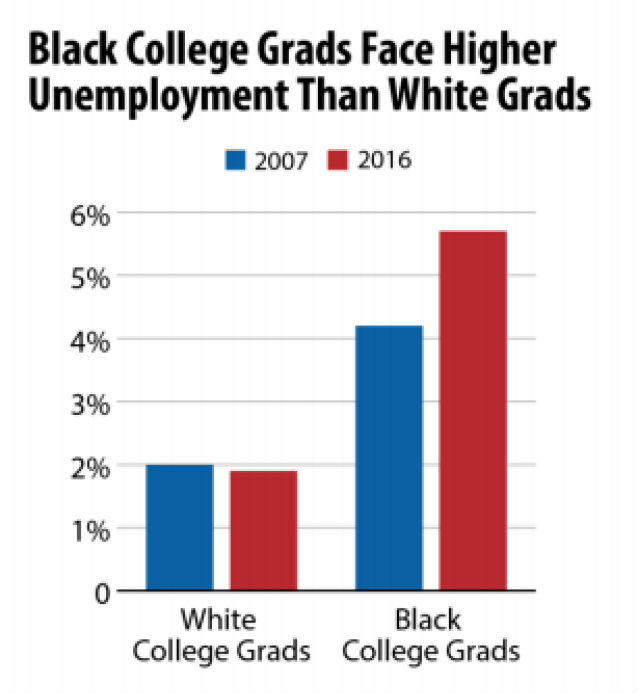 (Courtesy of DCFPI)
“Black people with a college degree are doing worse than white college grads—and worse than black college grads in 2007,” says the report’s author, Linnea Lassiter.
Non-black college graduates have an unemployment rate of 1.9 percent; for black college graduates it is 5.7 percent. Sufficient data was unavailable to compare those rates for those with post-graduate degrees, according to Lassiter.
For non-college grads, the figures are even more bleak.
In 2007, the unemployment rate for high school graduates in D.C. was 10 percent. In 2016, that figure was more than 16 percent. And as Greater Greater Washington points out, in looking at election-related graphs from FiveThirtyEight, D.C. has a negligible number of non-college-educated white residents—just 2 percent of the electorate.
The report tracks with other studies that have highlighted the disparities in D.C.’s job market. A report released in 2015 by the Economic Policy Institute found that D.C.’s black unemployment rate was the highest in the country, with the highest gap between white and black residents in the country (caveat: it compared the city to states). Meanwhile, census data from that same year showed that black Washingtonians are the only racial or ethnic group with a higher poverty rate than before the economic crash.
A Brookings Institution report released last year found that D.C.’s recovery from the recession has been slower than in 70 of the 100 largest metropolitan areas; it ranked 77th on a measure that looked at inclusion in economic growth by race.
“The high rate of black unemployment is a symptom of a much larger issue, a systemic issue,” says Lassiter. Though differences in employment levels are often attributed to education levels, the huge disparity in joblessness between black and non-black college graduates shows that there are other factors at work.
One of the other notable findings is the unemployed today are significantly likelier to be out of work long-term (defined as 27 weeks or longer). In 2007, only 18 percent of Washingtonians who lost their job stayed of the workforce for six months or more. Today that figure is 42 percent.
Still Looking for Work: Unemployment in DC Highlights Racial Inequity by RachelSadon on Scribd