Rachel Kurzius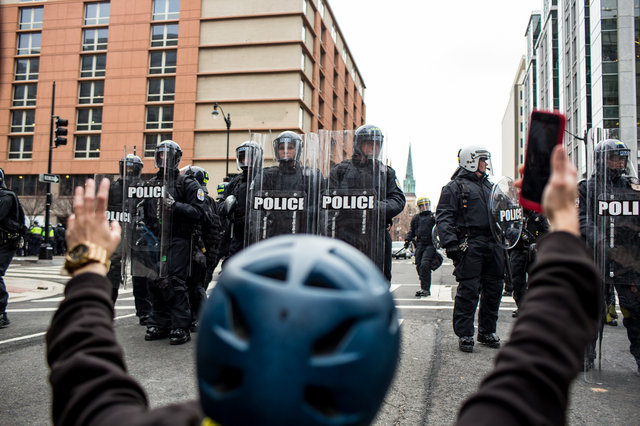
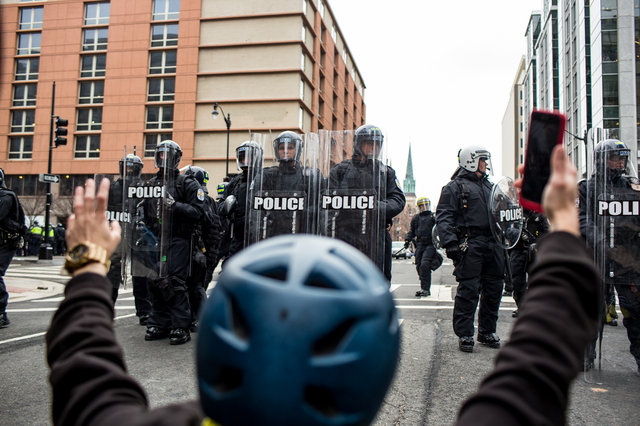 Protests on Inauguration Day. (Photo by Scott Heins)
Prosecutors said they’ve been mining the data from the more than 100 phones confiscated from people arrested in D.C. on Inauguration Day, according to court documents filed this week.
The cell phones were seized and searched for evidence when 230 people were arrested by D.C. Police during protests on Inauguration Day, including journalists and legal observers. Ultimately, 214 of them were charged with felony rioting. Lawyers familiar with the District say that the mass felony charges are a departure from previous policy.
If convicted, the charge comes with a maximum sentence of 10 years in prison and a $25,000 fine.
While most of the protests in D.C. on Inauguration Day were peaceful, police and demonstrators clashed in downtown D.C. after some protesters smashed windows and set fires. The filing calls it a “violent riot” that caused more than $100,000 in damages to buildings, property, and vehicles. Six officers faced minor injuries.
One class action suit alleges false arrests and excessive force, including that police “indiscriminately and repeatedly” used chemical irritants against “members of the media, attorneys, legal observers, and medics,” as well as protesters who did not destroy any private property.
One journalist, Evan Englel, who was arrested and initially charged with a felony (those charges were later dropped), published a blog post this week saying he quit his job at Vocativ after the company would not let him pursue stories about his arrest.
During my time in jail, I witnessed police mistreat their prisoners in ways that raised significant concerns for me. Since my release, I’ve worked with Vocativ’s editorial leadership and management to bring this story to light. Vocativ has not only declined to pursue this story, but has taken the unusual step of banning me from speaking about it publicly.
Make no mistake: What I witnessed was textbook abuse of power, and I have neither the ability nor the will to excuse, dismiss, or forget such behavior
The Office of Police Complaints called for an independent investigation into police actions, stating in a report that officers did not follow procedures for what happens when a protest turns violent and did a bad job distinguishing between the probable suspects of vandalism from the rest of the people gathered.
Indeed, the handling of protesters has become an issue as Interim Police Chief Peter Newsham undergoes hearings for his nomination as permanent chief. Mayor Muriel Bowser supports the department’s actions on Inauguration Day.
“The Mayor believes our police officers acted properly and professionally in stopping violence, protecting bystanders and arresting violent perpetrators who were armed with hammers, metal pipes and other weaponry,” said Kevin Harris, Mayor Muriel Bowser’s director of communications, after the OPC report.
The filing from prosecutors confirms suspicions from defense attorneys, who said that their clients still had not had their phones returned.
“The government is in the process of extracting data from the Rioter Cell Phones pursuant to lawfully issued search warrants, and expects to be in a position to produce all of the data from the searched Rioter Cell Phones in the next several weeks. (All of the Rioter Cell Phones were locked, which requires more time-sensitive efforts to try to obtain the data),” writes U.S. Attorney for D.C. Channing Philips in the court documents filed on Wednesday.
While prosecutors expect to find more information about the protests, including “other rioters [who] evaded arrest by forcibly charging police officers and fleeing,” they also believe the phones “contain a large amount of irrelevant personal information such as private photographs, videos, medical data, and identifying information that should not be further disseminated.”
All of the data will go to an online portal used by the government and lawyers for discovery in the case, and all attorneys will have access to all of it. Accordingly, the court granted a protective order to prevent lawyers from copying or disseminating any of the irrelevant data from the phones.