 Rachel Sadon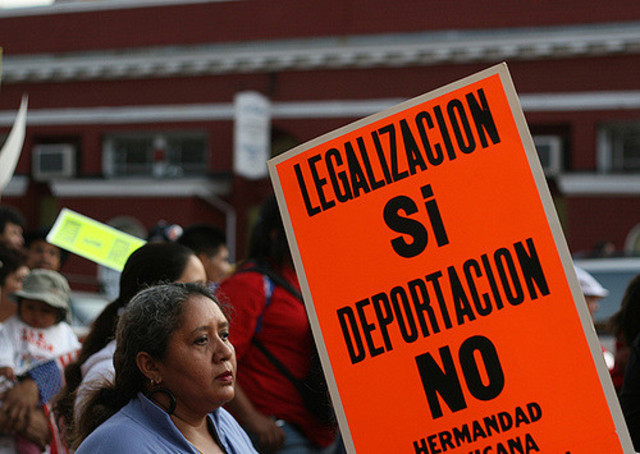
 (Photo by Yonas Hassen)
After announcing $500,000 in grants to serve immigrants in D.C. facing or fearing deportation in January, Mayor Muriel Bowser’s administration is bringing the grants back for a second year.
“It is a clear need for residents in the District, and we’re addressing it,” says Betsy Cavendish, the mayor’s general counsel. “Washington, D.C. is blessed with a very civicly engaged bar and our lawyers are some of the most generous pro bono givers of their time and expertise in the country. And we are also fortunate to have a very diverse population that brings great cultural contributions from around the world to the city. We’re matching up that vibrant sector of our community with the attorneys to hopefully provide more security.”
Of the city’s roughly 70,000 immigrants, an estimated 25,000 are undocumented.
Though the Bowser administration was initially reluctant to tie the Immigrant Justice Legal Services Grant program, which was announced in early January, to the Trump administration’s rhetoric around immigration, it followed the announcement of similar funds in several major cities designed to provide legal assistance for immigrants facing deportation.
“Certainly fear has worsened and so I would say yes” the grants are a response to the Trump administration, Cavendish says.
From February to July, deportation orders are up 31 percent from the same period last year, according to the Justice Department, which touted “a return to rule of law” under the Trump administration.
Shortly after the program was announced, the House Oversight Committee sent Bowser’s office a letter inquiring about its legality under federal law. The mayor’s office says they sent the requested documents and have not yet heard back from from the committee.
Both non-profits and private law firms were eligible to apply for funding for programs that could include: preparing asylum applications, conducting “know your rights” workshops, providing legal help for family reunification efforts, and representing D.C. residents in deportation hearings. However, the funds cannot be used to begin representing immigrants already detained by ICE. The grant program could also be used to file lawsuits that “may become necessary” to challenge government programs that utilize DACA information to deport people.
The first round of grants has already gone toward dozens of cases and hundreds of consultations, along with multiple know your rights trainings that have served around 500 people. One of the most creative programs took place at Briya Public Charter School, which used $84,000 in grant money to offer legal services to students and their families. Whitman Walker has used it to help LGBTQ or HIV-positive immigrants apply for asylum if returning to their home country would be life-threatening. And other groups have used the funds to train lawyers who specialize in other areas of the law to take on immigration cases.
While many of the cases are still winding their way through the lengthy legal process, there have been a few early successes. Thea Sebastian, the associate director in the Office of General Counsel, cites one teenager from El Salvador who was able to win a case the day before he turned 18 and would no longer be eligible for a particular path to citizenship.
Ward 1 Councilmember Brianne Nadeau introduced legislation earlier this year to make the fund permanent. “When we hold ourselves out as a safe harbor for vulnerable populations, we must recognize that this is a continuing commitment,” Nadeau said in announcing the bill, which was co-introduced by At-large councilmembers Robert White and David Grosso.
A spokesperson for Bowser says the mayor is supportive of the bill.
In the meantime, the administration is working to release the second set of grants, which are also worth a total for $500,000. The application was released last Friday, and groups have until August 29 to apply. The plan is to release the funds in conjunction with the beginning of the fiscal year.
The grants are essentially for the same purposes and goals as the first year, though the administration took pains to clarify that the funds could be used to train lawyers to handle immigration cases.
“It’s one of the trickier disciplines. You can’t just pick up a case and think, ‘I’m a good lawyer, I’ll know how to handle this.’ There’s a hundred ways to go wrong,” Cavendish says. “Training more pro bono attorneys, we think will bear benefits for years to come.”
This story has been updated with statistics from the Trump administration about an increase in deportation orders from last year as well as a clarification about how the funds can be used to support immigrants facing deportation.