Natalie Delgadillo
 Rachel Kurzius
 Rachel Sadon
2018 has felt so long that listing events that happened during the earlier parts of the year have become a bit of a joke. The Winter Olympics, for instance, happened less than 365 days ago. Go figure! Need your memory jogged on what went down a little closer to home? Without further delay, here’s a look at the events and issues that shaped D.C. in 2018.
Rising Traffic Fatalities
In 2015, Mayor Muriel Bowser made a bold pledge to end all traffic fatalities by 2024 using a Swedish concept called Vision Zero. Instead, D.C. has seen more drivers, pedestrians, and riders losing their lives on the road. 2018 has had 34 traffic deaths so far this year, a thirteen percent uptick from last year. Three cyclists were killed: Malik Habib, just 19 years old, was hit by a bus after his wheels got stuck in the streetcar track in June; two weeks later, Jeffrey Long was hit while riding in a bike lane by a truck trying to turn right; and Thomas Hollowell was struck by a hit-and-run driver. Each prompted vigils, protests, and calls for the city to do more to protect riders. Meanwhile, as the District saw an influx of rentable scooters, the city also registered its first related fatality: 20-year-old Carlos Sanchez-Martin died after being hit by an SUV and getting trapped underneath. And with just a few days left in a year, the mayor of Skagway, Alaska, and her elderly mother were killed by a tour bus while walking across the street—two of fifteen pedestrians killed this year. While the District is still doing a lot better than it was twenty years ago, advocates say that the city has dragged its feet on making substantive change. “The numbers are just going up, and we think this is fundamentally a priorities problem and a leadership problem,” Colin Browne, the Washington Area Bicycle Association’s communications director told DCist this summer. In October, Bowser announced two short-term fixes—lowering some residential speed limits and speeding up bike lane construction—and some longer-term proposals.—Rachel Sadon
Education Scandals
Reeling from last year’s graduation controversy at Ballou High School, D.C. Public Schools started this year with a fresh scandal: In February, DCPS Chancellor Antwan Wilson resigned after reports that he had improperly transferred his daughter from one high school to another, bypassing a waitlist of 600 students. Wilson violated a policy that he himself had set, banning public officials from asking for transfers for their children outside the normal lottery system. Former Deputy Mayor for Education Jennifer Niles approved the transfer and also resigned as a result. After the search for a new chancellor began over the summer, Mayor Muriel Bowser tapped Indianapolis Superintendent Lewis Ferebee for the job in early December. The Washington Post recently reported that Ferebee is a defendant in three civil lawsuits related to his handling of a sex abuse case in Indianapolis.
But there’s been news beyond the chancellor merry-go-round. A majority of students accused of residency fraud at Duke Ellington School of the Arts were cleared of the accusations in November. Still, D.C. Attorney General Karl Racine sued six Maryland parents for committing residency fraud to send their children to a D.C. school. (only one of those parents had a child at Duke Ellington).—Natalie Delgadillo
D.C.’s Election Year
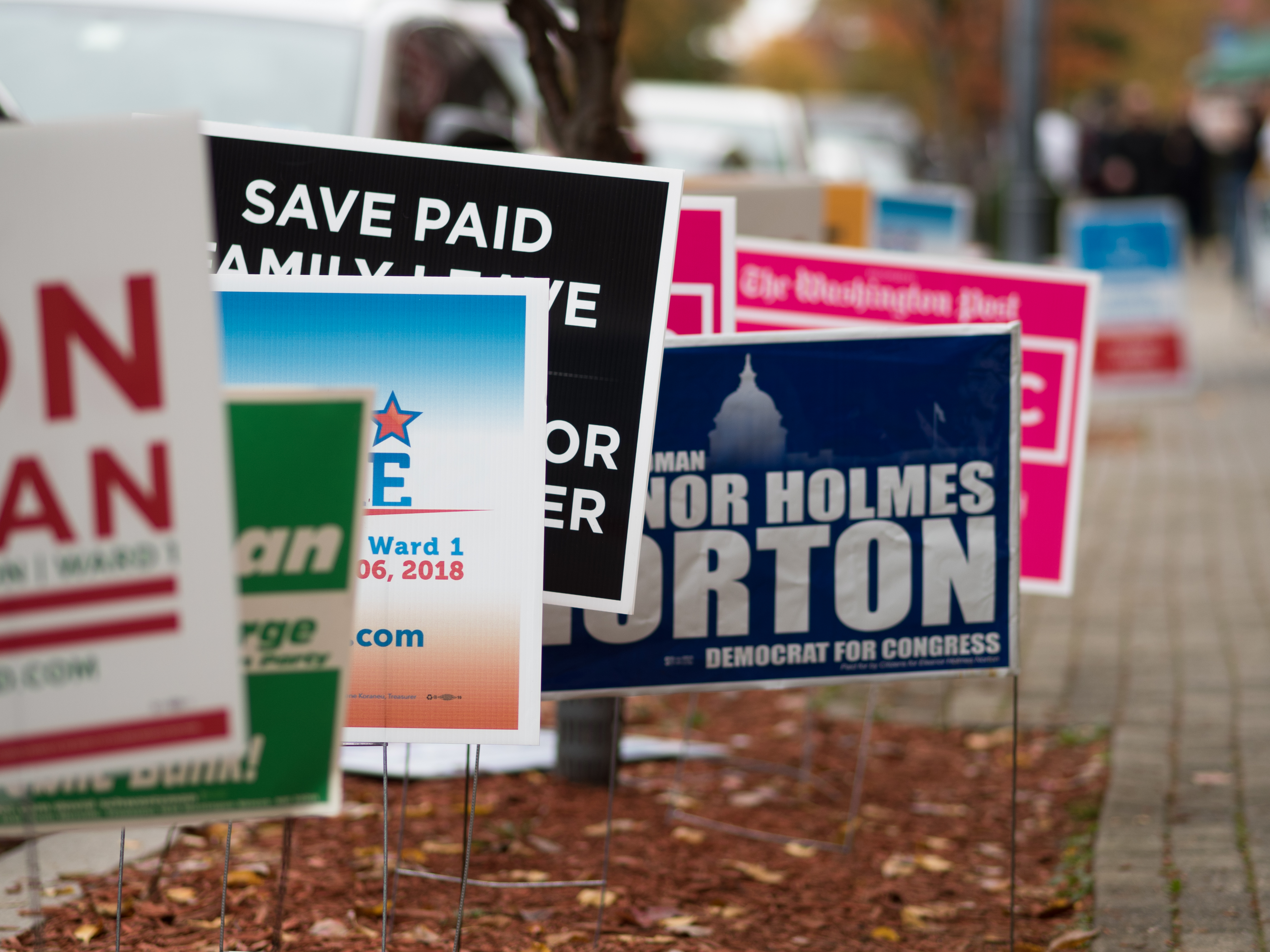
While most of the country was were trying to guess whether a blue wave would wash over Capitol Hill during the midterm elections, D.C. residents queued up to vote in their local contests. Following a breezy primary victory, Mayor Muriel Bowser became the first D.C. mayor to win reelection since 2002. But somehow she still didn’t escape the contest unscathed: Bowser went all in on At-large challenger Dionne Reeder in an attempt to unseat Elissa Silverman. She failed in that bid—Silverman beat Reeder, and won all wards except 7 and 8. The night was in fact strong for all incumbents, following the general pattern of rather boring election nights for heavily Democratic D.C. The person with the most votes at the end of the evening? D.C. Attorney General Karl Racine, the first person elected (and now re-elected) to the role. Some other notables from this election cycle: the heavily-contested and controversial Initiative 77 (see below), and some very expensive State Board of Education races. 2018’s last election—the Ward 4 State Board of Education special election—wrapped up earlier this month, and went to the union-backed candidate (with some famous friends).—Natalie Delgadillo
Initiative 77
One of the most bitterly fought political contests of the year raised questions about how to best protect hourly workers, whether D.C.’s ballot initiative system needs to be retooled, and the power of a vote in the District. A ballot measure during the June primaries called Initiative 77 proposed to get rid of D.C.’s two-tiered minimum wage system. Under that system, tipped workers make the lion’s share of their paycheck through tips, rather than directly from their employers. Both sides claimed to have the best interests of hourly employees at heart. Initiative 77 proponents said that the tipped wage was too complicated—leaving workers vulnerable to wage theft and the whims of customers. But opponents, including the mayor and the majority of the D.C. Council, argued that the measure would drive up costs for restaurants and lead to closures. Some employers like coffee shops use a tipped wage for jobs that customers might not see as tip-dependent, citing the ever-increasing expenses of running a business.
While 77 won at the ballot box, the fight was just beginning. For the first time since 2001, the D.C. Council overturned a ballot initiative and repealed the initiative. Even then, proponents of 77 weren’t willing to give up the fight, and mounted an effort to repeal the repeal. A lawsuit bedeviled those plans, and a judge ruled that the D.C. Board of Elections screwed up the procedure when it approved the referendum language. While that language would appear to kill the effort to revive Initiative 77, organizers have promised to appeal the decision. Whatever happens, the D.C. Public Library is saving all of the embittered Twitter exchanges about 77 for the edification of future historians.—Rachel Kurzius
Scooters, Scooters, Everywhere
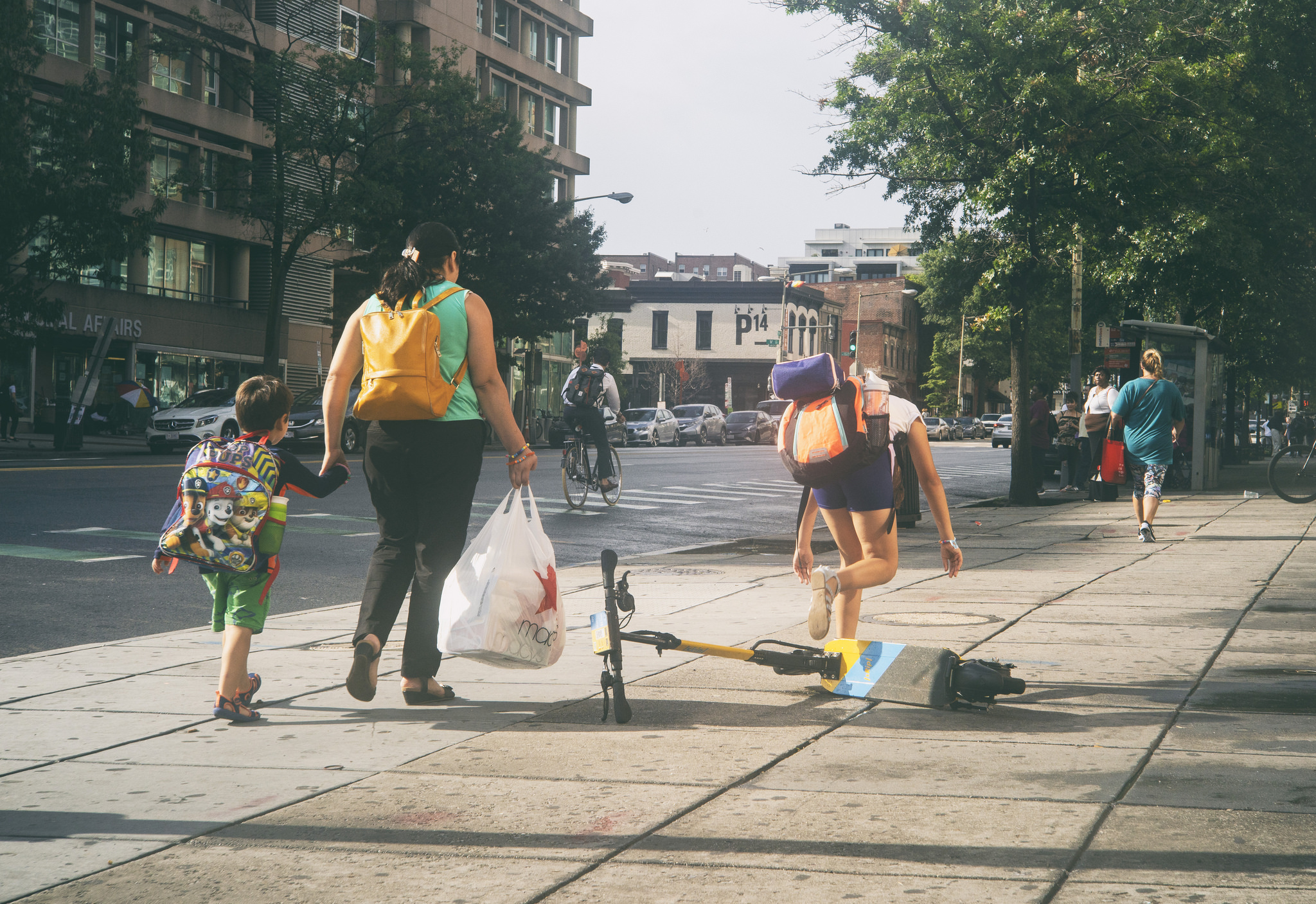
The District launched a pilot program in the fall of 2017 that resulted in a veritable rainbow of dockless bikes showing up on city sidewalks. But 2018 instead turned out to be the year of electric scooter. One by one, dockless bike companies either left D.C. entirely or switched their fleets to scooters; just one bicycle company, Jump, remains today with a fleet of e-bikes. Meanwhile, scooters (all of which are inexplicably named a single four-letter word) proliferated: Skip, Spin, Bird, Lime, and Lyft are all currently operating. The dockless vehicle test period was originally scheduled to end in the April but D.C. Department of Transportation officials kept extending and modifying it as they tried to work out a set of permanent rules. The agency finally announced regulations for 2019 last month. Scooter companies have been complaining about the new requirements, but it isn’t stopping them from clamoring to be in the District. DDOT is reviewing 16 permit applications for next year—11 of which are for scooter fleets, and five for electric bikes. There’s not a single regular dockless bike application in the bunch.—Rachel Sadon
Amazon Chooses Crystal City
When Amazon CEO Jeff Bezos announced that the tech behemoth was looking for a second headquarters in the fall of 2017, hundreds of jurisdictions applied for the promise of 50,000 high-paying jobs. The proposals sent to Amazon, laden with millions and sometimes billions of dollars in tax breaks and other incentives, were shrouded in secrecy. Three places in the D.C. region—D.C., Northern Virginia, and Montgomery County—made it to the top 20. But intermingled with the excitement was concern from critics that local governments were giving away money to the wealthiest man on the planet, in a move that could make housing less affordable and roads brimming with even more traffic.
While the process was opaque as could be, leaks to the media indicated that Crystal City was at the top of Amazon’s list. Then—a plot twist! There were to be two Amazon hubs, each with 25,000 jobs. Amazon officially announced in November that its two new locations were going to be Long Island City and *checks notes* National Landing, Virginia, the area in Crystal City, Pentagon City, and Potomac Yard where Amazon will be setting up its campus (turns out, the whole “National Landing” name came from development authorities in the commonwealth, not Amazon). But while the deal will result in major changes to Crystal City, including local and state funds for transportation and development, critics remain concerned that these changes will push lower- and middle-income residents out and further flatten the weirder parts of Crystal City (at least one experimental theater company is already leaving). Amazon will start moving in come 2019.—Rachel Kurzius
The Evolution Of Protests
If 2017 was the year of the mass rally—remember those long stretches where every weekend had a March for Something?—2018 was the year of targeted and persistent protests. Trump administration officials and acolytes found themselves confronted at restaurants and at home. Viral videos of interactions around the city sparked national debate about whether the tactic was a warranted response to cruel national policies or an unfair breakdown of societal decorum. A non-comprehensive list of those protested directly include Sarah Huckabee Sanders, Stephen Miller, Kirstjen Nielsen, Mitch McConnell, and Tucker Carlson. Specific news events also prompted people to the streets: there were the enormous counterprotests to the Unite the Right 2 rally, which far outstripped the dinky group of white supremacists who showed up; large rallies against the Trump administration’s child separation policy; and the repeated demonstrations against Supreme Court Justice Brett Kavanaugh (a number of which resulted in dozens of arrests), among others. After all that, the National Park Service announced that it may start charging permit fees for First Amendment demonstrations around the National Mall and the White House, prompting its own outcry. But perhaps few activists have been more dedicated than the attendees of the so-called Kremlin Annex protests that have occurred every night since mid-July (they’re still out there these days, currently changing Christmas lyrics to rhyme with treason). “Most of my friends don’t really like Trump, but they only really want to talk about it for like three or four minutes,” one regular protest-goer told DCist. “I’m the only one who … well, maybe I just don’t get tired of talking about it.”—Rachel Sadon
A Spike In D.C.’s Murder Rate
As of Christmas Eve, there have been 158 homicides in the District of Columbia in 2018. That’s a 44 percent increase from last year, when there were 110 murders. In May, Mayor Bowser deployed additional resources, including increased officer staffing levels, to places in Wards 5, 7, and 8 that had been experiencing spikes in violent crime. But still, by late August, the District had reached 100 homicides in the year—a significant increase from the same time the year before. By September 25, there had been more murders in D.C. in 2018 than in all of 2017. The police department has tried to crack down on illegal firearms to try and reduce violent crime, but Police Chief Peter Newsham said in September that the penalty for carrying illegal guns didn’t appear to deter criminals in possession of them. “The consequences of illegal firearm possession in our city is not changing the behavior. We’re arresting sometimes the same folks over and over again for carrying illegal firearms in the city,” Newsham said at the time. Strangely enough, even as murders are up this year, crime in nearly every other category is down compared to last year.—Natalie Delgadillo
Homelessness
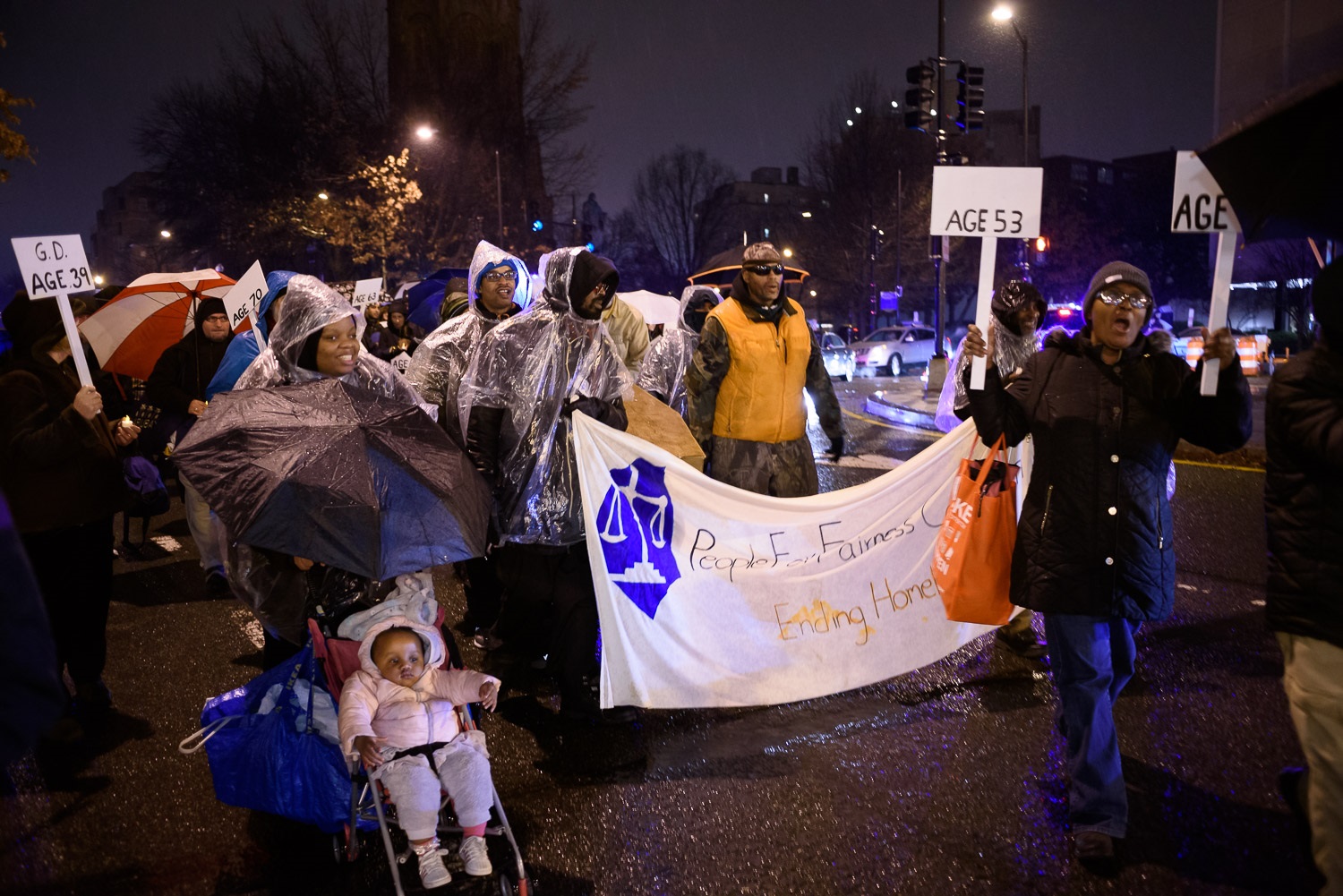
Mayor Muriel Bowser finally managed to close down D.C. General, the giant, dilapidated former hospital the city used for decades as a family homeless shelter. But before that happened, Bowser faced criticism for her decision to begin tearing down the old hospital while residents were still living in the main shelter building, which advocates regarded as disrespectful and potentially unsafe (in August, news broke that elevated levels of lead had been found in the soil outside one of the buildings set to be demolished). The last family moved out and officials finally padlocked the place at the end of October. As part of the closure plan, Bowser also opened up three new apartment-style family shelters this year in Ward 7, Ward 8, and Ward 4, with the remaining replacement facilities in varying states of completion.
This year’s point-in-time count showed a 7.6 percent reduction in the number of people experiencing homelessness in D.C. The largest reduction comes from a lower number of homeless families (nearly 21 percent fewer than last year), which the Bowser administration has targeted heavily in its attempts to make homelessness “rare, brief, and non-recurring.” The D.C. Council also had a late opportunity to pad next year’s budget for homeless services with the new revenue from an internet sales tax. It instead chose to use the new funds to lower commercial property taxes, which had been raised to help provide dedicated funding to Metro.—Natalie Delgadillo
Heroin And K2 Deaths Are Up
With a week before the year ended, the mayor’s office released a new plan to tackle the opioid epidemic in D.C. that aims to cut overdose deaths by 50 percent by 2020. The announcement comes shortly after the Washington Post published an investigation into opioid deaths in the District: 279 people died of overdoses in 2017, higher than the homicide rate and triple the amount of fatal overdoses in 2014. The opioid crisis looks different in D.C. than it does in rural areas—here it largely impacts long-time, black opioid users. D.C. has also been fighting overdoses from K2, a synthetic drug that sent hundreds of people to the hospital over the summer. D.C.’s Department of Behavioral Health now sends out outreach teams to connect people who use the drug to treatment centers and other services—some of the people most vulnerable to bad batches of K2 are those experiencing homelessness. As for marijuana, the mayor announced after Democrats won the House of Representatives in November that she would be submitting a plan to allow the sale of recreational weed in the District. Also on the cannabis front, the D.C. police crackdown on pop-up “gifting” events has been a steady presence all year.—Rachel Kurzius
Big Wins For D.C. Sports
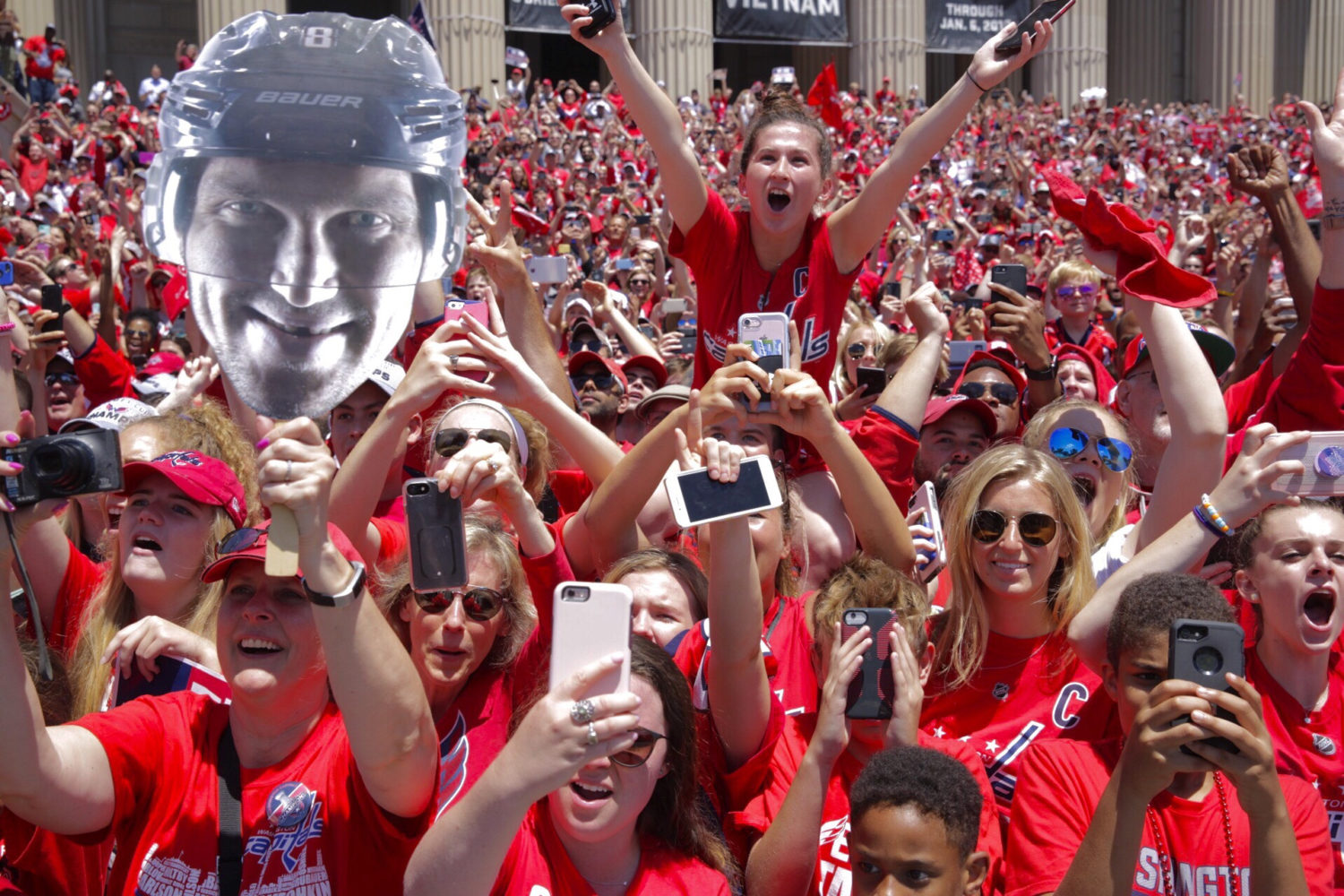
D.C. sports fans are pretty accustomed to having their hopes raised just enough to have them entirely dashed when the whole venture comes crashing down. But this year, oh boy! The Caps won the freakin’ Stanley Cup, for the first time in the organization’s history! It was very exciting and the celebratory parade brought huge throngs of jovial fans to the streets. But that wasn’t the only team making postseason history—the Washington Mystics made it to the WNBA Finals for the first time, and saw the opening of the (not-so-creatively named) Entertainment and Sports Arena, where they’ll play home games. DC United saw a stunning mid-season comeback that buoyed the team into the playoffs, after moving to a new home and acquiring a star in Wayne Rooney this summer. The Wizards made the playoffs, too. Perhaps it’s best not to speak of the Nationals and Washington’s football team, neither of which made the playoffs. But Mayor Muriel Bowser has been working on a wholly different kind of win for the controversial football team—a new stadium in city limits. Plus, covering all of the ups and downs is a newly invigorated D.C. sports media scene.—Rachel Kurzius
Kavanaugh Makes Local News National
Both of President Donald Trump’s nominees to the Supreme Court are graduates of the same local private school—Georgetown Preparatory School. But this year, the nomination of Brett Kavanaugh, previously a judge on the U.S. Court of Appeals of the D.C. Circuit, led to an unexpected spotlight on area high schools—their party cultures and attitudes towards misogyny. Well before allegations of sexual abuse became public, locals watching Kavanaugh’s Senate hearings raised an eyebrow when the Bethesda-raised jurist said he “grew up in a city plagued by gun violence and gang violence and drug violence.” But after accusations of sexual misconduct during Kavanaugh’s high school years became a point of contention in the confirmation process, suddenly understanding local people and places—and traditions, like Beach Week—became key components of a major national news story. Amid the hearing in which the sexual assault allegations were discussed, groups like the D.C. Rape Crisis Hotline saw a “significant” spike in calls. Hundreds of people were arrested at or near the Capitol to protest Kavanaugh. He was ultimately confirmed by the Senate, meaning 22 percent of the people on the highest court in the land are alumni of Georgetown Prep.—Rachel Kurzius