
 Matt Blitz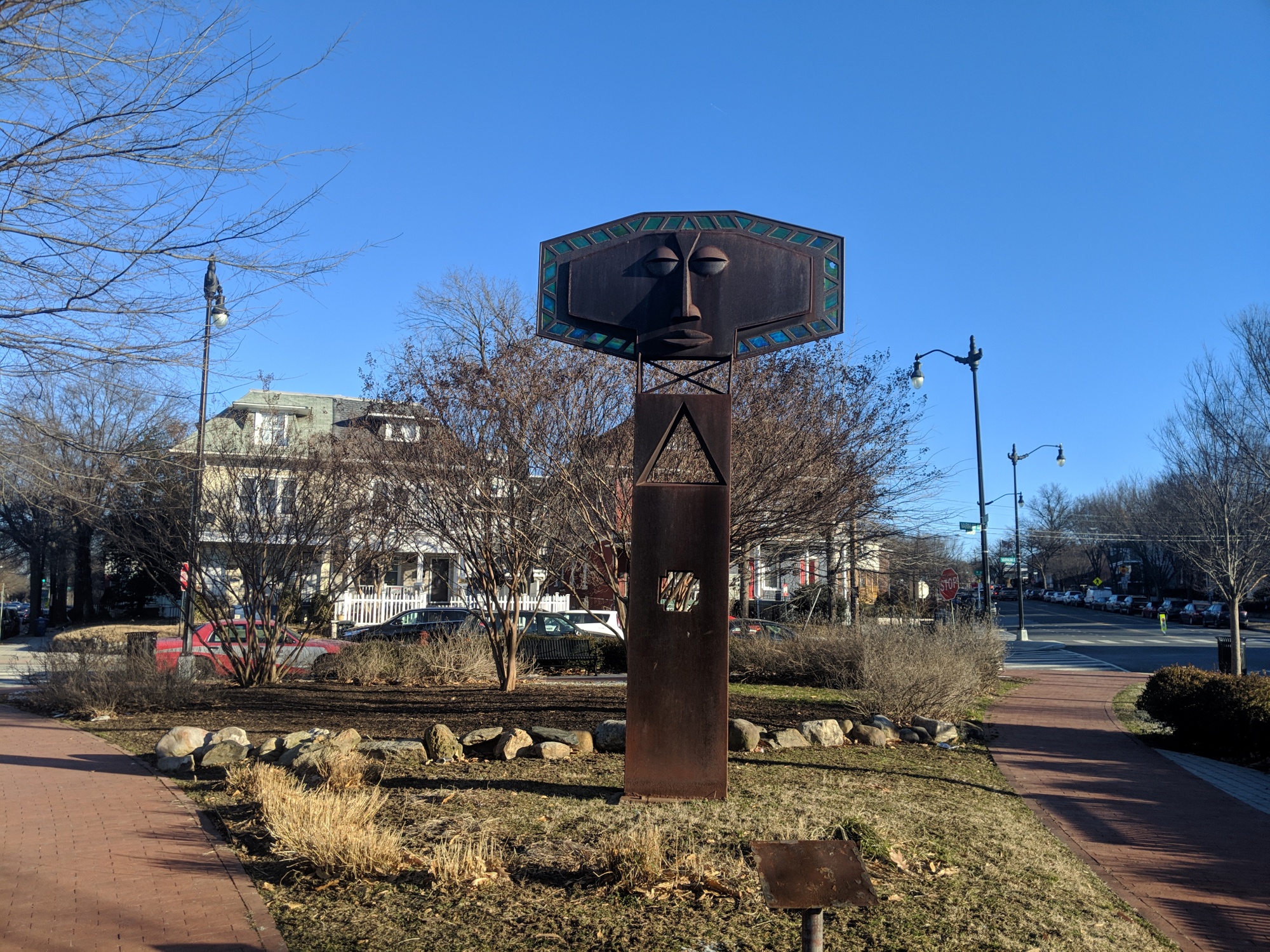
This Northwest neighborhood in Ward 4 is considered one of the city’s largest, though even long-time residents admit that they are not really sure of the boundaries. Established more than two centuries ago, Petworth—like many D.C. enclaves—has undergone substantial changes and sizeable shifts throughout its history, ones deeply rooted in race, class, and gentrification. Over the last decade, Petworth has become more crowded and trendy. The neighborhood’s Upshur Street has been called D.C.’s “future of dining,” though some recent closures have complicated that picture. But Petworth’s long, multilayered past still shines through. Here are ten places, stories, and tidbits of history you may not know about the neighborhood that President Barack Obama enjoyed buying books in.
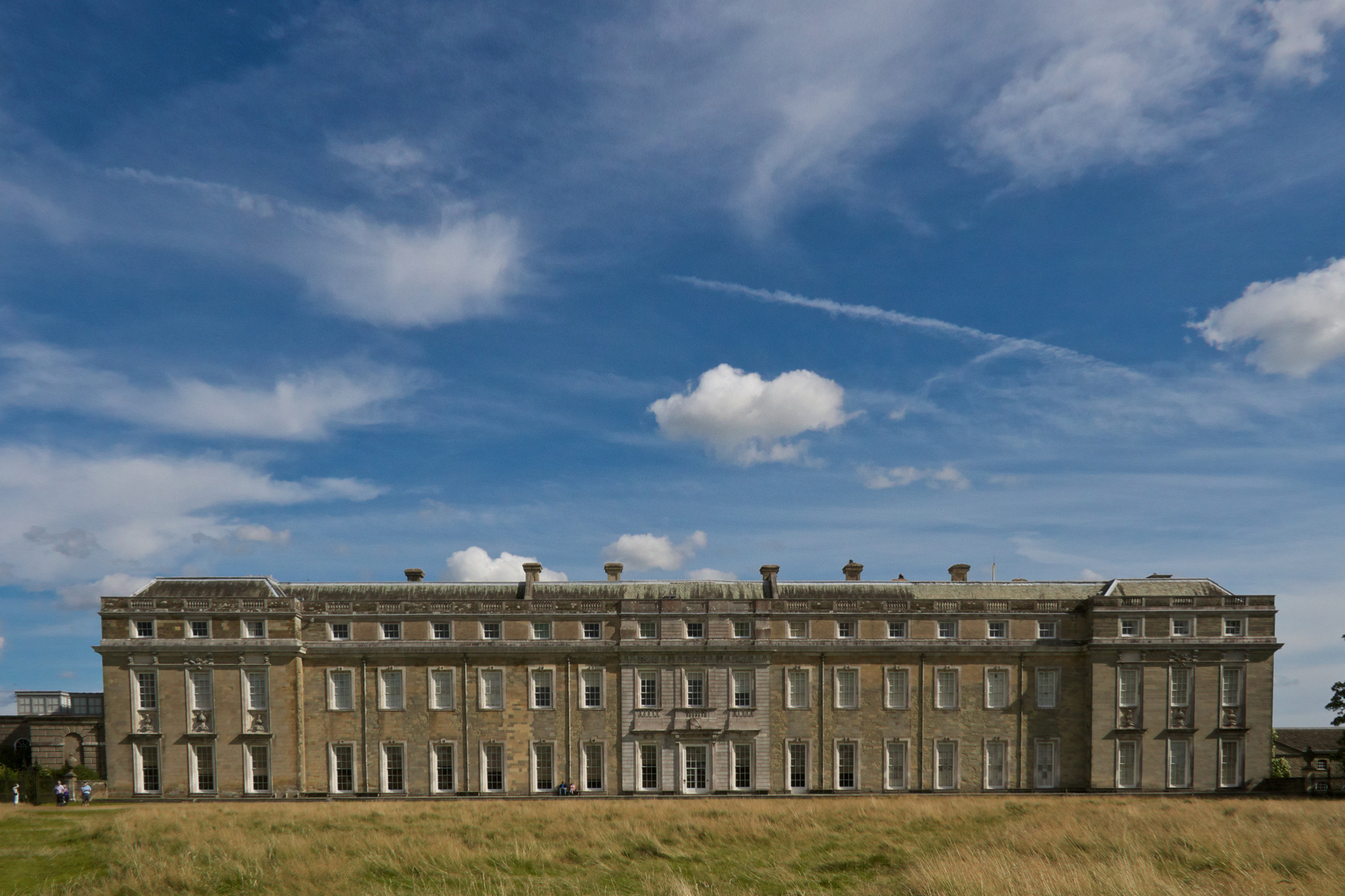
1. The name Petworth actually comes from an English town
John Tayloe III, once called the “wealthiest man of his day”, purchased about 200 acres north of Rock Creek Road in In 1803. A close friend of George Washington and the same man who built the infamous Octagon House on New York Avenue, Tayloe named his new property after a small English town in West Sussex where his ancestors likely came from.
In the late 19th century, Tayloe’s heirs sold the largely country farm land to developers who combined it with another estate to produce a nearly 400-acre tract of land. Then, they quickly subdivided the property. It was approved and put in the city records in 1889, becoming the first “suburban” subdivision to conform to the L’Enfant Plan. At the time, the Washington Post reported that the tract was “the largest ever put on record in this District, being about one-fifteenth the size of the entire Old City of Washington.”
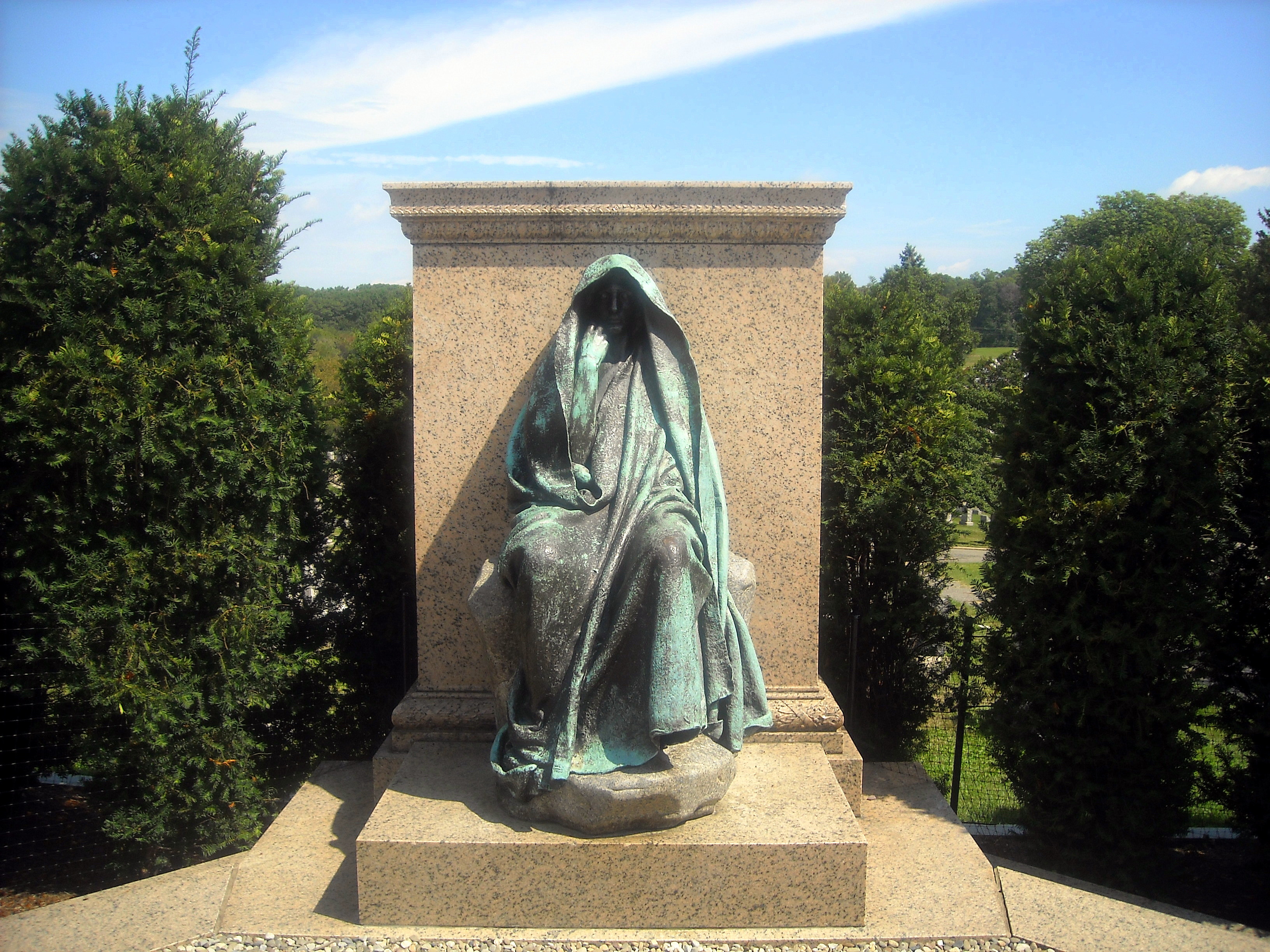
2. There is a haunting symbol of grief at St Paul’s Rock Creek Cemetery
On the eastern border of Petworth is 179-year-old St Paul’s Rock Creek Cemetery, a final resting place for famed writers, politicians, beer barons, and one creepy statute. While Upton Sinclair, Christian Heurich (of Brewmaster’s Castle fame), and Tim Russert are all buried there, no one attracts a crowd quite like the Adams Memorial — or, as many simply call it, “Grief.”
In 1885, the photographer Clover Adams committed suicide by drinking potassium cyanide, a chemical she used to develop photographs. A year later, her husband, the poet Henry Adams, commissioned Augustus Saint-Gaudens to create a memorial dedicated to his late love. So, stricken by grief, Adams refused to talk about her and told Saint-Gaudens to make no mention of her name in the sculpture. What resulted is a shrouded androgynous figure with a simple blank pose that doesn’t reveal who the monument is dedicated to. For many, it is a physical resemblance of coping with grief, knowing no real form and unclear in expression. To others, it’s terrifying and haunting.
A replica can also be found on the second floor of the Smithsonian’s American Art Museum.

3. The neighborhood is home to a sculpture dedicated to renowned actor/football star/lawyer/activist Paul Robeson.
Standing tall in a small park at the intersection of Kansas and Georgia Avenues is a large steel and green glass sculpture dedicated to the late multi-hyphen great Paul Robeson. Entitled (Here I Stand) In the Spirit of Paul Robeson, it reflects traditional African designs and influence. It was built by local sculptor Allen Uzikee Nelson and dedicated in April 2001 in honor of Robeson’s 103th birthday. While Robeson never lived here, he had a complex relationship with the city.
A D.C. resident for more than five decades, living in both Petworth and Columbia Heights, Nelson began his career as an engineering professor at the University of District of Columbia before becoming a steel sculptor. His works, both large and small, dot the city, including pieces that honor Thurgood Marshall, Marcus Garvey, and Malcolm X. The subject of a recent documentary, his work is inspired by African art, activism, and paying tribute to the civil rights movement.
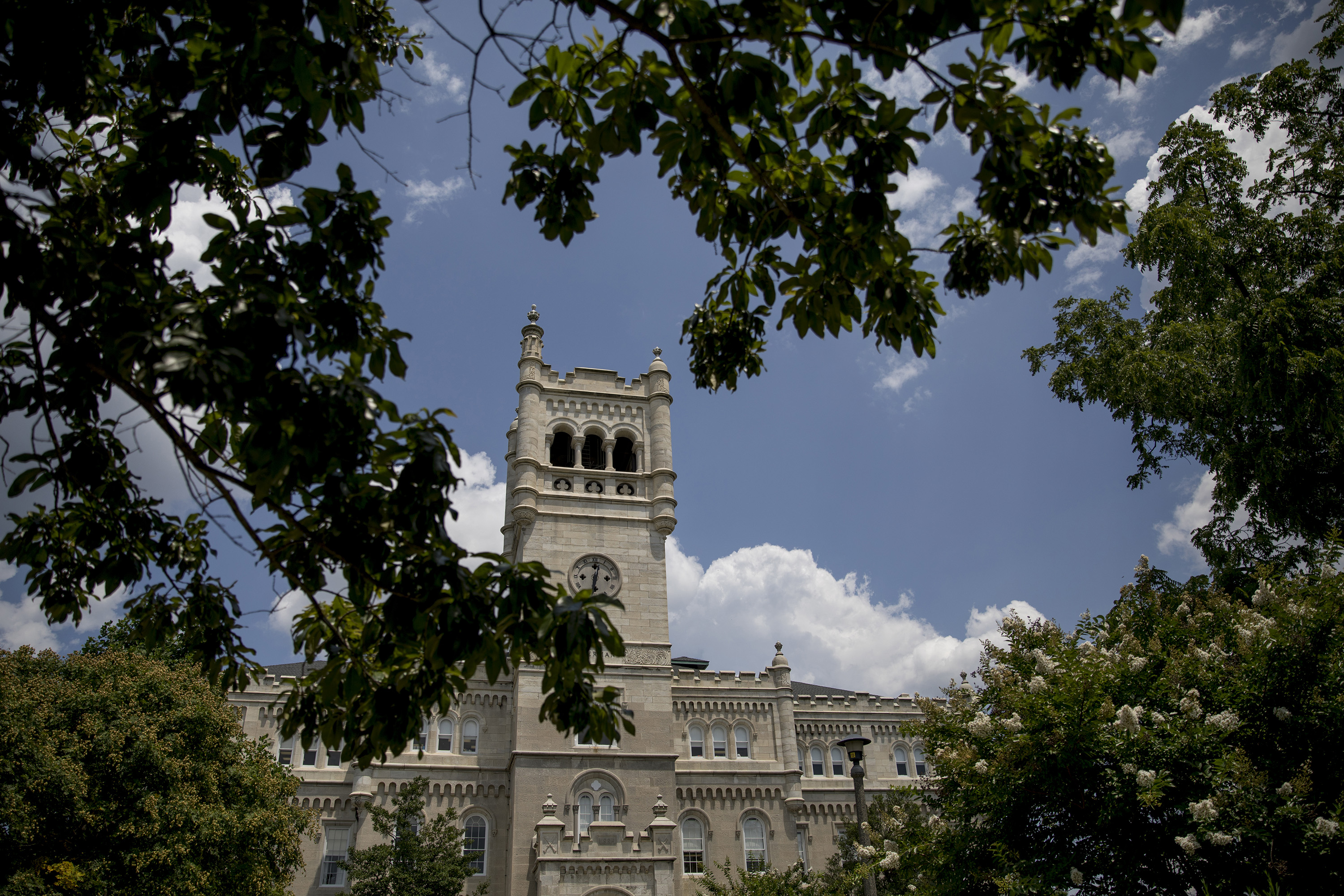
4. This 167-year-old retirement home for military personnel has a bar where residents drink for free.
Bordering the eastern edge of Petworth is the Old Soldiers’ Home, a 272-acre community reserved for those over the age of sixty and have 20 years or more active military service. It was founded in 1851, allegedly thanks to General Winfield Scott who, in lieu of ransacking Mexico City at the end of the Mexican-American War, took a cash settlement. He used that money to pay his troops and to help set up a home for retired and infirmed soldiers.
It’s still there today, though in some financial distress. With a golf course, bowling alley, a theater, and art studios, it’s idyllic setting for those who spent a good portion of their lives serving our country. Perhaps the best part is Defenders Inn, a bar where residents drink for free.
5. You can find a Caribbean feast by strolling along Georgia Avenue
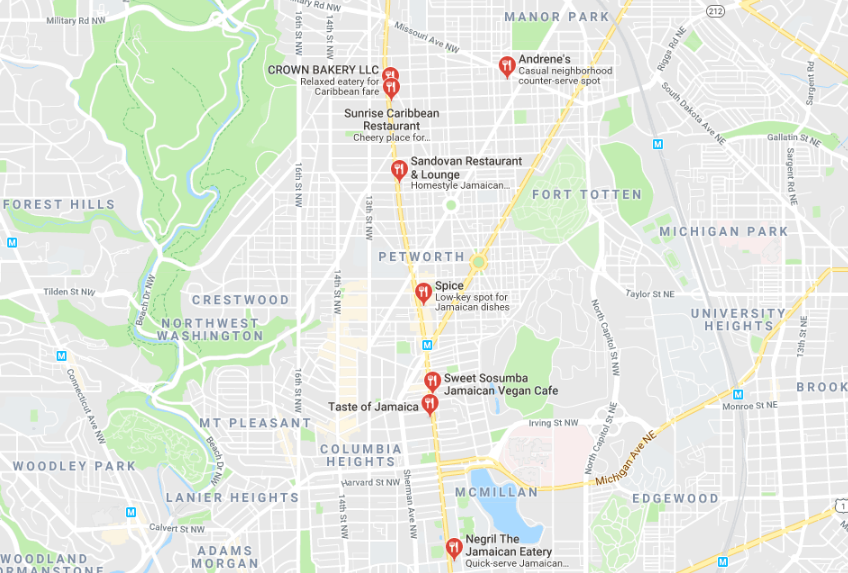
There are countless delicious Caribbean eateries filled with delicacies like jerk chicken and roti up and down Georgia Avenue. Beginning in the early 1980s and continuing to about the mid-2000s, there was a huge influx of immigration from Caribbean countries like Jamaica, Trinidad and Tobago, and Barbados. In fact, Jamaicans were D.C,’s second-largest group of immigrants in the 2000 census. This was largely due to Howard University’s long-standing relationship with the island nation.
This has manifested itself in a number of restaurants, shops, and Caribbean-American owned businesses lining Georgia Avenue, from Columbia Heights through Petworth to Brightwood. For nearly two decades, the much-beloved Caribbean Carnival was attended by thousands before ending in 2011 due to conflicting reports of perceived financial mismanagement, violence, and overly aggressive police tactics. Hope springs eternal that the carnival will soon one day make a come back.
6. Long-lost New Deal-era murals were uncovered at Theodore Roosevelt High School
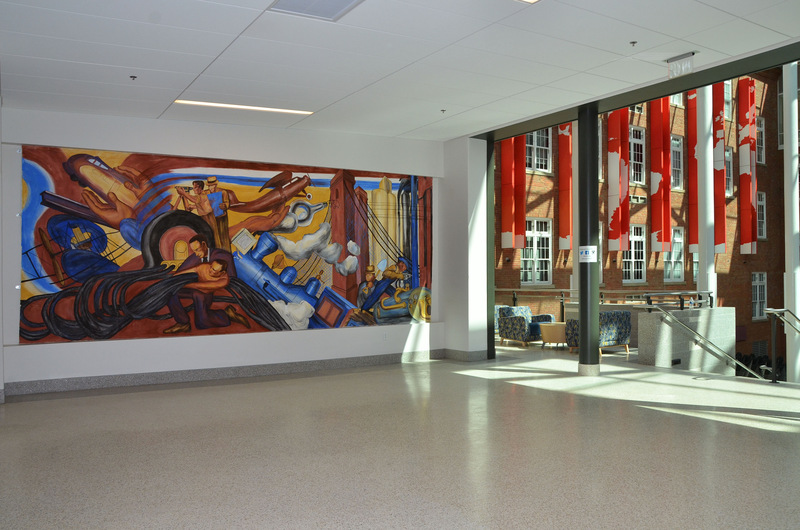
During a much-needed $127 million renovation of the decades-old Theodore Roosevelt High School in 2013, workers uncovered something rather historically amazing on the cafeteria ceiling. Stripping away layers of yellow paint, two well-preserved New Deal-era frescos revealed themselves. Titled “The American Panorama” and “Adolescent America,” they were both painted by 26-year-old artist Nelson Rosenberg in 1934.
The eclectic works of art features lumberjacks, boxers, race horses, trapeze artists, and a cartoon mouse that bears resemblance to Mickey. These were likely painted as part of 1934’s Public Works of Art Project, when nearly four thousands artists were paid by the government to construct more than 15,000 works of art for publicly funded buildings across the nation.
Today, these murals are on display in the high school’s main lobby.
7. Harry Houdini once escaped from a Tenth Precinct Police Station jail cell
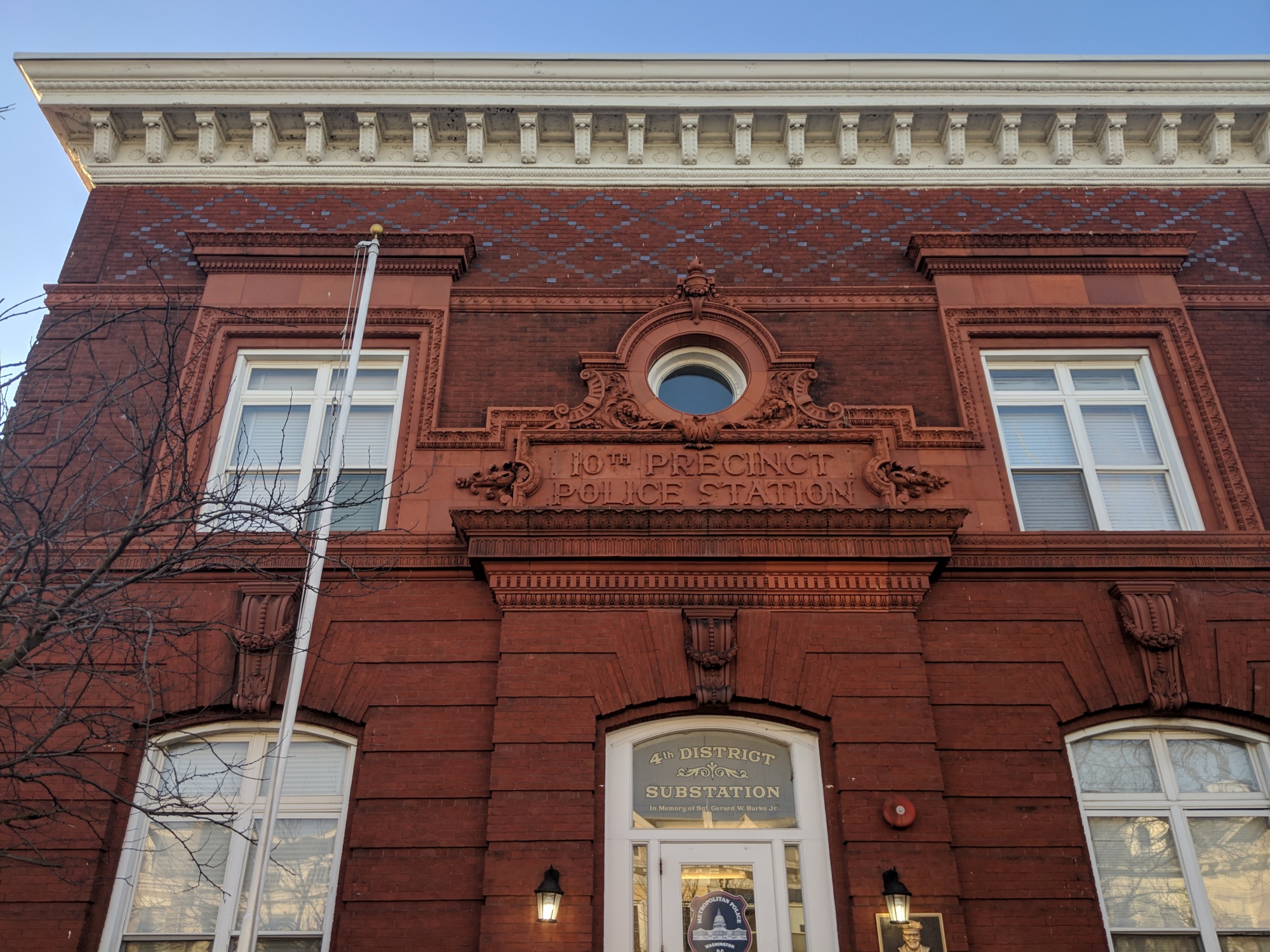
While debate still rages about the exact southern border of Petworth, the Tenth Precinct Police Station served the neighborhood for most of the 20th century. Built in 1901, it’s on the National Historic Register for representing 1900s municipal building architecture. But that isn’t the station’s claim to fame.
Touted at the time to have the strongest jail cells in the city, famed performer Harry Houdini put that to the test. It was New Year’s’ Day 1906 when, as a promotional stunt for an upcoming D.C. show, Houdini had himself locked in a cell with his clothes locked in a separate, adjoining cell. As the legend goes, eighteen minutes later, a fully-clothed Houdini was standing among the guards laughing along with them in disbelief that he had escaped the cell.
But that delight was short-lived. Later, Houdini would tell the press that he was unimpressed by D.C. police and that he had never been treated so poorly while performing a jail escape.
8. The facade of historic Engine Company No. 24 is now a Metro cooling plant
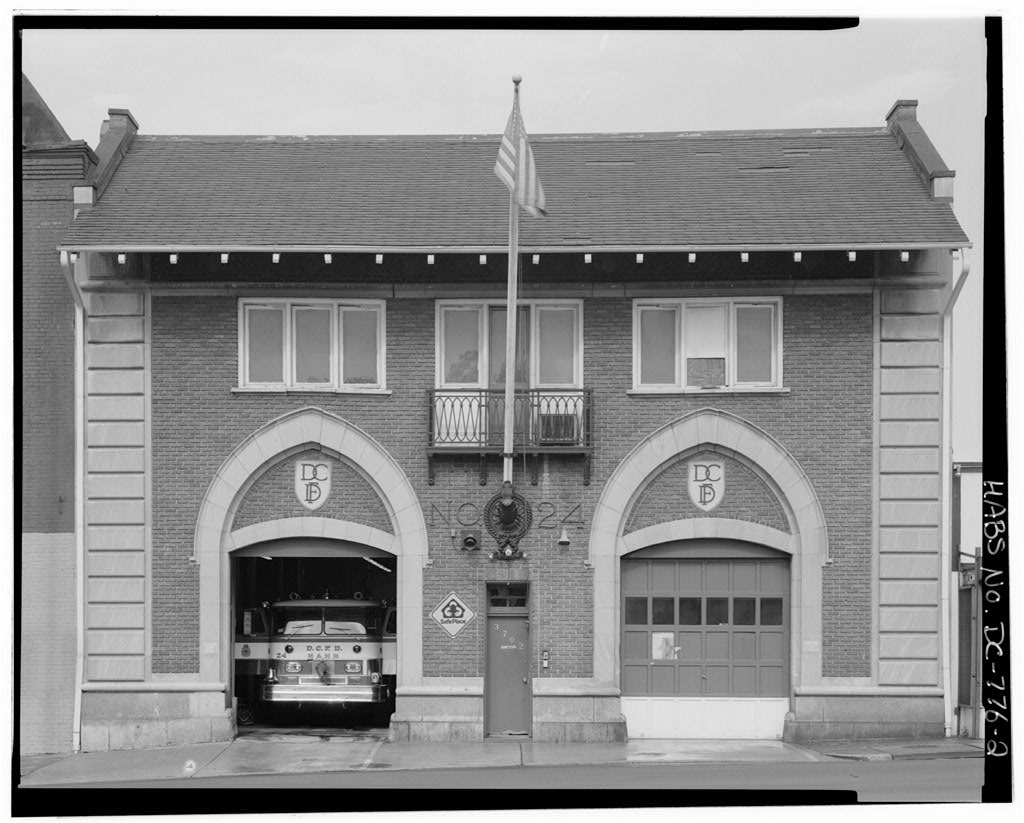
Engine Company No. 24, which once sat at the corner of Rock Creek Church Road and Georgia Avenue, was the first firehouse in the District to go fully motorized, trading in their literal horses for trucks. Proving to be more efficient, modern, and less messy, their success showed D.C. had become a 20th century city.
Built in 1911, the Italian Renaissance style firehouse was designed by Luther Leisenring and his partner Charles Gregg (also known for their work on the Cosmo Club). As a prototype for early 20th century firehouse design, it quickly became a local landmark. In 1954, it became of the first fire stations in the city to racially integrate.
When the Green line was announced in the early 1990s, the firehouse was in the path of construction and set to be demolished. However, local uproar prevented it. In 1994, the facade was moved several blocks away to 3702 Georgia Avenue and now serves as a cooling plant for Metro.
9. Petworth is (still) a mecca for house flippers
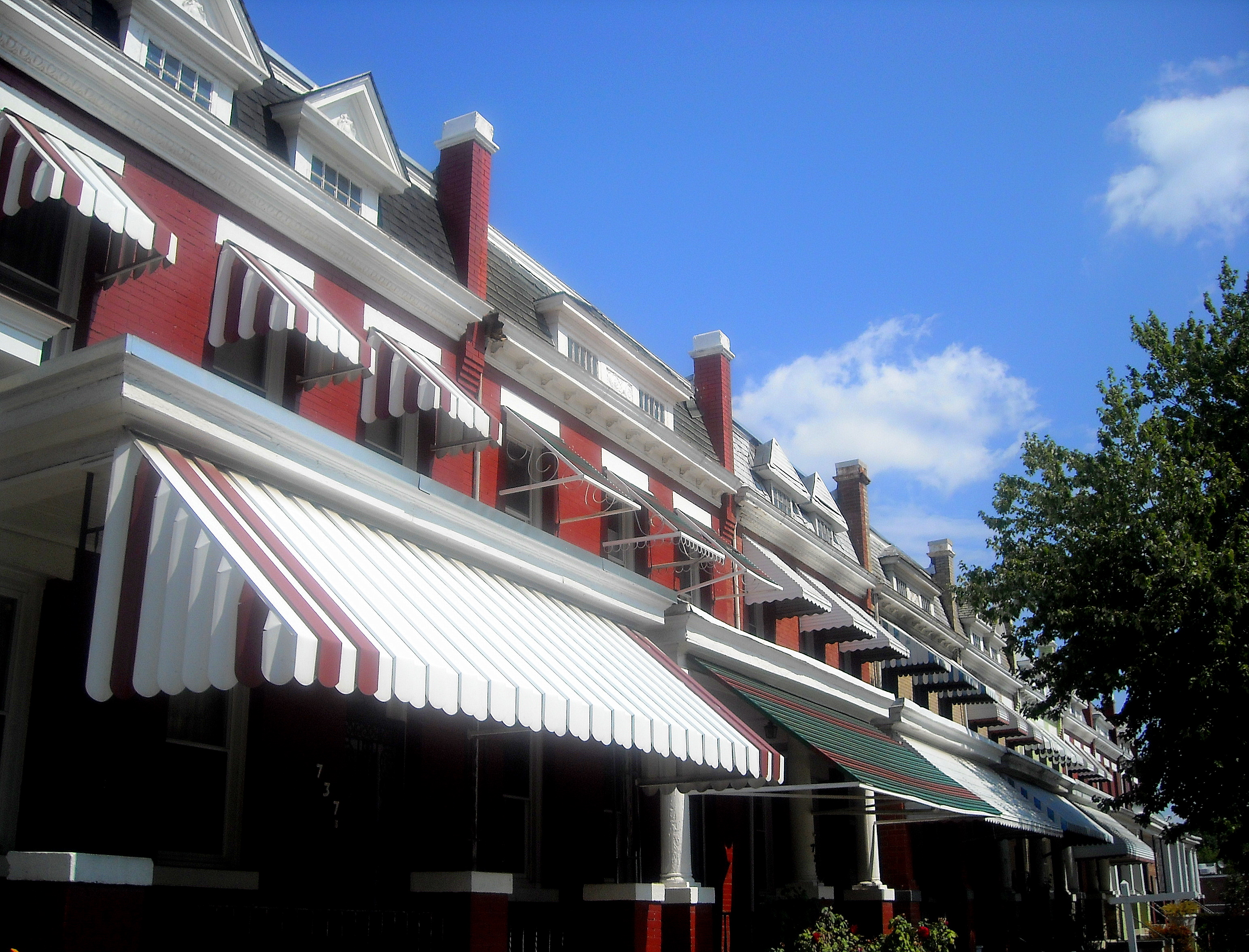
According to a 2016 Redfin report, the average profit ($337,000) for a home flip in Petworth was higher than any other neighborhood in the country. Perhaps not surprisingly, it was joined by three other nearby neighborhoods in Redfin’s top ten list.
In a predictable development, Petworth was the location for a new HGTV show called “DC Flippers,” where a young, local hip couple flipped homes to huge profits. It appears the show never went beyond its initial pilot episodes. By the beginning of 2018, home flips in the District in general were down six percent but, in Petworth, the average home flip profit remained about even with previous year levels.
10. Before a bullet changed history, Abraham Lincoln was nearly kidnapped off his horse in Petworth
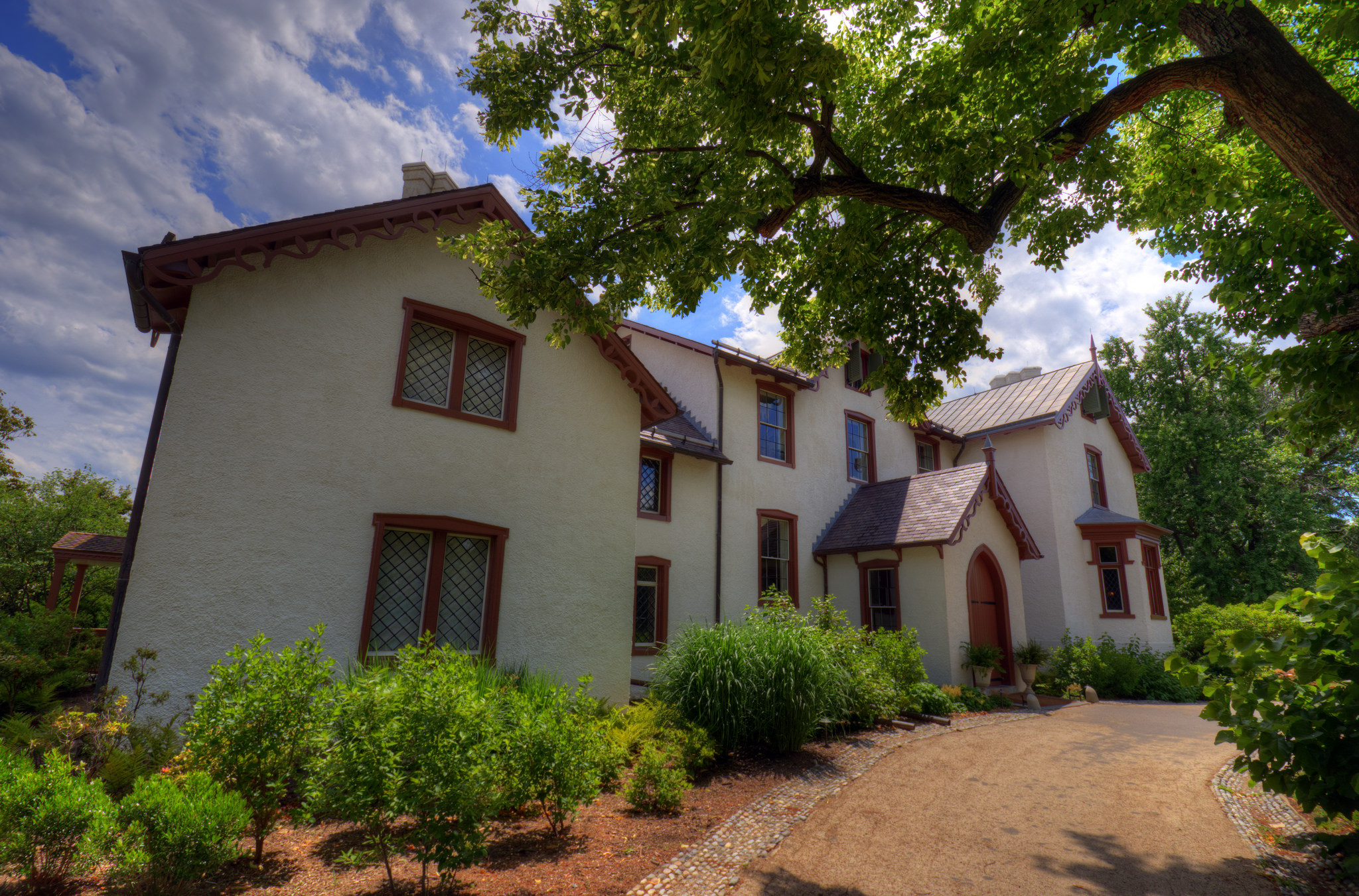
At the height of the Civil War, President Lincoln found comfort, relaxation, and peace at his summer’s cottage which is still located on Petworth’s eastern boarder. He was often seen taking a carriage or riding his horse up George Avenue and through the surrounding neighborhoods. This was also where John Wilkes Booth planned to kidnap the president.
It was a month before that fateful day at Ford’s Theater and Booth had heard that Lincoln was set to see a play called Still Waters Run Deep. Recruiting two friends, he had hoped to intercept the president as he rode through Petworth on his way back home to the cottage. The plan was aborted at the last minute when the president deciding to stay in that night to finish up some work. History would have to wait a few more weeks.
After being used for several other purposes, the cottage was remade as a historical site and museum in 2008.
Want more?
Ten Facts You May Not Know About Chinatown
Ten Facts You May Not Know About Spring Valley
Ten Facts You May Not Know About Navy Yard
10 Facts You May Not Know About Brookland
Ten Facts You May Not Know About Anacostia
Ten Facts You May Not Know About Dupont Circle
Nine Facts You May Not Know About The Southwest Waterfront

#/media/File:Adams-memorial-SaintGaudens.jpg)