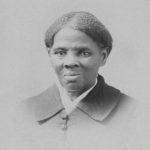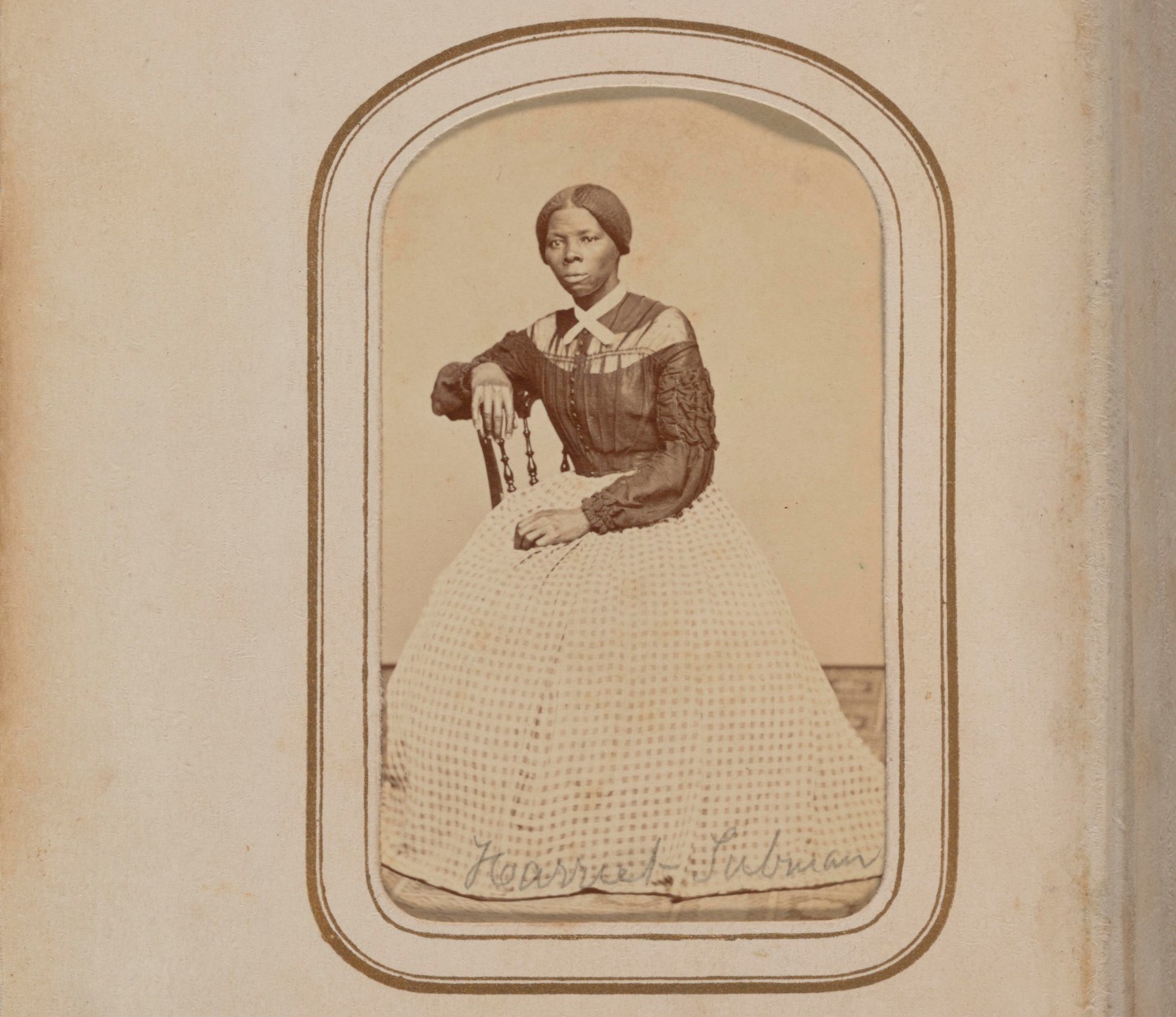
Before Monday, most visitors to the National Museum of African American History and Culture were likely only familiar with the image of Harriet Tubman as an older, frail woman, as seen in the few photographs available. Now, a previously unknown photograph of a young Tubman secured by the museum and the Library of Congress offers an alternate take on the woman known for helping an estimated 70 slaves escape to freedom and spying for the Union Army in the Civil War.
Tubman, who escaped from slavery in Maryland, was in her late 30s or early 40s when she sat for the photograph taken by Benjamin F. Powelson, officials said.
“You can imagine this woman could have led people through the swamps,” Lonnie G. Bunch III, founding director of the African American History Museum, tells DCist. “This woman could have spied for the Union, this woman could have demanded that America live up to its stated ideals. You weren’t sure you could do that with some of the earlier pictures, so it really gives us a sense of a vibrant, an active Harriet Tubman.”
Both institutions unveiled the portrait of Tubman at the museum Monday—it is believed to be the earliest photograph of her in existence.
“Just to see her younger is really great because we’re so used to seeing the older photos of her after she’s already made her way back and forth,” says Deborah Brice, a descendant of Harriett Tubman. “She’s a young woman and that’s what I see in the photo: a young woman who still has that hope.”
The Tubman photograph is one of 49 pictures appearing in an elegant photo album that belonged to Emily Howland, a Quaker educator and abolitionist. Howland taught at a school for free African-American girls in D.C. before the Civil War and taught freed slaves to read at Camp Todd in on Confederate Gen. Robert E. Lee’s Arlington estate. She went on to launch her own school for former slaves, according to Library of Congress Magazine.
Howland’s album is on display at the museum’s main entry hall through Sunday. After that, it’ll move to the “Slavery and Freedom” exhibition in the museum’s History Gallery.
Often called the Moses of her people, Tubman sat for the photograph in 1868 or 1869 in Auburn, N.Y. She was newly remarried, had just bought a farm in Auburn, and was trying to figure out how to take care of her family and herself, Bunch says. Howland belonged to a circle of abolitionist women near Tubman’s farm and the two became friends.

The album also contains the only known photograph of John Willis Menard, the first African-American elected to Congress. Menard was born free in Illinois and moved to New Orleans in 1868. He was elected to Congress that same year to represent New Orleans, but never served: The loser successfully contested the result.
Also appearing in the album are English author Charles Dickens; Elmer Ellsworth, the first Union officer killed in the Civil War; William Johnson, a soldier with the U.S. Colored Troops; and Princess Dagmar of Denmark, before she became empress of Russia. Others are friends, former students, teachers, family members, suffragists, and abolitionists.
The Library of Congress and the Smithsonian Museum of American collaborated a year ago to pool their money so they could purchase the album at auction.
“We joined together to make sure that this portrait of Harriet Tubman that had never been seen before—and also the other photographs that tell the American story—would remain in the public realm,” says Carla Hayden, the Librarian of Congress.
The photographs and album underwent an intense restoration process at the library to preserve them for future generations. Research at the library and museum about the people appearing in the album is ongoing, Bunch said.
Howland put Tubman’s photograph at the end of the album, which Rhea L. Combs, the museum’s curator of film and photography, says symbolizes Howland’s values.
“It embodied something that was around freedom, that was around justice—social justice—and it was about equality for all,” Combs says. “And no one better represents that and reflects that than Harriet Tubman.”