 Mikaela Lefrak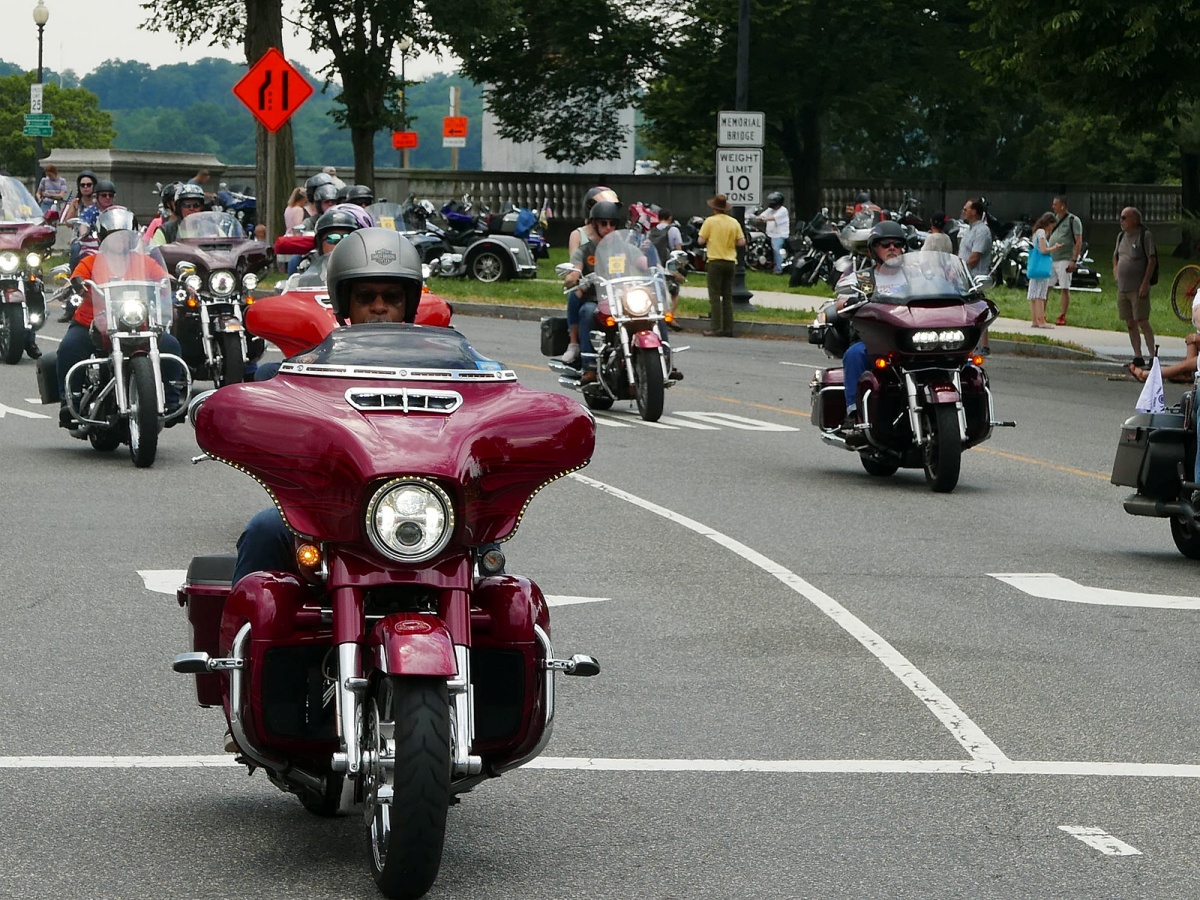
The motorcycle rally Rolling Thunder wrapped up its latest—and, potentially, its last—annual event in the nation’s capital on Sunday. Hundreds of thousands of bikers from around the country rode to Washington, D.C., over Memorial Day weekend to advocate for veterans and prisoners of war, just as they have for the past 31 years.
Organizers announced last December that this would be the final D.C. ride, citing the event’s $200,000 price tag, past conflicts with Pentagon management over logistics and fees, and their own advancing ages as the main reasons for ending the tradition.
But according to President Donald Trump, the issue was something else entirely: permits. He weighed in on Twitter on Saturday while on a diplomatic trip to Japan.
Can’t believe that Rolling Thunder would be given a hard time with permits in Washington, D.C. They are great Patriots who I have gotten to know and see in action. They love our Country and love our Flag. If I can help, I will!
— Donald J. Trump (@realDonaldTrump) May 25, 2019
Rolling Thunder organizers say that while obtaining permits can be time-consuming, that wasn’t why the event is ending after this year.
The next day, Trump followed up with more news.
The Great Patriots of Rolling Thunder WILL be coming back to Washington, D.C. next year, & hopefully for many years to come. It is where they want to be, & where they should be. Have a wonderful time today. Thank you to our great men & women of the Pentagon for working it out!
— Donald J. Trump (@realDonaldTrump) May 26, 2019
But organizers say that D.C. is not actually where they want to be next year.
“I know he means well, but I don’t know what the story is with them working it out with us,” Artie Muller, the ride’s co-founder and a Vietnam war veteran, told C-SPAN from the rally’s staging ground at the Pentagon on Sunday. “There’d have to be a lot of discussion and a lot of changes for everybody.”
While the event does require numerous permits and logistical support from the National Park Service, Pentagon, D.C. police and other entities, neither Muller nor Rolling Thunder President Joe Bean cited permitting as a reason for ending the ride during interviews with WAMU.
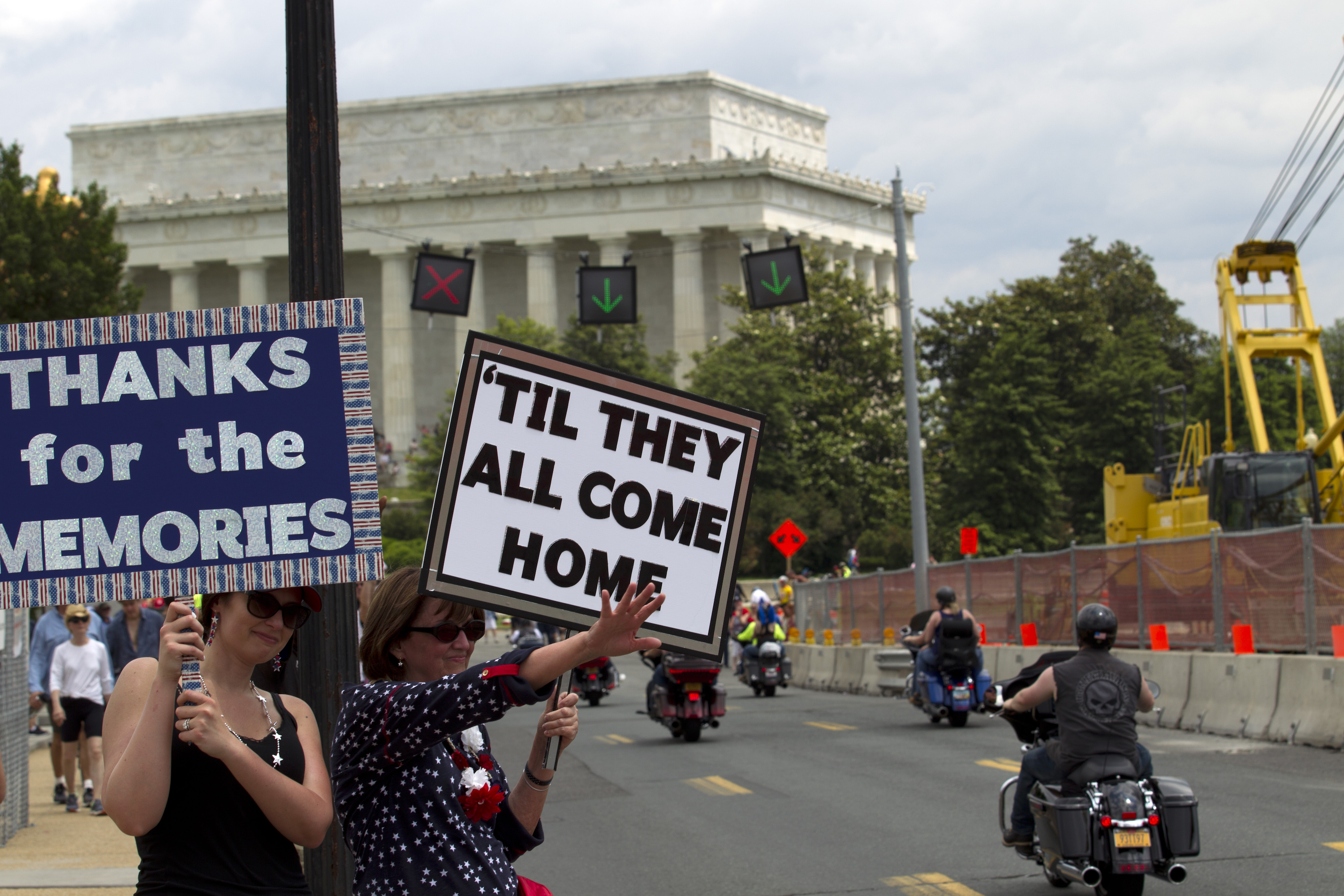
Supporters held up signs as participants in the Rolling Thunder motorcycle rally rode past the Lincoln Memorial on Sunday.
Muller did note that he has been frustrated with the Pentagon’s relationship with Rolling Thunder: It charged Rolling Thunder, Inc., the nonprofit that organizes the ride, about $52,000 this year to rent its parking lot and pay for security, toilets, and cleanup. (A Pentagon spokesperson could not confirm that cost by publication time.) Muller said that the fees were outsized for the services they received, and that that money could be better spent on helping veterans.
When asked about President Trump’s tweets, a Pentagon spokesperson declined to comment and directed inquiries to the White House press office, which hasn’t responded to a request for clarification.
Muller said he wants Rolling Thunder chapters across the country to organize their own Memorial Day rides next year. He thinks those local rides will do more to raise awareness about veterans and prisoners of war than one big national event.
Still, other entities continue to offer support for the annual event. “Harley-Davidson is always behind us,” Nancy Regg, Rolling Thunder Inc.’s media liaison, told WAMU. She said a D.C.-based restaurateur called her Sunday night and offered $200,000.
Plus, “a guy named Steve in the Pentagon parking lot” said he raised $100,000 for her. “I don’t know if he was serious,” Regg laughed.
But it’s not just about the money, she clarified. Both Regg, 68, and Muller, 74 cited their advancing ages as a reason to scale back the event. She said she’d welcome the opportunity to meet with President Trump to discuss veterans’ rights and prisoners of war, but she has not heard directly from the White House and doesn’t know if the President could change their 2020 plans.
“You want to donate the $200,000? We’ll be happy to take it,” Regg said. “But it’ll go to the Rolling Thunder charity, and it’ll go to veterans.”
This story originally appeared at WAMU.