Jacob Fenston
The Potomac was once so polluted that bright green mats of algae would blanket the water each summer (“an open sewer calling itself a river,” according to the New York Times); the Anacostia was so toxic that one study found two-thirds of catfish had tumors—the highest rate ever recorded in river in the United States.
“It’s been the poster child for a degraded urban waterway for decades,” says Erin Garnaas-Holmes, who works for the nonprofit Clean Water Fund, focusing on the Anacostia River.
In 1971, the head of the Environmental Protection Agency pressured city lawmakers to ban swimming. They passed a law making swimming or wading in the Potomac, Anacostia or Rock Creek punishable by a $300 fine or 10 days in jail.
Fast forward almost 50 years: Billions of dollars have been spent cleaning up the rivers, and some environmentalists and swimmers say it’s time to get back into the water. City leaders are talking about relaxing—if not lifting entirely—the decades-old swim ban, and discussing where swim platforms or beaches could be located.
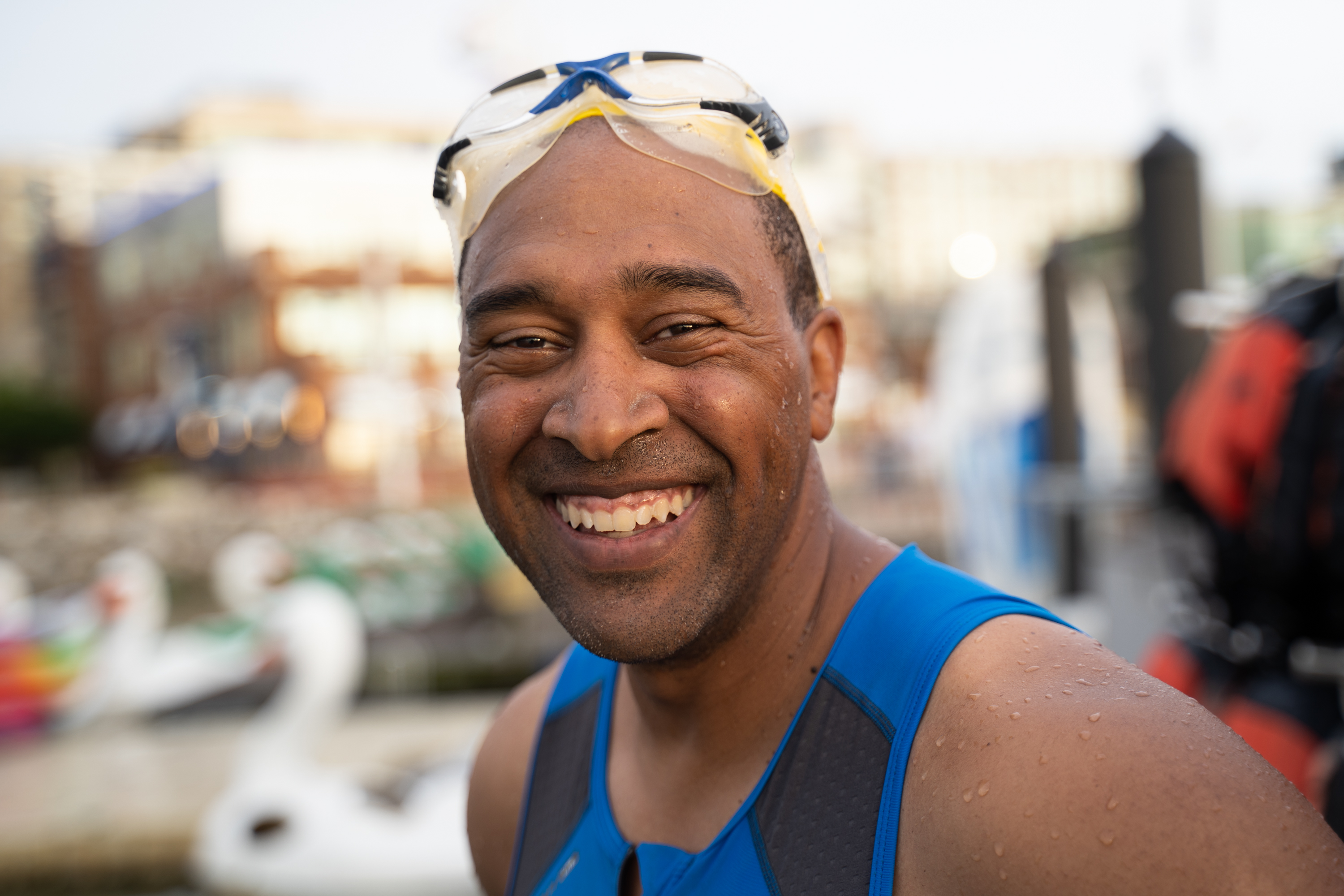
Elvert Gardner, after a swim in the Potomac.
Garnaas-Holmes says swimming is one of the tangible benefits taxpayers get after years of investment.
“Swimming is fun, right?” says Garnaas-Holmes. “As the Anacostia River is getting better and better, it’s sort of a natural question to say, okay—when do we get to take advantage of that?”
It’s a question cities around the country are asking about their once-polluted waterways. Many urban rivers were used as industrial hubs and sewage dumps. Now, pricey condos are rising on the banks of these rivers—including the Anacostia—and years of cleanup efforts are starting to pay off. In Boston, the Charles River now hosts “splash days,” where people are allowed to jump in. In Portland, Oregon, the city is opening swimming beaches along the once-off-limits Willamette River.
So what might river swimming look like in D.C.?
Swimming A Lap Or Two In The Anacostia
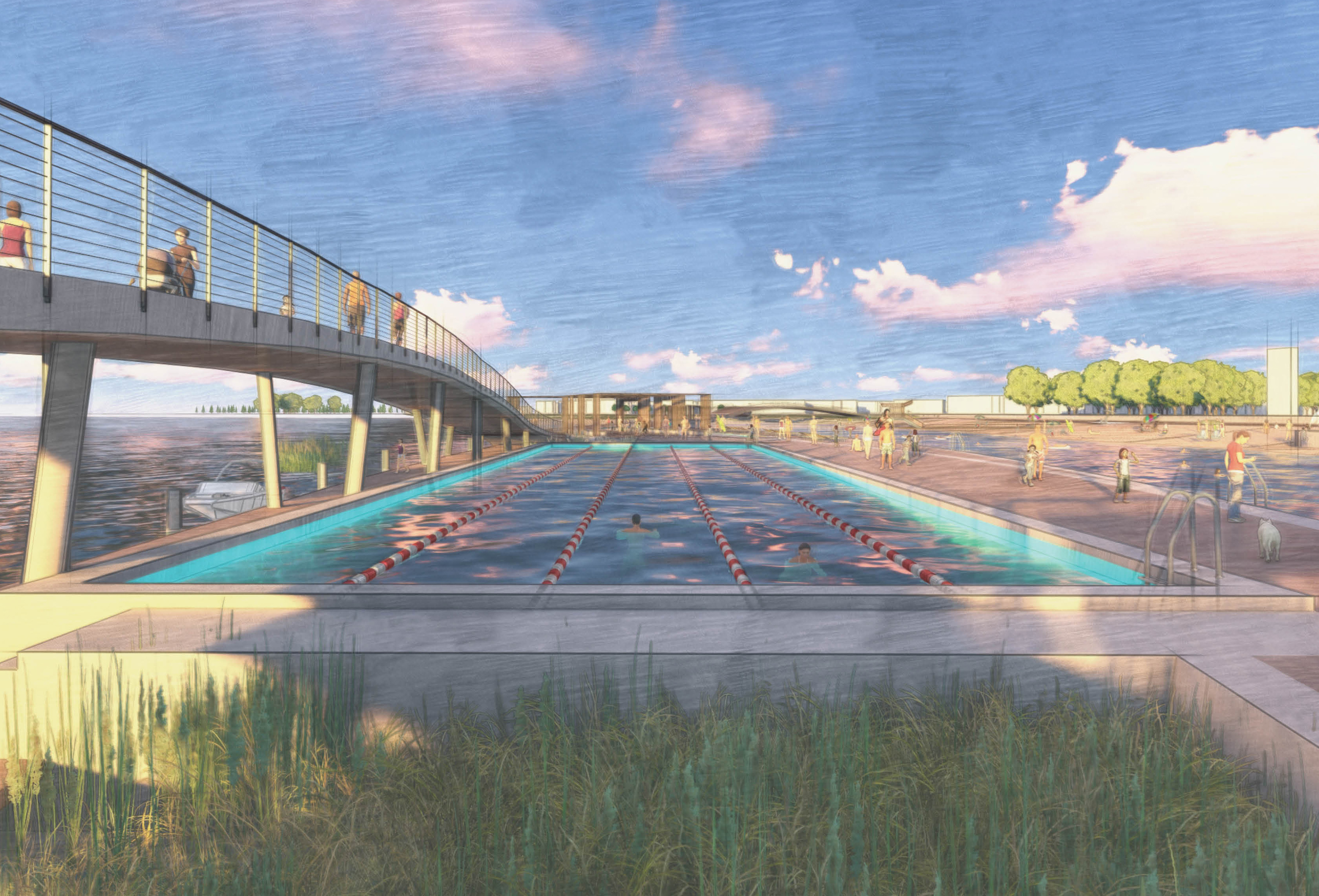
One idea of what a swimming structure in the Anacostia River could look like.
“So you could have a large lap pool for instance, you could have a general swim area,” says Merrill St. Leger, an urban planner and designer with SmithGroup. She is one of the authors of a recent feasibility study for a swimming facility in the Anacostia River. The study envisions a “river pool”—some sort of dock structure providing access to the river.
The study considers several types of structures. Most would be surrounded by a deck, providing the protected feel of a pool, but with unfiltered river water flowing through. The authors identified nine possible sites along the Anacostia, from Yards Park, at the southern end of the river, to Kenilworth Park, upstream near the Maryland border. They examined the pros and cons of each site: How close is it to public transportation? How deep is the water? Would a swim platform interfere with rowers or other other boat traffic?
For inspiration, the authors looked to other cities where such river pools are already in use, or being planned.
“Copenhagen has a number of really interesting examples of harbor baths,” says St. Leger. She visited four of them last summer and brought back photos—wooden platforms in the middle of the Danish capital packed with swimmers and sunbathers.
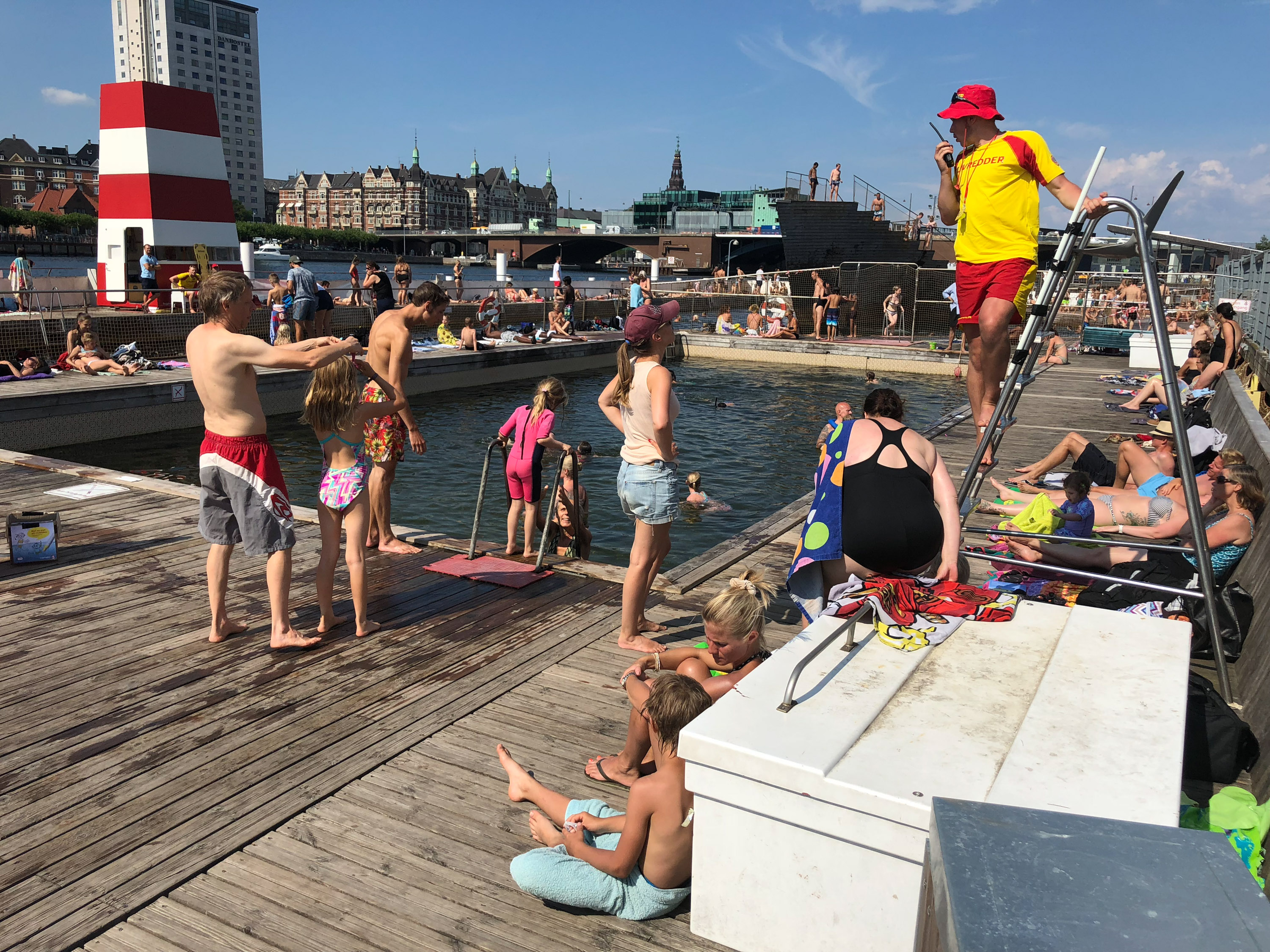
One of Copenhagen’s popular swimming platforms.
There are similar examples in Paris and Zurich, and there are plans in the works for the Thames River in London, the Charles River in Boston and the East River in New York (though the East River is still too polluted for direct contact—instead, the pool would filter the river water).
Imagining Copenhagen-style swim platforms on the Anacostia might sound far-fetched, but city officials are on board.
“I believe we will have swimming platforms in Washington, D.C. by 2025,” says Tommy Wells, director of the District Department of Energy and Environment.
Of course, politicians have been promising to make D.C. rivers swimmable for years. President Lyndon Johnson, in his 1965 State of the Union Address said, “We hope to make the Potomac a model of beauty here in the capital.” Johnson called the river “a national disgrace,” and vowed to make it swimmable within a decade.
That didn’t happen.
But slowly, the river’s health did improve. Daily sewage discharges—500,000 gallons a day on average—came to an end when new sewer lines went online. By 1979, the algae had cleared up and D.C. Mayor Marion Barry’s administration declared the river was safe for swimming.
“All that remains to be done is to establish a supervised beach for swimming,” read a Washington Post story at the time. There was just one caveat, according to The Post: “Because of budgetary considerations, that may have to wait until next year or the 1981 city budget because the city currently does not have the money it would need to create such a site.”
Forty years later, swimmers are still waiting.
‘Bacteria CSI’ On D.C. Rivers
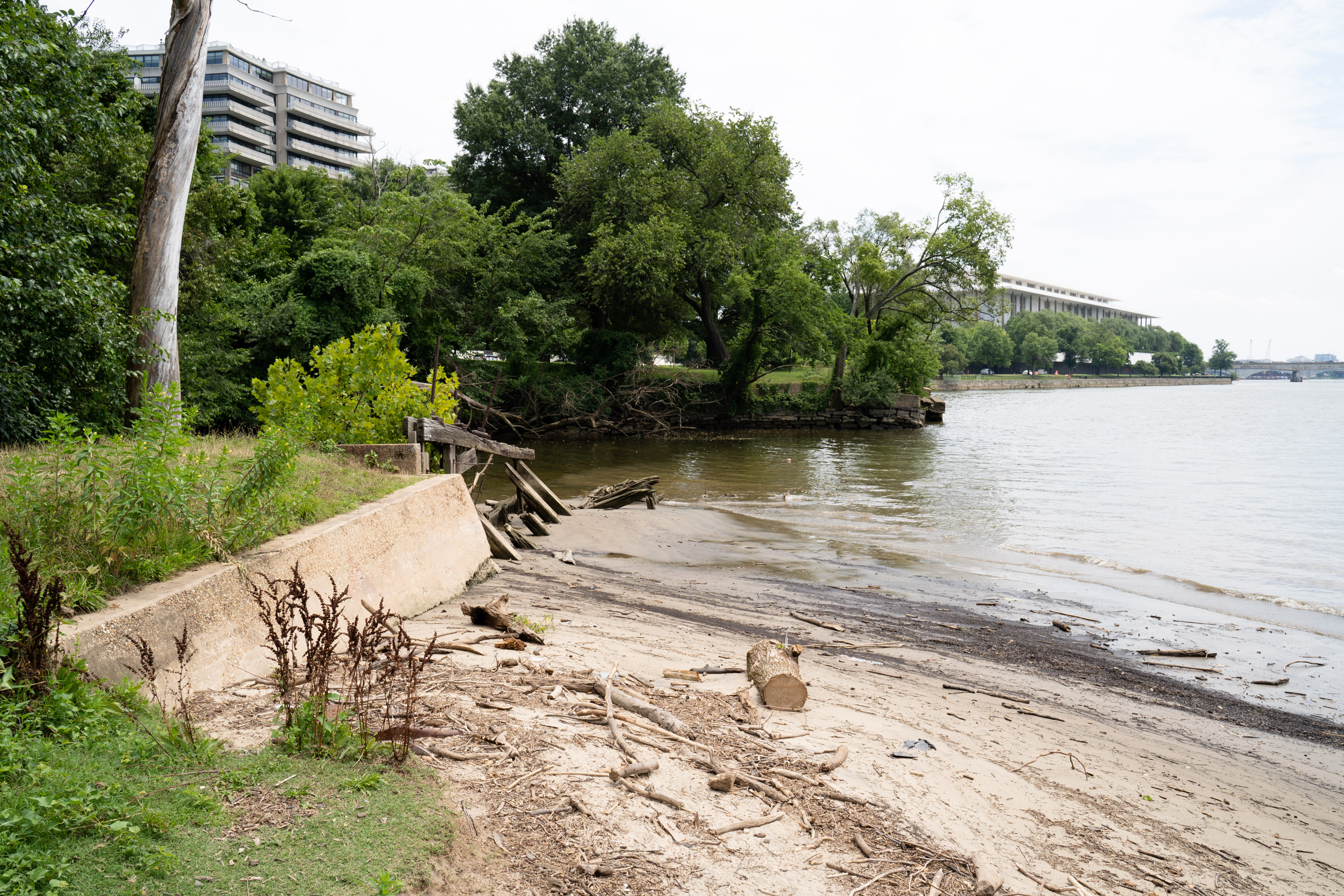
Could this sandy area in Georgetown someday be a swimming beach?
Tommy Wells says this time, the promises of a swimmable river are different. Last year, DC Water opened a massive new tunnel, preventing more than 80 percent of sewage overflows into the Anacostia. A giant tunnel boring machine is currently munching its way under the city, building the next portion of DC Water’s tunnel system. When that opens in 2023, it will prevent 98 percent of sewage overflows on the Anacostia.
On the Potomac, both DC Water and Alexandria’s sewer authority, AlexRenew, are working on sewer tunnels that will prevent the vast majority of overflows. Alexandria’s tunnel is slated to open in 2025; DC Water’s Potomac tunnel is planned for 2030.
There are other sources of bacteria entering the waterways too, but Wells says the District is working on tracking those down. Bacteria can come from pet waste and wildlife waste, washed into the rivers by rain, from leaky sewer pipes, or from “unintended hookups”—where a sanitary sewer pipe is accidentally connected to a stormwater pipe, sending sewage, untreated, into the rivers.
“So we’ve sent cameras up the pipes, to see where they’re tied in, to try to approximate some illegal hookups,” says Wells. “We’ve also taken dogs to smell from the surface above to see if they smell bacteria.” The District has also recently commissioned a $400,000 study of the bacteria in the Anacostia—the EPA will run DNA tests on bacteria samples from the river to determine whether the source is human or from other creatures.
“We’re kind of doing bacteria CSI,” says Wells.
Convincing The Public To Dive In

Jeffrey Matthews cools off with his young children in the fountain at Yards Park, a few steps from the Anacostia River.
Picture this: It’s one of the hottest days of the year—it feels like 107 degrees according to the heat index. You’re lounging by the Anacostia River—feet dangling in the water.
“It’s so relaxing out here, I could just sit here all day,” says Jeffrey Matthews, watching his two young kids splash around in the shallow water. But they’re not it the river itself. They’re in a fountain at Yards Park, a few steps from the Anacostia.
Matthews laughs when asked if he would ever swim in the nearby river.
“I don’t think so,” he says. “I grew up here and it’s never been clean. It’s just all types of debris.”
Erin Garnaas-Holmes, of the Clean Water Fund, says there are two obstacles to swimming in the Anacostia. First is the technical challenge of making sure the water is clean. At this point, he says, that may be easier than the other big challenge: “Convincing people that we’re actually getting towards a space where you can stick your hand in and pull it out and there will be more than just the skeleton left.”
Garnaas-Holmes says the Anacostia is recovering faster than people realize. Last year, D.C. relaxed the swim ban a bit, allowing permitted events in both the Potomac and Anacostia. “So there are some of us having conversations about maybe we should have an event where we have a swim day in the river and maybe jump off a dock and test it out,” says Garnaas-Holmes.
Dean Naujoks, the Potomac Riverkeeper, says the swim ban is already outdated.
“In my opinion, this is a public river, it’s a public waterway. The public has a right to use it. D.C. must put plans in place to lift the moratorium and lift the swim ban.”
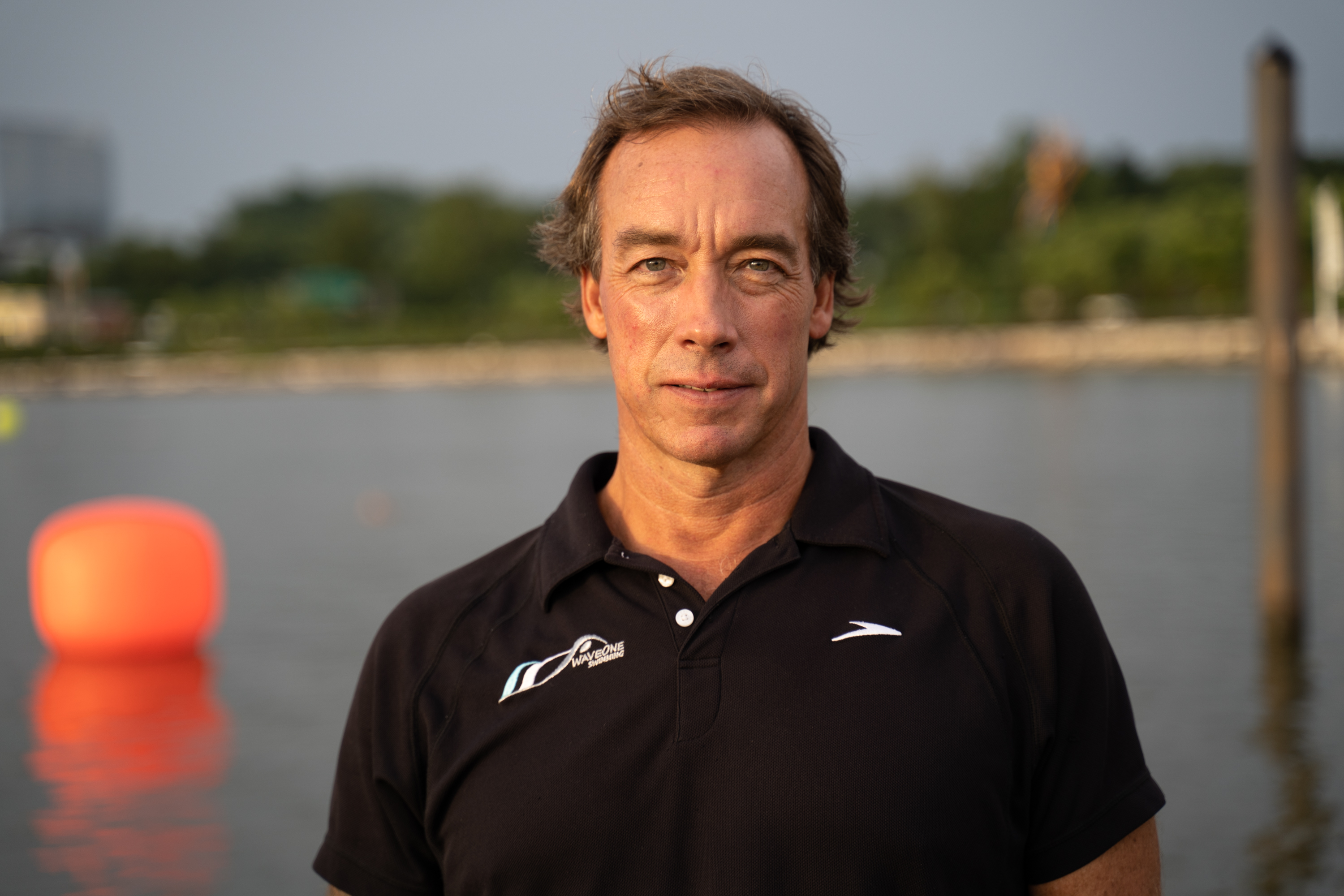
Open water swimmer Denis Crean runs WaveOne swimming.
On a recent evening, a dozen or so swimmers line up on a dock and one by one jump into the Potomac’s light green water.
“I was initially worried about swimming in the Potomac,” says one of the swimmers, Elvert Gardner. “I figured that I was going to jump out of the water and my skin was going to fall off or something like that.”
Gardner is one of the newer swimmers in this weekly swim group, called WaveOne. They swim at National Harbor, about a mile south of the District border. Here in Maryland, it’s legal (though WaveOne had to get permission from National Harbor, since it’s private property).
“The water is actually pretty decent quality,” Gardner says. “I have been in water far nastier than this.”
WaveOne is run by open water swimmer Denis Crean. The group has been swimming in the Potomac for 10 years, and they’ve rarely had to cancel because of water quality.
Crean thinks the river is already swimmable.
“I mean, let’s say probably 350 days out of the year—something like that—it’s swimmable.”
Not according to EPA standards. National Harbor has some of the cleanest water in the area, according to a new weekly water testing program, but in many parts of the Potomac and Anacostia, E. coli levels rise well above what the EPA considers safe for swimming just about any time there’s a heavy rain. Lately, that has been nearly every week.
How A Swimmable Anacostia Could Correct ‘Historical Inequities’

Dennis Chestnut grew up swimming in the Anacostia, and looks forward to doing so again soon.
D.C.’s two rivers are very different bodies of water. The Potomac’s watershed extends all the way into rural West Virginia and Pennsylvania, draining almost 15,000 square miles, much of it forested. The Anacostia watershed, on the other hand, is small—less than 200 square miles—and runs through highly urbanized areas where there are more pollutants, and where nature’s filters—forests—aren’t able to do their work cleaning the water.
While efforts to clean up the Potomac got started in the 1960s, the Anacostia was ignored for decades.
“The opportunity to actually swim in the river is not only a celebration of its health, but also corrects some historical inequities,” says Merrill St. Leger, who worked on the swimming feasibility study on the Anacostia. She points out that during segregation many public pools were off limits to black families. Kids who didn’t have a nearby pool they could use found places to swim in the Anacostia.
Dennis Chestnut was one of those kids. “The Anacostia River, this was where me and my friends would come to cool off on a hot summer day,” says Chestnut, who later in life started the environmental group Groundwork Anacostia River DC.
“We have this great resource right here, and it’s being underutilized in so many ways,” says Chestnut. Now, he believes a swimmable river really is right around the corner.
“I’m 70 years old and I’m still vertical. I think several years from now I’ll be able to go into one of those pools, at least, and swim in the Anacostia again. I’m counting on it.”
This story originally appeared on WAMU.