Adrienne Kramer can’t stand calling restaurants to see if they’ll accommodate her food allergies to soy, peanuts, and cashews.
So her husband, Gottschalk Kramer, usually does it for her.
“She gets really stressed out about it,” he says.
She received her life-altering diagnosis for those allergies four years ago after she had a violent allergic reaction to a soy latte. It means the Kramers can’t just go out to eat on a whim at the D.C. hotspot du jour or at places that would be old standbys for others—at least not without doing extensive research.
“I was so bitter about it forever and it is so very frustrating,” says Adrienne Kramer, 28, who used to be an adventurous eater, and wrote to DCist about where to find allergy-friendly restaurants. “I think I’ve come around, but it’s hard.”
She can do some research in advance about whether a spot is allergy-accommodating, by Googling or using the AllergyEats app. If those turn up empty, Adrienne Kramer dispatches her husband to call the eatery, and he makes a judgment call based on the conversation he has with whoever answers the phone.
If he feels like the person is saying what he wants to hear or isn’t confident about serving his wife, he crosses the restaurant off the list. Sometimes the answer he gets “just sounds like something you’re trying to say to make someone feel comfortable, rather than being educated about it,” says Gottschalk Kramer, 27, who doesn’t have any food allergies.
Kramer and other allergy sufferers want to dine out just like everyone else, and don’t want to be made to feel like they’re a “freak of nature,” says Bart Farrell, vice president of food and beverage at Clyde’s Restaurant Group.
Many D.C. restaurants go beyond separating food stuffs to avoid cross contamination, which is a standard practice, and are getting known for being allergy-friendly.
The super-careful restaurant group
D.C. requires restaurant staff to hold a DC Health-issued food protection managers certificate, a document that’s issued upon successful completion of a food safety course.
Restaurants must also publish customer advisories warning them that consuming raw or undercooked foods may increase the risk of foodborne illnesses. That disclaimer can appear on menus, brochures, placards and through other “effective written means,” according to the D.C. Food Safety and Hygiene Inspection Services Division.
Clyde’s Restaurant Group, which operates 14 eateries in the D.C. area, goes a step further. Earlier this year, the chain was named by AllergyEats, the same resource Adrienne Kramer uses to scout for restaurants, as one of the nation’s five most allergy-friendly small chains.
Farrell, the restaurant group’s vice president of food and beverage, says all chefs and managers are required to take training on the “deadly eight” food allergens through AllerTrain, a company that provides accredited food allergy and gluten-free training to thousands of restaurants, universities, country clubs and others across the country.
Shane Mannix, the restaurant group’s director of training and development, is certified as a master trainer to teach the one-day course to the chefs and managers. At the end, they take an exam they must pass.
Locally, AllerTrain has also trained teams at Sweetgreen, Howard University, Georgetown University, Chevy Chase Club, Woodmont Country Club, Marriott International, and others, says Betsy Craig, AllerTrain’s chief executive officer.
Since the first Clyde’s location opened in 1963, the team has evolved some menu items to be more allergy-conscious. They once removed a cocktail that contained ground pink peppercorns because it could hurt people who are allergic to tree nuts. They’ve replaced peanut and soy oils with canola oil. And they serve a soy sauce that doesn’t contain wheat.
When guests enter one of the group’s restaurants, servers are trained to greet them and ask if they have any allergies or dining restrictions they should be made aware of.
If the guest has an allergy, the server notifies the manager, talks to the chef about dishes that are safe to consume, and discusses it with the patron. Then, when entering the dish at the point of sale, the staffer makes sure to hit the “impactful allergy button.” That tells kitchen staff to make a dish separate from the menu, if necessary. A waiter or manager brings that dish out separately so there’s no possibility of cross contamination, and it’s the only dish he or she handles.
“We don’t want to see anyone writhing around in pain or dying in our restaurant,” Farrell says. “There’s nothing worse for business.”
That’s why Farrell says he told a potential guest who emailed the restaurant group in May not to dine at any of its eateries. That person had maybe six of the eight most common food allergies and Farrell said he could not guarantee the guest’s safety.
“Quite honestly, I don’t know any restaurant that could have accommodated them,” Farrell says.
The restaurant that gets creative with substitutions
Rose’s Luxury, a 6-year-old restaurant that’s drawn luminaries like the Obamas and Gayle King, accommodate any allergy that walks through the door to the best of staffs’ ability, says Rachel Haas-Stow, the restaurant’s general manager.
“Even guests with allergies should be able to come in and enjoy themselves fully,” Haas-Stow says.

If the guest brings up an allergy, the server takes their menu and asks a series of questions designed to tease out the allergy’s severity.
Like, if you were to kiss someone who ate a peanut would you need an EpiPen? Would your throat swell up or would it just get itchy? If the fryer is contaminated and you eat something from the same fryer, what will happen?
For those guests, the chef will mark up a special menu with smiley faces to indicate safe items and frowny faces for dishes that should be avoided.
“It is one more way that we make 100 percent sure that there are no mistakes, no errors,” Haas-Stow says.
But about two or three times a month, the restaurant calls in reinforcements. One time, a surprise vegan guest signed up to do one of their tasting menu dinners, and Rose’s sister restaurant, Pineapple & Pearls, sent over three vegan dishes to help round out the nine-course dinner—a special grilled cucumber dish, green garbanzo falafel, and a coconut dessert. Recently, Rose’s Luxury created a branzino en papillote for Pineapple & Pearls to make sure a guest with special sugar and gluten restrictions had something to eat.
“Our goal at the end of every day is to make guests happy and so what makes people happy is having a full meal, regardless of having whatever dietary restrictions they have,” she says.
The accidental nut-free baker
Yael Krigman, owner of a nut-free and Kosher bakery Baked by Yael, skips the nuts in her baked goods, but not because she’s allergic.
“I just don’t like them—it’s a personal preference,” Krigman says. “When the store opened, people would come in and ask what was nut-free and we said, ‘Well everything’s nut free just because I didn’t put nuts in it.’”
But after starting her company in 2010 and opening its standalone location in 2015, what began as a personal preference ended up becoming a really good business decision. This month, Baked by Yael was also recognized by AllergyEats as one of the top 15 allergy-friendly sweets shops in the country. (Fellow D.C. bakery Sticky Fingers also got a mention.)
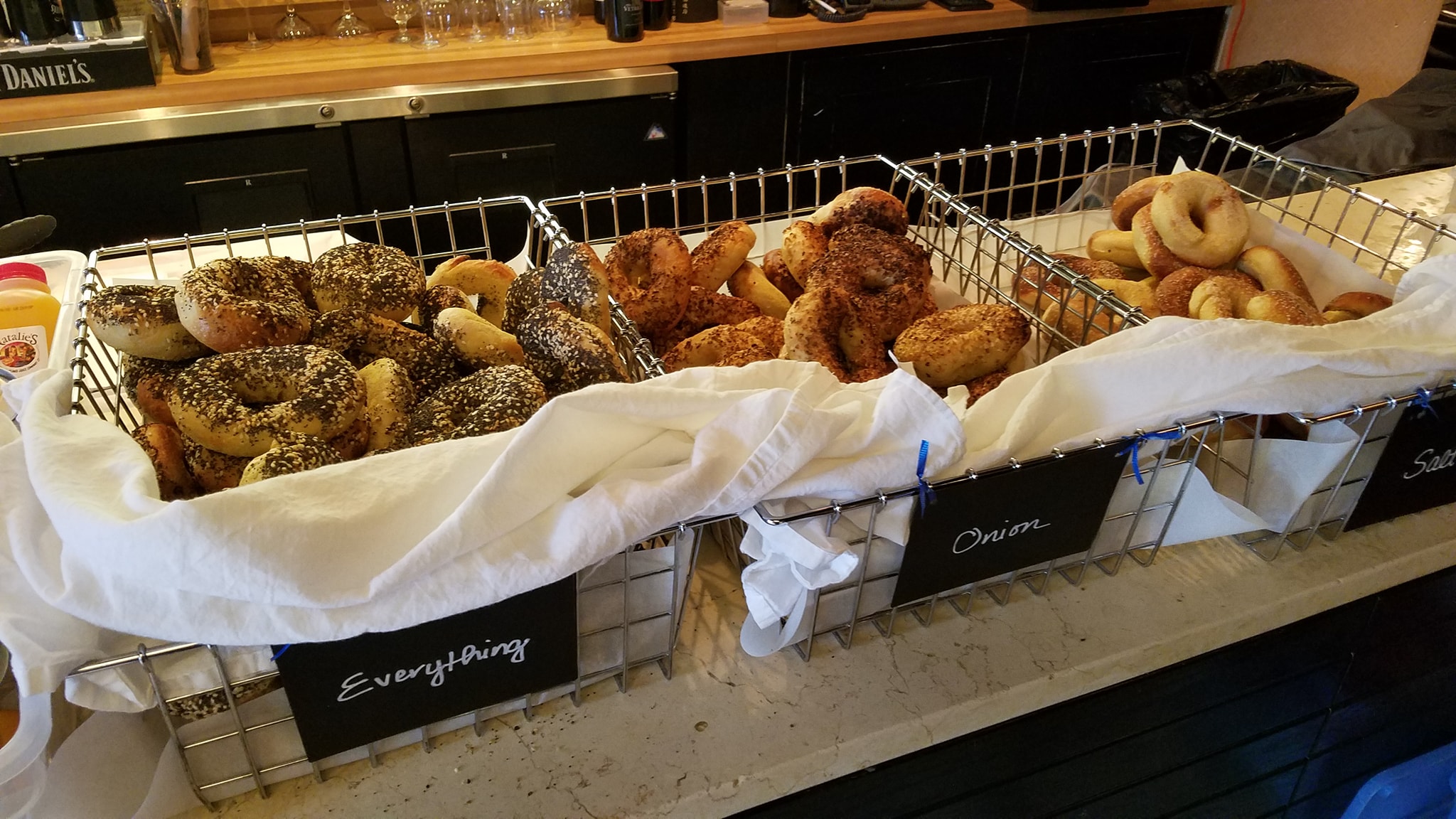
Krigman makes sure all the ingredients her brand uses in its fluffy breads, chewy bagels, or cheeky cake pops aren’t made in shared facilities, and that staff and customers don’t bring anything into the bakery with peanut butter or any nut products. A sign on the door warns potential guests that they can’t enter with uncovered food or drinks.
Situated across the street from the Smithsonian National Zoo, Baked by Yael not only attracts locals, but tourists from all over the world. When she started branding her bakery as nut free, she attracted families with other allergies, like to soy, dairy, gluten, or eggs.
So she makes a variety of products so they can enjoy at least something. There’s a gluten-free cookie bar for customers allergic to gluten and a vegan raspberry bar that’s dairy- and egg-free.
Then she heard from customers allergic to all of those ingredients, plus soy, so she launched gluten-free, vegan and soy-free cookie bars, raspberry bars and chocolate cake pops. For patrons who are particularly sensitive, she also orders No Whey and Enjoy Life snack bars that are produced in allergy-free facilities.
“I literally have had people cry, mothers cry in the store because they are so overwhelmed that their child can come in here—tears of joy,” Krigman says. “My favorite is when the parents say, ‘Honey you can have anything you want.’ When does a parent take their kid into a bakery and tell them they can have anything they want?”
Krigman, formerly an international trade attorney, says she hasn’t had any incidents, but she’s also upfront about the bakery’s products and putting the onus on the customer.
“As a lawyer, of course I’m hesitant to make any promises and don’t make any promises, and at the end of the day, it’s the judgment of parents or the person with the allergy,” Krigman says. “But I feel confident that we’ve done our best to make this a safe place for as many people as possible.”
The gluten-free baker
When Michael Koritko opened his gluten-free Rise Bakery five years ago, he did so with the intention of accommodating people who can’t eat gluten, because he was diagnosed with Celiac disease 15 years ago.
If people with Celiac disease eat gluten—a protein in wheat, rye and barley—it’ll launch an immune response that attacks the small intestine. In Koritko, gluten triggers a headache, mental fog, and drowsiness that last for weeks.
“There weren’t any options like this around and I wanted to make gluten-free food more prevalent in the city because for such a foodie city, I thought it was lagging behind,” Koritko says.
Rise Bakery also offers vegan options, as well as goods devoid of dairy, egg, nuts and soy, and marks them with colored dots for customers. Your options get more complicated if you’ve got multiple allergies: He’s got a blueberry muffin without nuts or soy, but it does have eggs and dairy. Or he’s got a banana nut muffin that’s egg and dairy free, but you can’t eat it if you’re allergic to nuts.
The bakery accommodates special requests, too and supplies its gluten-free bread to restaurants within Clyde’s Group, Little Pearl, and about 100 others.
“We definitely keep busy,” Koritko says.
‘It’s hard to put your trust in people who might not be trained well.’
Ever since Kramer’s diagnosis barred her from soy, she’s found several places to eat.
She’ll grab raw fish from Sushi Para, Satay Club, and Tono Sushi—without soy sauce. She’s also a regular at Clyde’s and Old Ebbitt Grill, Maggiano’s Little Italy, Gordon Biersch Brewery Restaurant, and Bareburger—places she says are safe for her to eat.
“I would always go out and eat whatever I felt like and I would try all kinds of different things before I got these allergies—it’s really sad,” Adrienne Kramer says. “Soy is tasteless and [scentless]. It’s hard to put your trust in people who might not be trained well.”
In a perfect world, her husband Gottschalk Kramer says, “She’d have to worry less and everybody would be better understanding.”
We asked our readers to tell us on Twitter about their favorite allergy friendly spots. Here’s what they said:
- Busboys and Poets
- Zaytinya
- Lincoln
- Taqueria Local
- Ankara Turkish & Mediterranean Restaurant
- Elizabeth’s Gone Raw
- The Smith
This story is part of our food coverage generated by reader questions. Ask your own question below:
This story has been updated with information about the AllergyEats rankings.