Natalie Delgadillo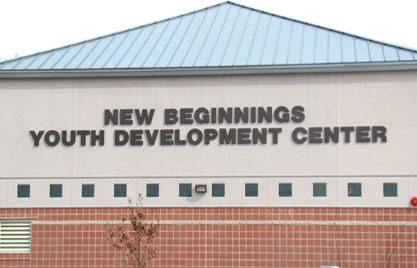

Updated Dec. 1:
Mayor Muriel Bowser announced the end of court oversight of the D.C. Department of Youth Rehabilitation Services on Tuesday. The D.C. Superior Court approved the termination of the case during a virtual hearing before Judge Herbert B. Dixon Jr.
“This milestone reflects our D.C. values and recognizes our collective and ongoing commitment to providing court-involved youth and their families the highest quality of services,” Bowser said in a press release. “We are proud that DYRS has transformed into a national leader in the juvenile justice space, consistently demonstrating that through a focus on restorative justice, love, and empowerment, we can change lives and continuously reimagine how we serve and improve the lives of our young people, their families, and our entire community.”
DYRS director Clinton Lacey called it a “historic moment,” thanking the mayor, D.C. Attorney General Karl Racine’s office, and others.
A new office established by Bowser, the Office of Independent Juvenile Justice Facilities Oversight, will monitor DYRS secure juvenile facilities for three years to make sure that “progress made over the course of the lawsuit” is maintained and improved, per the release.
Updated Oct. 16:
A court-appointed arbiter has recommended an end to court oversight of D.C.’s youth rehabilitation services, marking one of the final steps towards ending decades of court monitoring. Court control over the Department of Youth Rehabilitation Services (DYRS) originally came about because of a class action lawsuit against the city over its treatment of young people charged with crimes.
“This recommendation acknowledges the dedication, hard work, and devotion that the District has to our court-involved youth and the well-being of our entire community,” said D.C. Mayor Muriel Bowser in a press release. “DYRS continues to serve as a national leader in the juvenile justice space, modeling engagement focused on restorative justice and demonstrating every day that our young people and their families are worthy of our compassion, hope, empowerment, and the highest quality of services.”
As a next step, the court will schedule a hearing to dismiss the case.
Original Story:
Thirty-five years after a class action lawsuit resulted in stringent court oversight of the city’s youth rehabilitation services, D.C. is likely to get back full control of the agency in charge of rehabilitating juveniles who commit crimes.
Mayor Muriel Bowser announced Wednesday that the District has finally reached a settlement agreement to terminate court oversight. The agreement still has to be approved by a D.C. Superior Court judge.
D.C.’s Department of Youth and Rehabilitation Services is under partial court control (also called a consent decree) because of a litany of alleged abuses that took place at its old rehabilitation facility, Oak Hill in Laurel, Maryland. In a 1985 class action lawsuit, plaintiffs alleged that the District was violating the constitutional rights of the juveniles under its care.
At its largest, Oak Hill had 208 beds for juveniles across 11 buildings. Staff was reportedly violent and had trouble keeping control. In 1989, investigators found that staff members at the facility beat juveniles with a brick, a knife, a chair, and their fists, according to the Washington Post. The children reportedly had broken teeth and noses, a dislocated shoulder, and kidney injuries resulting from the beatings, per the outlet. There were also reports of sexual assault at the facility, reports USA Today.
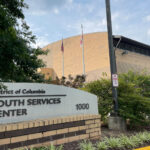
Since the lawsuit, D.C. has instituted a variety of reforms at the agency charged with rehabilitating minors. It closed Oak Hill in 2009, and created the Department of Youth Rehabilitation Services as part of the Office of the Mayor. At its new rehabilitation center, the New Beginnings Youth Center, staff re-engineered its approach, starting with the appearance of the building itself: one young person told WAMU in 2012 that it “look[s] like a little campus or something”—a stark difference from Oak Hill, which he likened to a prison. Still, a 2013 report remained critical of how the agency monitored its charges, particularly young people who were sent to facilities hundreds of miles of way.
“When the suit was first brought about, there were several terms that needed to be addressed in terms of safety and basic human rights,” says DYRS Director Clinton Lacey. Since he became director in 2015, the agency has focused on providing better health care, fire and safety protocols, and bettering data collection around critical incidents, among other things, he says. The care and rehabilitation children receive now is worlds away from even 15 years ago, he says.
“The physical layout and the physical conditions, their rooms, where they sleep, the bathrooms, the showers, the cafeteria. In all aspects D.C. has made a quantum leap over time to improve the state of things in the past to where we are at this point,” according to Lacey.
Five years ago, in 2015, the D.C. Superior Court approved a partial settlement in the suit, which reduced court oversight of DYRS. The new agreement terminates the oversight and allows DYRS to function entirely independently.
Lacey says that families can expect for the changes the agency has undergone over the last 35 years to sustain themselves over time, court oversight or not. The agency has a guiding philosophy that he says is unusual in criminal justice spaces, one that he says will be sustained over time.
“That concept is love. And by that we mean commitment and care and very close attention to the needs of our young people,” he says. “Seeing them not as [what they’ve done] but as children worthy of the opportunity to heal and be restored.”