 Mikaela Lefrak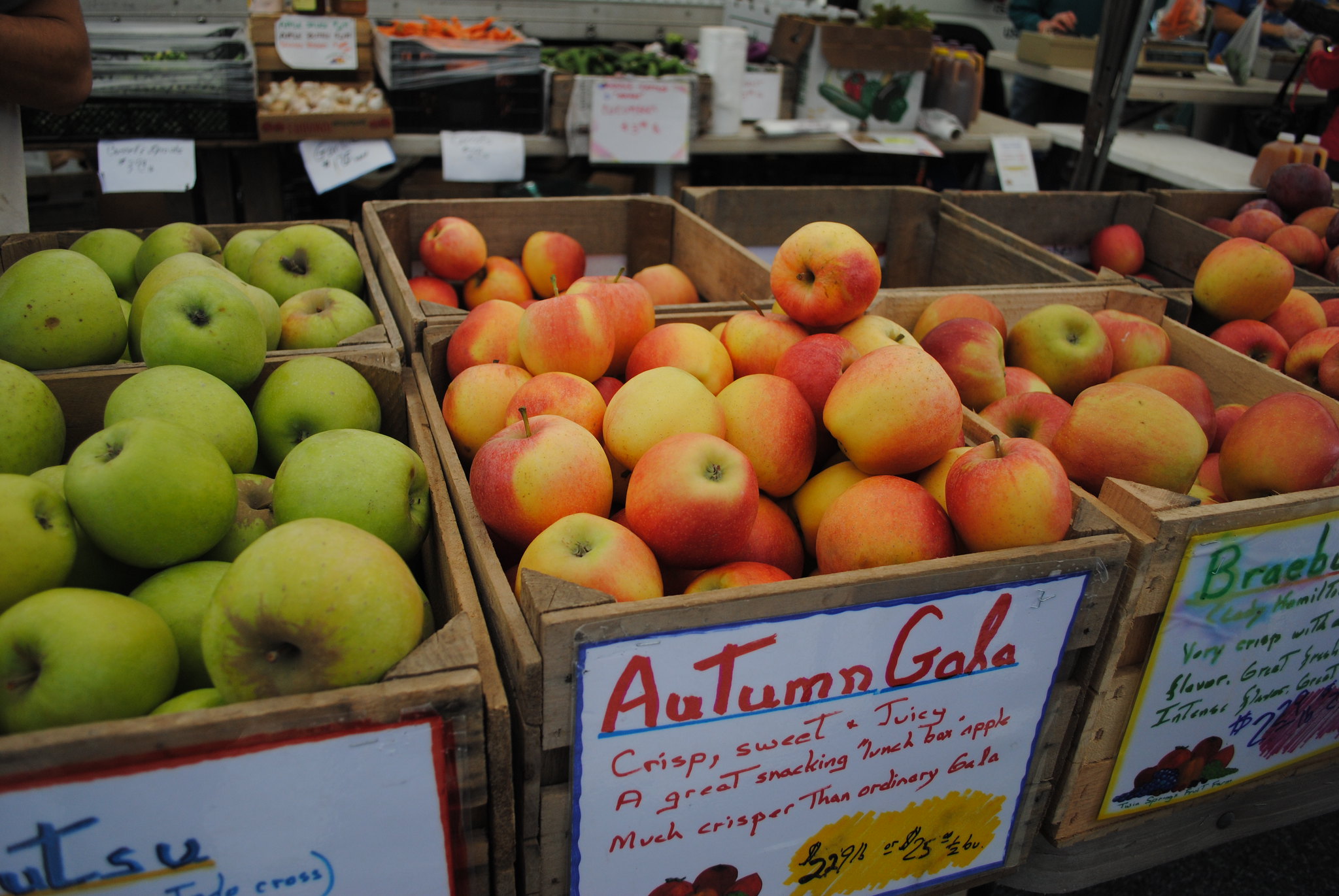
Caitlin Roberts is an expert at selling pickles. In the past two weeks, she’s also become an expert at running a home delivery service that involves six trucks and 500 customers across two states and the District.
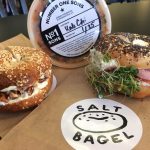
Roberts and her brother Yi Wah co-own Number 1 Sons, a pickling and fermenting company in Northeast D.C. that’s a staple at local farmers markets. Those markets are allowed to remain open, but profits from markets and restaurants have dropped drastically as people practice social distancing. Roberts and other vendors have had to reinvent themselves so they can serve customers—and survive as businesses—during the coronavirus pandemic.
Food vendors like Roberts are experimenting with a wide range of new business strategies. Some farmers have begun developing social media presences to grow their online sales, and small businesses have banded together to offer home delivery for vegetables, bread, and pantry staples.
“We pivoted really hard,” Roberts says. “We’re getting real scrappy.”
Door-To-Door Bread Delivery

Rick Cook’s bread babies.
Rick Cook works at 2Amys Neopolitan Pizza in Northwest D.C. (that is, until it closed today in response to the pandemic).
Over the past week, he’s been building up a side hustle: A home delivery service for his homemade organic sourdough bread. He sells the loaves for $9 apiece to customers willing to pre-pay for a 4- or 8-week subscription.
“I was expecting maybe five, six, seven people, and now I’m flooded with subscriptions through June,” he says. “It’s kind of overwhelming.”
Now that the restaurant is shut down, Cook is thinking of starting a second round of baking every week to whittle away his 20-person waitlist.
There’s Always Money In The Hot Dog Stand
Attman’s Deli in Cabin John, Md., lost $12,000 in catering bookings in 24 hours last week. They also had to shut down their restaurant and lay off 12 of their 28 employees.
Then general manager Sam Lerner had an idea. He took the hot dog cart they typically used for catering events and set it up outside the restaurant. Hot dogs go for $3.50, and the cart’s giant umbrella signals to potential customers that the restaurant is still open, too — for carryout.
“I’m not going to say we’re making money, but we’re not losing money,” Lerner says.
The deli also started selling toilet paper for $0.99 a roll at checkout. They eat the cost of the toilet paper and put all the proceeds and tips toward a fund for the deli’s laid-off workers.
Many other local brick-and-mortar restaurants have pivoted to carryout and delivery services in the wake of official orders to end dine-in service, too. D.C. also passed emergency legislation to enable many of them to sell alcohol to-go. Breweries and distilleries have started offering home delivery services as well.
[To see which area restaurants are offering delivery services, click here.]
Farmers And Vendors, Unite!

A sign from a Number 1 Sons delivery customer.
Number 1 Sons’ home delivery service started as a way to sell to customers who didn’t want to go to crowded markets during the outbreak.
The shift was difficult: Not only did Caitlin Roberts’ staff have to figure out multiple new apps and software within a short period of time, but they also lost the sense of community connection that made up the heart of their business.
But the home delivery system took off quickly. Customers requested more products, and Roberts’ fellow farmers market vendors began asking for help with distribution.
Not having a distribution or social media network in place can be a serious impediment to vendors who want to sell during this time. Farmers without marketing experience have been struggling to keep their sales up, says Molly Scalise, communications and outreach director at FRESHFARM, which runs popular farmers markets in D.C., Maryland, and Virginia. “A lot of our farmers may only have a Facebook page, or they may not have an online ordering platform,” she says.
[For a full list of shopping alternatives from FRESHFARM-affiliated vendors, click here.]
Roberts and her team struck deals with a number of farmers to sell and deliver their products. Their trucks deliver three days a week to homes within 15 miles of Ivy City, D.C., the site of Number 1 Sons’ pickling factory.
The business has been so successful that Roberts says they might keep it up after the pandemic is over. Even so, she can’t wait to return to a time when she can interact with her customers face-to-face.
One of her drivers recently sent her a picture of a father and son waving from their doorway. It made Roberts choke up.
“We just aren’t getting any connection, and we’re used to connecting with thousands of customers every week,” she says. Seeing that picture “was pretty magical,” she says.
This story originally appeared on WAMU.