Margaret Barthel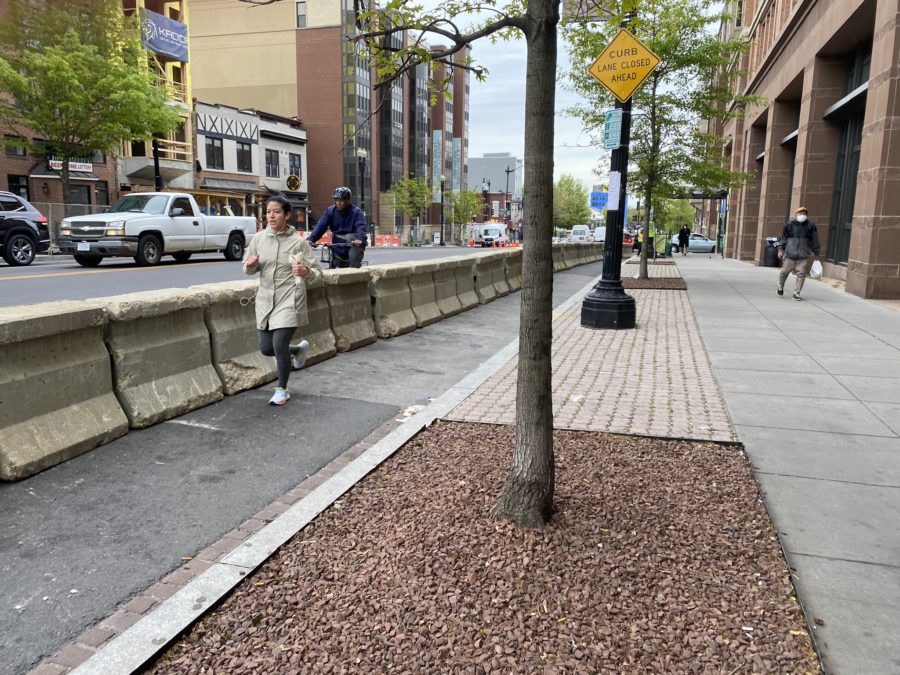
The District’s ReOpen DC task force announced recommendations today to restart the economy as the growing rate of cases begins to slow. The plan includes details on D.C.’s vision for gradually returning the workforce, small businesses, arts and entertainment, and transportation and infrastructure to normal.
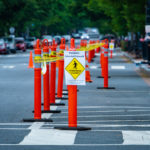
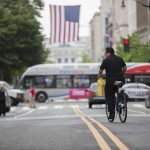
Advocates and some District leaders are frustrated that there are few concrete plans to make streets friendlier to pedestrians and cyclists — like expanding sidewalks, lowering speed limits, opening lanes of traffic to pedestrians and cyclists, and closing off some streets entirely — in the mix. Such plans, they argue, would help promote social distancing, and in the long term could make it easier for residents to walk, bike, and scoot instead of driving cars.
Some D.C. councilmembers think the ReOpen DC recommendations don’t go far enough, though the report does mention expanding sidewalks, and points to the need to identify streets for full closure and bolster the District’s bike lane network.
Councilmember Mary Cheh (D-Ward 3), who chairs the council’s Transportation and Environment Committee, says she hoped the District would release a street-by-street plan.
“You get a map. You put the maps down on the table and you say, ‘Look, here’s where we’re going to have all of these protected lanes,’” she says. “‘Here’s what we’re gonna do. And here’s the rapid pace at which we’re going to do it.’ I mean, I don’t think that that’s so hard.”
The District Department of Transportation, which oversees and implements street projects, has not responded to DCist’s request for comment on the ReOpen DC recommendations and specific plans to open streets.
On Twitter, Councilmember Brianne Nadeau (D-Ward 1) linked to her own map envisioning what repurposing streets in Ward 1 might look like. On the map, major arteries and collector roads are reduced to single travel lanes, and in some cases one-way traffic, and all side streets are open to local traffic only.
“I’m glad the ReOpen DC report suggests repurposing streets and public space to respond to this crisis,” Nadeau tweeted. “But this can’t just be for businesses, and can’t just be filed under ‘other.’”
References to expanding pedestrian and cyclist access to streets do come under a header called “Other Recommendations and Big Ideas,” in the transportation and infrastructure section of the ReOpen DC report. They include:
- Identify select streets to close off to cars and convert to outdoor seating and retail space
- Establish expanded sidewalks through travel lane conversion on bridges to promote physical distancing, especially Anacostia River crossings (Sousa, East Capital, Frederick Douglass, and Benning Road Bridges
- Re-program curbside lanes for e-scooter/bike lanes along major corridors
- Convert existing on-street “bicycle route” system to shared street network with rapid implementation of signage, barriers and traffic calming with a target speed of 10 mph – Reduce speed on local arteries from 25 mph to 20 mph to protect more people walking in streets due to physical distancing
Last week, Nadeau, Cheh, and Councilmember Charles Allen (D-Ward 6) wrote a letter to the Bowser Administration urging action to open streets.
In the letter, the councilmembers said they would support legislation to require the District’s Department of Transportation (DDOT) to set up an application process for D.C. residents to request road or lane closures, if DDOT does not act independently. The legislation was set to be considered this week as part of an amendment to the Coronavirus Support Congressional Review Emergency Amendment Act, but it did not ultimately move forward.
D.C. selectively expanded sidewalks last month around essential businesses to allow patrons to follow social distancing guidelines. The Cleveland Park service lane, for example, was closed to cars and opened to pedestrians, an “early success,” for opening streets, says Cheryl Cort, of the transportation advocacy group Coalition for Smarter Growth.
“Safe outdoor space is in high demand, and that means we need to supply it,” she says.
Nearly a year ago, the District hosted its first Open Streets event, closing several miles of Georgia Avenue to traffic for a day to promote transportation safety and help communities envision new ways to use streets.
Mayor Bowser has been skeptical of opening streets to pedestrians, citing worries that more pedestrian space will result in a street festival-like atmosphere. She’s not alone: officials in Los Angeles have also been reticent to open streets for the same reason.
Cort describes a “groundswell” of support for the open streets concept, and says she was encouraged that the idea appeared in the ReOpen DC plan. But, she says, the District is lagging behind many other major American cities in re-purposing streets for people and bikes during the pandemic. New York, for instance, has opened 100 miles of streets for people to use. Oakland, Calif., is shifting 74 miles to make way for people. Seattle permanently closed 20 miles of streets to most vehicles.
Cheh thinks opening streets for social distancing will put D.C. on track to be a greener, more pedestrian- and bike-friendly place, even after the pandemic.
“[This is a] once-in-a-lifetime opportunity to think through how we do transportation, how we get around,” she says. “And we should seize it. We should seize it right now.”
Jordan Pascale contributed reporting.