Matt Blitz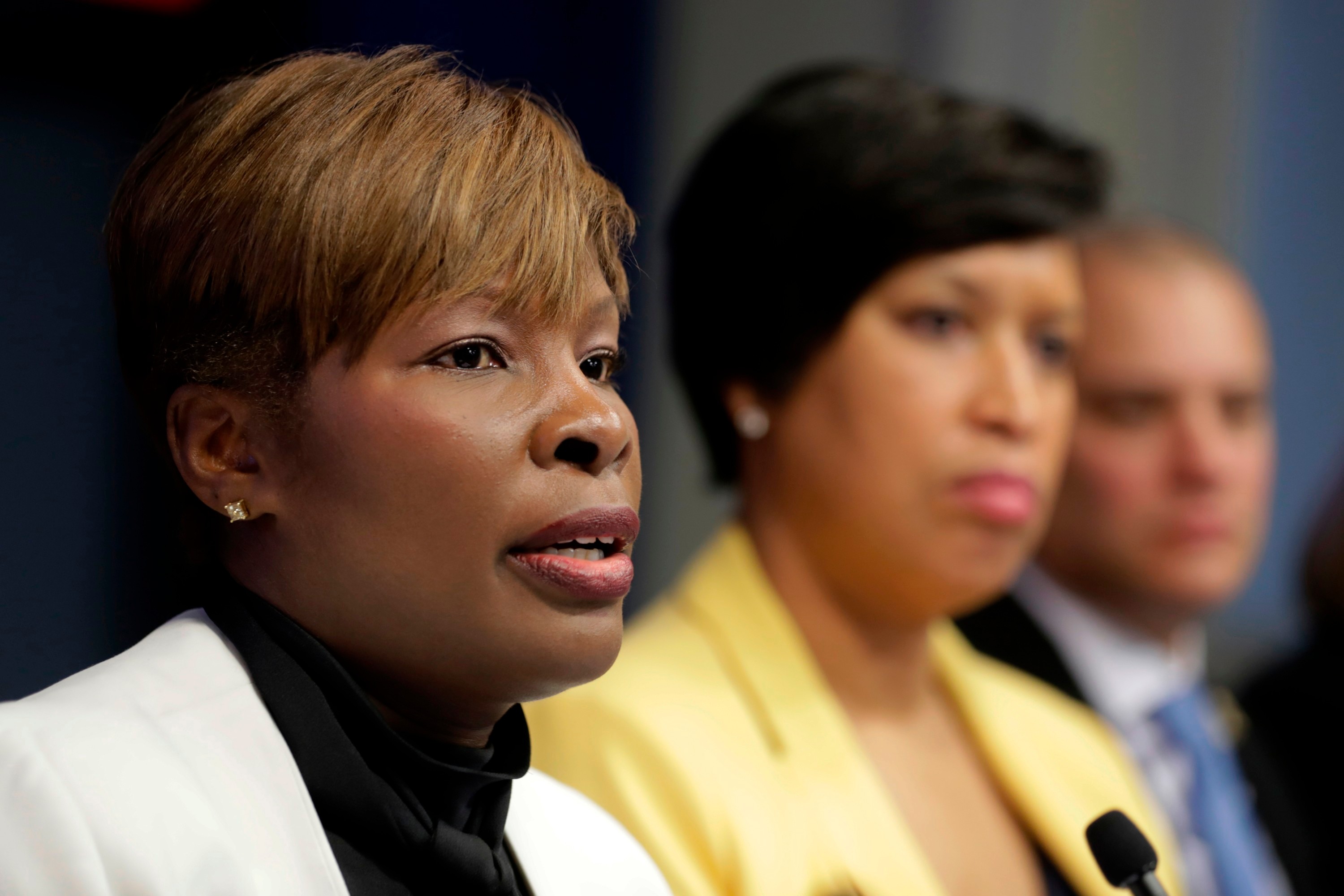
On Monday, D.C. Health Director Dr. LaQuandra Nesbitt said at a press conference that, so far, no observable coronavirus peak or spike can be attributed to the widespread protests that have been happening across the region (and country) since the end of May.
“We have not seen or heard our new cases report their exposure being associated with mass gatherings,” Nesbitt said at a press conference Monday morning. “That being said … we continue to have mass gatherings so that doesn’t allow us to exclude mass gatherings as a … potential source for exposure.”
Nesbitt said it can take up to 20 days for changes in community conditions to be accurately reflected in the data. It’s now been about 30 days since the largest of the mass gatherings in the District and the data does not show a jump in relation to them, says Nesbitt.
There was understandable concern from local officials and public health experts that thousands coming together in mass gatherings to protest the murder of George Floyd could lead to a surge in coronavirus cases. Many protesters knew the risks but took to the streets anyway with the country in “midst of two public health crises.”
Bowser urged all those who did protest to get a test. While testing numbers have increased in D.C. since the beginning of June, challenges existed in meeting these testing needs and getting results back in a timely fashion both in D.C. and elsewhere in the region.
As for what is contributing to potential exposure and positive coronavirus tests, Nesbitt says it’s continuing to be “household contacts,” and “essential activities,” as well as “other activities that are coming online.”
D.C. is currently in Phase Two, meaning residents can gather in groups up to 50 and restaurants and nonessential businesses can allow customers inside up to 50% capacity.
There’s currently no timeline for when the city will enter in Phase Three, despite surrounding jurisdictions moving forward in the last several weeks.