 Aja Beckham
 Dee Dwyer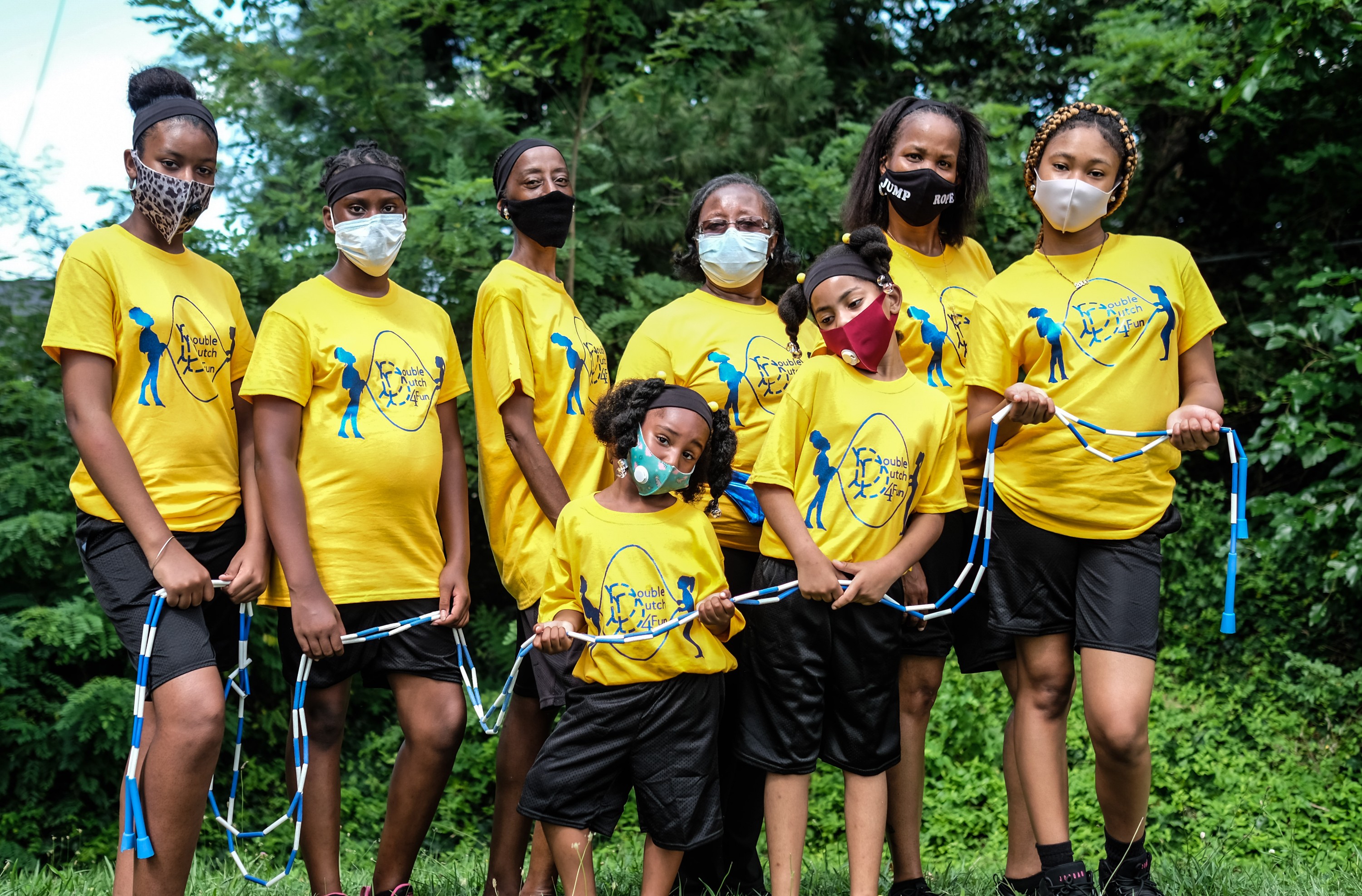
D.C.’s pandemic-related restrictions mean that this summer looks different than in years past: Gatherings are limited to 50 people or less. Spray parks and pools run by the D.C. Department of Parks and Recreation are closed. Children older than 2 are required to wear a mask outdoors.
Still, many youths are struggling to manage the isolation brought on by COVID-19 and yearn for chances to be outside and regain a sense of normalcy. So some adults in wards 7 and 8—who spent their childhoods playing games in yards and on playgrounds—are now striving to create memorable summer experiences for kids, even as their communities have been disproportionately impacted by the pandemic.
DCist talked with three youth extracurricular groups in wards 7 and 8 that are meeting in-person during the pandemic about how they’ve adjusted their offerings to allow participants to have fun, while also keeping them safe.
Indy.B
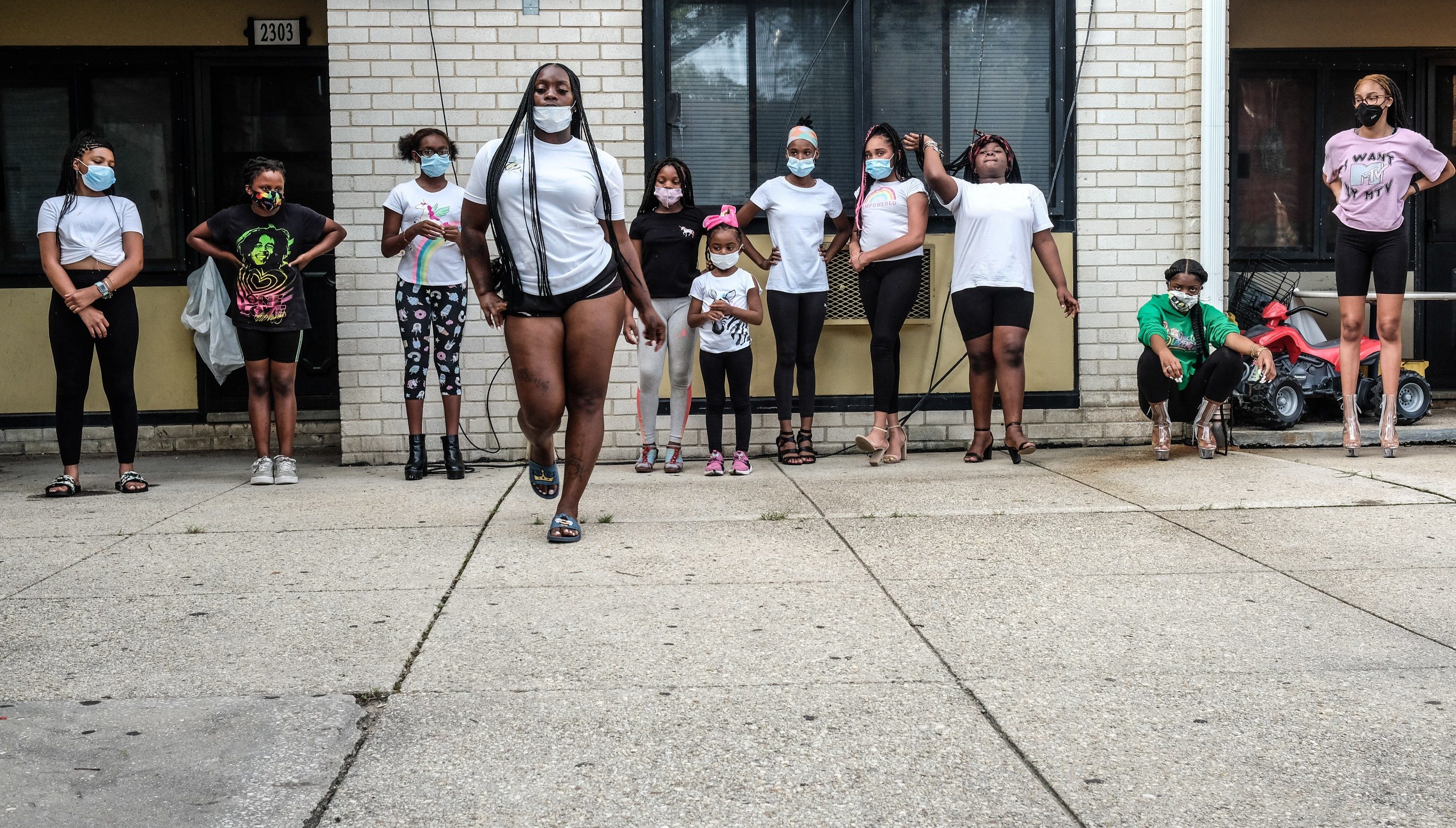
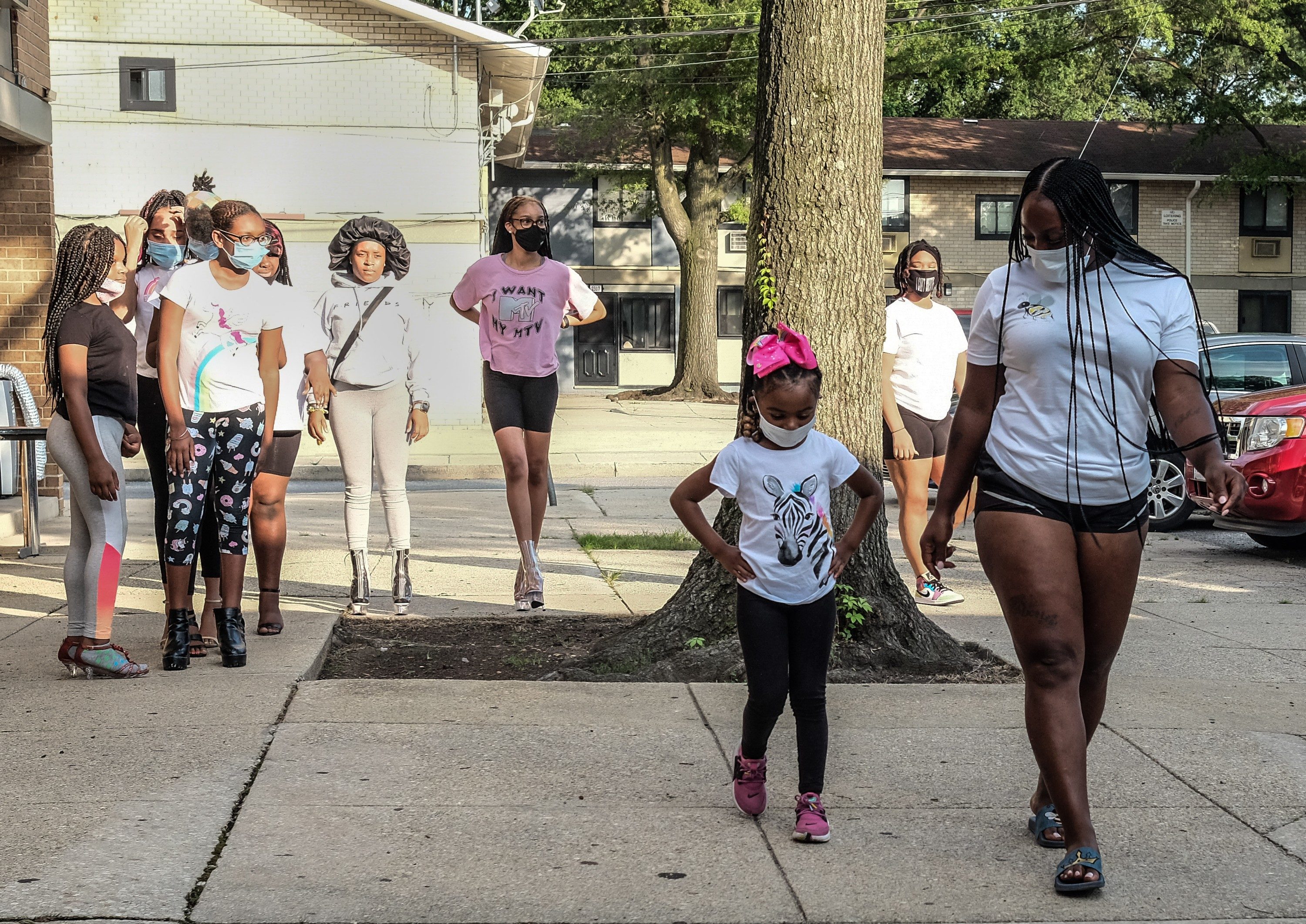
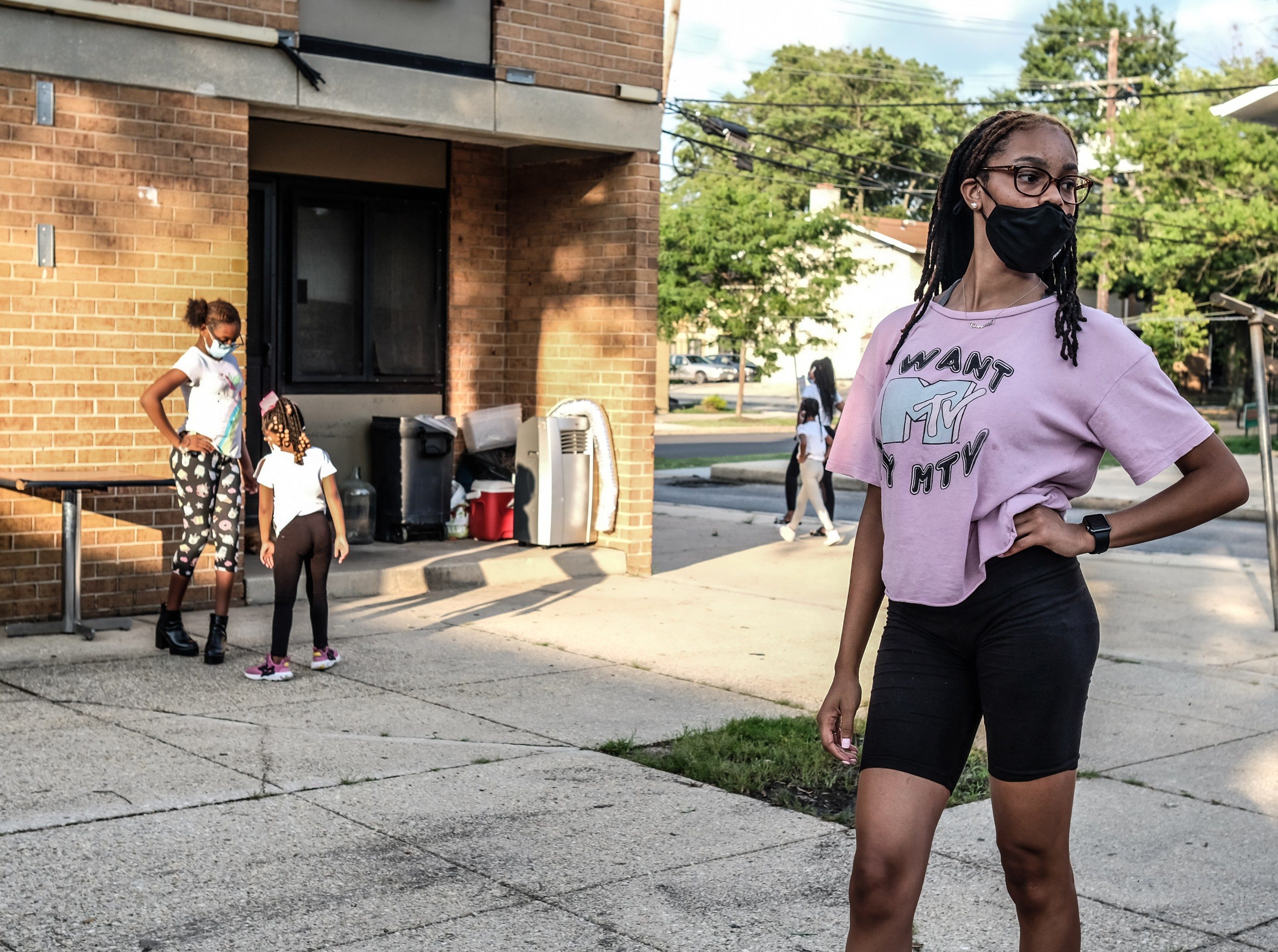
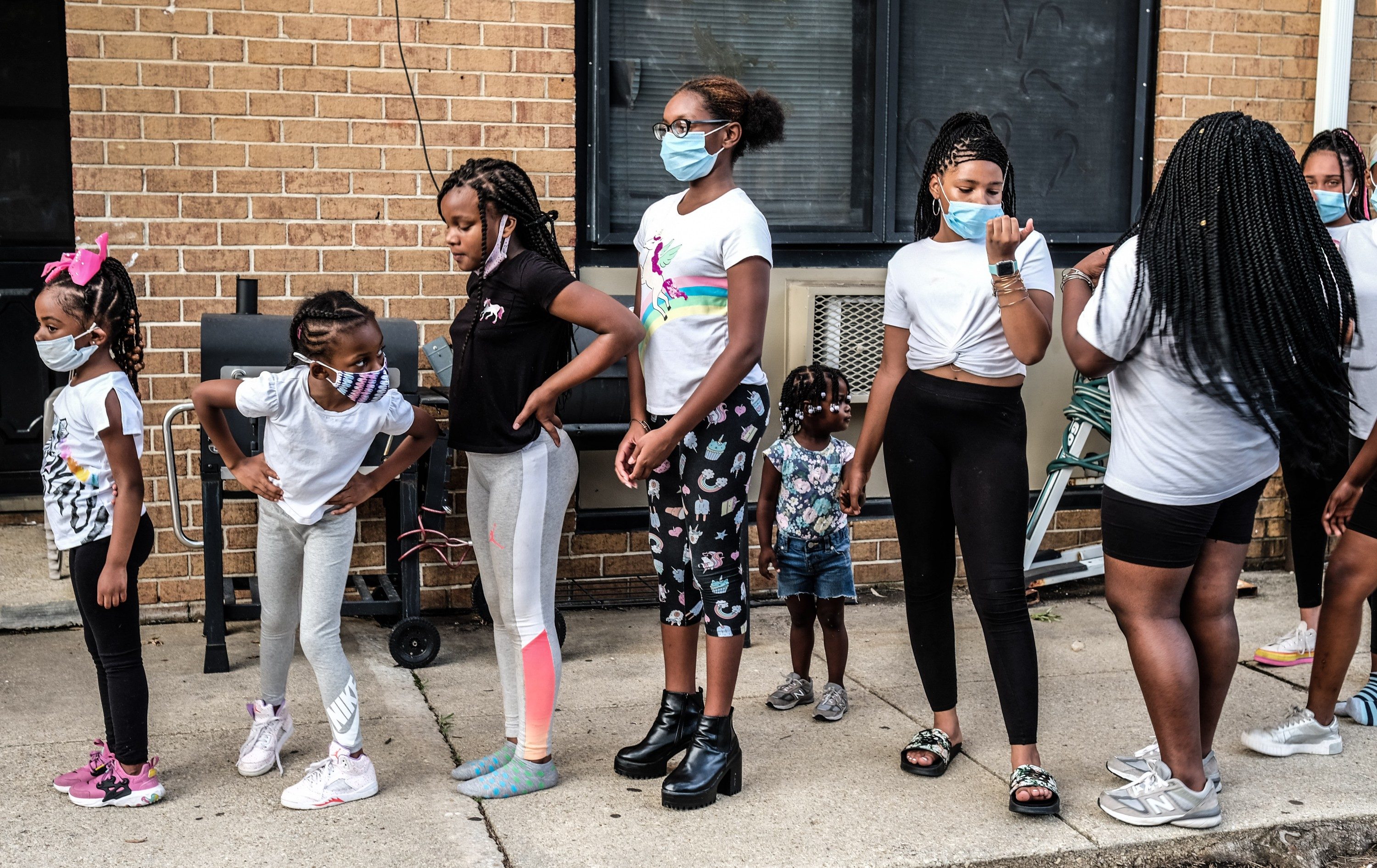
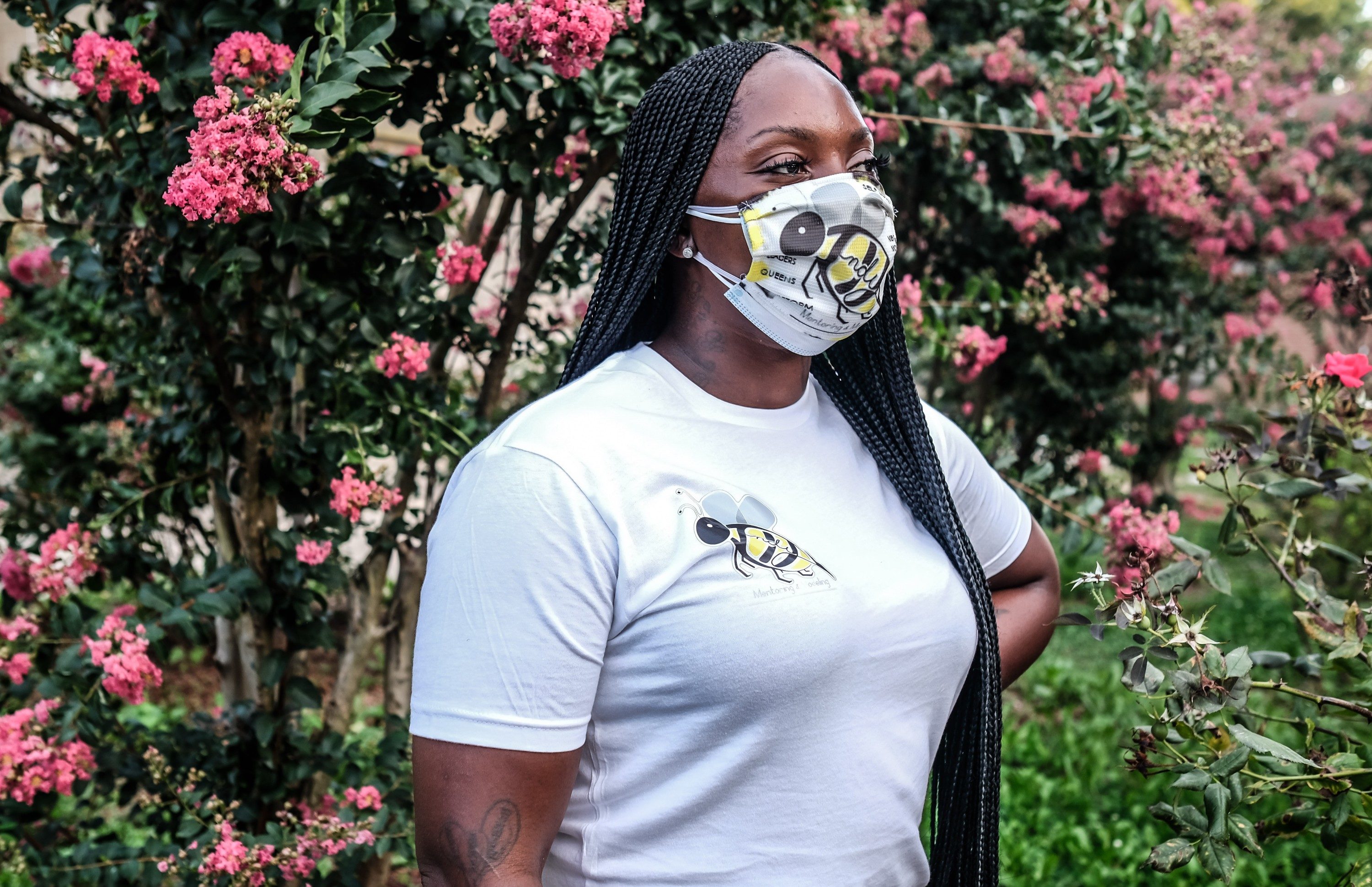
India Blocker-Ford, the founder of Indy.B, a modeling and mentoring program for girls from Ward 8, says that when the pandemic hit, “I had to meet with all of my girls’ parents via conference call and let them know life has changed and things are different.”
Indy.B in-person meetings—which had been happening three times a week—temporarily paused in March due COVID. Blocker-Ford pivoted and added a component to Indy.B, an entrepreneurship program where the girls learn how to build their own business. The program is held twice a week via Zoom, where Indy.B girls ages 7 through 21 were able to work towards building their own business. Girls created wrist and ankle bracelets, lip gloss, dolls, and t-shirts, says Blocker-Ford. She plans to surprise Indy.B models with a pop-up shop where the community can come purchase the girls’ products.
“I gained more participants during COVID. I had so many people to reach out to me through the Indy.B website and fill out the forms saying, ‘Hey, my kid wants to be a part of this,’” says Blocker-Ford. (Typically, Indy.B costs $20 per month in dues, which goes towards food and drinks for the participants, but during the pandemic, no payment is required.)
Blocker-Ford says she began the program because she wanted girls, including her own three daughters, to have activities tin their community She remembers how, as a kid, she had to go outside of Ward 8 for extracurricular activities like cheerleading and track because we didn’t have it in the neighborhood.
“The kids need something else better to do other than see their friends dying, seeing fights every day, and just come outside to broken playgrounds,” says Blocker-Ford. “I give them something to look forward to,” says Blocker-Ford.
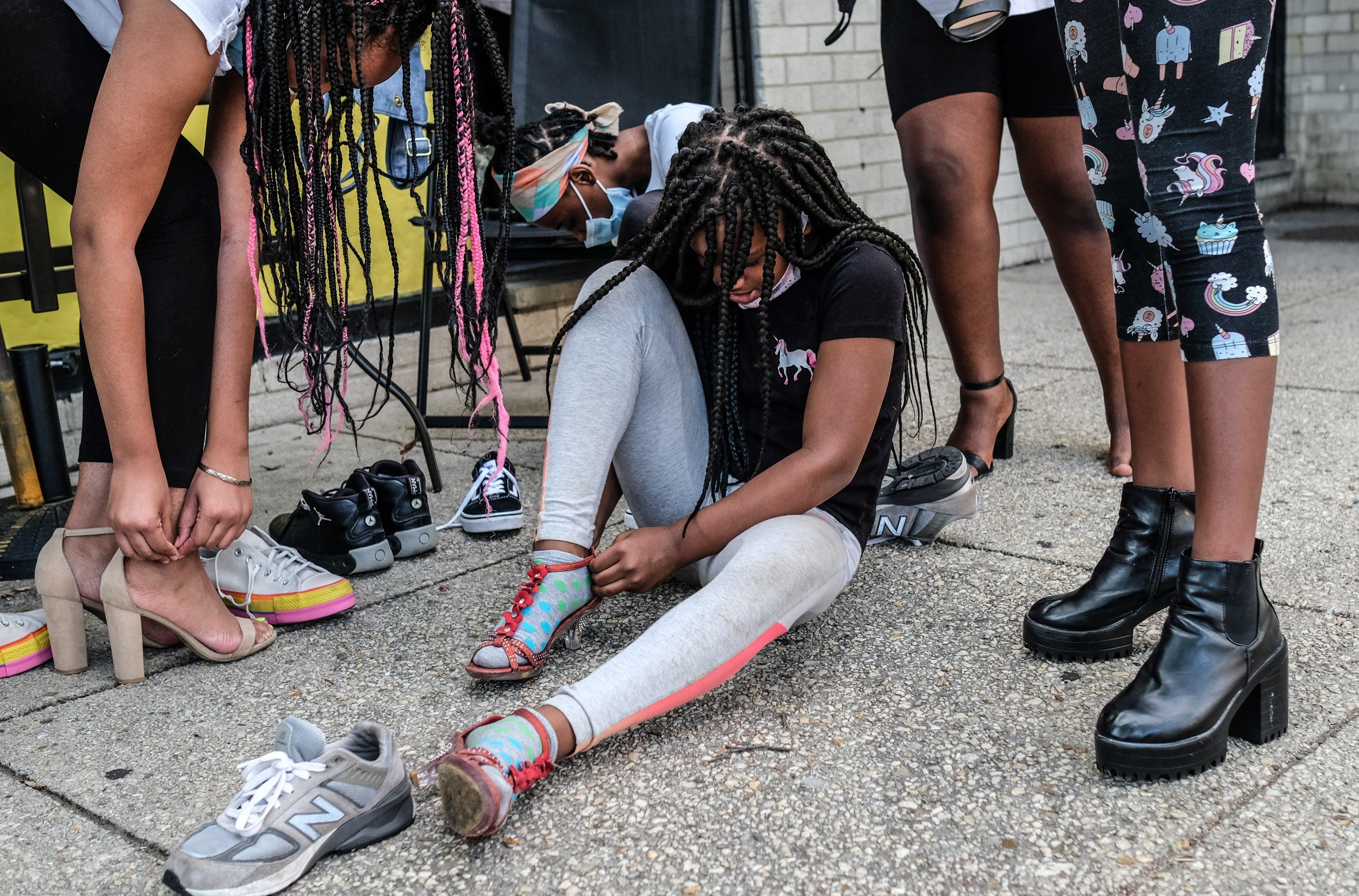
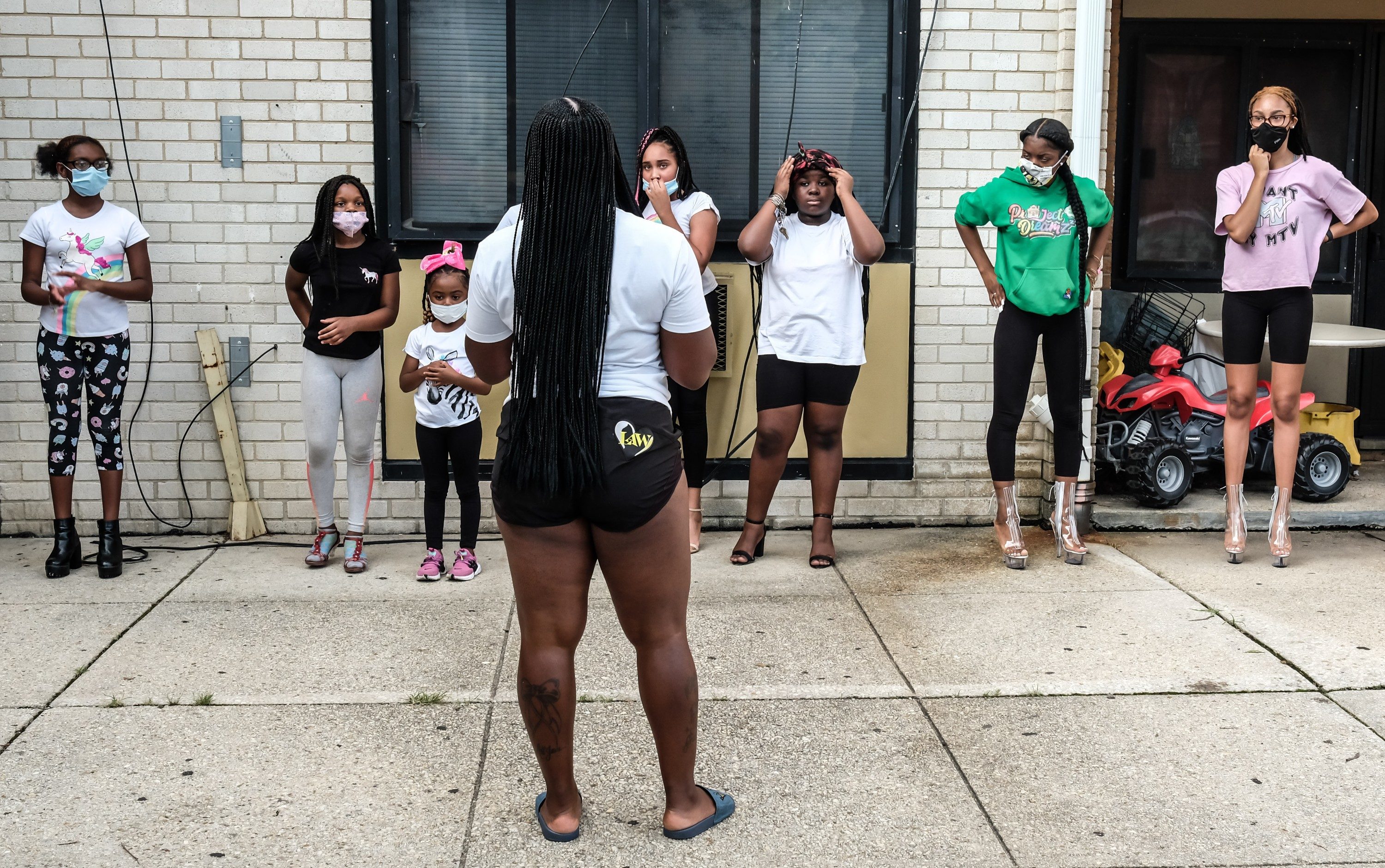
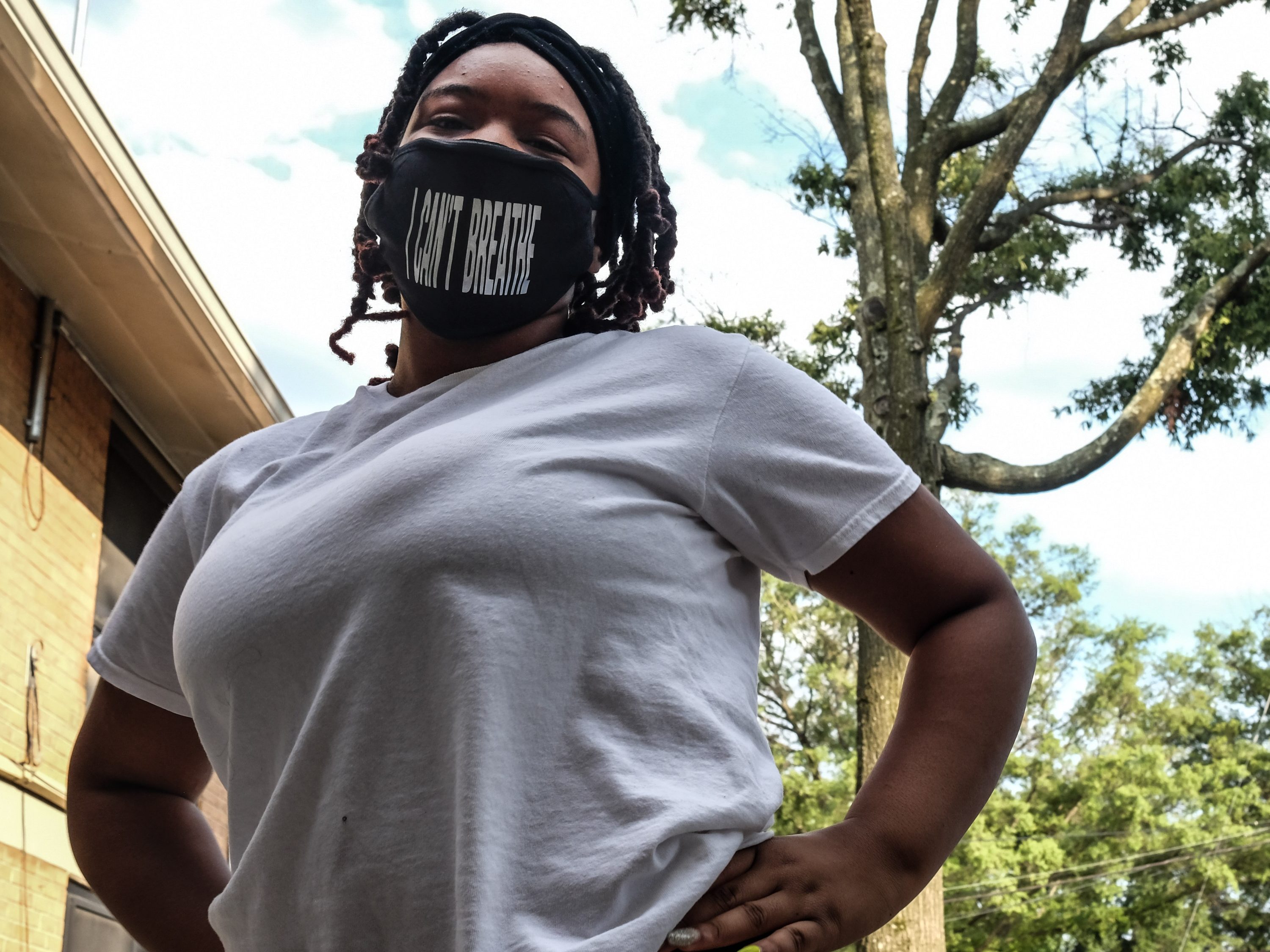
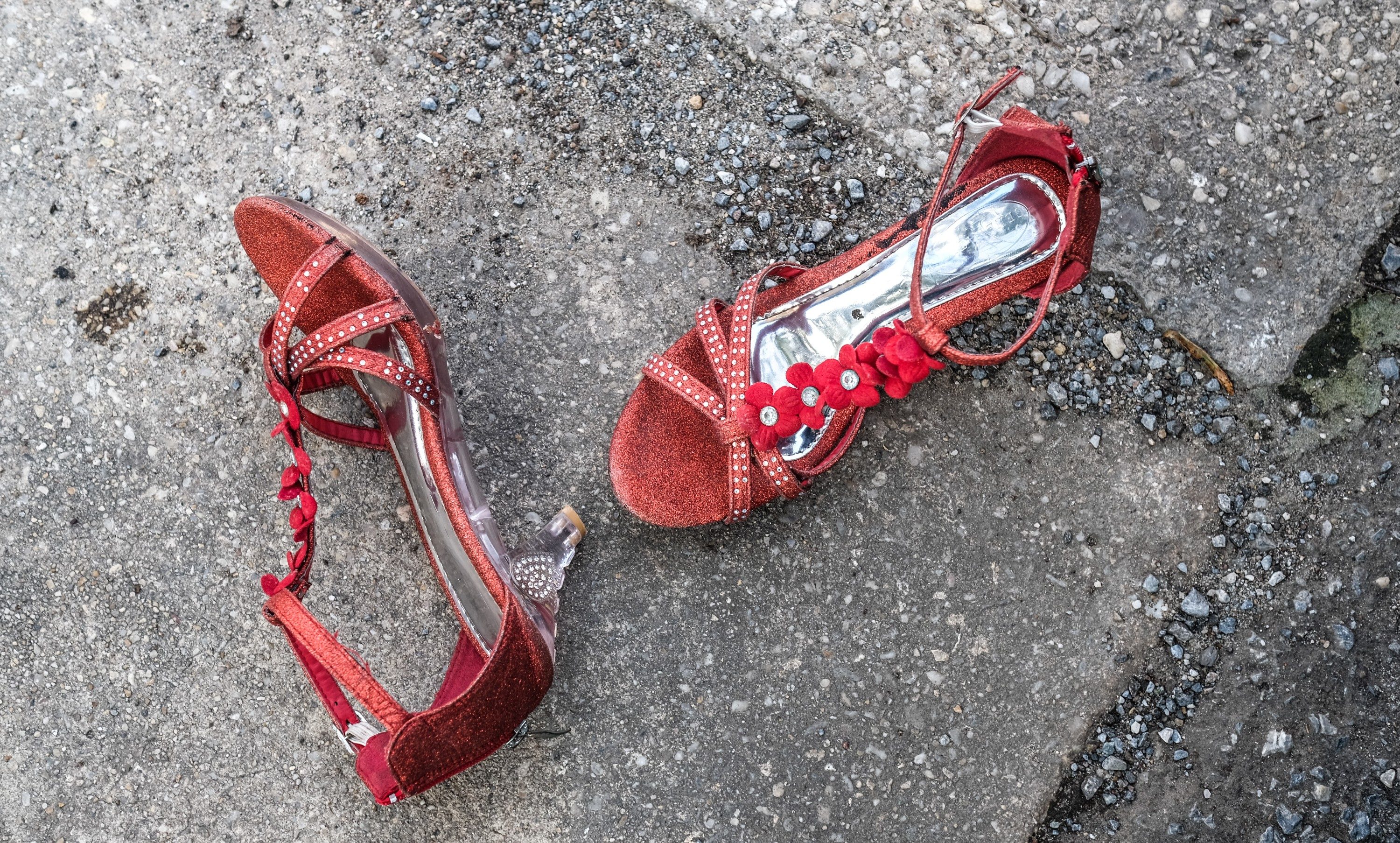
On August 5, Indy.B models ages 3 through 19 came together in-person to meet for the first time since March to practice their model walk outside of Blocker-Ford’s Ward 8 home. The community became the girls’ runway.
Parents sat together socially distant on patio chairs, encouraging the girls to walk with confidence, as Blocker-Ford cued the opening song, Heard You Wanna Walk Like Me by Miss Jay Kuran. She coached the girls on walk, posture, stance, turns, and facial expressions—especially in their eyes, as the girls wore masks.
Vernetta Simmons, the mother of 13-year-old Anaijah Chambers, says that her child “has a sisterhood with Indy.B. She’s in the house all the time with nothing to do due to school closure. She watches a lot of TV. Her sleeping pattern is all the way off, so we’re out here today trying to get them back on track.” Some girls ran towards their friends when they arrived.
“It’s hard for me not to see my friends at school,” says Ski’Yonna Jones, 9. “Every night, I cry. I’m really excited to be out here right now with everyone.”
The program also has a mentorship component.
Here’s how college student Folashade’ Priester, 19, describes her experience mentoring the younger girls: “I get their head straight. Like some of the girls say, ‘I want to quit’ because it’s a challenge to show confidence while developing yourself. I tell them, ‘No, don’t quit. Of course, we are going to be kind of tough on you because we want you to be great at what you are. So don’t give up on yourself.’ I really love these girls, they are like my sisters.”
STAND Foundation
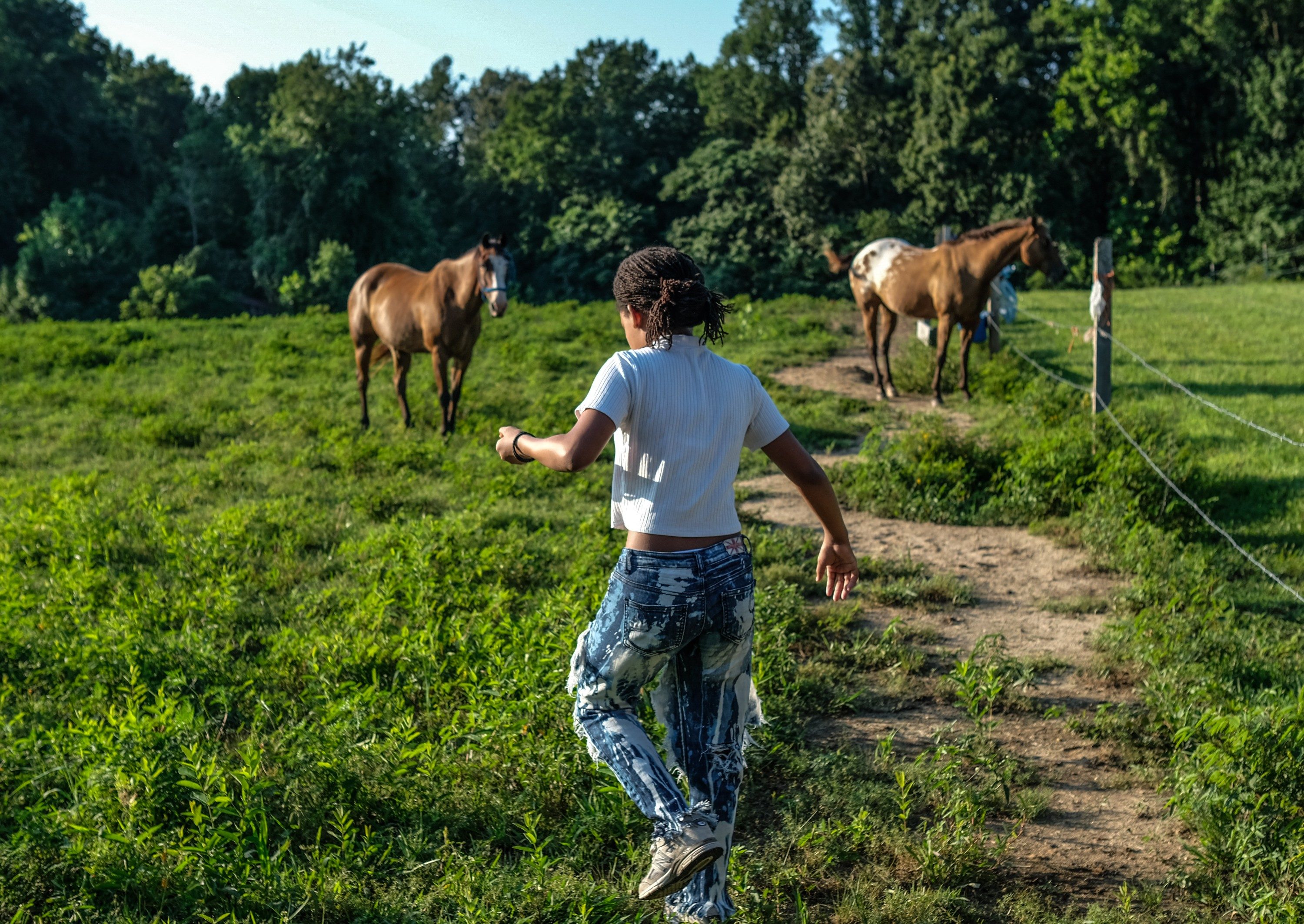
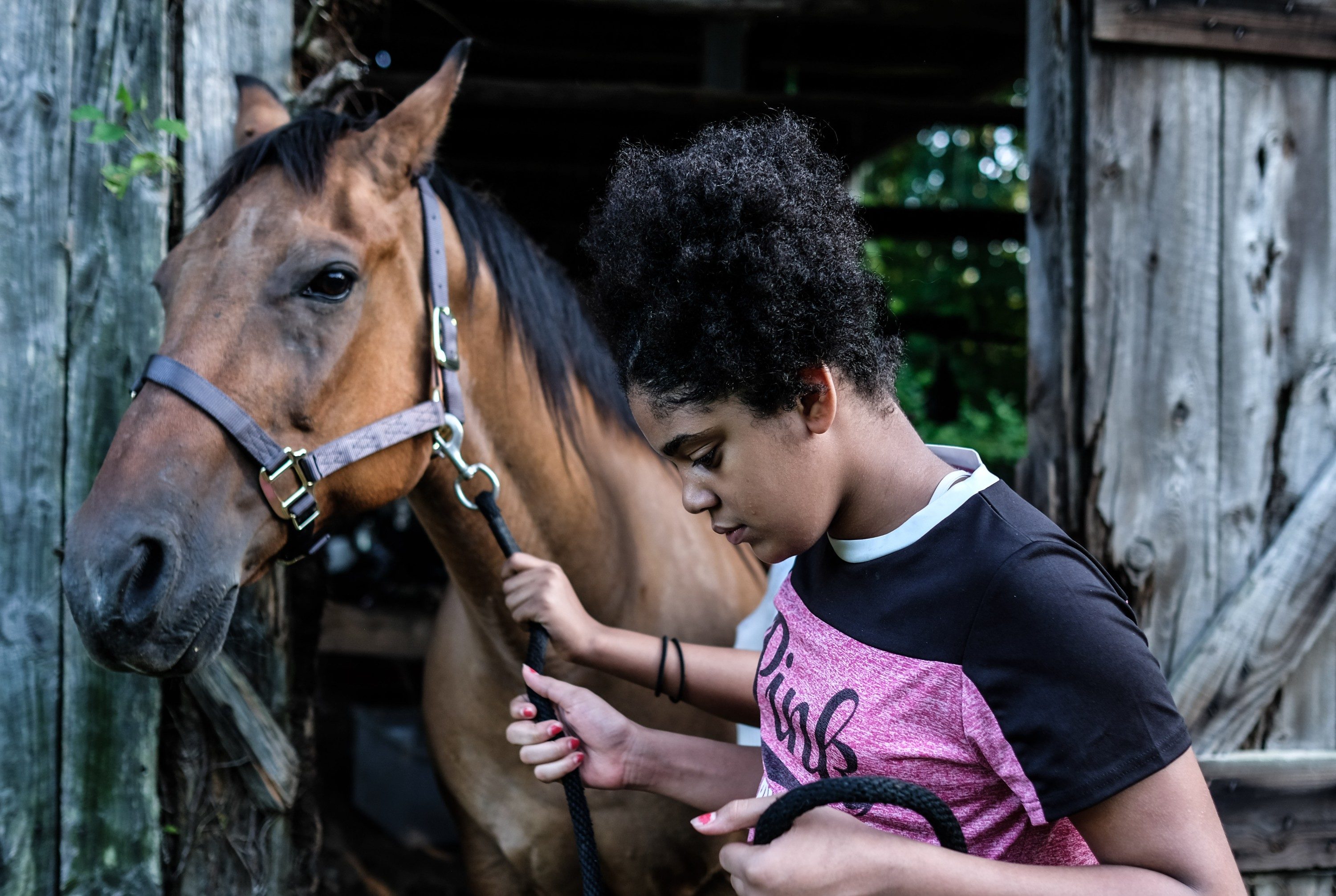
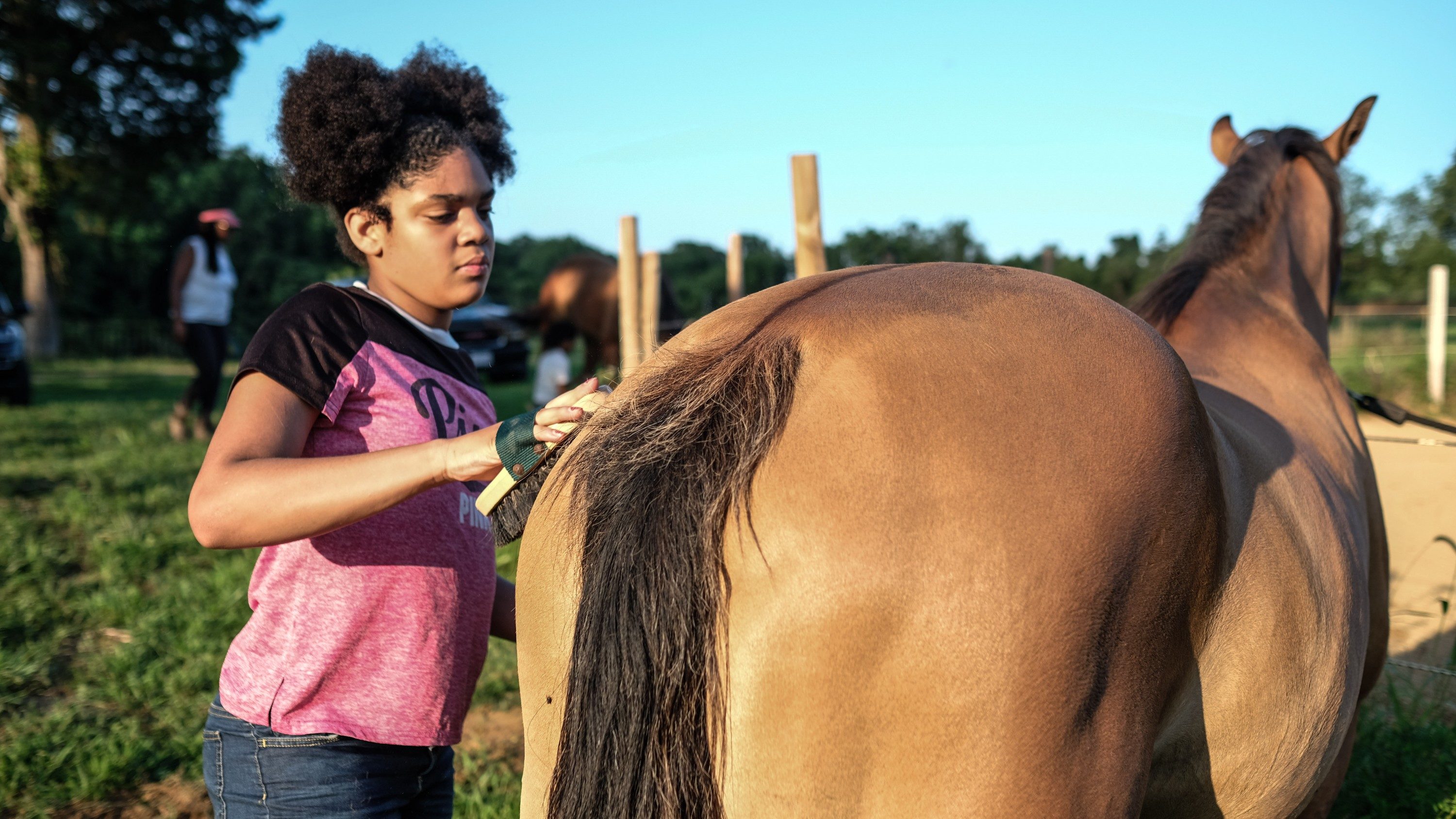
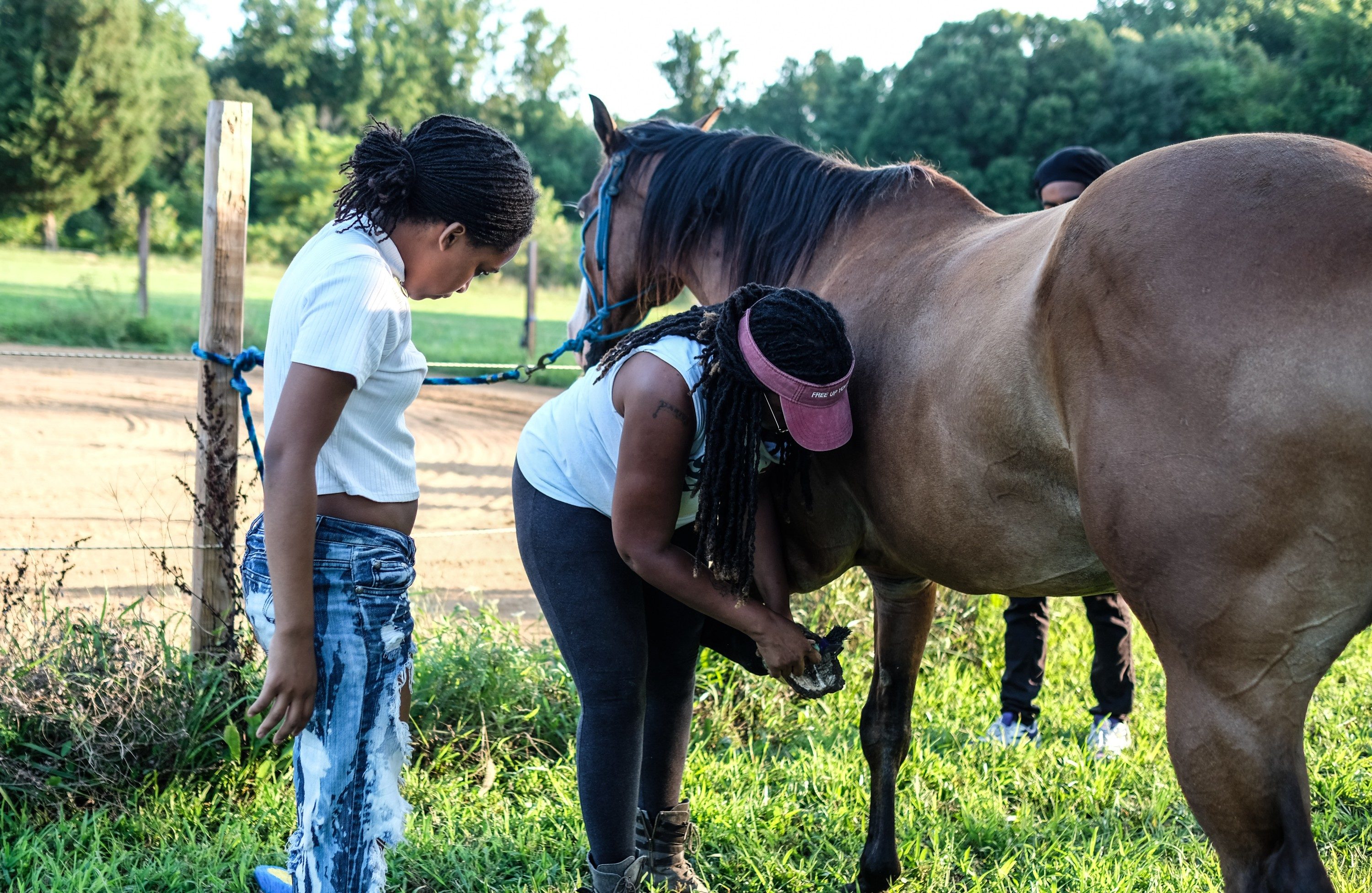
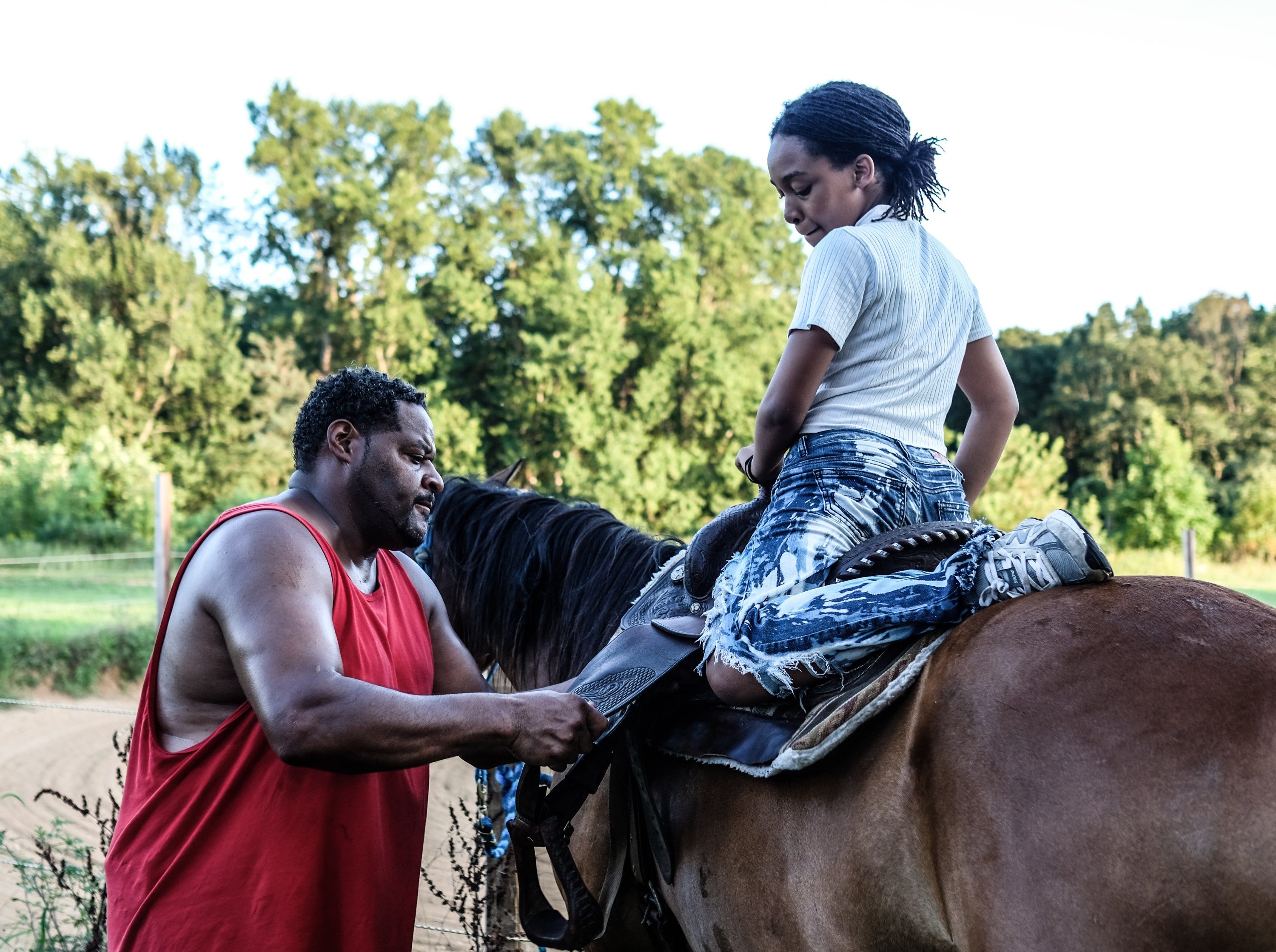
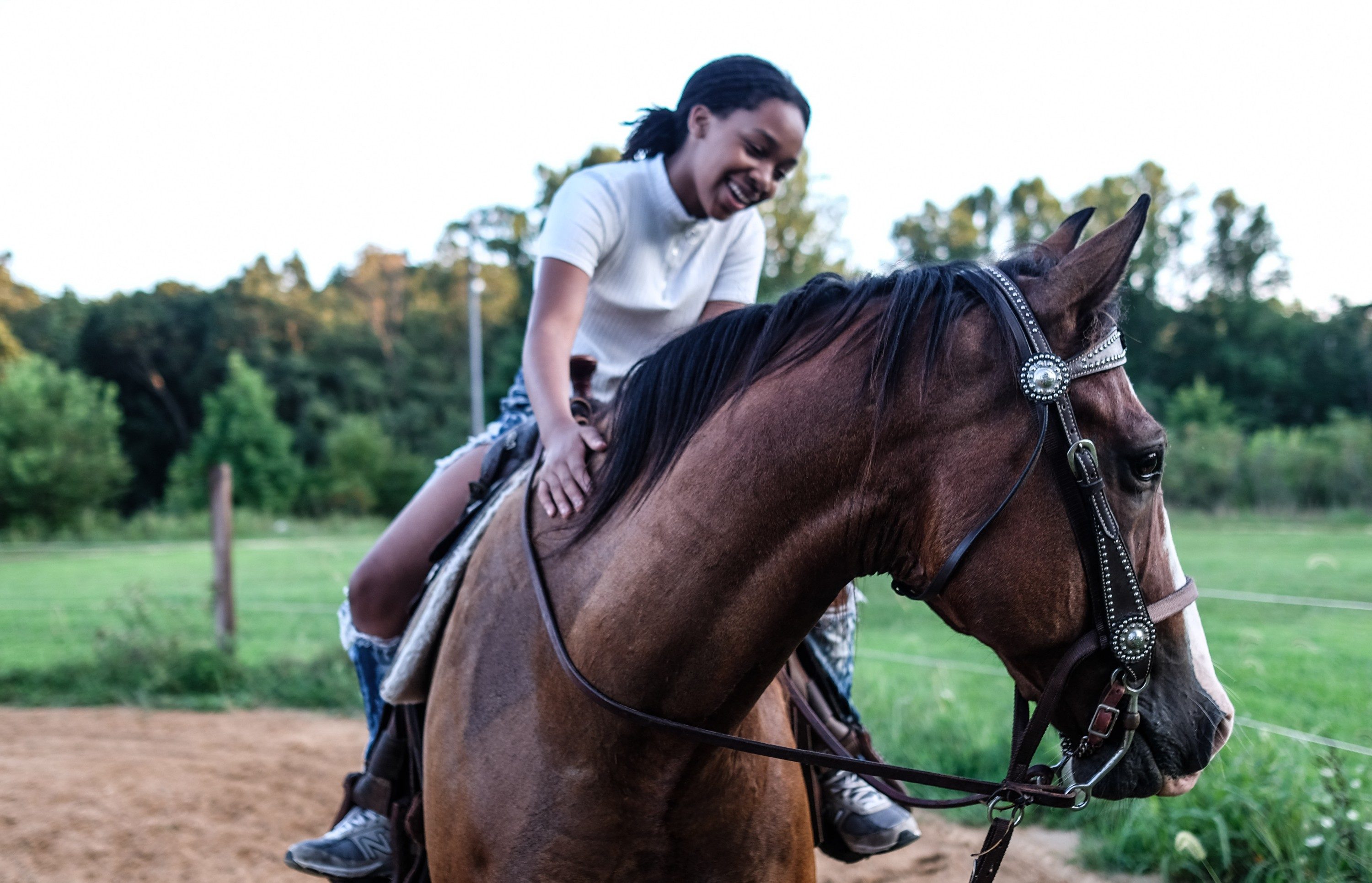
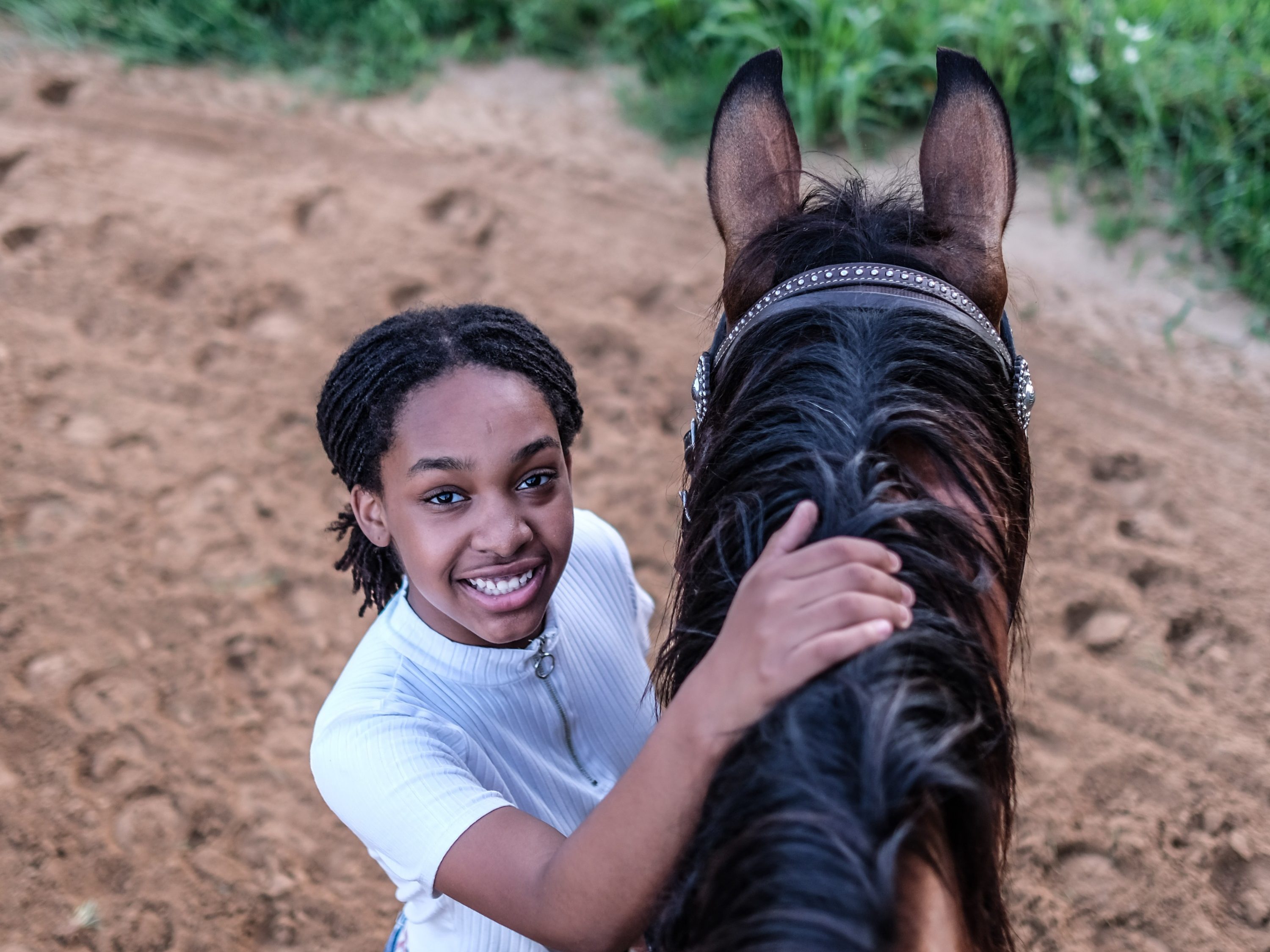
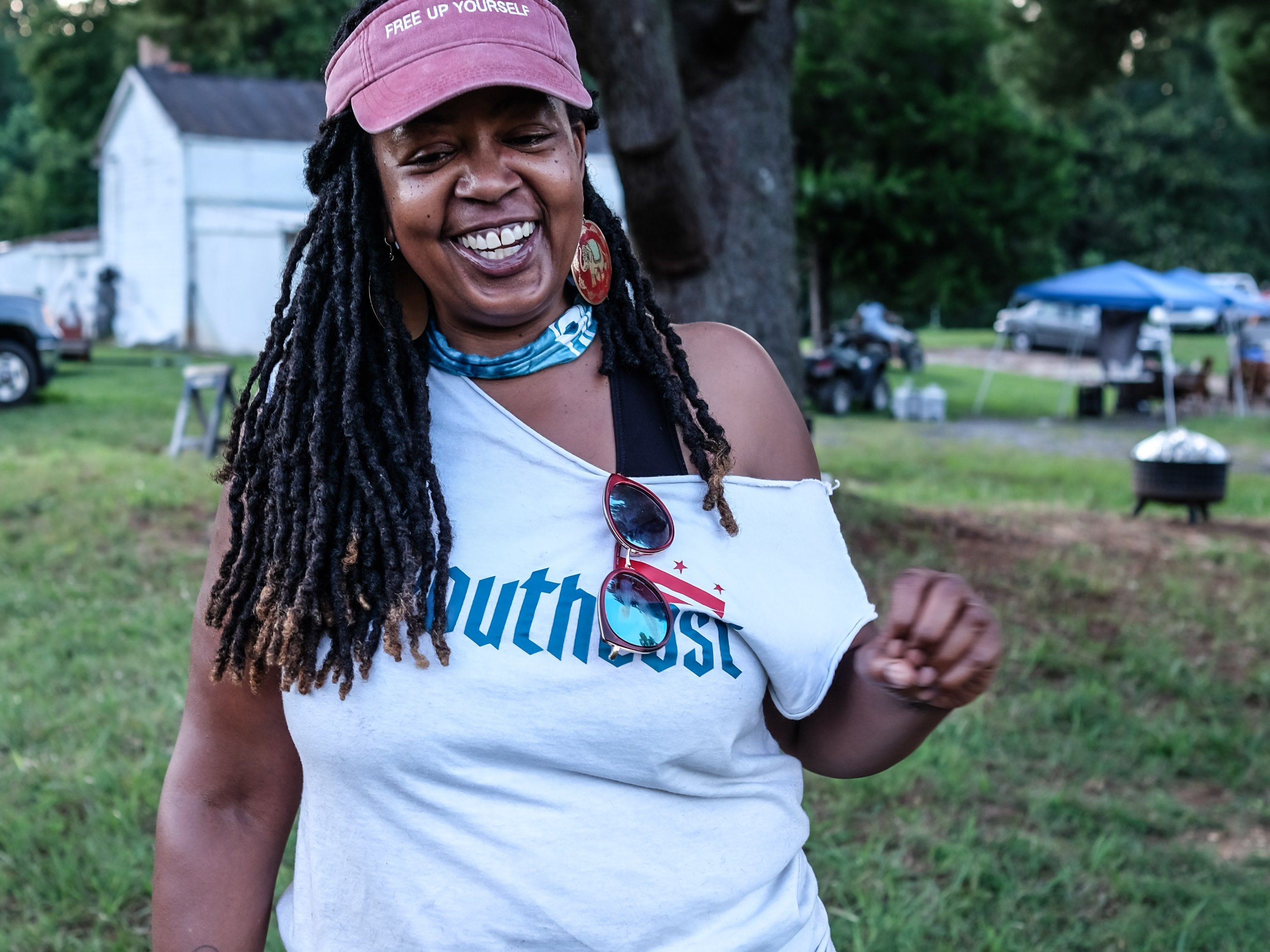
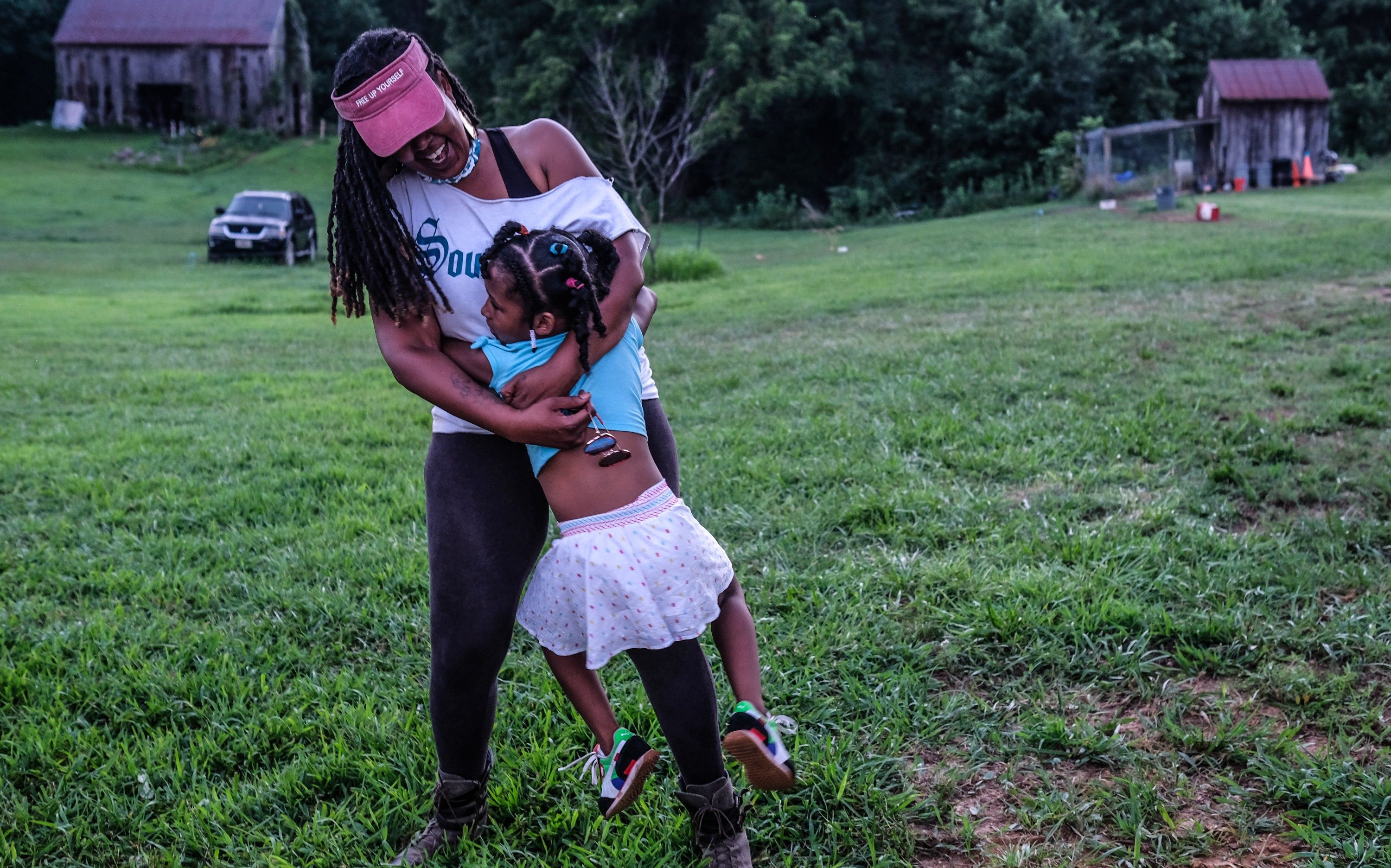
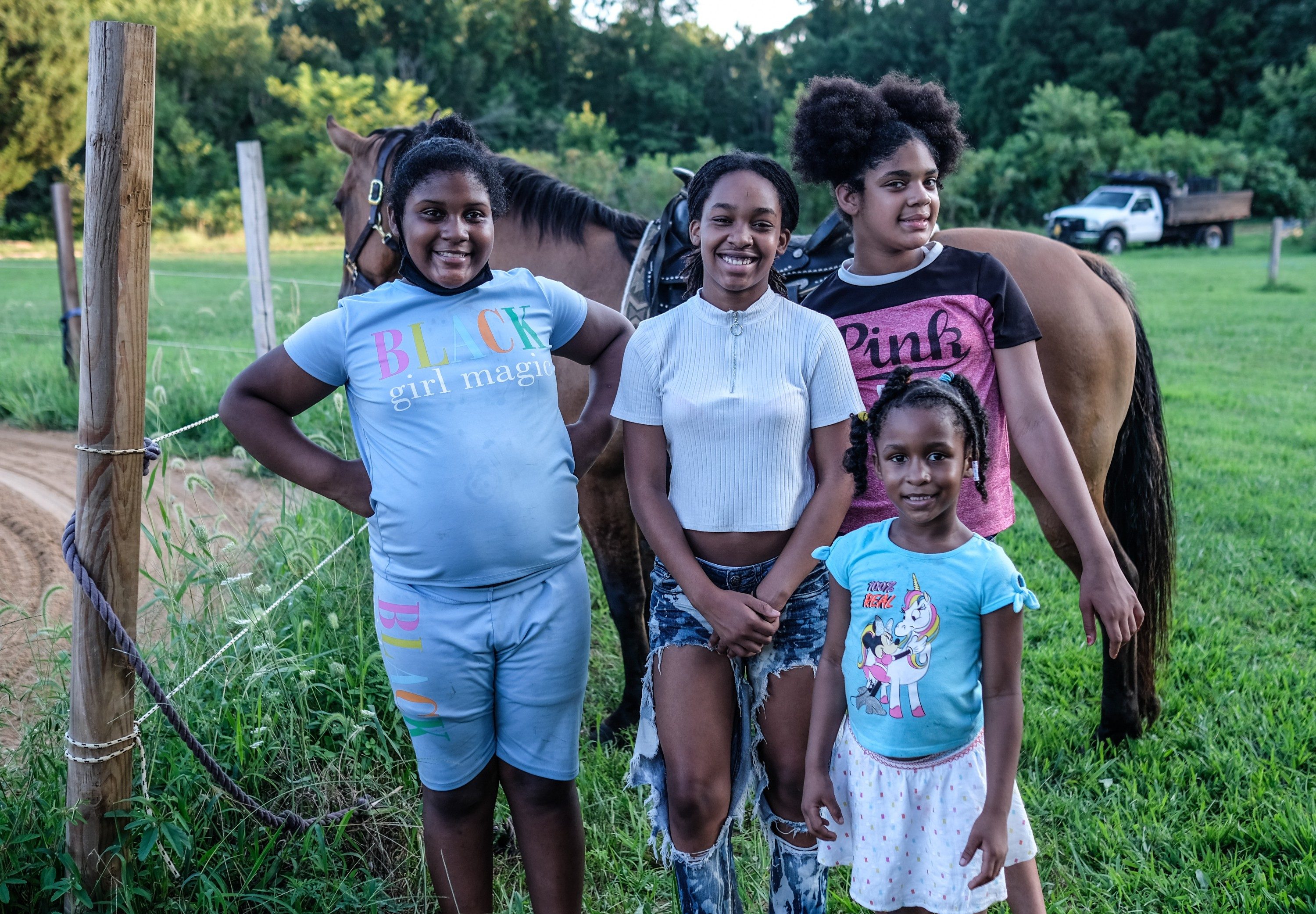
Strengthening Thought And Nurturing Dreams gives girls an outlet to be wild and free while riding horses, during a time when they are otherwise isolated and confined due to coronavirus, says Selina Brown, the nonprofit’s founder of STAND.
STAND’s summer program focused on Ward 7 and 8 youth for a free five-week program. Brown charters a bus out of her own pocket to commute Ward 7 and 8 youth from Anacostia High School parking lot to friend’s farm located a 45-minute drive away in Prince Frederick, Md.
The program used to meet in-person at Anacostia High School four times a week and at the farm once a week. Now, the program is virtual three times a week, though the weekly in-person meeting at the farm remains. The summer program included art therapy, mindfulness and yoga meditation, nutrition and fitness and equine-assisted therapy.
“A lot of them did come from trauma, and there’s a lot going on in the city, especially with deaths. The youth experience a lot of stress and trauma,” says Brown. Brown says sometimes the horses will act similarly to the kids, in that the horse will be irritable and difficult to steer when a youth who doesn’t have a positive attitude is directing them. Brown says she uses that behavior as a way to talk to the youth about the energy that they’re bringing into the interaction with the animal.
STAND participant Kierra Roundtree, 12, who joined the program two years ago, has noticed how the horses can mirror her behavior. “I can express myself with the horses, and sometimes they show me how I am acting,” she says. “If I feel moody or don’t want to do something, they show that in their mood whether they back up, don’t want to interact, or are stubborn.”
Brown can relate to participants, as she was raised in Ward 8. She got into horseback riding as an adult, and realized how therapeutic it was. She wanted to create the same safe space for youth in Ward 8. “This is a way that I can free my people,” says Brown.
Joan Brown (no relation to Selina Brown) is Roundtree’s grandmother, and is grateful for the program. “At this time, when you really can’t do too much until things reopen, it gives my granddaughter, Kierra, something different to experience. It helps improve self-esteem and mindset,” she says. “Sometimes kids don’t feel comfortable talking to anyone but then they feel comfortable talking with a horse.”
Double Dutch For Fun
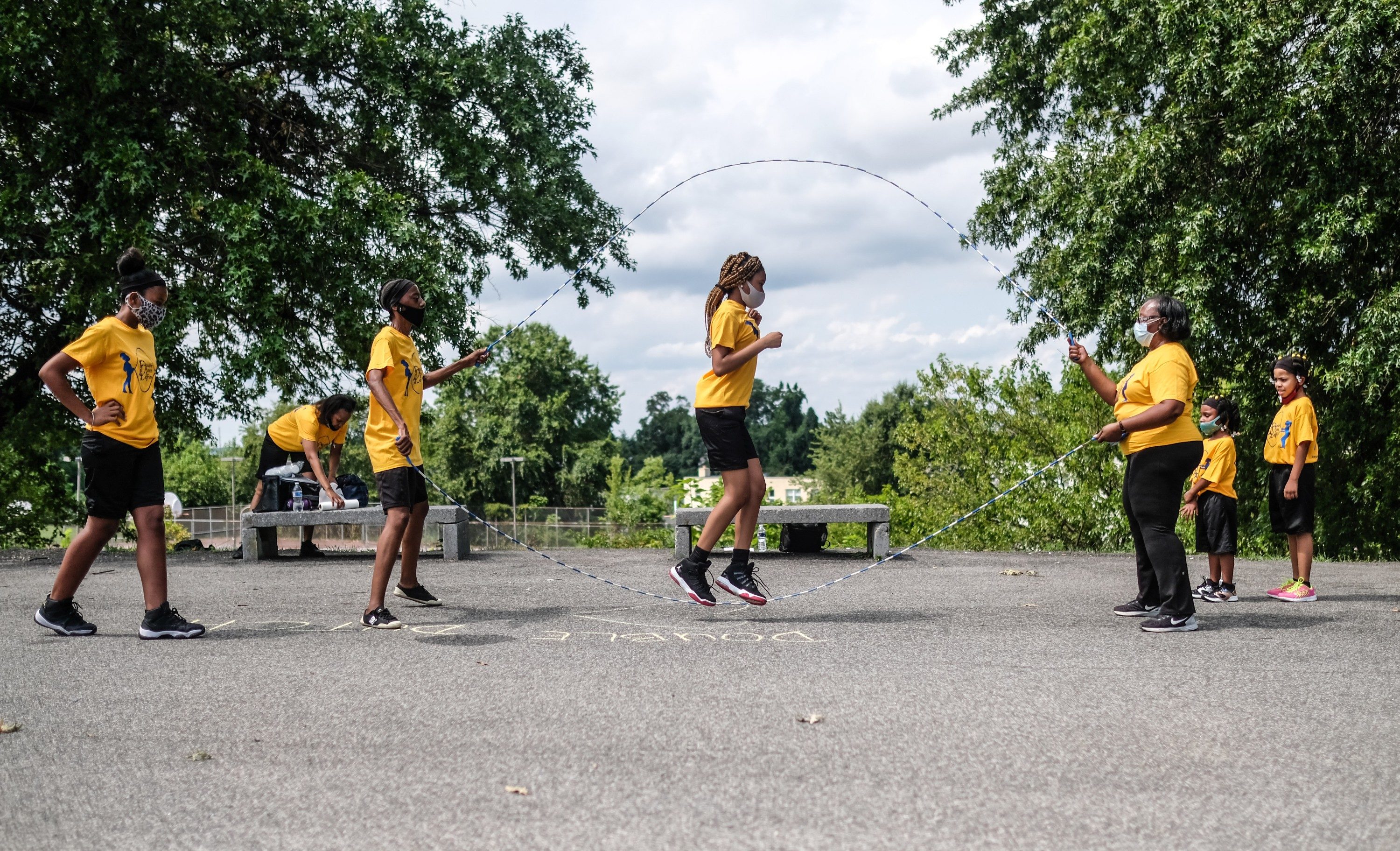
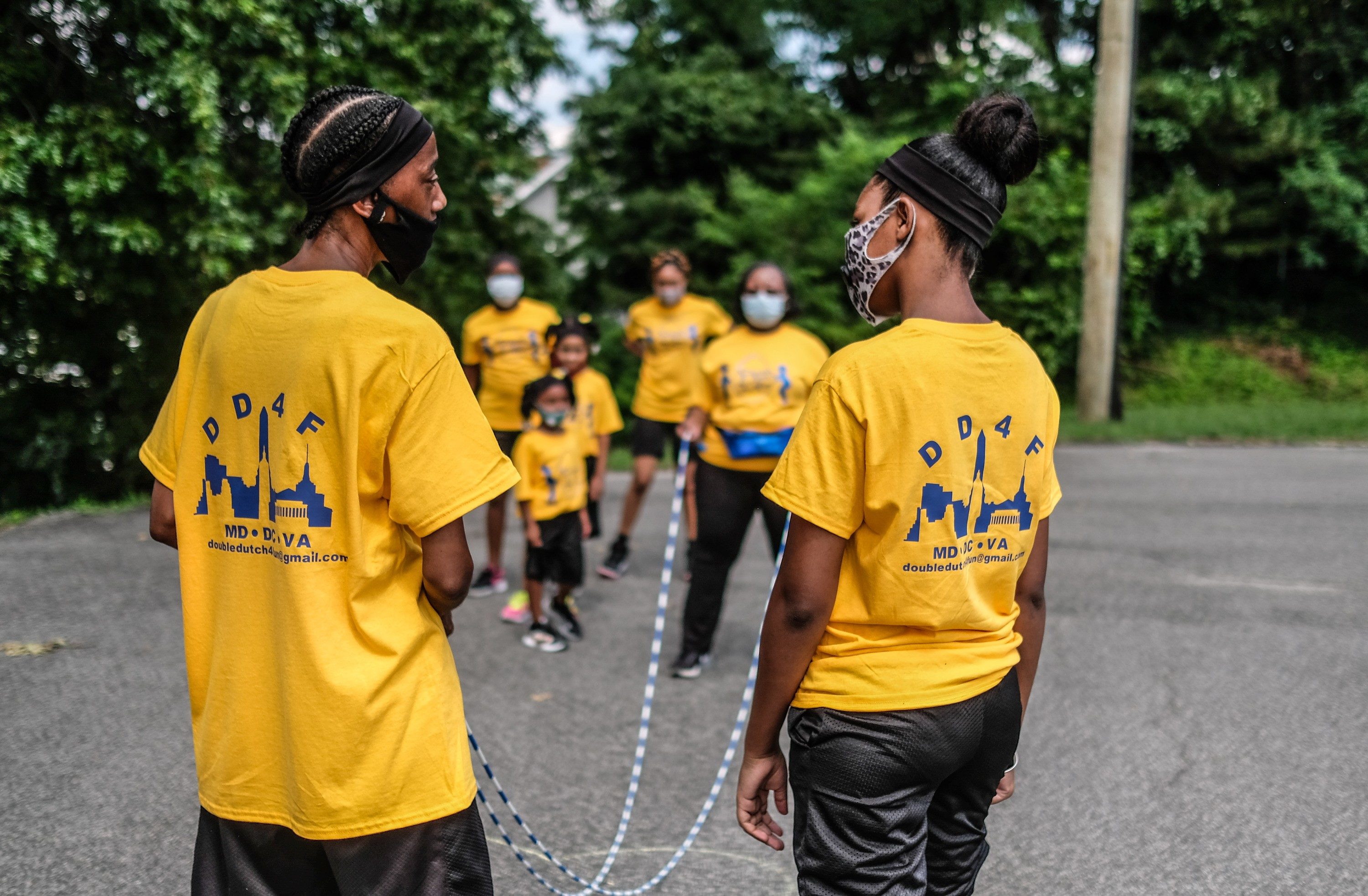
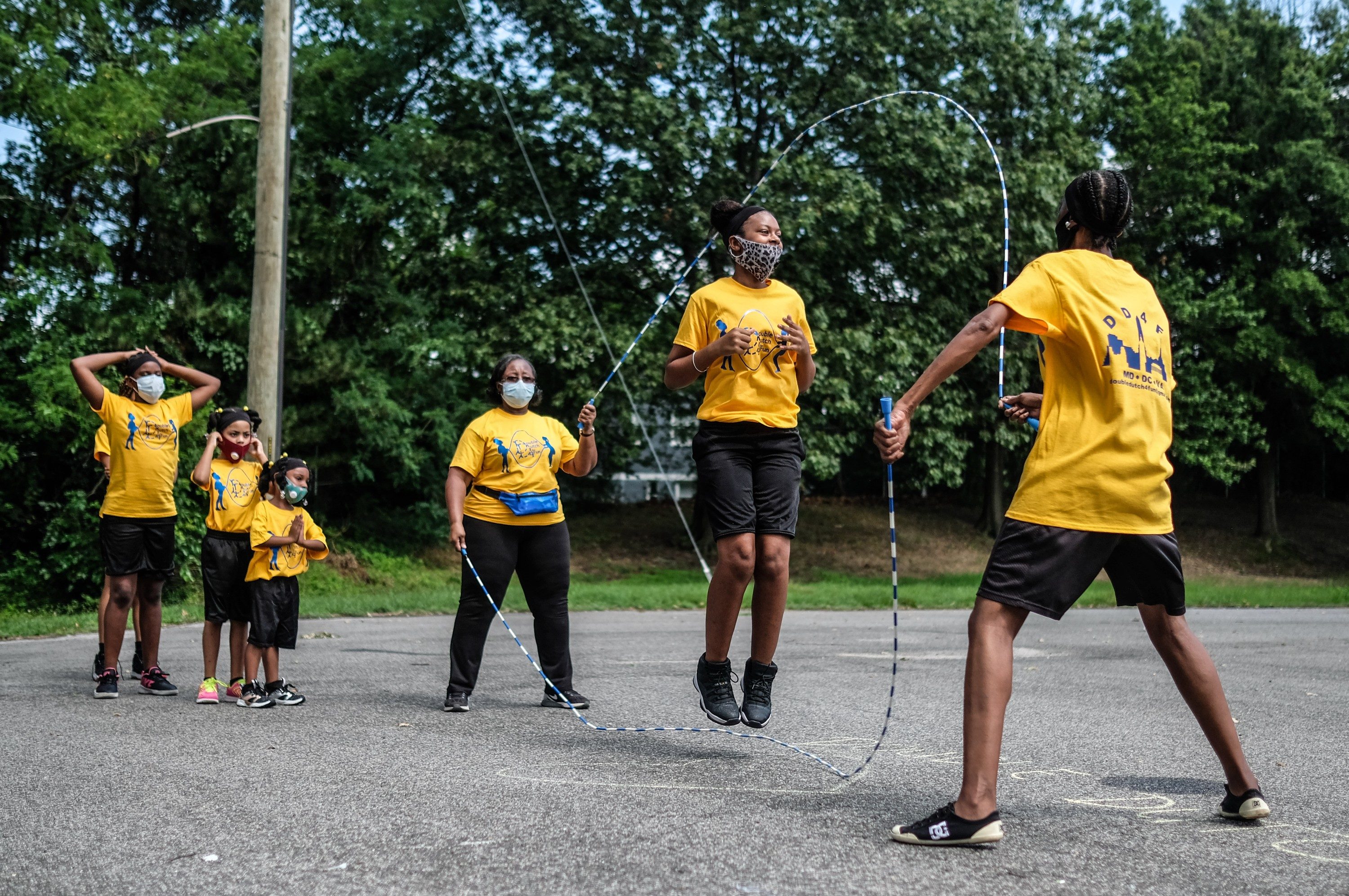
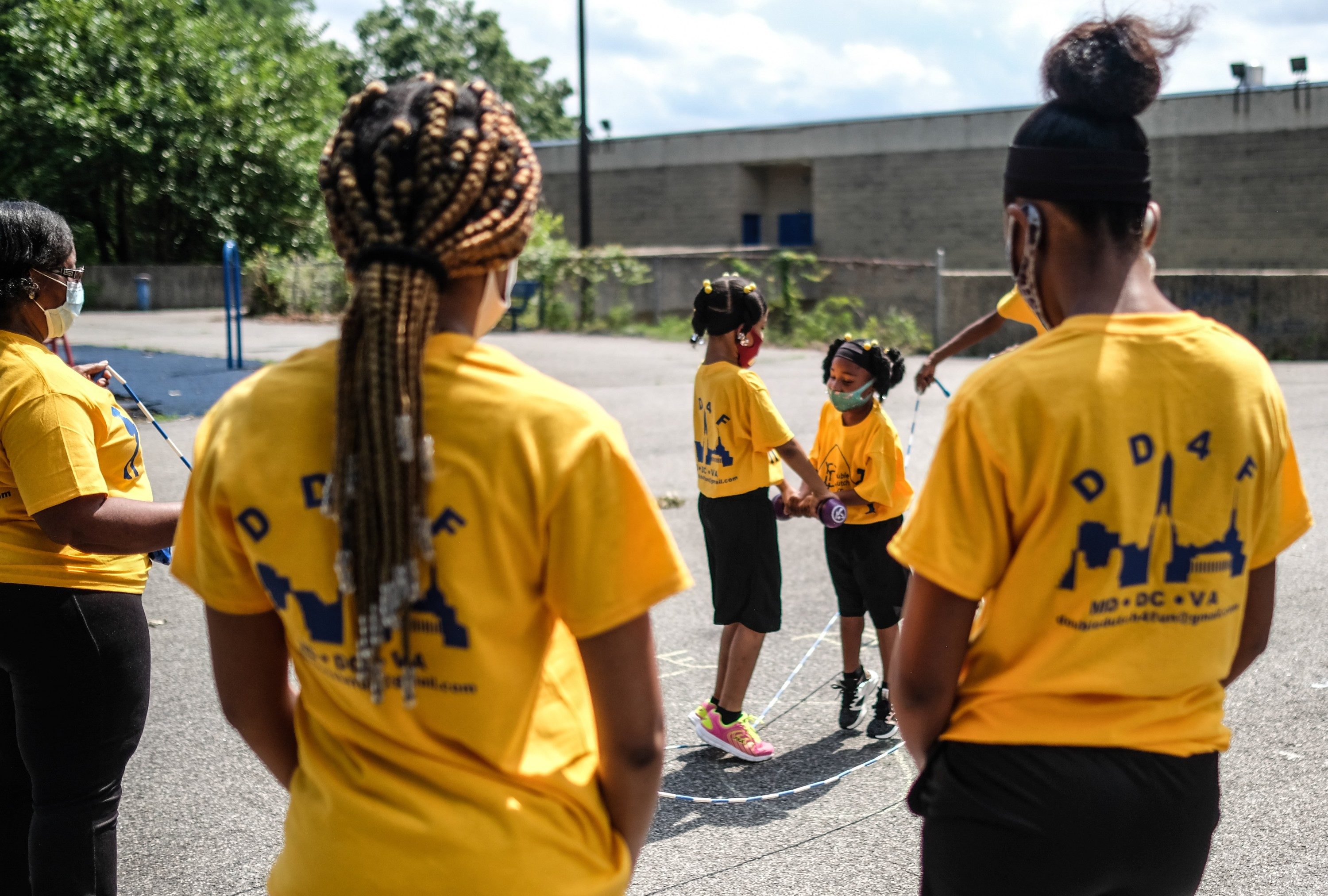
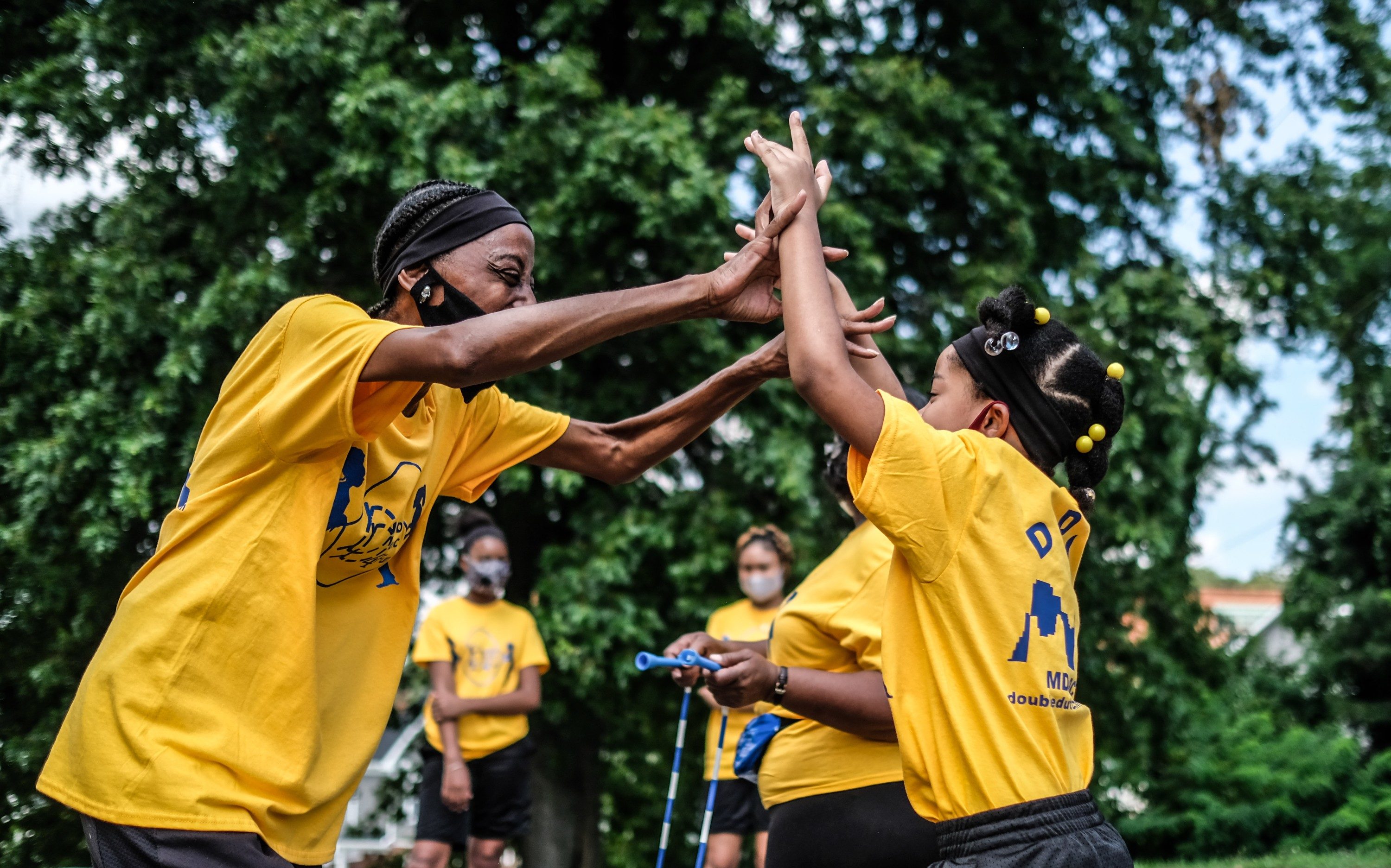
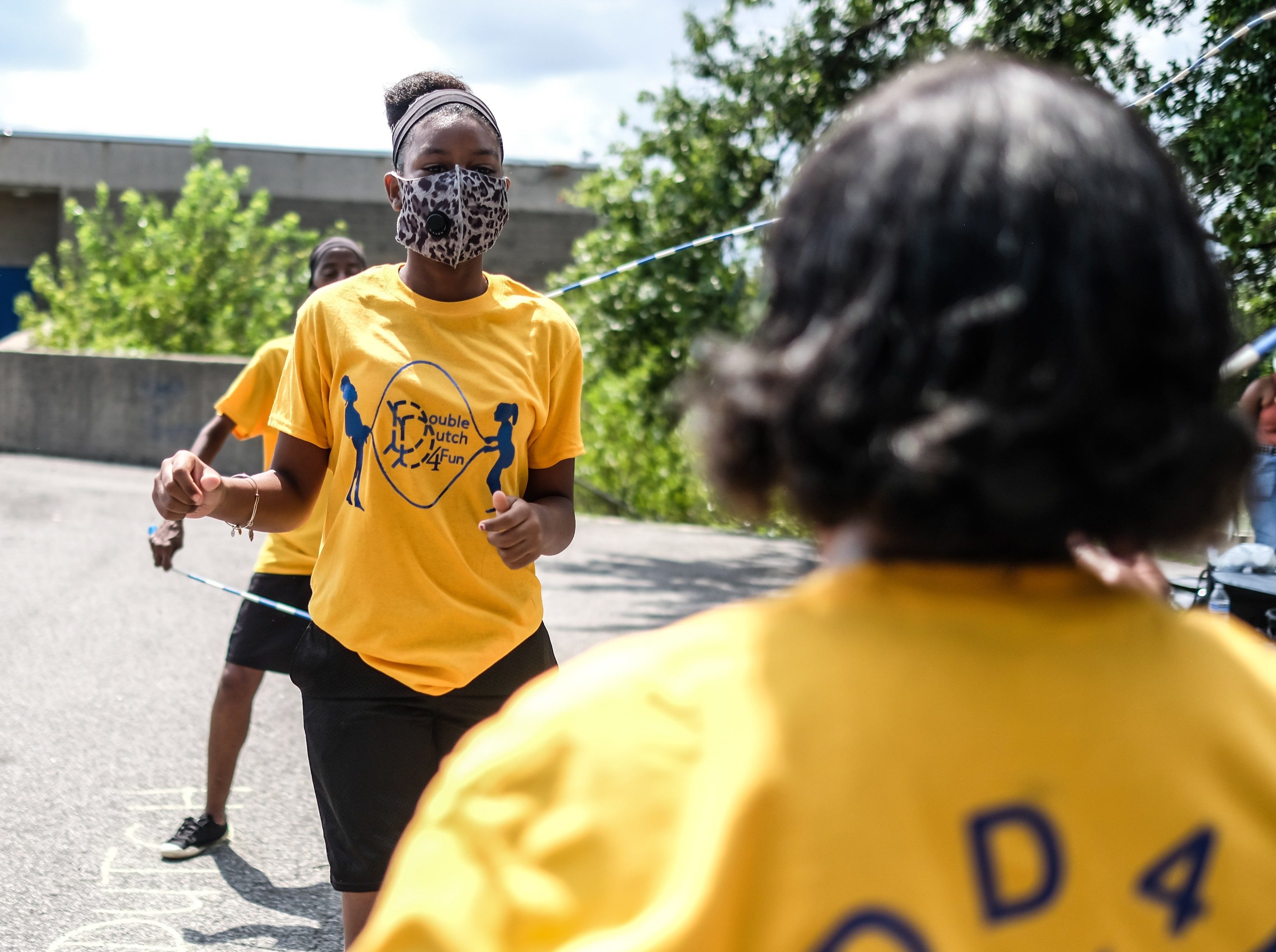
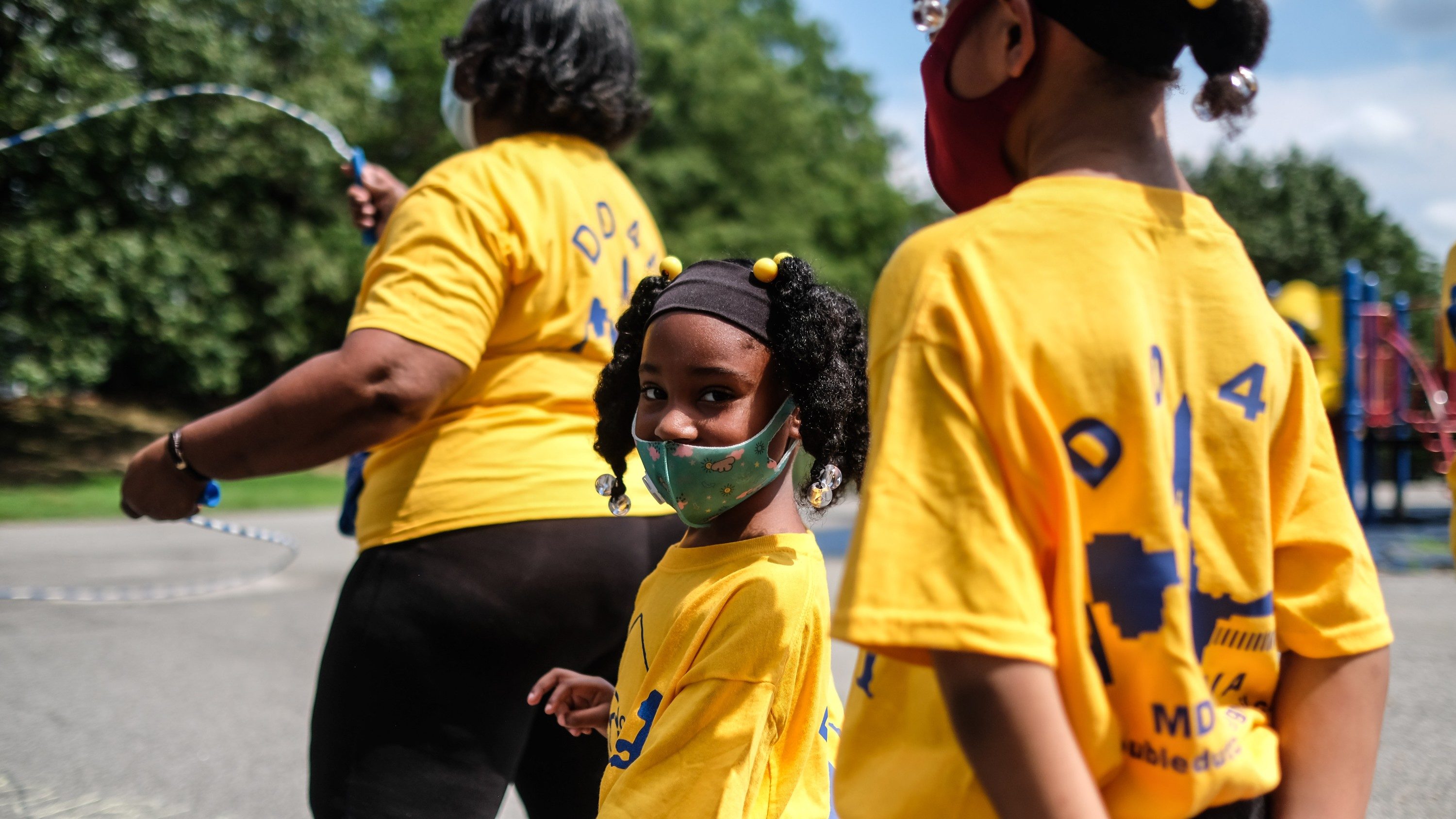
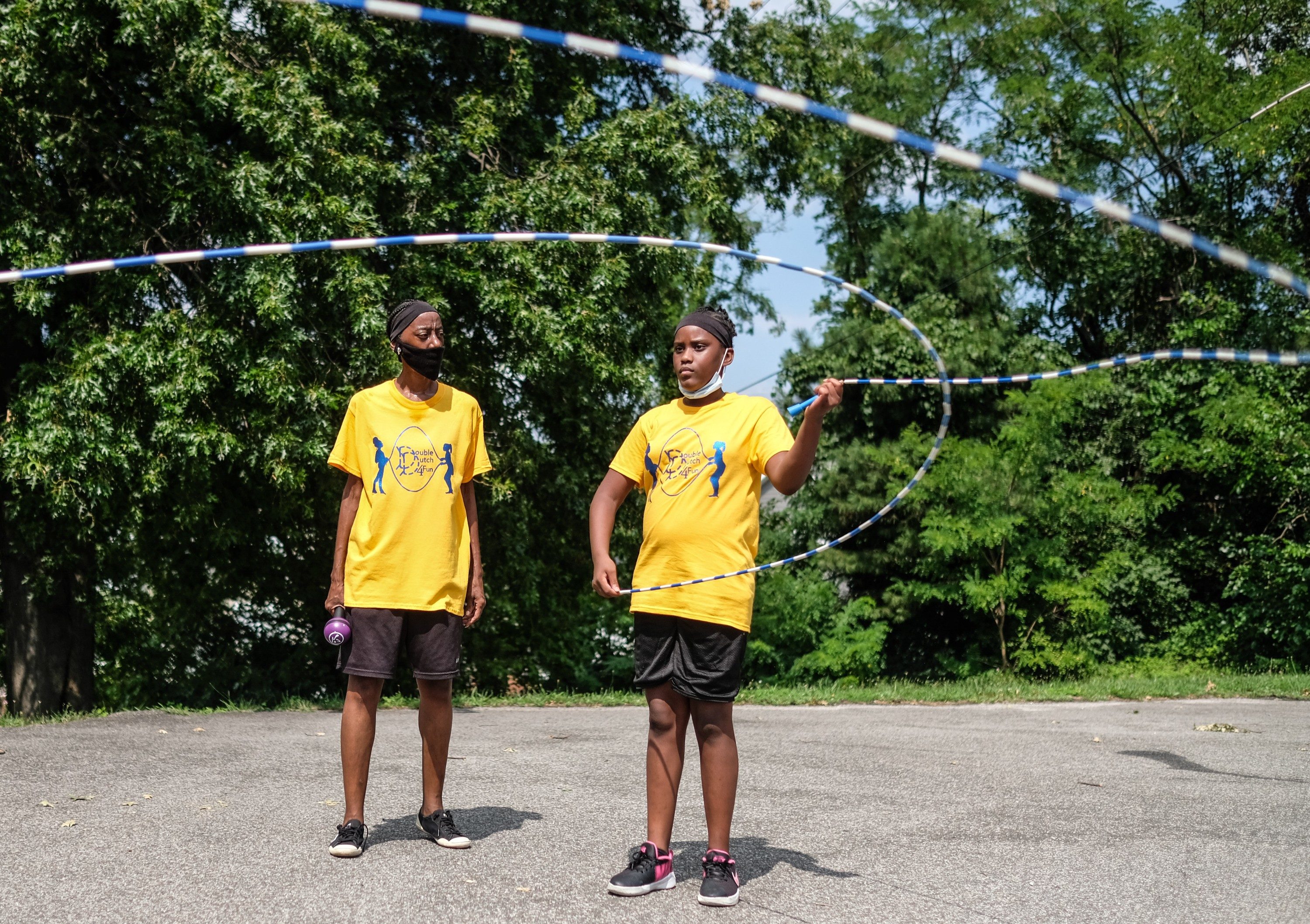
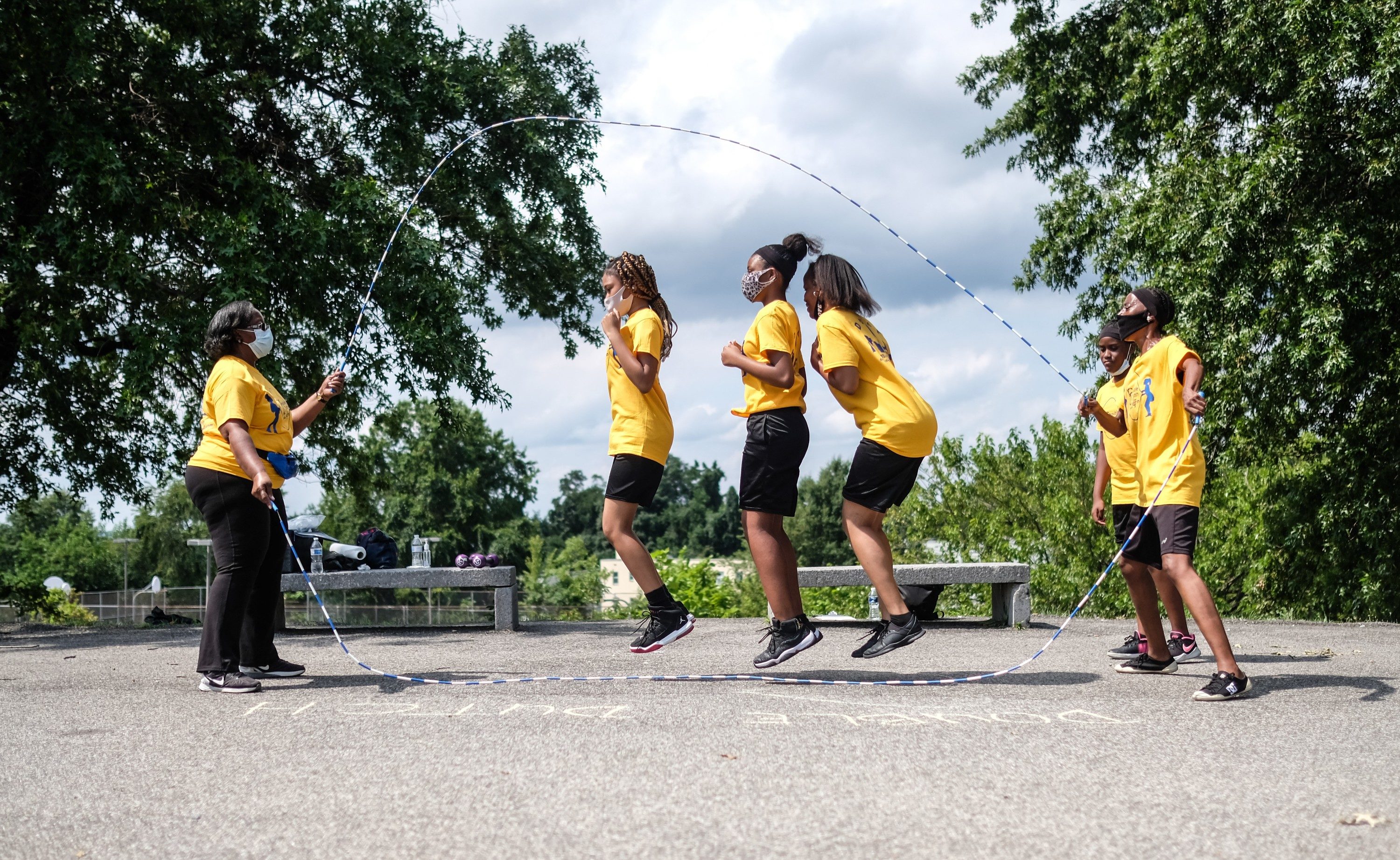
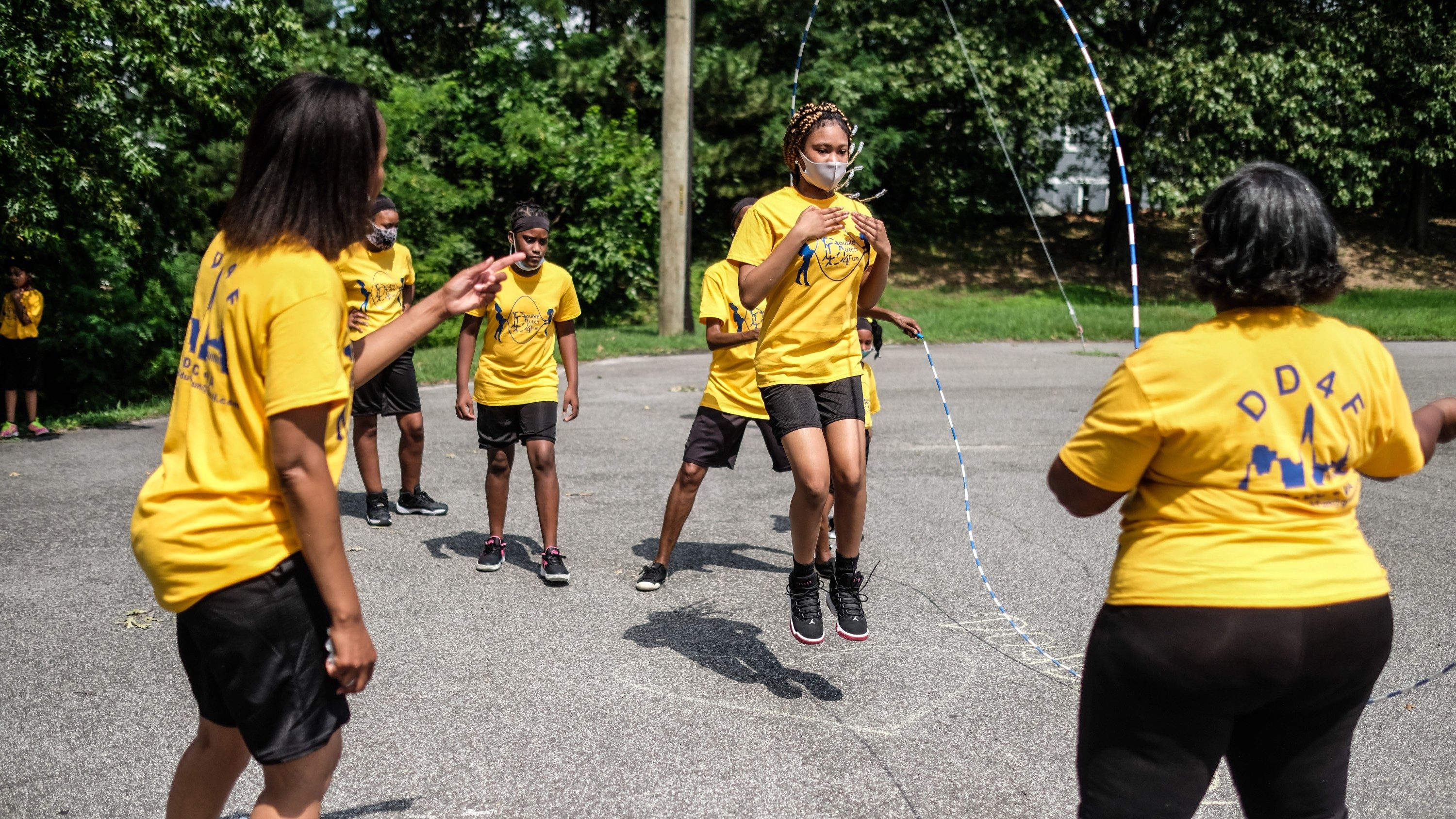
A group of five girls age four through 14 are wearing bright yellow uniforms, as Robin Ebb, lead instructor of Double Dutch For Fun, calls out “When I say double, you say.”
“DUTCH,” the group of girls responds.
Ebb, a longtime jumper with a group called DC Retro Jumpers, started Double Dutch For Fun in 2012 to provide a physical activity for youth. It’s grown from there. In early March, before the pandemic, Ebb says 50 boys and girls of all cultures jumped with Double Dutch for Fun, including in after-school programs.
Currently, Double Dutch for Fun is focused on teaching kids in Ebb’s own community. Now a small group, capped at five participants, meets three times a week for two hours behind Ward 7’s Fletcher Johnson Middle School.
A parent, Josette Hardy, 48, suggested focusing on youth in Ward 7. She was inspired by her daughter, who was bored in the house and glued to her phone in the early days of COVID-19, Ebb says.
Ebb liked the idea. She was able to easily meet with the kids right in her own neighborhood. A family member of Hardy’s made it official by providing free uniforms for participants, and Hardy and Ebb recruited youth connected to their friends and families.
Hardy is not the only parent eager to partake. Ebb says it’s common for parents and children to bond over the nostalgic sport, showing their footwork and singing along to Miss Mary Mack rhymes.
“Kids and parents who come pick them up leave out holding hands and hugging. That makes me cry to know now they can bond,” says Ebb. “Then, they practice together at home and have conversations with one another—something that’s not done because of technology and phones.”
Participants agree that double dutch provides a welcome interruption to all of the screen time.
Jamia Hardy, 14, was supposed to start high school this year. “It’s sad that now it’s virtual,” she says. “But this gives me something to do to keep me off my phone.”
Miracle Goodman, 13, felt similarly. “When I’m in the house I’m bored,” she says. “But when I’m out here, I’m not bored anymore.”