 Aja Beckham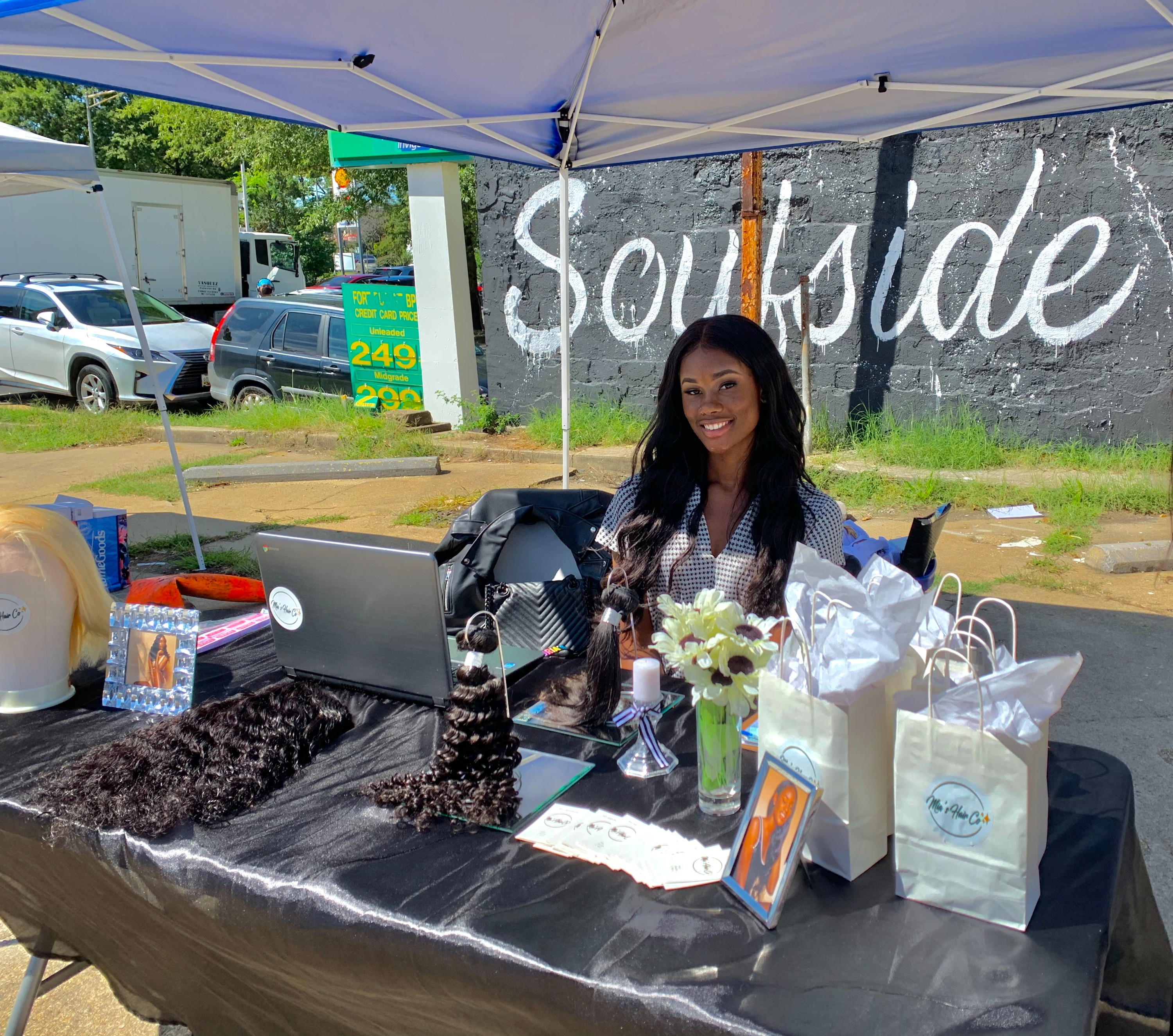
Malik Sneed has lived in Ward 7 all his life, but says he’s never seen a market in the ward or in the region specifically for Black-owned businesses. He says that some markets and stores are not welcoming of Black businesses, which is why he decided to create Soufside Market.
“Instead of begging for a seat at the table, we decided to build our own,” says Sneed, 25.
Every Saturday since its August 1 launch date, Soufside Market welcomes Black D.C.-area businesses to Ward 7’s Dupont Park to sell products and build a new customer base. Organizers vet about 100 vendor applications each week and select 15 new businesses to feature their products at the market. About four of them sell out each week, says Sneed, who founded Soufside along with co-founders Aja Sophia and Azel Prather. “Residents from the DMV area come to Soufside with the intention of circulating the Black dollar,” he says.
There’s a wide range of goods to be found at Soufside, including produce, coffee and tea, laundry detergent, art, floral arrangements, cultural card games, adult toys, and even a bar area and DJ. “The market showcases that there is a Black owned business in every industry that sells any product that anyone needs,” says Sneed.
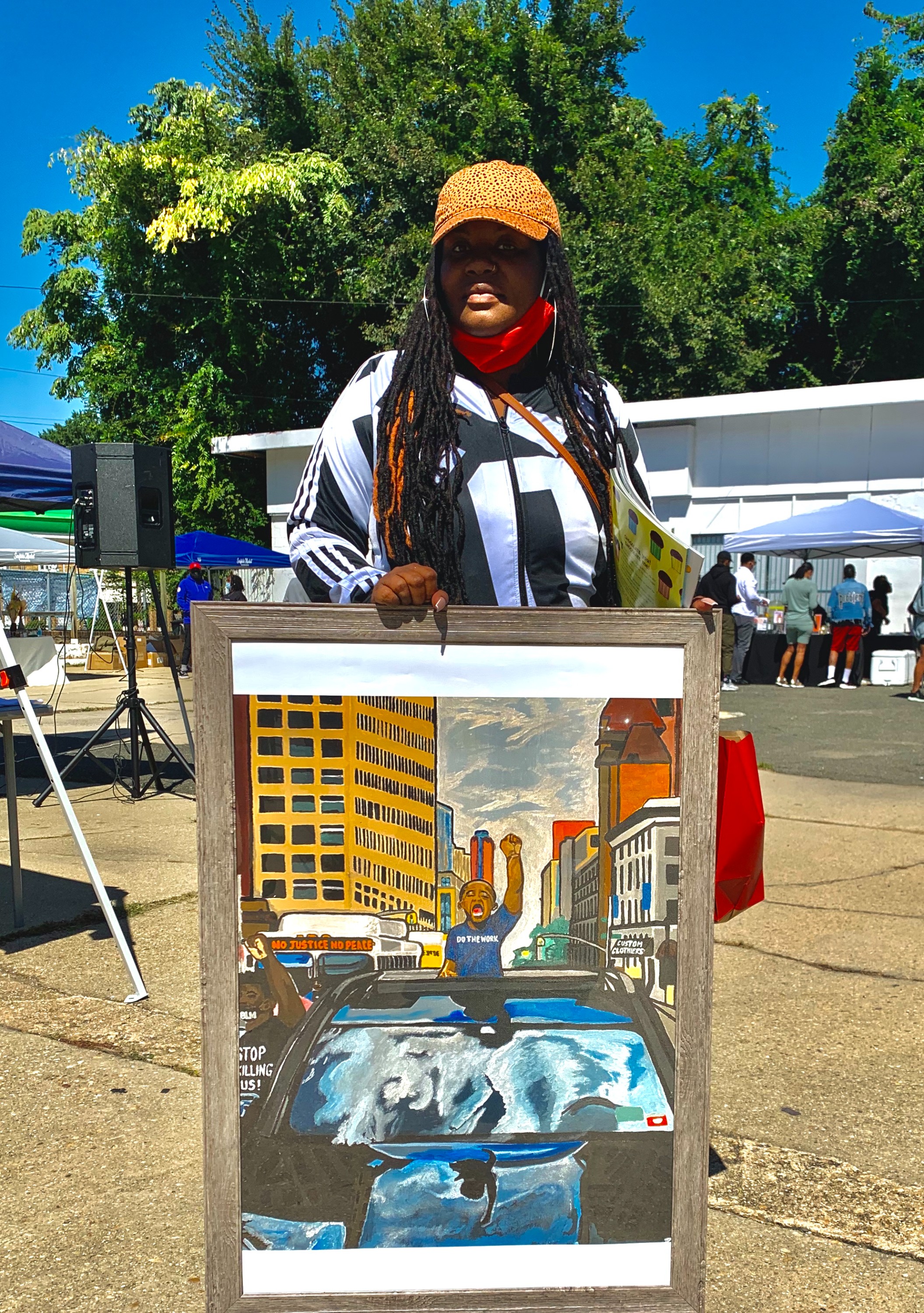
On a recent Saturday, Kashnna Barratt drove to Soufside from Prince George’s County. While there, she purchased a painting from Cole Artwork for $75.
The painting is of a small Black child protesting with his fist raised, mouth wide open, and wearing a shirt that says “Do the work.” Alongside him is an older Black man with a shirt that says, “Stop killing us.” Barratt says when she sees it, she sees her 4-year-old son. The painting will go up in his room.
“This is the life that unfortunately, he’s been birthed into. It’s my job as a parent to prepare him for the world,” says Barratt, 32. “This painting represents Black life. Even through the pandemic, we are still going through everything, and I have to explain to my child the realities of the world.”
Barratt also grabbed free children’s books distributed by The BasKids Foundation, who while at the market gave out 400 free books with Black narratives and illustrations.
Barratt heard about Soufside from Prather, one of the market’s co-founders and a P.E. teacher at KIPP DC Arts and Technology Academy, where Barratt’s son is a student.
Prather says he feels proud to know that the parents, students, teachers, and others from KIPP come out to the market. He is especially proud that Barratt purchased that specific piece of art because that “Do the work” tee in the painting was inspired by his business Do The Work, a brand management and consulting company.
“There’s no way around the work,” says Prather. “That’s exactly what we are showing the youth out here today, to put in the work for their community.” Soufside employs teens from the neighborhood to set up and break down vendors booths to give them something positive to do, while seeing Black businesses to look up to, says Prather.
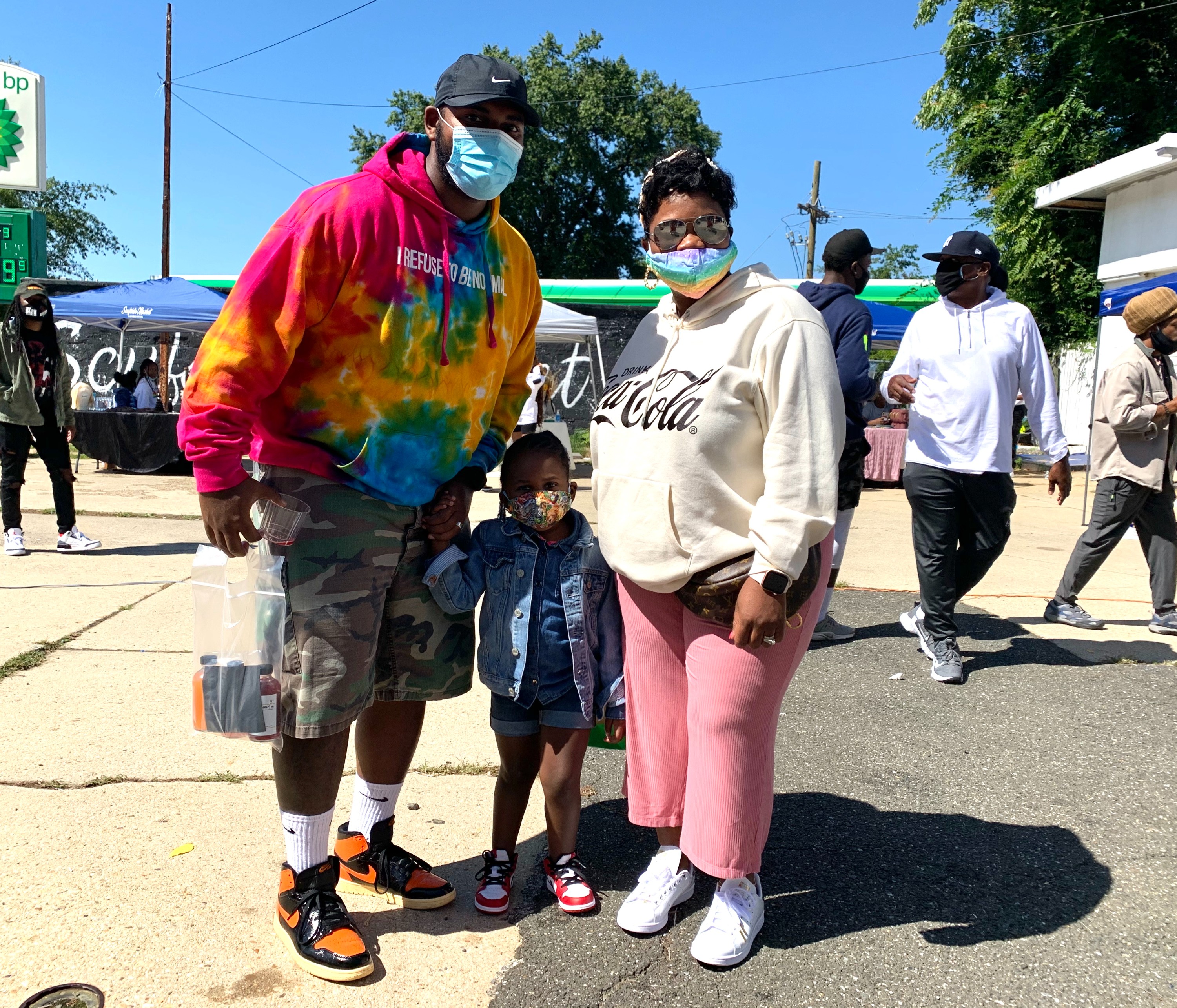
That’s exactly why Lindsay Wright brought her 4-year-old daughter to Soufside, to see Black business owners doing great work. Wright, who lives in Charles County, Maryland, says her two sisters are vendors at the market.
“When [my daughter] is out here, our family is out here and she’s able to relate and see there are some great Black entrepreneurs,” says Wright, 36. Since the family started attending the market weekly, her daughter has shown interest in becoming a chef, librarian, and more. “Watching these business owners, she knows she can do anything.”
Soufside launched weeks after Black vendors in D.C. spoke up about being denied spots at D.C.’s largest farmers market in Dupont Circle. The Freshfarm market later issued an apology, and added four new Black-owned stalls. In the District, nearly 30% of all businesses are Black-owned, according to Technical.ly.
“We need this simply because it doesn’t exist,” Sneed says of Soufside. “We shouldn’t have to beg for that space.” He mentions the 15% Pledge, an initiative asking 10 big national retailers to commit 15% of their shelf space to Black-owned companies, as Black Americans make up roughly 15 percent of the country’s population. Only two of the 10 big retailers have taken the pledge, according to the initiative’s site.
Sneed says that while some products can’t always stand out on shelves in stores, Soufside selects businesses that “complement, not compete against each other.” He says there are never two vendors with similar products at the same event. Each week, Soufside reviews vendors’ applications and social media to decide on businesses to feature at the market that week; some prospective vendors bring products to the market to make an impression and meet founders in-person.
Some businesses seek opportunities like Soufside to stay afloat during the pandemic. One business says the market allowed them to be creative and pivot their business model.
Selena Stephens and Dominique Satterwhite are the owners of Mini Bahr, a handcrafted cocktail business. Before the pandemic hit, Mini Bahr had been hosting mixology classes and other events since the company launched three years ago.
“Literally, one week before the market started in August, we heard about the opportunity and decided on a new business plan,” says Stephens. Now the business is shipping products to other states and selling out weekly at Soufside, where customers are buying up cocktails like the Dragon Tells, made with vodka, ginger, fresh lime, pear, mango, and dragonfruit. Mini Bahr has also increased its social media presence and following from 40 followers to more than 480 since the company began vending there.
“It’s the Soufside way,” Sneed says. “Every week at least one business has sold out, at max, we’ve had eight vendors sell out.” On Saturday, August 19, four vendors sold out including Sweets by Shy, Table Touches, Designed By Ashley, and Mini Bahr.
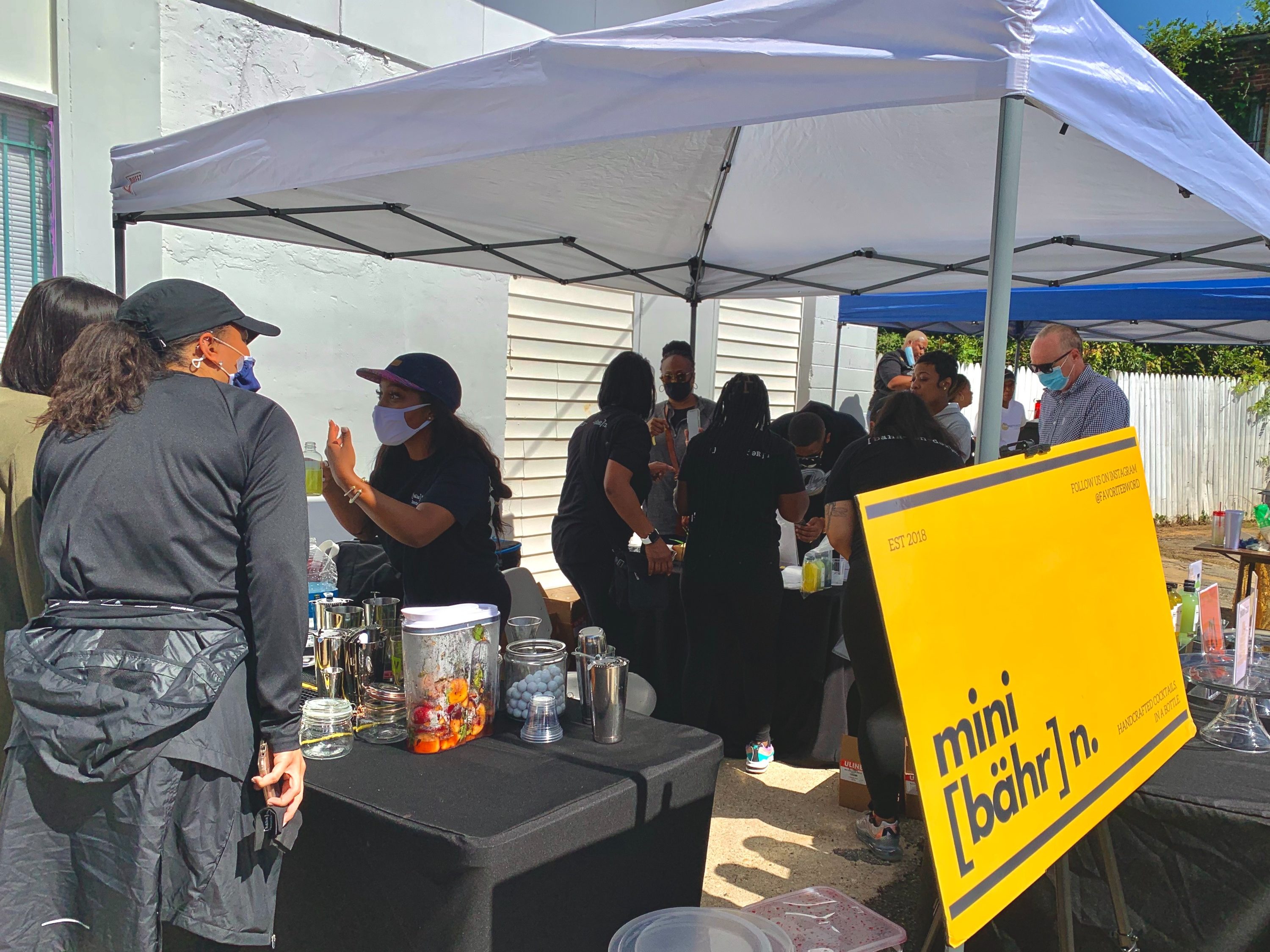
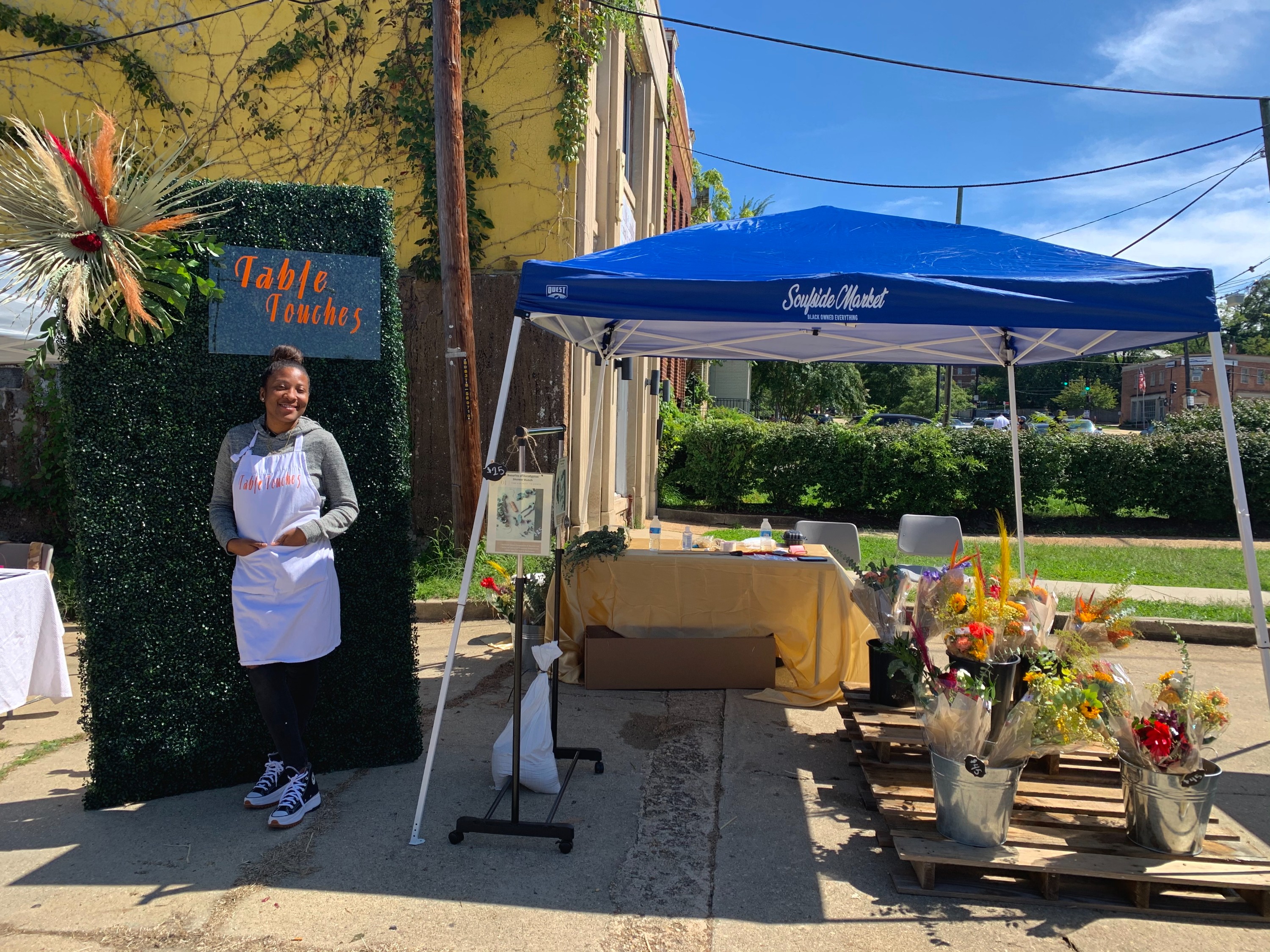
Stephens says she’s looking to partner with Black farmers, distillery owners, liquor brands and more to further circulate the Black dollar. “We don’t see [enough] spaces like Soufside reminding us of Black business partnerships and spending with Black businesses,” says Stephens.
Soufside hopes to expand to different cities, starting on the East Coast. “We want Black businesses to have a space where they are valued, respected, and supported,” says Sneed. “There’s something special about Soufside and energy around supporting Black business. It feels like magic.”
This post has been updated to add the names of two of the market’s cofounders.