 Julie Strupp
For the first time today, D.C.’s acute care bed capacity is more than 90% full, an amount considered ‘insufficient’ according to the city’s reopening metrics. The news follows several days of rising COVID-19 cases around the region.
The District’s available bed capacity metric indicates how the local hospital system is able to care for all patients, including those with COVID-19, without needing to use emergency surge resources. However, this metric frequently fluctuates, and the city has emergency surge capacity.
Of the 2,487 total beds (not including the roughly 1,000 beds available in surge capacity), 2,244 were occupied as of Nov. 9. Notably, only 109 of those were COVID-19 patients, according to DC Health data.
It’s not immediately clear how that number of total beds might have changed since the start of the pandemic, when several area hospitals paused elective surgeries to free up resources for COVID-19 patients. Some jurisdictions including Virginia have since resumed elective surgeries.
“Facilities are assessing their capacity on a daily basis and implementing strategies as appropriate to manage the current and anticipated surge,” DC Health spokesperson Allison Reeves tells DCist via email, adding that the Washington Convention Center’s field hospital setup is prepared for a surge in patients.

Yesterday DC Health data showed the virus had reached “substantial community spread” levels for the first time since May. That rolling seven-day case rate metric climbed again today to 16.78 cases per 100,000 people.
Today the District recorded 159 new cases, and the daily count of new cases has topped 100 several times this month. On Wednesday, the city recorded its highest daily case count since late May, at 206 new cases. Case counts have been trending upward since September.
On Thursday, D.C. Mayor Muriel Bowser said the city may need to impose new restrictions if cases continue to rise heading into the winter, but has so far not done so. There are 18,666 known cases in the District in all, and 657 people have died.
Maryland, meanwhile, today saw its highest daily caseload on record, with 1,869 new cases.
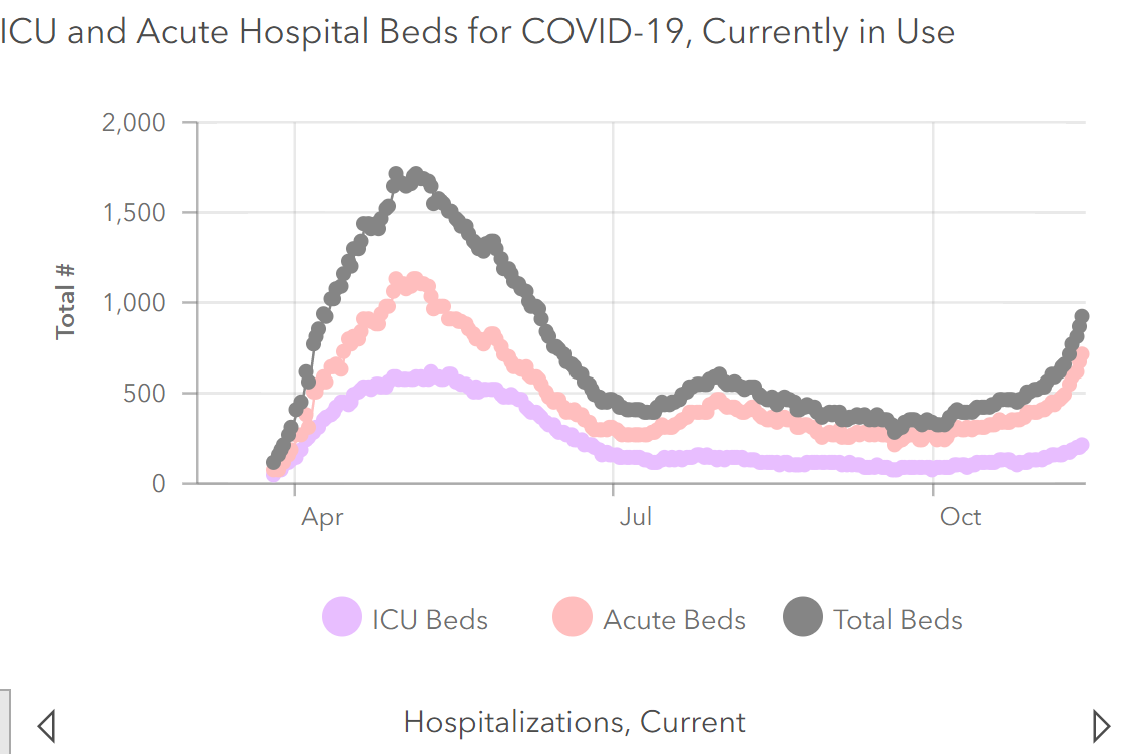
The state’s hospital bed usage is now at levels not seen since June. On Tuesday the state health department activated plans for hospital surge capacity and Gov. Larry Hogan tightened restrictions on indoor dining capacity, in response to seven straight days where the state saw 1,000 or more new daily coronavirus cases. (That number now stands at 10 days in a row.)
Maryland’s seven-day rolling positivity rate is also at levels not seen since mid-June. It currently stands at 5.87%, above the 5% threshold recommended by WHO.
On Thursday, Hogan announced additional investments and initiatives to protect residents from the virus. Montgomery, Prince George’s, and Anne Arundel counties have all added coronavirus restrictions of their own this week.
Last week Prince George’s County reported 69 hospitalizations due to the virus. County health director Dr. Ernest Carter said that was the county’s highest average since June.
“Just in the last two days, we’ve seen a 27-bed increase in hospitalizations,” Carter told DCist/WAMU earlier this week. “Thankfully our hospital capacity remains very strong … however, we absolutely have to get it under control because if we don’t, there will be a rapid rise in our intensive care units and we’ll have to do further things to make sure we have that capacity.”
Meanwhile, the Virginia Department of Health today recorded 1,235 new cases in the state: a high figure, but not the highest number of caseloads it’s seen in the past week.
On Thursday, Virginia reported the seven-day average number of daily new cases was 1,546, the highest that metric has reached since the pandemic began. Its rolling seven-day average positivity rate stands at 6.5%; it last saw that number in mid-September.
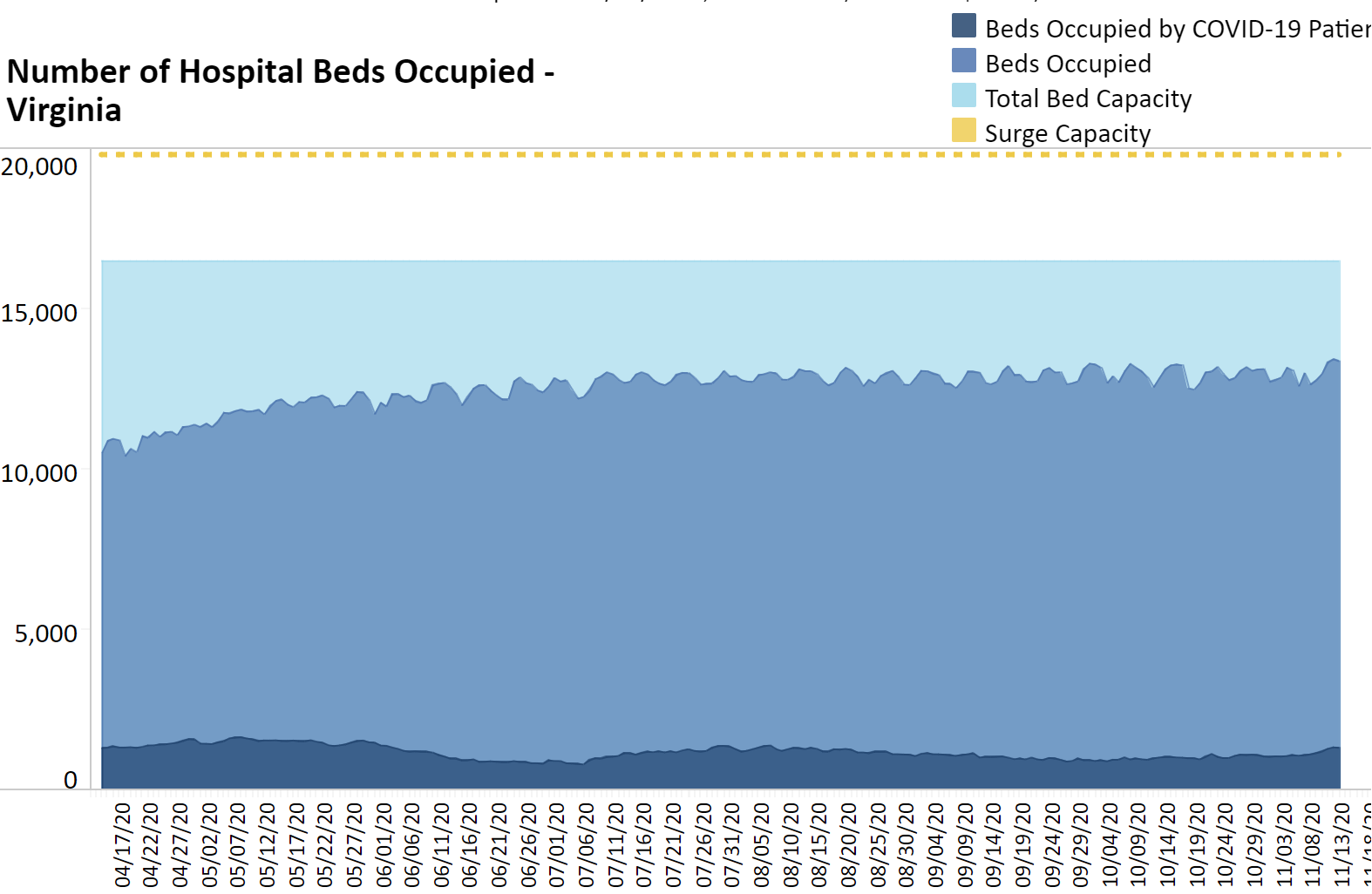
The commonwealth’s hospital bed capacity has seen small fluctuations, but remained largely steady overall.
Gov. Ralph Northam has announced expanded testing this week, but no new restrictions.
Public health experts have warned for months of an uptick in infections as the weather gets colder and people spend more time inside. They are particularly concerned about the cold weather coinciding with “pandemic fatigue,” as people grow weary of social distancing and mask-wearing.
In recent weeks, Bowser, Hogan, and Northam have warned against risky in-person holiday gatherings and urged residents to respect local guidelines.
This post has been updated with comment from DC Health.