 Aja Beckham
 Tyrone Turner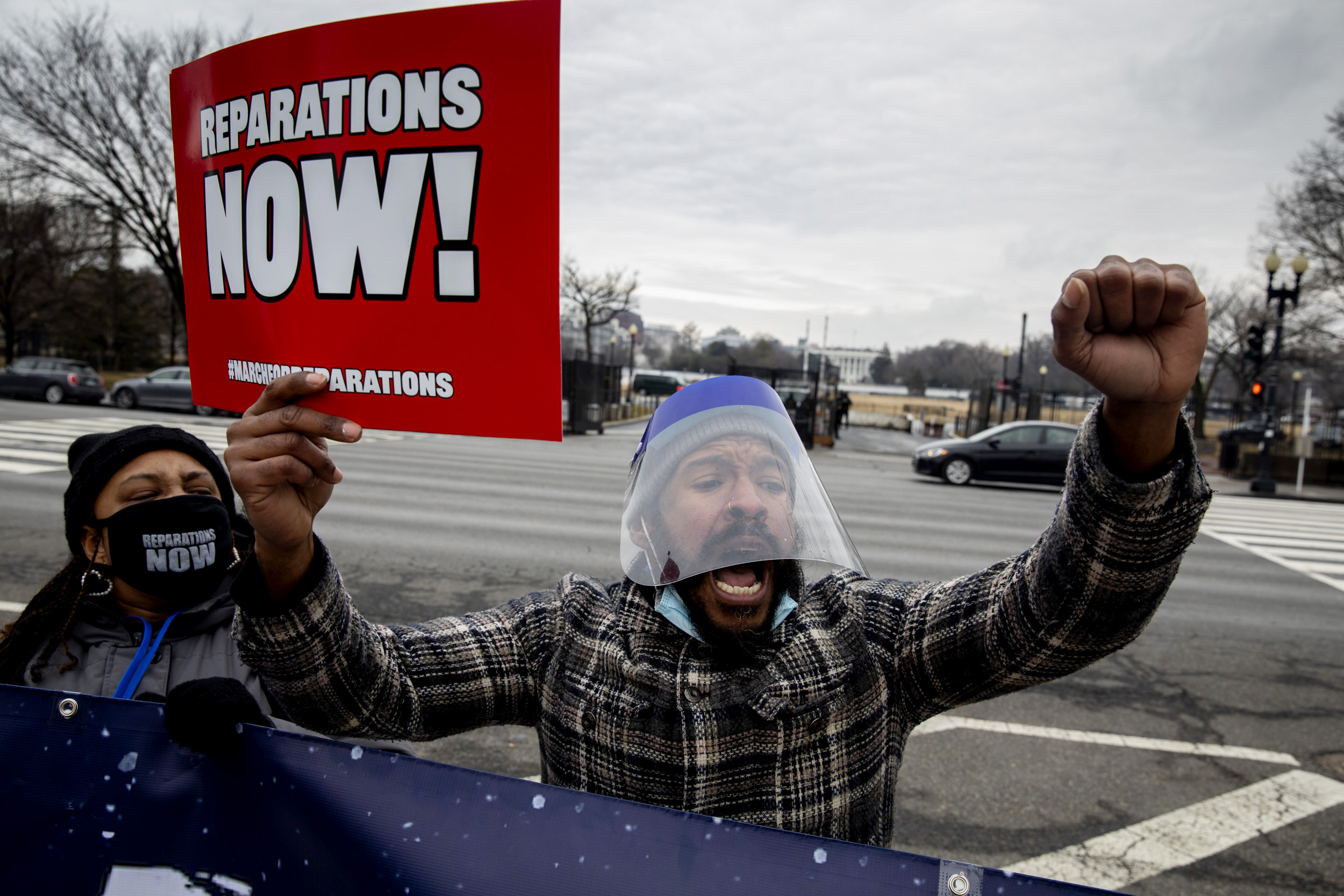
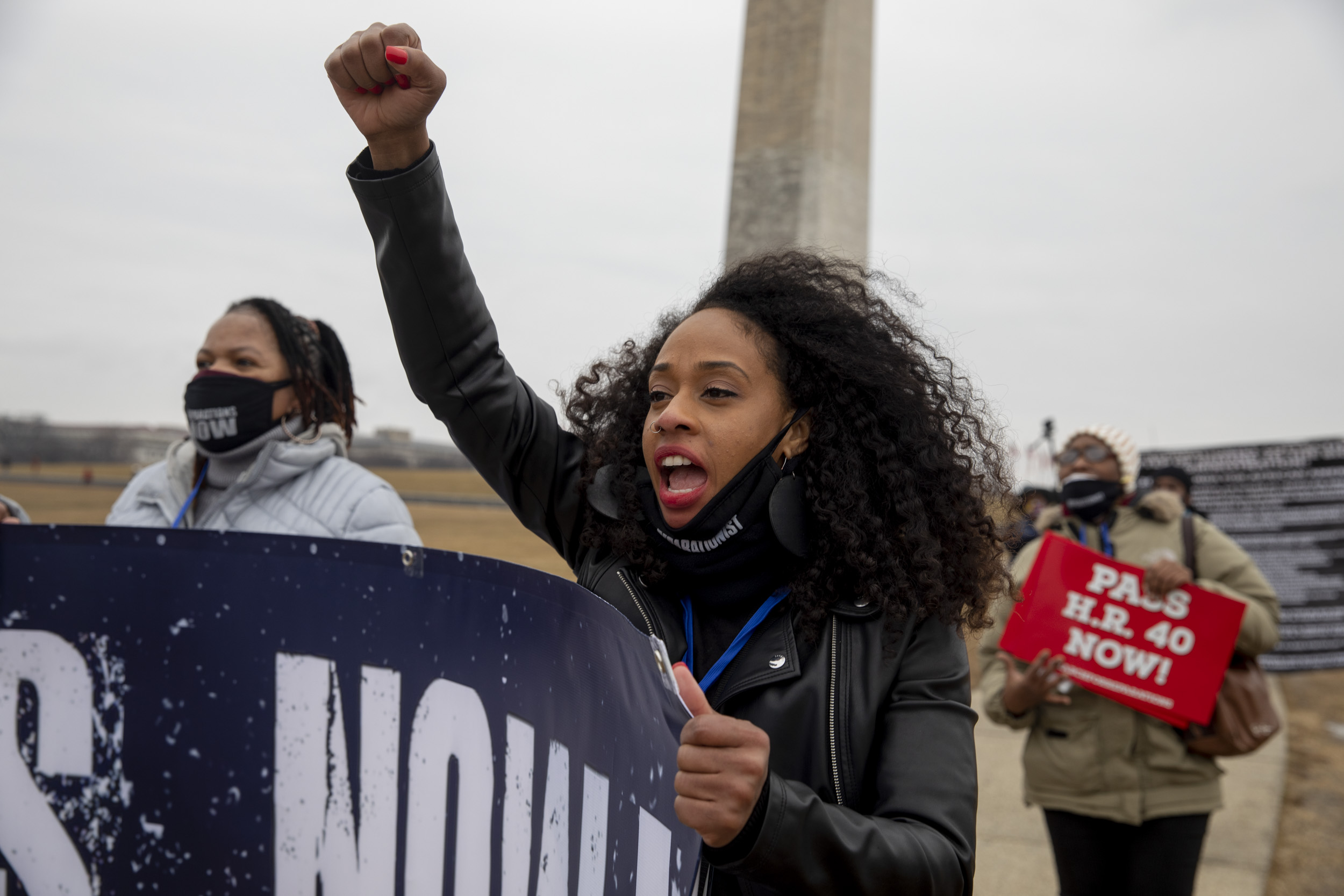
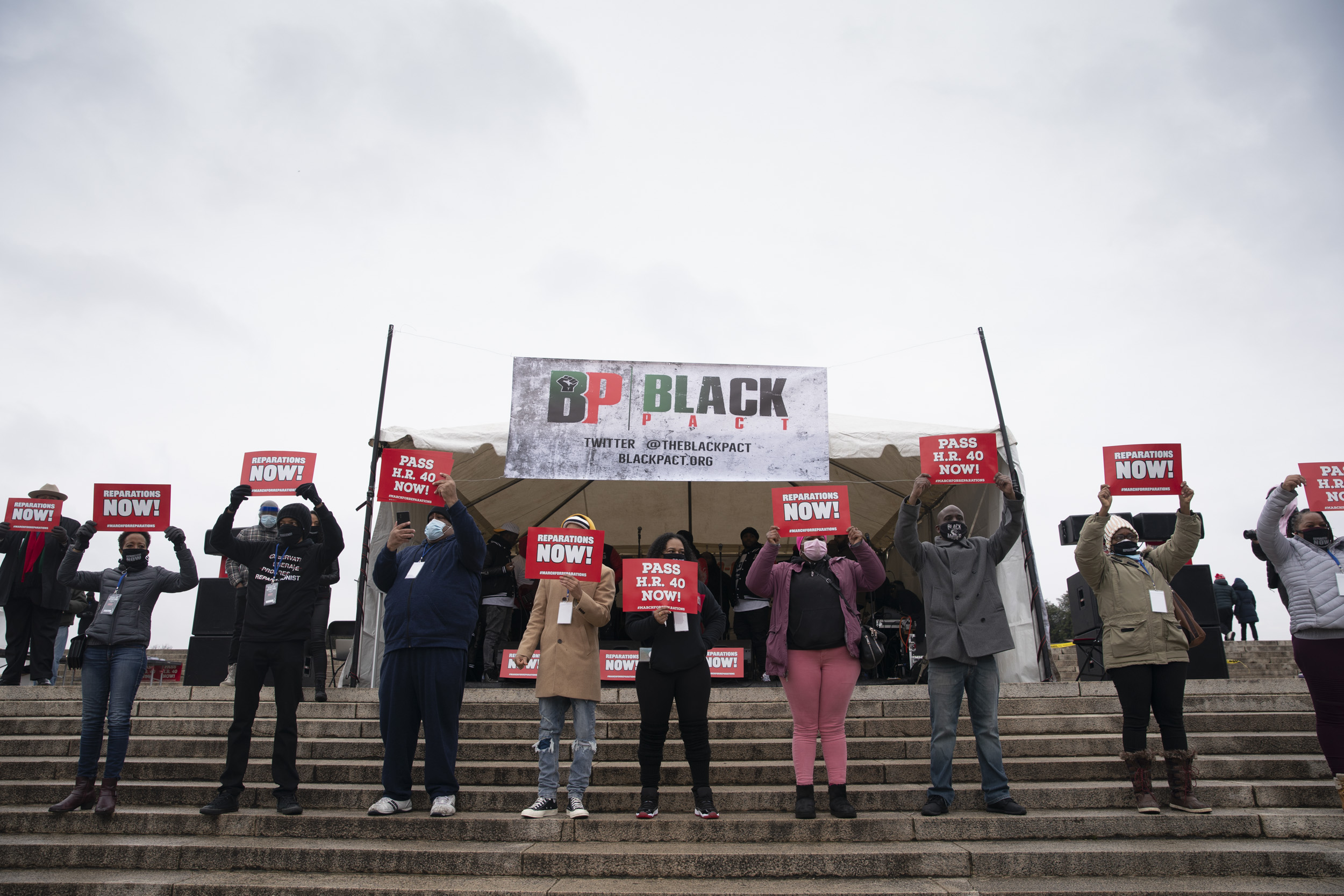
A few dozen marchers gathered in freezing temperatures on Sunday for The March for Reparations after the event’s original date was pushed back due to the insurrection on January 6.
The march was initially meant to overlap with President Joe Biden’s inauguration on January 20, but the event wasn’t permitted amid broad security measures after the attack on the Capitol building. About 500 people were slated to attend the original march to demand action on reparations for Black Americans for centuries of systemic oppression.
On Sunday, about 50 people gathered in person and hundreds streamed the event online, says Tara Perry, lead organizer of the march and founder of Black PACT, a California-based group that organizes reparations movements.
March participants said they showed up in the freezing weather to express their dissatisfaction with the current state of affairs for Black people in the U.S. and to ask that the Biden Administration move the needle on reparations legislation to close the wealth gap for Black Americans.
Gregg Marcel Dixon, a fourth grade school teacher from South Carolina and a member of The Reparationist Collective, planned to come to the march in January, but says he showed up in February to protest the wealth gap between white and Black Americans.
“I would invest so much into my students and see them fall into crime, become victims of crime, or a lot of them were still stuck in poverty, even the ones that went off to college,” says Dixon. “I always knew it wasn’t about working hard … Black Americans are excluded, violently discriminated against, violently disenfranchised, deprived of their basic humanity, deprived of land, deprived of opportunities to build wealth.”
Statistics show that Black Americans are indeed substantially worse off economically than white Americans. On a national level, middle-class Black households in 2016 had slightly over $13,000 of wealth compared to nearly $150,000 in White households, according to the Washington Post. On a local level, White households in D.C. have 81 times more wealth than African Americans residents, according to the D.C. Fiscal Policy Institute.
During the event, Sammy Sanchez, founder of Reparations Now Coalition, spoke about the “oppression and suffering of Black people,” reparations including health care and education resources, and allyship from other groups. (Sanchez, a Dominican American, gave his speech in both English and Spanish.)

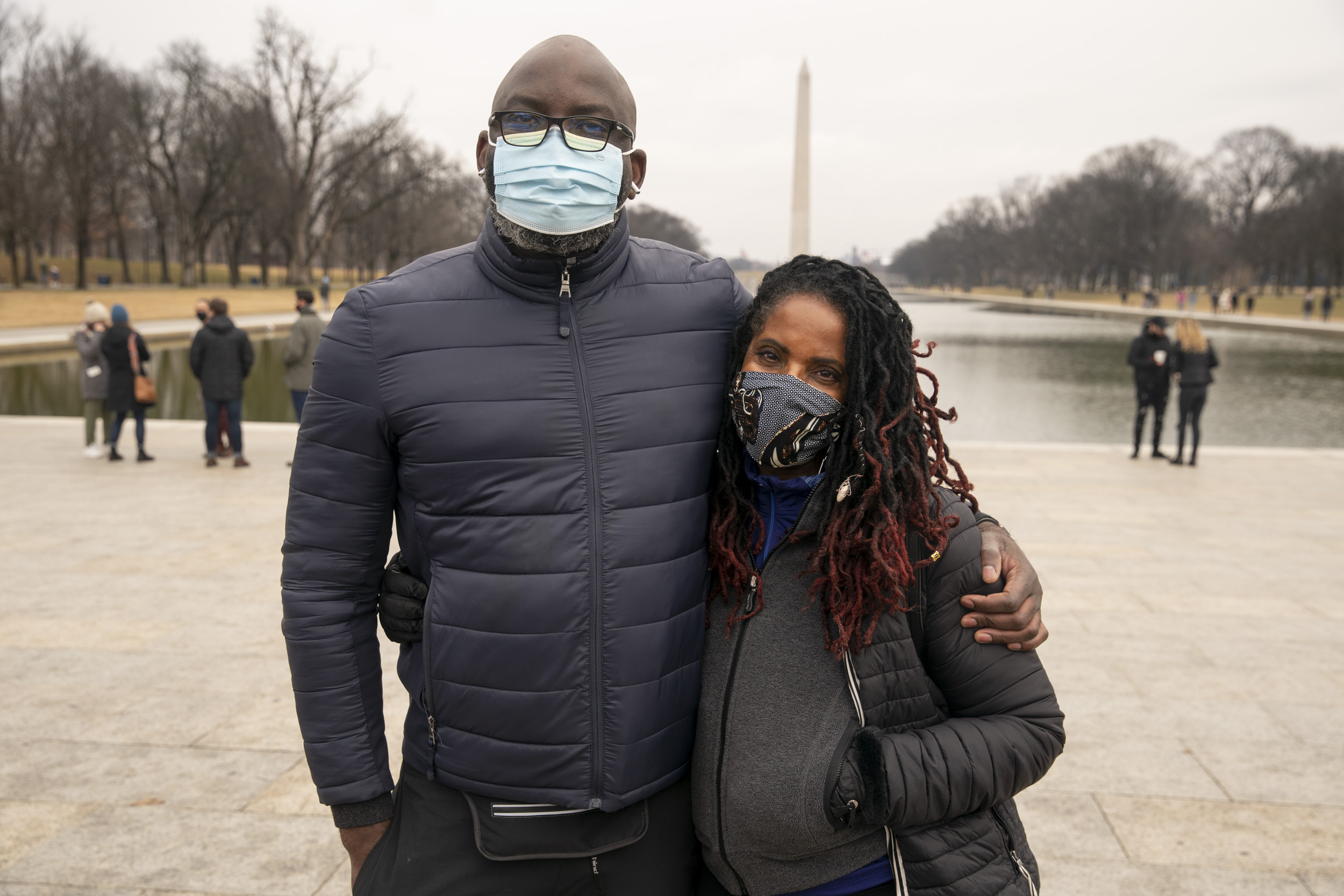
In the audience, Ketchazo Paho, a Bethesda resident who grew up in Cameroon, stood listening.
“Even though I won’t be a beneficiary of [reparations legislation], I think if Black brothers and sisters here benefit from it, it’s good because it makes us [all] better,” says Paho.
Still, Paho says his presence at the march was personal. In 2018, a cyclist repeatedly called him the n-word and struck him in the head with a metal bike lock while he drove through Georgetown. In 2019, the white attacker was convicted of assault, but a jury deadlocked on the question of whether the attack was racially motivated.
Paho says reparations means “respect.”
“It’s time for people to respect my people,” he says. “I’m a firm believer that it’s due, that it’s owed to them, and I will fight and I will march for it.”
On the 26th day of President Joe Biden and Vice President Kamala Harris’ first term, march participants gathered at the Lincoln Memorial to demand that during Biden’s first 100 days in office, he sign an executive order commissioning a reparations study. While a bill, H.R. 40, has been introduced in the House proposing a study to explore reparations payments for African Americans, the group wants Biden to use an executive order to commission that study now.
“The process of the [H.R. 40 bill] will take so much longer. [Congress] has to have multiple hearings – judicial hearings [and] meet with the budget committee,” says Perry. “We can go through a song and dance just for a commission to be empaneled. … [Or] Biden can just [create] a committee right now.”
Biden has already signed several executive orders since taking office, including one rescinding the travel ban from Muslim-majority countries and one overturning a ban on transgender individuals serving in the military. Recently, the Biden Administration also announced that it would pick up where the Obama Administration left off and resume efforts to put Harriet Tubman on the $20 bill.
“Harriet Tubman would want African Americans to receive payment and repairs for slavery and not just her picture on a $20 bill. … She didn’t fight for that,” says Sanchez. He adds that he’s not against Harriet being on the bill, but says that’s only part of the change: “By all means, put Harriet on the $20 bill and then print all those $20 bills and give them to African Americans. That will help.”