 Dominique Maria Bonessi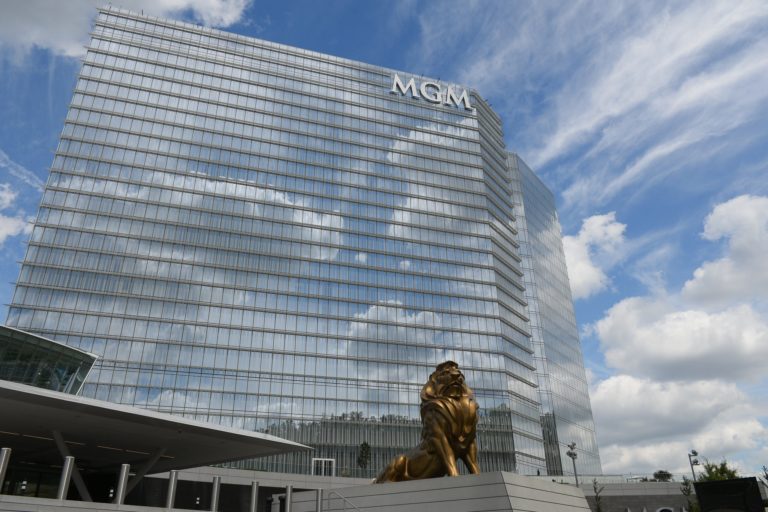
Governor Larry Hogan placed Maryland’s first sports wager on Thursday at MGM National Harbor casino, one of five casinos across the state launching their sports betting services this week. The state plans to issue an additional 90 licenses.
“Today marks the culmination of years of effort to get sports betting up and running here in the State of Maryland,” Hogan said in a statement. “In addition to allowing Marylanders to bet on the NFL, March Madness, and more, sports betting will also help to keep more dollars in-state and will provide another critical revenue source for public education without raising taxes on families and small businesses.”
At the same time, Prince George’s County Senator Paul Pinsky (D) says the delay in the rollout of sports betting and revenue expected from these licenses is holding up the implementation of the state’s new education reform measures.
When the bill legalizing sports betting was approved earlier this year, Marylanders were sharply divided on the issue; at least 43% of state residents opposed expanding gambling to allow sports betting online and 49% opposed it in casinos and horse racing tracks, according to a Goucher College Poll. In the bill, state lawmakers agreed to issue 10 sports betting licenses to the state’s larger casinos, the Laurel Horse Racing track, large bingo facilities, and sports teams like the Ravens and Orioles.
There will be 30 additional licenses issued for restaurants, bars, small race tracks, and other businesses for on-site betting, and up to 60 more companies getting mobile licenses for online betting.
The slower rollout in distributing licenses to smaller businesses has to do with equity, according to Dann Stupp with PlayMaryland, a research and analytics firm that tracks online gaming among states. He explains the state’s Sports Wagering Application Review Commission is taking a cautious approach to approving licenses.
“They’re especially putting a focus on making sure that women and small businesses and minority businesses get a chance to get involved,” Stupp told DCist/WAMU.
Stupp says the commission aims to avoid mistakes previously made by the state’s medical marijuana commission, which in 2016 issues licenses mainly to white business owners.
Other localities in the region, like Virginia, already have a head start. After launching sports betting earlier this year, Virginia became the fastest state in the U.S. to reach $2 billion in total sports wagers, according to betting.us. D.C. legalized sports betting in 2019, putting Maryland behind the rest of the region.
That could be significant, since those first out of the gate can gain an early lead. Stupp notes that some sports betting license holders in Virginia have had an advantage over others. He says FanDuel, a private mobile operator in Virginia, launched three days ahead of all other sportsbooks and has been generating higher revenue than others.
“We’ve seen in other states. If you’re not the first out of the gate or among the first out of the gate, it’s virtually impossible to catch up,” he said.
“A lot of Maryland people are driving over on the weekends to place their bets,” Stupp said. He added that since Maryland is the 11th state to launch sports betting this year, the market is becoming more competitive. “They’ve got some catching up to do.”
In the District, however, sports betting revenue has been disappointing, with private mobile competitors siphoning off a sizeable chunk of business from GambetDC, the city-operated betting system, according to the Washington Business Journal. Between May 2020 and March 2021 tax revenue from sports wagering in the District totaled about $1.8 million, around $4.4 million less than D.C. Lottery officials anticipated.
In Maryland, the slow rollout of sports betting has also delayed funding to implement other state and local programs. The Accountability and Implementation Board, created earlier this year by state lawmakers to oversee the implementation of the state’s long-awaited education reform measures, is waiting on the tax revenue from sports betting to begin their work.
In 2020, when lawmakers passed the education reform measures, also known as the Blueprint for Maryland’s Future, it stipulated that Hogan was required to allocate $1.8 million from sports betting revenues to the board each fiscal year. Hogan vetoed the blueprint and was not required to include the funds in the 2022 fiscal year budget. By the time the board met for their first meeting in November, they didn’t have the funds to start their work of implementing the state’s new education reform measures.
Senator Pinsky, chair of the senate committee that passed the blueprint bill, says Hogan has had other opportunities to transfer funds to the board, but hasn’t done it.
“The governor is dragging his feet,” Pinsky told DCist/WAMU. “The governor has not wanted to fund it. He basically wants it to be unsuccessful.”
Pinsky says he’d like to see any revenues generated from casinos to go directly to fund the board. In January, Hogan will be presenting the 2023 fiscal year budget to lawmakers, which is expected to include funding to the board and the education reform measures. It’s unclear how much funding will be available from sports wagering revenues.
Experts at PlayMaryland.com predict that sports betting could generate $35 million in revenue for the state, but only 10% of that is from casinos. Stupp says the majority of the revenue would come from online sports betting companies.
“I’d be hesitant to earmark the money for anything specific right now,” Stupp says. “It will generate revenue when the market starts to mature, but it’s impossible to know how much it’s going to be and exactly when that’s going to happen.”
The sports wagering commission has given the second half of 2022 as a tentative date to launch mobile betting, but Stupp says a lot can slow down the process.