 Dominique Maria Bonessi
 Naomi Starobin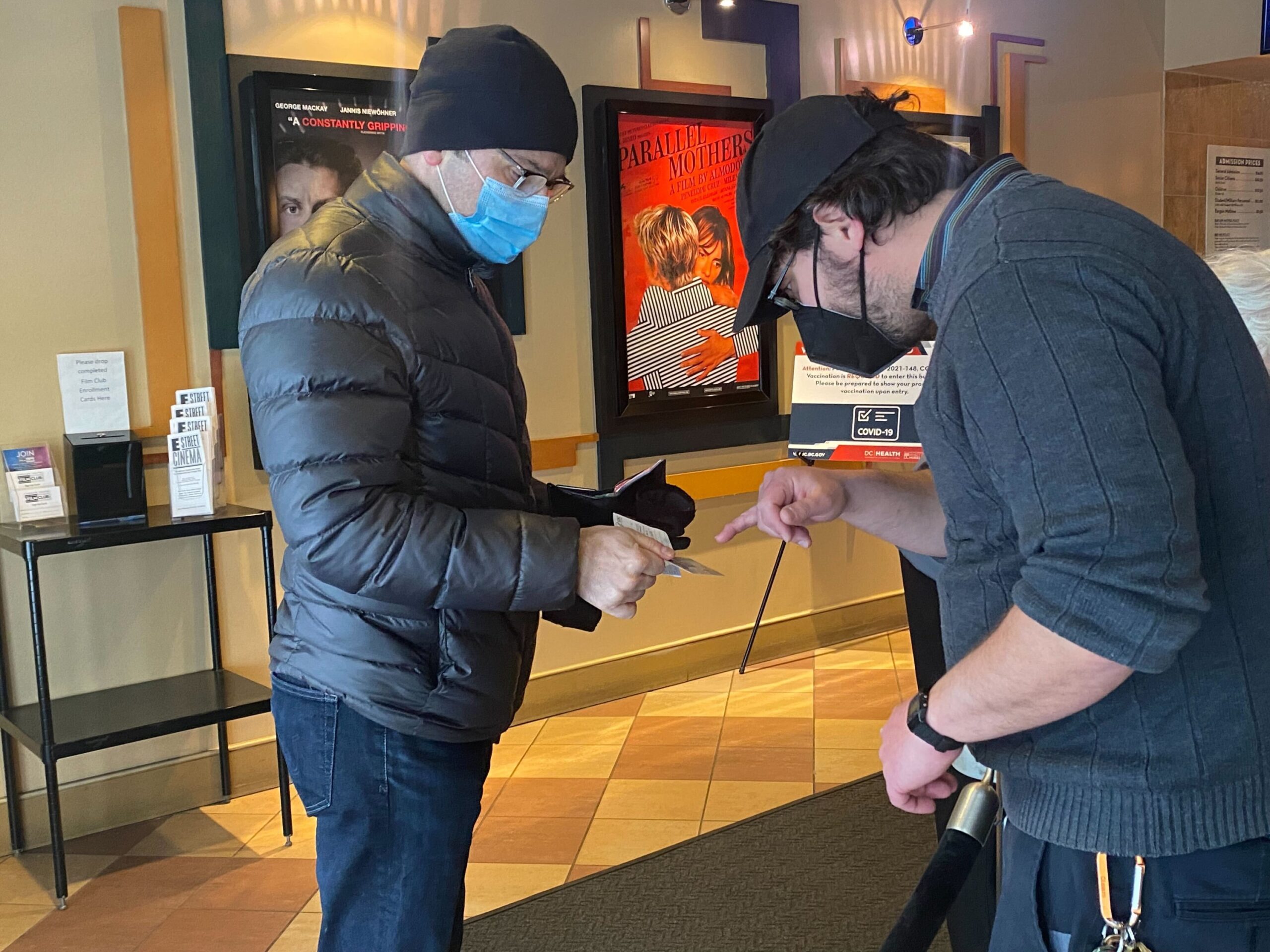
As Sarah Bryant headed into the E street Cinema on Saturday to catch a matinee of “Drive My Car,” theater workers greeted her near the door, asking to see her COVID vaccine card and ID. Once cleared, she and other moviegoers got a neon green wristband as proof they complied.
Bryant said she got an email about the new requirement from the theater ahead of time, and was ready. She said she feels bad for businesses.
“Because obviously they’ve been hit by the pandemic,” said Bryant. “And then I think just having to logistically deal with this on top of everything else is just another hassle for them. But today was fine. I think you just have to be prepared ahead of time and have everything ready to go.”
Movie theater staff, other business owners and employees, and patrons began adapting to the District’s new vaccination mandate that went into effect Saturday. It requires people to show proof of vaccination to enter some establishments.
D.C. Mayor Muriel Bowser announced the mandate late last month saying it was intended to get more residents vaccinated. As of Saturday morning, anyone 12 years and older entering certain establishments, including restaurants, fitness centers, nightclubs, bars and movie theaters, will have to show proof of one dose of a vaccine. Later, on Feb. 15, two doses of a vaccine will be required for entry.
Currently, there is no plan to require establishments to check for boosters, but some local businesses are independently requiring proof. People 18 and older must also show ID.
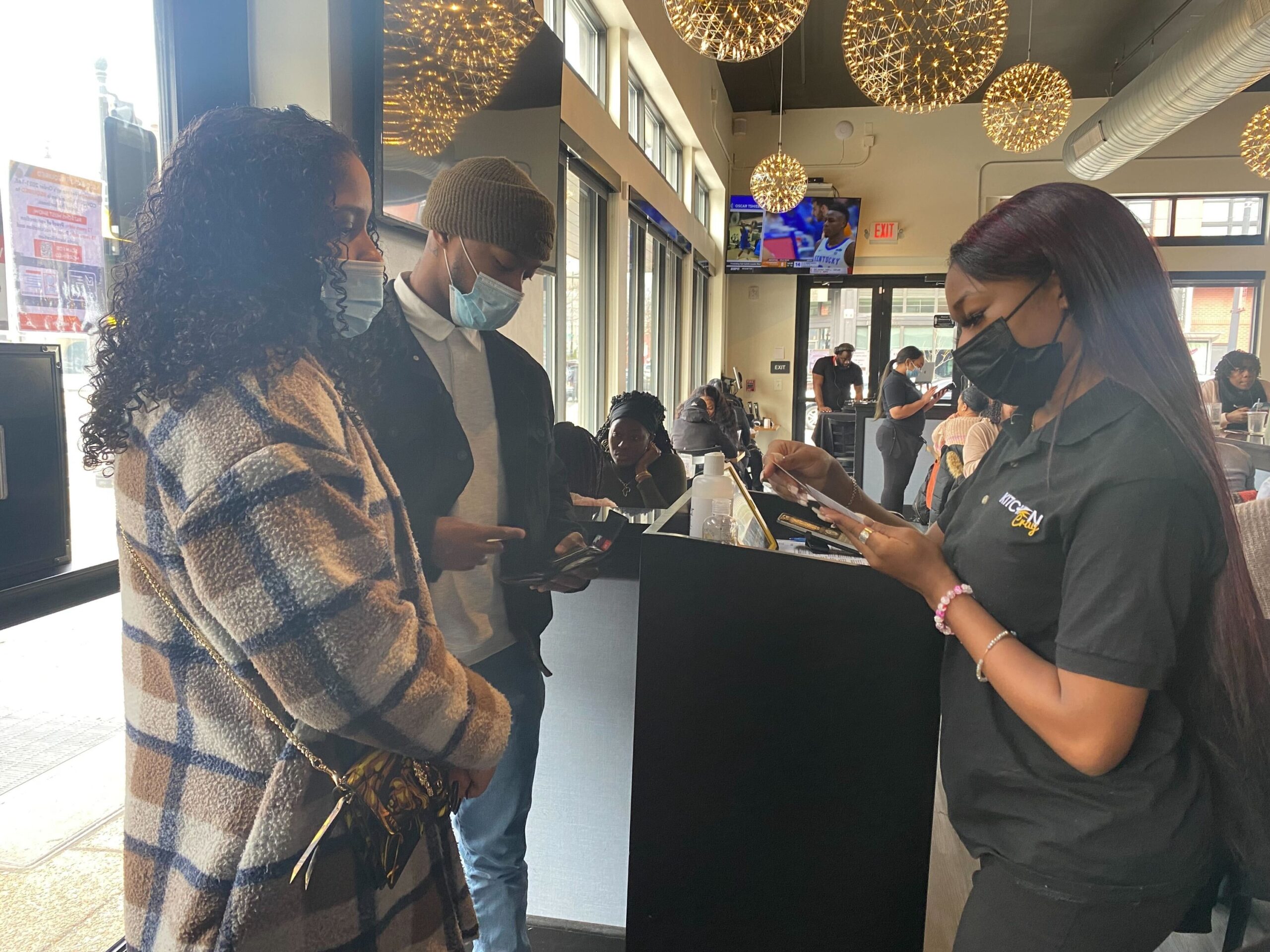
Kitchen Cray Restaurant on H Street NE opened at 11 for brunch. Warren Green, who manages the company’s three New Orleans-style comfort food restaurants, said they had already been pro-mask, did regular temperature checks of patrons and handed out sanitizer. They’ve been reminding people of the new mandate when they take reservations.
“Most people have been amicable in regards to that,” Green said. “We’ve had a few complaints about it, but of course, we just have to let them know that this is something that’s mandated across the D.C. area and it’s not a Kitchen Cray policy, but a D.C. policy.”
He also arranged for his security team to come to work earlier than usual, to deal with the new requirement.
“We are incurring some extra expense in that sense to bring in extra security to make sure that we can accommodate the flow of traffic,” he said. “We don’t want folks waiting outside in the cold because we have to check vaccination status now.”
Green said he took advantage of some of the funding available from the federal government for businesses in 2020 and 2021, but he could use more now.
“This year it’s a whole new year and we still have the same bills,” he said. “We still have the same responsibilities as far as ,you know, our overhead and things of that nature. And it’s been very difficult to be honest with you.”
Sandra Basanti, owner of Pie Shop DC just down the street from Green, agrees and applauded Bowser’s efforts to increase the number of vaccinated people, but said “when you’re using small businesses, provide them with the support to accomplish that goal safely and make sure that we can stay open.”
Pie Shop DC and some other businesses around the District were already asking for proof of vaccination when they reopened to patrons last August.
“I don’t know that people really realize that this is the hardest time ever in this pandemic for brick-and-mortars in Washington, D.C.,” Basanti told DCist/WAMU.
At fast-food restaurants, like the Chipotle on Georgia Avenue near Howard University, the rules for patrons are a bit murky. According to the DC Health, if you are “briefly entering” a restaurant to use the bathroom or grabbing food-to-go, you do not need to show proof of vaccination. People dining in will need to show proof of vaccination. Howard freshmen Hailey McMannen and Gianna Turner were getting a bite and catching up after McMannen had moved into her dorm for the Spring semester.
McMannen, who’s from North Carolina, said she learned about the D.C. mandate from the signage posted in the window, which is now required.
“I thought it was kind of cool. I’m from the South, so they don’t really enforce it the same way that they do here,” she said. “You have to show your card, and I was like ‘Oh, that’s a good way to be safe.’”
D.C. Police say they are prepared to handle any confrontations with resistant patrons, and the city’s Alcoholic Beverage Regulation Administration will issue warnings and citations to any business that doesn’t comply with the mandate.
The D.C. mandate and similar ones elsewhere have received attention from groups protesting mandates. Next week, a protest, called “Defeat the Mandates: An American Homecoming,” is planned on the National Mall.
Protest organizers submitted an application to the National Park Service earlier this week saying they anticipate 40,000 attendees at the event. NPS officials say the permit will likely be granted next week. According to the protest website, those attending the demonstration are asked to “remain peaceful and nonviolent at all times.” The event spokesperson told DCist/WAMU that anyone attending the anti-mandate protest should not disrupt local businesses.
The protest comes as Republican members of Congress have been pushing to do away with D.C.’s vaccine mandate. Earlier this week, some Republicans drew comparisons of the mandate to Nazi Germany. Rep. Matt Gaetz (R-Florida) introduced a bill that would end the vaccine mandate for businesses. And last week, Sen. Ted Cruz (R-Texas) introduced legislation to overturn D.C.’s vaccine mandate for schoolchildren.
Rep. Thomas Massie (R-Kentucky) pledged to avoid patronizing D.C. restaurants.
The DC vaccine mandate kicks in this weekend. My office will not comply. We will not show papers. We will not order takeout from restaurants that require papers for dine in. We will get our food from Virginia or we will bring it to work. Shame has befallen our nation’s capital.
— Thomas Massie (@RepThomasMassie) January 14, 2022
According to DC Health, almost 90% of D.C. residents are either partially or fully vaccinated. In most of the District’s surrounding jurisdictions, more than 80% of residents have received at least one dose of a vaccine, according to data from the Centers for Disease Control and Prevention.