Dee Dwyer
 Martin Austermuhle
“As we all know, wards 7 and 8 have been neglected for years on end, no matter who’s in charge or who wins.”
That’s the brutally honest assessment that Adedayo Kosoko, a Ward 8 Educator, recently gave us when we got to talking about this year’s mayoral election in D.C. Fair or not, Kosoko’s take on the state of the majority-Black and predominantly low-income areas east of the Anacostia River has long held, and has in many ways gotten more entrenched as development, businesses, and new residents have flooded into neighborhoods on the other side of town.
For as much as D.C. as a whole has grown, many residents of wards 7 and 8 say they’re little better off than they were four years ago, or four years before that. Violent crime and homicides remain a persistent concern; a majority of killing in any given year occur east of the river. More than 20,000 people in Ward 8 have tested positive and 258 died from COVID-19 during the pandemic, higher than any other ward in the city. Despite being home to 160,000 residents, wards 7 and 8 only have three full-service supermarkets; Ward 6 alone, directly across the river, has 14.
Many of those realities aren’t new, nor are the repeated promises from many candidates and elected officials that they will turn the tide. When Mayor Muriel Bowser first took office in 2015, she appointed a new deputy mayor who primary focus was wards 7 and 8. She has also pushed development from the St. Elizabeths campus (home to the new Washington Mystics arena) to Anacostia, and pledged to move more D.C. government offices to areas east of the river. In recent weeks, she announced that two new supermarkets will be coming to wards 7 and 8.
For some residents in wards 7 and 8, it’s slow but necessary progress. For others, it’s too little too late. For Kosoko, he wants areas east of the Anacostia River to prosper — but not necessarily change. “I really want to hear about how they plan to keep Ward 7 and Ward 8 as authentic as possible, but giving them the same resources allotted to other wards,” he says of the mayoral candidates.
Either way, this year they’ll get a chance to take those opinions to the ballot box as Bowser seeks a third term against a number of Democratic challengers — including Ward 8’s own councilmember, Trayon White. DCist/WAMU spoke to a number of residents — including a couple of candidates — about what they’re thinking ahead of the mayoral election. Responses have been edited for length and clarity.

Trayon White, D.C. Councilmember and Mayoral Candidate
My name is Trayon White, running for mayor for Washington, D.C. I’m currently a city
councilmember in Ward 8. I’m running for mayor partly because it’s the grand frustration I represent. Not many will participate in the economic growth of the District. As a councilmember in Ward 8, we have a number of social issues that we face each and every day. It has been a tug and pull of trying to get the basic things that we need across the river. While I see other counterparts getting better quality of services, better schools — and [they] are able to get things without really having to organize a protest in a city that is thriving economically. I’ve been on the council. We originally had a $14.5 billion dollars in the budget and now we have $17.5 billion. We haven’t seen that reflected in the needs of especially indigenous, Black, and people of color in D.C.
I think that any strong community has strong education. We are in a place now were we see our Black and brown children getting left behind in significant numbers while we’re saying that we are the fastest growing education system in the country. That narrative is not facts. We can’t fix the thing until we acknowledge what the problems are. In D.C. we run a lot of false narratives and pat ourselves on the back. We have a large dropout rate among Black and brown boys in Washington, D.C. The achievement gap has widened in the last seven years. There’s no accountability for [the] School Reform Act between the mayor and the State Board of Education. And so we are looking to do some things different. We’re looking to leverage our relationships with the business community so we can build a path to college and career entrepreneurship in all our schools starting in middle school.
There’s an issue in health equity. We’ve been fighting and scratching trying to get healthy grocery options east of Anacostia River, [and a] quality health care system in which we made tremendous progress with that in the last three years. There’s also an issue of housing. We’re in a housing crisis and our current mayor touts herself as the housing mayor and we’re supposed to reach 30,000 affordable housing units by 2026. We’re far off and we’ve seen the recent articles of the mismanagement of the Housing [Production] Trust Fund money, where $80 million dollars is missing for those people who need it the most. It’s a matter of accountability, it’s matter of priority.
In the past three years, homeless people were removed out of tents and put in worse situations than they were started. There’s no way we’re sitting in Washington, D.C., what the amount of [money], and we can’t meet the basic needs of the citizens of D.C. I’m a Ward 8 councilmember, so I reach out to the mayor more than most. The average person is unable to reach the mayor. I had a teacher at Anacostia burst out crying because she’s the engineering teacher saying she still doesn’t have supplies for her students in January. With the school system having over a billion-dollar budget?
I don’t see no other candidate connected to wards 7 and 8 more than Trayon White, hands down, point blank, right? Born and raised graduated from Ballou Senior High School still live east of Anacostia River and in the trenches each and every day. What I want to do differently is make people more inclusive in their own solution and empower people to become more self-sufficient. I created a bill called the Commission on Poverty to invest and fund people living in poverty. We want to create more home ownership in D.C. east of Anacostia River; we have almost 71% of people renting. That’s not the same dynamics in other places throughout the city. We know if we create the right programs, right infrastructure and the right systems we can get people from dumping money into a black hole every month.
We’re going to figure out how we’re going to use programs like the Housing [Production] Trust Fund to create leverage and keep houses more affordable. We want to leverage community land trusts, to leverage home ownership in addition. We want to leverage displacement-free zones to freeze taxes in and around [areas] that’s hardest-hit by developers. We can work with new people without pushing out the people that were there before. That’s what we’re going to do. We’re doing some of that now. We’re not just talking the talk, we’re walking the walk. I was the one who went to the mayor and said, “We needed a new shelter for the men on St. Elizabeths.” We just cut the ribbon. I was the one talking about the recreational centers closing down, and we wonder why the kids are committing crimes.
One other note is public safety. We have never seen as many women and kids shot in Washington, D.C. ever in my life. Part of the reason why we’re here is part of the neglect that happen in the last eight to nine years. The narrative at the press conferences and in the meetings was crime was down by the police chief and the mayor, we was saying, “Yeah, crime is down — down the street.” Our campaign is about action, it’s about motivating everyday people that’s living in D.C.

Melanee Williams, Business Owner
My name is Melanee Williams. I’m connected to wards 7 and 8 because my family and I have a business called “A Beautiful Balance” geared towards the youth. What we do is we bring the arts to the community and we help children know that whatever it is that they desire or dream through the arts, that it can happen. So we provide different skills – art, sewing, social skills, and etiquette and mentoring.
I was born and raised on Capitol Hill, and when my mom moved over to Ward 8, I was actually shocked and surprised that you can be here in this city and as soon as you cross over to another area in D.C., it’s like a whole other world. Growing up in Capitol Hill you see that there are people who attend all of the meetings, they get things done and that’s what I was used to.
So with this upcoming mayoral election, I feel like whoever is going to win has to deliver. I also feel like they need to join forces with other residents in the community to make things happen because I see that there’s a lot of loose ends. So for myself, you know, I would love to just see that major shift and a major change because there’s no reason why we in [wards] 7 and 8 should be left behind. There’s no reason why! So I feel like whoever does win, they need to make sure that they’re stepping up and really following through and really have their army so that there can be the change that wards 7 and 8 needs.
I feel more resources are needed. We’re dealing with a generation that needs to have some type of guidance, and more funding for more recreation is the area. We need people who are going to work everyday and make something happen. Game time is over, you know, because we’re in a whole world where things are constantly changing and we need to be a part of that change.

Kymone Freeman, Activist
I’m an angry Black man in therapy. I’m connected to Ward 8 through WEACT Radio, an independent radio station on the radical side of Martin Luther King Jr. Avenue. Hopefully this will be the last race where we have difficult choices without having the benefit of ranked-choice voting. Ranked-choice voting gives you the opportunity to vote for people in the order of your preference to find out who has the true majority support of the city.
The fact that the wards east of the river have historically been neglected means they need to be respected, and that respect needs to come in the form of community development, not economic development. I don’t think we need to have a transformation where it makes [us] look like 14th Street. We need to have development without displacement. We need to have public policy with public input, and we need to make sure that we are at the table implementing that. We need to have co-ops as opposed to multinational chain stores. We need to have some ownership. We need to have investments [that] we need. We need to be set up in a position of empowerment and not continue the situation where they come down the mountain and tell us what’s best for us with this paternal relationship that we currently have now.
I think we should demand more. I think people should educate themselves, and they could easily get a better idea of what they should be asking for by reading Dr. King’s last book, Where Do We Go From Here: Chaos or Community? Because you know, it’s a difficult road ahead, as long as we’re going to have to realize that things have changed. The pandemic is a crisis that created opportunities to see that there’s cracks in the system. Whenever we hear someone say, “Get back to normal,” that means normal was working for them, but normal wasn’t working for everybody. And I think the pandemic was the first time that poor people got a vacation, and that now the system is trying to save itself – its expecting these people to now pay for their vacation. And I think that we’re going to have to acknowledge that profit over people is no longer there.
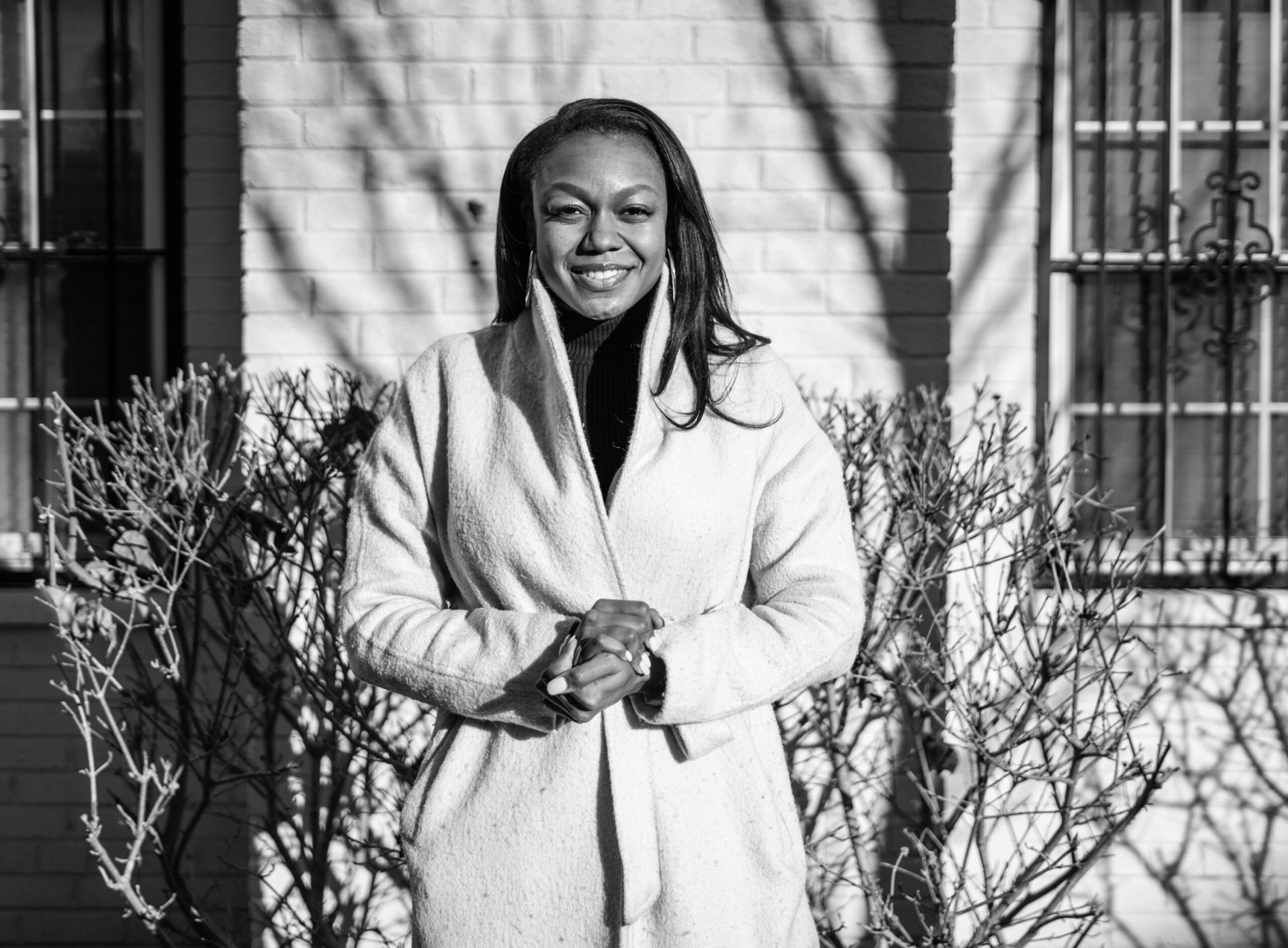
Sharece Crawford, D.C. Council Candidate
I am a native Washingtonian. Born and raised in Ward 8, but have family in all four corners of the city. I grew up in the Congress Park community and I served as an Advisory Neighborhood Commissioner for 8E04 and 8C03, as well as a graduate of Ballou Senior High School. The biggest issue [we’re dealing with now] I think if you’re looking at the combined crises that we are managing right now, the biggest, in my opinion, would be the massive wealth gap. I think the level of homelessness that we’re experiencing, the level of crime that we’re experiencing, even in addition to how students are not being able to feel safe and secure in their school, is an economic crisis. So I think it’s three-fold: It’s economics, it’s education and it’s housing security. This divestment in our young people — we’re now seeing the compound effect of that.
I like to work with her [the mayor] to be more inclusive of resident voices and really ensuring that the leaders in this town have a solid voice at the table. I was there for the Good Foods Market [grand opening], but the residents in ANC 8D fought hard for that and really didn’t get the [credit]. It’s difficult when you’re the mayor. But then it’s the residents for years going through the suffering, having to live in food deserts, having to live in economic despair. I think that’s going to be the way forward for any person; leadership is amplifying the voices that are closest to the pain and closest to the trauma.
There’s been a lot of work done on St. Elizabeths campus, there’s been new opportunities for homeowners. The St. Elizabeth’s Hospital, the Gateway has become an entertainment hub. I have not seen the local business growth the way I’d like, and have not seen the elevation of economic stability and security. There’s two libraries in between me that really tried to cover the brunt of the kind of entrepreneurial needs for this community, but I really think that we have to funnel more economic support systems, more business incubation, more business opportunities. I’ve seen the growth, but I also see that we have not economically advanced any further than when I was a commissioner 10 years ago.
I want to see the voices of the people amplified. What are we not hearing from our neighbors, from people who pay taxes, from people who pay more taxes per capita than any other city in the country? They want safe schools for our children. As a future mother, I can relate to that. I want safe schools for my children. I was with the educators at Anacostia Senior High School. They have bullet holes in their classrooms. It’s unacceptable. They have not done clean sweeps to make sure that the schools are COVID-safe. It’s unacceptable. And we are still bulldozing over homeless residents when providing temporary solutions, when we need permanent, secure housing. We know that homelessness is a public health crisis and it has been for a very long time. These are the things that the people, the voices of residents in this city are saying resoundingly that we want to address. And we want our leadership to be working together and not pointing fingers on top of our severe public safety crises, from transportation to gun violence to carjackings. We need to show up as a united front, and that’s what I’m excited to do.

Isiah Thomas, Non-Profit Worker
I currently live in Ward 7 and work with non-profits in wards 7 and 8. I actually think there’s a good couple of candidates, you know, it’s not going to be like a walk in the park for [Bowser] and I think that’s what is needed. Just overall and in general, just a progressive city like Washington, D.C., I think there’s some valuable candidates. Trayon White is always going to be valuable. Robert White, I think he’s valuable and I think the current mayor can enhance some of the ideas that she has more so for the people in the communities, I think that, you know, she’s a good choice as well.
I think one thing that’s needed definitely more in wards 7 and 8 today is financial literacy. A lot of times we mismanage our money and don’t put it in the right place. That kind of causes this trickle-down effect. I’m privy to some information regarding trucking. I know they’re going to start allowing 18-year-olds to become truck drivers. Previously, I think it was like 21 years old. So I think that’s going to help.
If we can kind of have like a targeted approach to combating gun violence and the youth violence, I think that’ll help be the catalyst for change in the community for D.C. in wards 7 and 8. We have to do a better job with connecting with the community, actually being in the community.
Most people I speak to don’t know who their councilmember is. They know the mayor, of course, but they don’t know what a councilmember is. I just think like a more authentic relationship with the community should be established.

Chef Ki, Restaurant Owner
My name is Chef Ki. I’m from Ward 8. I had a pop-up café in the Congress Heights Arts and Culture Center called River East Café for about three months. We tried to bring new innovative recipes and food to what’s considered the food desert of D.C. I’m excited to see some new eyes, new feet in office and just a new perspective. Me personally, I’m team Trayon White. I actually worked with him at Ballou [High School] on Manpower, D.C. That’s a program for boys and stuff. I got to provide food for that and saw how he was so embedded in the community and cared. You know, I think that’s what we need. I mean, at least from that aspect, you know, food nourishes the brain. And I think that’s what the kids need.
We need more programs in wards 7 and 8 that promote creativity in youth, even just working in the school system. I just I see a lot of the same stuff that I see on the street, you know, in the children. And I think that they don’t have a positive creative outlet. So they just, you know, act out or they do things they shouldn’t be doing. I don’t think that there’s enough programs or enough people who care enough to start programs so that the kids can have a positive outlet and creative outlet as well. Honestly, I don’t really see a whole lot of effort in ward 7 or 8 to really better us. They put things in wards 7 or 8 to try to create opportunities, but we don’t really be the ones taking them because it’s not really geared towards us taking them. It’s just gentrification and to make it look good. I don’t really have a whole lot of positive things to say about the mayor now or the past mayors aside from Marion Barry. He was a part of the people, so he gave the people opportunities. I just had a conversation with two of my colleagues, and we was talking about how they actually got their first work experience from, you know, Marion Barry’s job programs for the youth. So it’s just like to see that his efforts still positively impact people these days is just amazing.

Jeremy Ives, Educator
In Ward 8 I help run programming to teach young kings and queens how to be storytellers. We afford them opportunities to learn from professional creatives that look like them and tell stories in the neighborhood and their community. I think at the end of the day, we just try to give them experiences that they wouldn’t otherwise have.
I’m new to D.C. We had a creative studio that was in Northwest, and over the last five years I saw how Northwest changed. I saw how there were grocery stores. I saw investments that were made into communities. I saw on a monthly basis how communities were changing and I don’t see the same opportunities available for the kings and queens that are in the program that we work with. I remember being on a call, I think it was like a City Council call in the middle of the summer, you had community members that were begging for liquor stores to not have licenses renewed and for grocery stores to come in and the same liquor stores are still there. So I would hope that like with a new administration, we would see change to our communities, for our communities and you know, just leadership.
Growing up I was always busy, whether that was learning or playing sports or after-school activities like I was always busy doing something, it was a learning process. I think for the community one of the greatest things they could get is more resources for programming. We look at what education looks like today and we look at what the status quo of education has been. I think for communities like ours very specifically, it’s been challenging, and I think right now, ever more so it’s even more challenging because I think resources that we can afford our children moving forward right now is very important. That’s probably the number one thing that we could do is make sure that they have resources and opportunities to grow.
We can look at the people that are in the race and what they’ve done for their community in the past. To me, leadership is the most important thing. Being able to reach across multiple communities and connect with people is the most important thing. Having the ability to bring communities together to support is the most important thing. I would employ people to look at what people have done and what people are doing. The most important thing is that we can show out and vote for people that we support, we can get behind the person that we think is going to support our community the most.

Red Grant, Comedian and Mayoral Candidate
I was called to run for mayor. When I came home from L.A., coming back and forth, the residents, my friends all were asking me to run for office. I didn’t want to run for council because I’m not a legislator. Me being in business for the last 25 years, building this corporation, I feel like D.C. is a big corporation and it needs a leader that understands how to run it – me having a film company and working for the Viacom Network, BET, MTV, Comedy Central and developing over 25 shows for them.
You know, I’ve leaned on my business for so many years. A lot of people don’t know that was 90% of my life, 10 % was comedy. So I think D.C. deserves a person that understands how to allocate funds properly. How to run a corporation and also how to be a people person, a real humanitarian.
I see the physical changes that’s happening to Anacostia. I think we need to see great buildings going up, I just want it to be fair for our residents. I want them to be able to afford to be here. I want the businesses to be able to afford to be here. I don’t want to ever lose that feeling of being in Anacostia. They took the “Big Chair” away from us before, I don’t want them to take it away again because it represents so much.
This neighborhood itself was brought on and made very popular by Frederick Douglass in the 1800s, when they weren’t allowing African-Americans to live in this area. And a lot of people need to really research their history, understand when the Civil War was over and everybody left, Frederick Douglass bought up so much around here. The change is a good thing, but what’s not a good thing is the equity-sharing that’s not going on, the redlining in our communities and why we’re not sharing the arts and humanities with this side of town. I think that’s what’s been taken away from our communities. The programs and recreational centers, ways to keep our kids active. Our school systems should be at one with our rec department. They’re all under the same services but so separate.
When I look at the growth, I see the growth of the buildings but so many people are being left behind. Is it fair that most of the arts and humanities money goes to ward 1-4 and we get forgotten about in wards 7 and 8? Only about 10.4% of the money came over here, we have most of the kids in the public school system. When you look at crime, where it’s more programs it’s less crime and where you look at more crime, it’s less programs. This is something we have to look at, face the problem and align ourselves with the solutions.
It seems like when it’s time to vote everyone wants to put up the face, I don’t get involved with speaking on other people. I try to focus on what Red Grant can do and bring to the table. We have to start with a “Love, Care and Respect” system. It starts at the top. D.C. Government has to stop beefing with one another. We want the public safety issues to stop, we have to develop things healthy for our communities. We’ve been behind since slavery, we never really caught up. People think we’re asking for a handout, we’re not, we just want to be at the table, getting the same treatment as everyone else.
Our city is off right now, it’s time for new leadership. We have to start with listening, residents haven’t been listened too. It’s a shame we have a 18.5 billion dollar surplus in our budget but we don’t allocate the funds properly, that’s one thing I want to get to. I’m not in this for clout, I’ve been famous since I was 19, I don’t need no money, I’ve been well off for a long time. This is purpose over popularity for me. It’s a service, me being a humanitarian, the philanthropist I’ve always been.

Adedayo Kosoko, Photographer
I’m connected to Ward 8, which is the Southside, with the work that we do with The Creative School through Royal Exposure. We teach youths, who we call kings and queens, in the area about photography, becoming photographers, becoming creatives, and just becoming their own storytellers for their own neighborhoods.
As we all know, wards 7 and 8 have been neglected for years on end, no matter who’s in charge or who wins. I really want to hear about how they plan to keep Ward 7 and Ward 8 as authentic as possible, but giving them the same resources allotted to other wards. You know, you can read between the lines there, but you know that is essentially the heart of D.C. right now when it comes to the African-American community. They need to be afforded the same resources and changes that are happening in other areas of D.C. without having to be transported to the county or different areas, i.e. gentrification. So give the people there what they need and let them chill and let them stay.
The only changes I’ve seen down there really are some to the infrastructure, maybe some roads, you know how the traffic goes. Is there a shopping mall? Are there nice places to eat there, grocery stores that people can really access? Are they really supporting local businesses? I don’t know about that. Not so much. So, you know, there’s always room for improvement and it needs to be priority. I think a lot of times wards 7 and 8 become an afterthought. I think that’s unfortunate. There needs to be a focus on the youth. Once again, we work with the youth, but I think the youth need more programming. They need more jobs, they need stuff to do. You know what I mean?
A lot of times when we’re looking at the route of crime or easy money and things of nature that the youth get into is because they haven’t been afforded the opportunities. And, you know, rather than focus on people drowning, we got to go a little bit upstream and see why they’re getting in that water. You know what I mean? That’s a Desmond Tutu quote. That’s the real thing.
This is for anybody: vote with your heart. Politics is politics, really pay close attention to who is actually putting together programming activations, actual solutions to the potential issues that wards 7 and 8 might have and what they have been through. So stay focused, my friends.