Jacob Fenston
What’s 14 feet tall, weighs 380 tons, lives more than a hundred feet underground, and moves 1/4 mile per hour at its fastest? Alexandria’s new tunnel boring machine, of course!
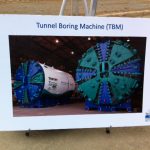
The massive blue and white beast was unveiled Thursday at Alexandria Renew, the city’s sewage treatment plant, before being lowered down underground to begin digging.
The machine, christened Hazel, is a high-tech solution to a problem that has bedeviled Alexandria for a century: old, antiquated sewers that overflow and dump sewage into the Potomac River roughly 60 times a year. That adds up to 140 million gallons of stormwater combined with raw sewage spilling into the river from Alexandria’s sewers in an average year.
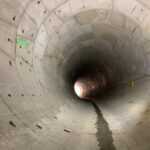
Hazel’s task is to dig a 2-mile long, 12-ft. wide tunnel that will capture sewage overflows before they reach the river — basically a long storage tank, able to hold the equivalent of 18 Olympic-size swimming pools. The bacteria-laden brew will then be pumped through Alexandria’s sewage treatment facility before being discharged.

“It really is a generational project — for us as engineers and planners — but also for the city and future generations who are going to benefit from healthier waterways,” says Justin Carl, program manager for the project, dubbed RiverRenew.
The sewage problem is caused by what are known as combined sewers — mixing sewage from toilets and showers with stormwater runoff from streets and rooftops in the same pipes. In dry-ish weather the system works fine, but when it rains more than a quarter inch or so, the old pipes reach capacity and discharge the excess into the Potomac and its tributaries. Combined sewers serve just 6% of Alexandria, or 544 acres, in the oldest neighborhoods. Newer areas have more modern, less polluting, separate sewers, which carry sewage and stormwater in different pipes.
Once completed, the tunnel system will prevent about 85% of sewage overflows, keeping 120 million gallons of untreated sewage and stormwater out of the river. This will be another big step toward making the Potomac once again safe to swim and fish in. The water quality has been improving on both the Potomac and Anacostia, leading some environmentalists and local leaders to push for the creation of swimming beaches in the area. According to the group Potomac Riverkeeper, two potential beach locations are just south of Old Town Alexandria at Jones Point Park and Belle Haven.
Combined sewers aren’t unique to Alexandria — D.C. has been working on similar tunnels for the past decade, and is scheduled to complete the final one in 203o. Around the country, some 700 cities have combined sewers, and have been working to prevent overflows. Many of the projects, like D.C.’s, are the result of lawsuits brought by environmental groups.
In Alexandria, the city is working under a tight, 7-year deadline, imposed by the Virginia General Assembly. The project must be completed by 2025. Tunneling is slated to begin next month.
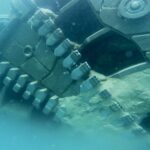
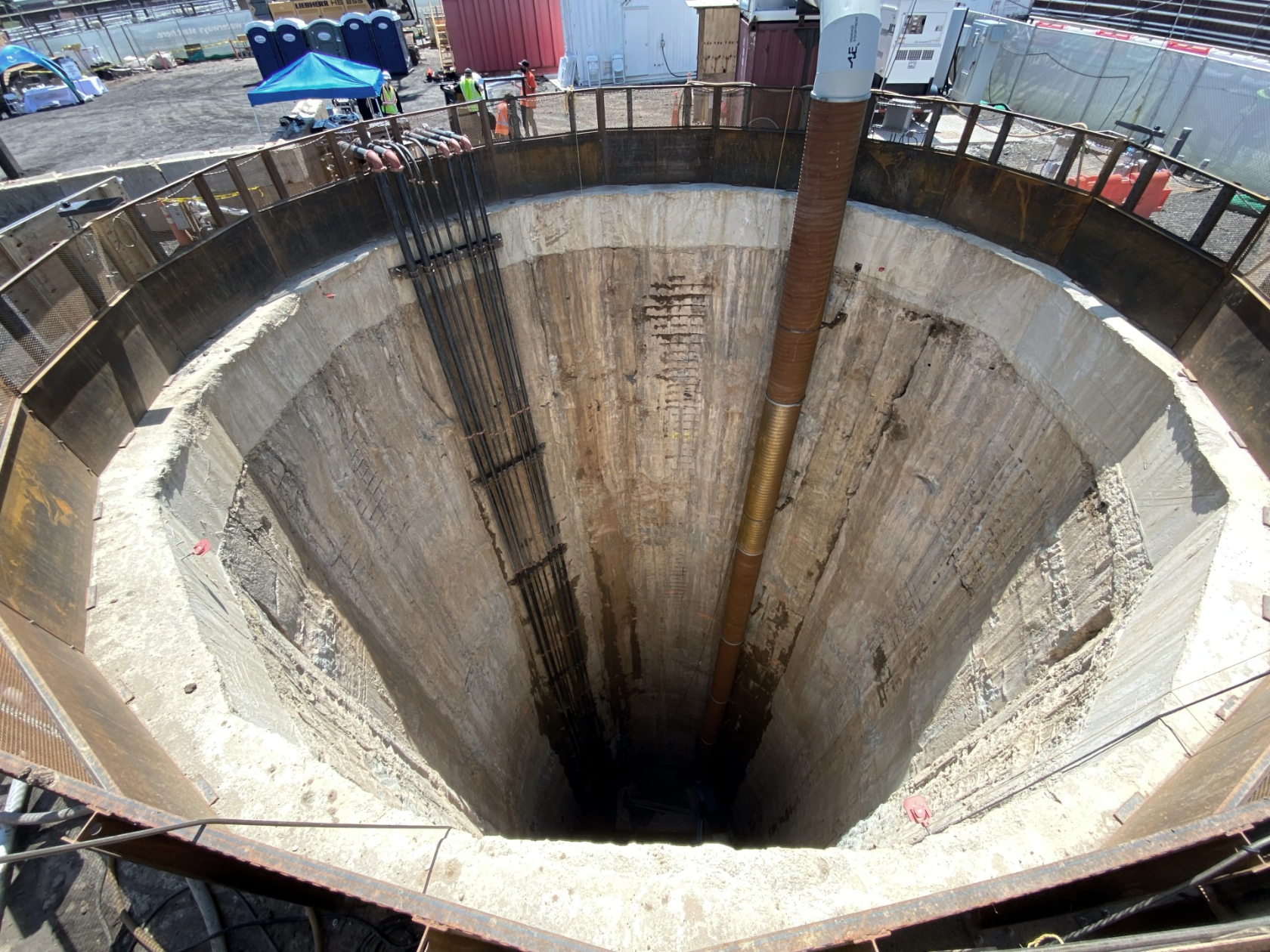
The tunnel boring machine, built in Germany and shipped across the Atlantic, is a marvel of engineering. Only the first three sections, 36 ft. long, were on public display — the entire machine is 465 ft. long, operated by a crew of 6 to 10 people. The front of the machine is a disk with various cutting edges designed specifically for the clay soil found near Alexandria’s waterfront. When in operation, the disk rotates, chewing through the earth, while a giant drill bit pulls out the resulting muck, sending it onto a conveyer belt that trails back to the entry shaft. Trucks then cart away the debris — roughly one truck every four minutes when operating at top speed.
As Hazel chugs along underground, she will also be building the tunnel using precast concrete segments.
“It advances like a giant inchworm,” explains Ryan Payne, a field engineer with Alexandria Renew. “It’ll mine forward four and a half feet, build a ring, and then it’ll push off the last ring that it constructed, mine forward another four and a half feet, and keep going.”
Hazel is named for Hazel Johnson, a Chicagoan known as the “mother of the environmental justice movement.” Her activism spanned 40 years, beginning in the 1970s, when she fought for better conditions for residents of a public housing complex built on a toxic landfill. The name was chosen through a naming contest.
But why are tunnel boring machines always given names? And why are they usually women? (DC Water had Nannie, Lucy, Lady Bird, and Chris.)
Apparently, the origins of the naming practice can be traced back to the 1500s, when miners prayed to St. Barbara.
“There was a lot of danger behind tunnel operations,” says Caitlin Feehan, director of RiverRenew. “St. Barbara really became the patron saint of mining operations, and it started a tradition of naming machines after women.”
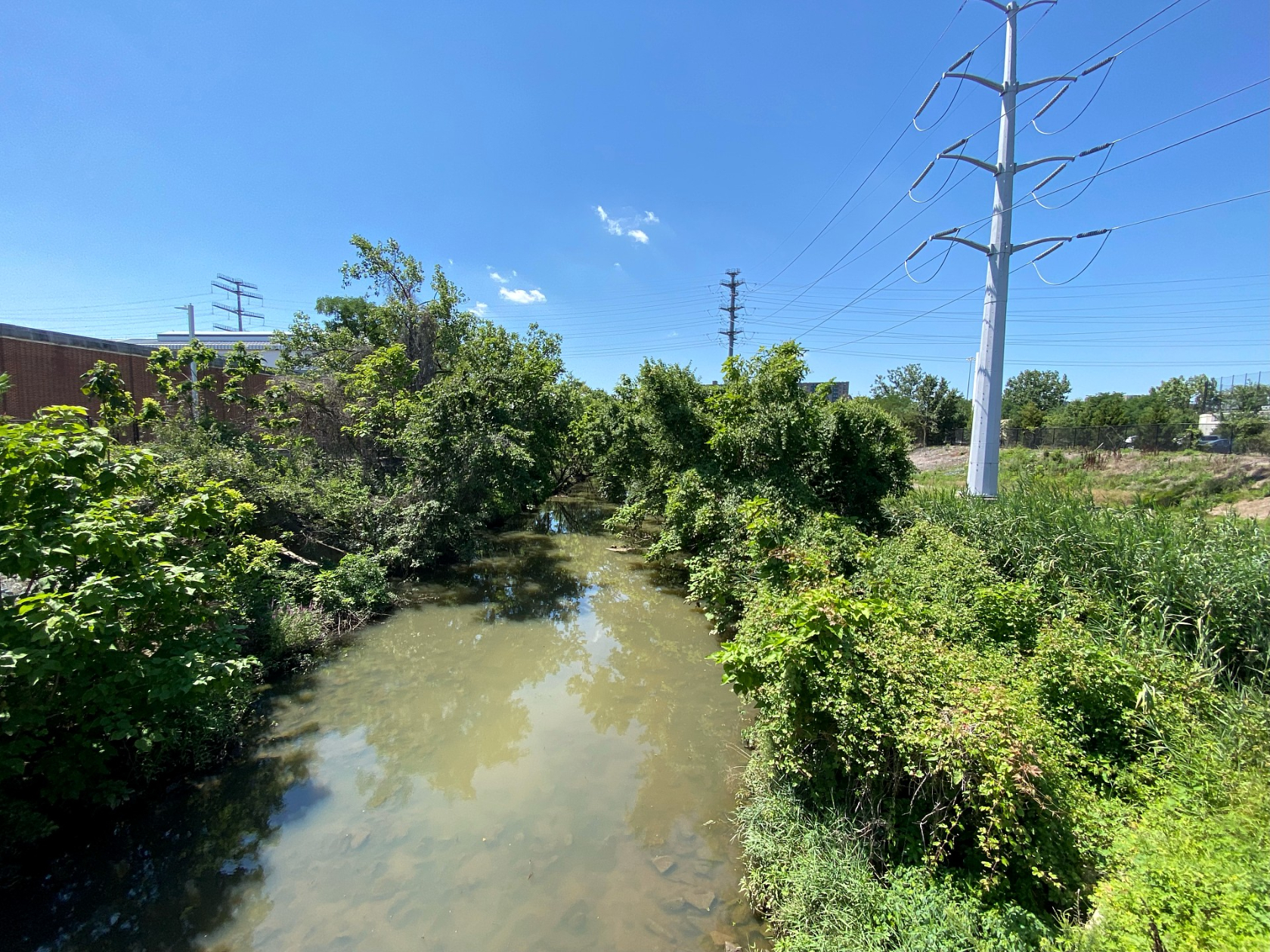
The tunneling will start at the sewage treatment plant, just west of Old Town, and proceed underground south along Hoof’s Run. Before hitting the Beltway, Hazel will veer east toward the Potomac River, then head north along the waterfront, ending at Oronoco Bay.
Residents won’t notice the machine underground, though there are several construction sites above ground along the way, where officials say there will be some construction noise and truck traffic.