 Jenny Gathright
The last time Althea Littles spoke to her son Treyvon was two days before he died. Littles says they were talking about plans for his upcoming release from the D.C. Jail: what he wanted her to cook, who was going to pick him up. Her son was supposed to be released on Sept. 6, according to Littles.
“It was supposed to be a nice, family welcome home thing, but it didn’t occur,” she told DCist/WAMU.
Treyvon Littles was pronounced dead at a hospital on August 11, after being found unresponsive in his cell on August 10. He was 25 years old. His death comes after DOC disclosed in May that two people died after being found unresponsive at the D.C. Jail. Little’s death has led to revived calls from advocates for more effective oversight of the jail. It has also left his mother, Althea, determined to find answers: D.C. Department of Corrections officials say they don’t know how Littles died, and his mother says she won’t rest until she finds out what happened to her son.
“I want to know what happened at DOC. I want to talk to that warden. I want to talk to everybody. I want answers,” she says. “As his mom, I’ve got to move forward. I’m going to speak for my son.”
Staff at the jail found Treyvon Littles unresponsive in his cell shortly after 9 p.m. on Wednesday, August 10, a DOC spokesperson told DCist/WAMU. He was pronounced dead the next day, after he was transported to a local hospital. DOC staff and medical personnel used Naloxone, a drug used to reverse opioid overdoses, to try to revive him. They also performed CPR, the spokesperson said. Littles had no apparent signs of trauma or physical injuries, and his cause of death remains under investigation, according to DOC.
“The DC Department of Corrections is committed to providing a safe and secure environment for the men and women in our custody and care,” DOC spokesperson Keena Blackmon wrote in an emailed statement. “Our condolences are with Mr. Little’s family during this difficult time.”
In May, two men at the D.C. Jail died within a week of each other. At the time, DOC officials said their causes of death were unknown, but said neither man showed signs of trauma.
But autopsy reports have since determined that one of the men, Ramone O’Neal, died of an accidental drug overdose and the other man, Sean Lee, died from blunt trauma to his neck. Lee’s death has been ruled a homicide.
A DOC spokesperson told DCist/WAMU that the deaths have led officials to step up searches for contraband at the facility. They use K9 units to search the jail for drugs, the spokesperson said. The jail has also been looking into new technologies it can use to better detect illegal substances. In addition, the spokesperson said, the facility has expanded drug education for residents and now equips all corrections officers with Naloxone.
Contraband drugs and weapons have been a longstanding concern at the D.C. Jail, and in February, a corrections officer was arrested for allegedly smuggling knives, drugs, and cellphones to distribute to people detained at the facility.
Last fall, during a surprise inspection of the jail, the U.S. Marshals Service found “pervasive” evidence of drug use in the facility, including the smell of marijuana present throughout residents’ cellblocks. In a scathing memo, the Marshals Service – which has custody of some people held in the jail on federal charges – described conditions in the jail as unsanitary, and alleged that staff were abusive towards people detained at the jail. People detained at the jail, along with family members and advocates, said nothing in the memo surprised them, and it merely described deplorable conditions that had persisted at the facility for years.
After the Marshals Service published the memo, DOC entered into a memorandum of understanding with the Marshals Service, promising to improve conditions.
In the meantime, Treyvon Littles’ family must start the process of mourning.
Treyvon Littles’ mother, Althea Littles, describes Treyvon as an outgoing child. He grew up in D.C. with his twin brother and five other siblings.
“We’re all Washingtonians,” she says.
Treyvon was an excellent dancer, his mother says. He sometimes traveled out of town for dance competitions and specialized in “bone breaking,” an illusionist kind of street dance. But Littles says that whenever her son wasn’t out performing, he was a typical “momma’s boy” who chose to spend his time at home with her.
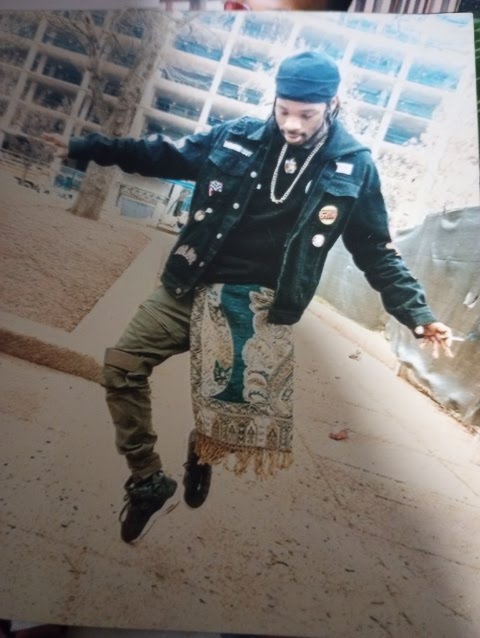
Littles was in jail for a combination of robbery charges and a probation violation. Family members said the pandemic had been hard on him — but he was committed to staying out of trouble going forward. Treyvon Littles has a 6-year-old son, according to his mother.
“I have seen him through all four seasons which are happy, sad, broken, and desperate. During all those times, he remained humble but since this pandemic with no chance with jobs and programs, things had been depressing,” wrote Jamani Pearson, the mother of his son, in a letter to the judge in Littles’ case in March. “While being incarcerated, his mental and attitude towards his life and family have matured. Jail can turn a human into an animal, but Treyvon has been humble …he apologizes for leaving his son and [me] out here with no help and/or support.”
As she mourns her own son, Althea Littles is still confused about the chain of events that led to his death, and angry about his treatment in the medical emergency. When she arrived at the hospital to see him, she was told her son was braindead. Treyvon Littles was handcuffed to the hospital bed, even though he was no longer alive, she says.
“Why do you have my son handcuffed to the bed if he not here anymore?” Littles says.
She has since returned to the hospital on three different occasions, trying to get additional answers about Treyvon’s cause of death, she says. She’ll delay burial services for her son until she gets the answers she needs — and she’s retained an attorney so she can file a lawsuit, she tells DCist/WAMU.
“I’ve barely eaten. I can’t sleep. I’m all over the place. I can’t go back to the hospital because they’re not going to tell me anything …[and] nobody from DOC is talking to me,” she says.
The office of Ward 6 Councilmember Charles Allen, who chairs the committee in charge of oversight of the jail, also described a lack of proactive communication from DOC about Treyvon Littles’ death. His office said DOC did not formally notify Allen about the death. Instead, he found out about it on August 13 through the Corrections Information Council, a D.C. government agency that’s charged with monitoring the conditions of confinement for incarcerated residents. And while DOC is not formally required to notify the public or the D.C. Council about deaths in the jail, DOC officials have historically reached out to Allen’s office when a resident dies in the jail.
“Immediate notification either by the Director to the Councilmember or staff-to-staff is expected,” Allen’s office wrote in a statement. Allen’s office said the Councilmember will receive a confidential briefing from DOC Director Tom Faust in the coming days.
In response to questions about why DOC did not immediately notify Allen’s office, a spokesperson for the department said that DOC followed its standard notification procedure in this case — which is to alert the family, the Deputy Mayor for Public Safety and Justice, and the CIC.
Advocates say Littles’ death and the deaths of O’Neal and Lee in May are evidence of systemic problems at the jail.
“Despite numerous calls for systemic reform by loved ones and elected officials, people held at the Jail continue to face inhumane conditions, and DOC continues to operate without effective oversight,” wrote Nassim Moshiree, policy director for ACLU of DC, in an emailed statement.
Moshiree also said that when the D.C. Council’s legislative session resumes in September, the body should hold a hearing to question DOC Director Tom Faust about resident deaths at the facility. And in the long term, Moshiree said, the Council “should empower a new independent oversight body with unrestricted access to the Jail to regularly and publicly report on the conditions and treatment of residents at DOC facilities.”
D.C. does have an agency whose mission is to monitor conditions of confinement for residents – the Corrections Information Council. But advocates and lawmakers have questioned whether the CIC has enough authority to effectively perform oversight of the troubled facility.
Althea Littles says her son’s death presents even more evidence that D.C. officials, including Mayor Muriel Bowser, need to change the situation at DOC.
“Y’all need to do something about this jail, because there are too many kids losing their lives over there,” said Littles. “I will expose the jail for what they are.”