Matt Blitz
One of D.C.’s most popular museums is reopening with its nearly billion-dollar renovation closer to completion.
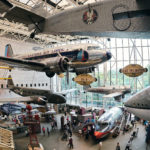
The Smithsonian National Air and Space Museum’s west wing will be unveiled to the public for the first time in close to four years next week. The Oct. 14 opening will also reopen the whole museum for the first time in more than six months; Smithsonian closed Air and Space in March to finish some of the construction associated with the west wing.
With the opening come eight new exhibits, hundreds of new artifacts, and countless new stories to tell.
There’s some old favorites, of course, like the 1903 Wright Flyer and Neil Armstrong’s spacesuit, moon dust still covering the knees. Behind glass, the Apollo 11 capsule bears the burn marks from its reentry to Earth. A few items have moved museums, including the T-38 flown by Jackie Cochran, the first woman to break the sound barrier. Previously located in the museum’s satellite Udvar-Hazy Center in Chantilly, it now hangs from the ceiling near the center of the museum.
There are also plenty of new objects on display in the museum for the first time to the public. Greeting visitors at the entrance is an aircraft built by Neil Loving, the first Black American, as well as the first double amputee, to earn a racing pilot’s license.
Gliding over the escalator is Poe Dameron’s X-Wing Starfighter from 2019’s Star Wars: The Rise of Skywalker looking as if it could go into hyperspace at any moment. There’s also Mario Andretti’s race car, Jerrie Mock’s “Spirit of Columbus,” original fabric from that 1903 Wright Flyer, and Spock’s pointy ears.

All of those items will join hundreds of artifacts that are either new to the museum or recently have undergone significant work to conserve them. It’s all part of Smithsonian’s mission to connect with a new generation by telling stories that have too often been overlooked, diminished, and ignored.
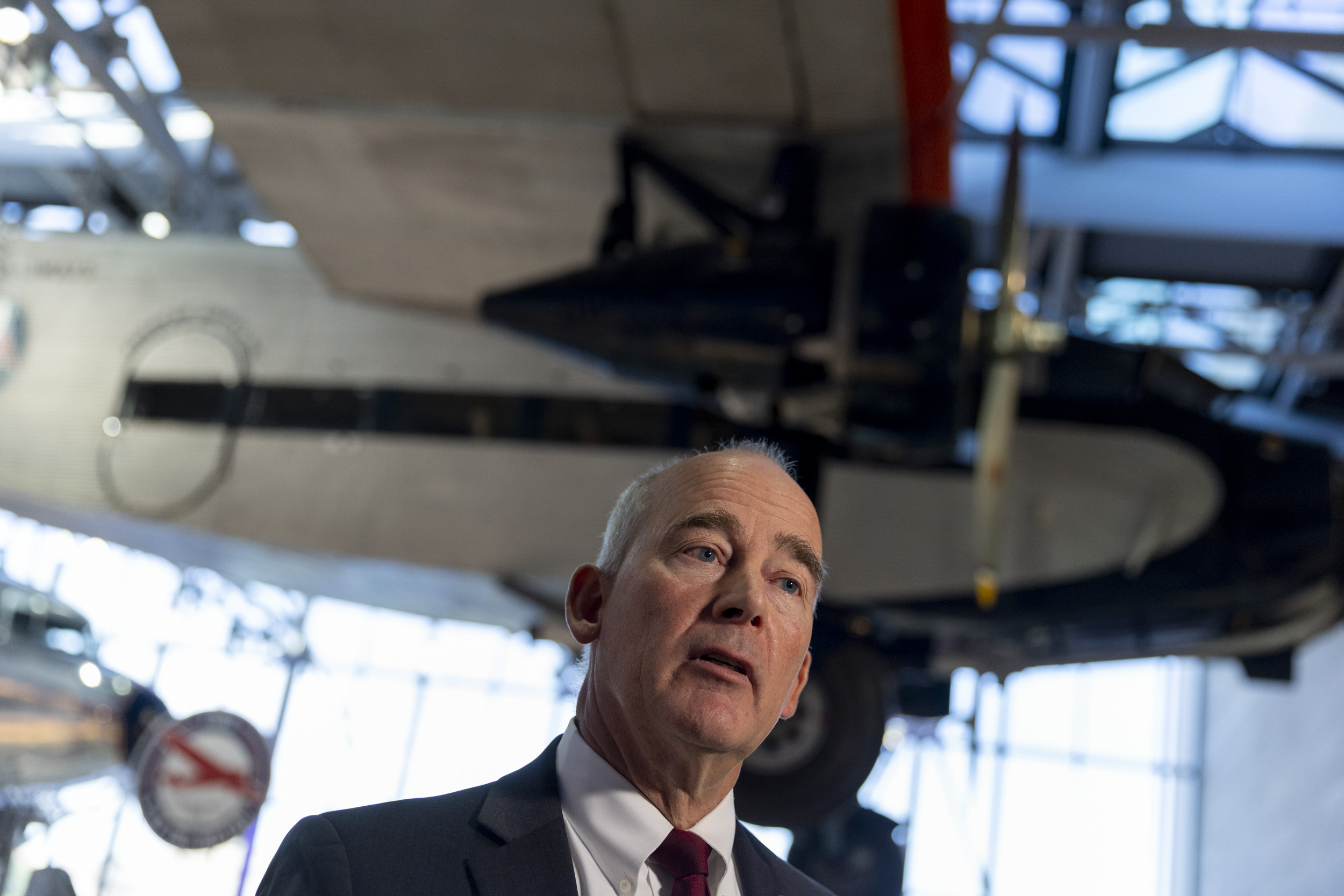
“In many cases, the stories have always been there but not told,” museum director Christopher Browne said during a media preview Thursday morning. “We want to make sure that people can, particularly young learners, connect, personalize, and see themselves in that cockpit or in that capsule and know that’s possible.”
It’s been a bit of a journey to get to this point — one that’s only about half completed. In early 2019, the museum closed a large chunk of its galleries to start the renovation. It was much needed due to the building just being “worn out,” space history senior curator Michael Neufeld tells DCist/WAMU.
The electrical system was out of date, the air conditioning unreliable, and the building’s exterior stone warped.

“[The museum] was built in the early seventies. It was built somewhat on a lean budget and didn’t hold up super well. So, we really needed to replace everything,” Neufeld says. “And, so, we decided at that point basically to gut the building and rebuild it completely.”
The plan was to keep at least a portion of the museum open to the public even as construction continued. That all changed, of course, when the pandemic hit about a year later, shutting down all of D.C.’s museums for months. Air and Space reopened and closed again several times due to COVID before shuttering in March 2022 to allow for construction on the west wing to be completed.
This isn’t the end of renovations, though. The west wing’s opening only marks about the halfway point. The “Milestones of Flight” exhibit is currently in midst of a revamp with a reopening set for 2024, and the east wing’s facelift is targeting a 2025 completion. There’s also the planned addition of the Bezos Learning Center, which remains in the design phase and is scheduling a 2026 debut.
The pandemic probably ended up lengthening the 7-year project’s timeline by about 4 to 5 months, Browne said. Plus, it increased the budget for the entire undertaking by about 10%, bringing the grand total to nearly $1 billion.
In that time, though, there’s been a clear shift at the National Air and Space Museum in how stories are told. There’s been a renewed focus on not just spotlighting the astronauts and pilots that made history, but everyone who contributed to these game-changing endeavors.
For example, up the staircase from Armstrong’s suit in the Destination Moon gallery, is a seemingly ordinary-looking sewing machine. On that sewing machine, seamstresses in Dover, Delaware sewed spacesuits. There’s an accompanying video that features a seamstress explaining how she made gloves and why they needed to be perfect.
“Life depended on the quality of their work,” Neufeld says. “The hundreds of thousands of people who had to work to build the technology and launch the rockets and bring the people back to Earth… all of those stories need to come into the story of going to the moon.”
Near the exit of the Destination Moon gallery, there’s a D.C.-centric artifact — and story — that also paints a more complete picture of what it took to not just get to the moon, but learn from it.
The Carruthers camera, the first sent to the moon specifically to photograph the cosmos, was developed and built at the Naval Research Laboratory in Southwest D.C. The camera’s namesake was George Carruthers, one of only a few Black astrophysicists and engineers at NASA at the time. The camera that’s on display in the museum was the backup used for testing on Earth. (The other remains to this day on the moon.)
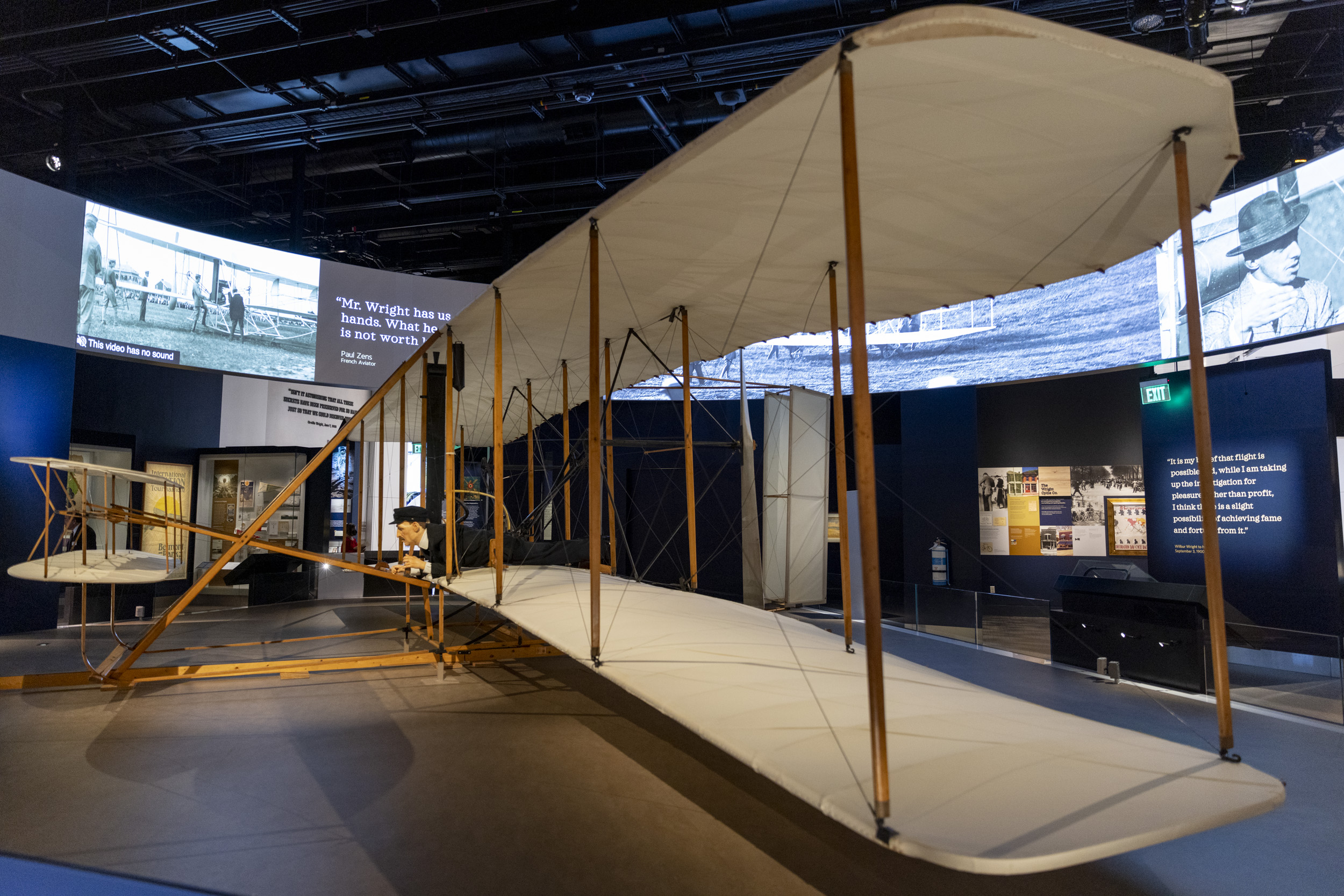
There’s also a focus on connecting decades-old artifacts to the world we live in now. In the Wright Brothers’ gallery, the original 1903 Wright Flyer remains the showstopper. However, the surrounding exhibit and the 180-degree projection screen that frames it makes every effort to attach a 119-year-old wood and steel object to what’s familiar in 2022.
“Every airplane that flies subsequently embodies these principles,” senior curator Peter Jakab says while pointing to the aircraft. “Every airplane you fly on is essentially a Wright flier.”

Standing in front of Neil Armstrong’s suit, which looks like it’s about to take one giant leap out of its glass case, spacesuit curator Cathy Lewis notes there’s much that today’s scientists and engineers can learn from studying this spacesuit that could be applied to the next moon mission. One example? Once lunar regolith (that’s moon dust to us civilians) embeds into fabrics, it’s not coming off. Hence, why Armstrong’s knees are forever gray.
“Lunar regolith is extremely aggressive and we’ve been able to document that it is dug into the fibers of the beta cloth,” Lewis says. “So, we couldn’t even remove it… it’s historical moon dust and it’s part of [the suit’s] history.”
Also, don’t rely on zippers.
“They work for a short period of time and a limited number of re-closures, but it’s an unreliable system,” she says.
For all the new artifacts, the revamp means some that were previously on display are no longer. That includes Able, a female rhesus monkey that was sent to space in 1959. She survived the trip but died shortly thereafter during a post-flight operation. She was then preserved and put on display at the Air and Space museum until it closed in 2019.
But Able is no longer greeting visitors. Neufeld explained that her story didn’t quite fit any longer, plus visitors have said that they found her “disturbing” and sometimes made them “uncomfortable.”

When the museum opens for the first time to the public Oct. 14, it’s expected to be crowded. Even though capacity is expected to be limited to about 50% of what it was prior to construction, and timed, free passes will be needed to come to the museum due to the limited amount of open space and in an effort to “not detract from visitor experience,” Browne says. Each person can reserve up to six passes a day and passes will be made available every six weeks. A limited number of same-day walk-up passes will also be on hand at the museum starting at 8:30 a.m. every day.
Museum officials hope those crowds respond well to the changes. After all, the aim of this massive revamp wasn’t just to put on a new coat of paint, fix the electrical systems, modernize displays, and shine up the exterior. The goal was to redo how those stories are told — to go beyond objects to add a much-needed emphasis on how it took many people from all walks of life to get humans first to the sky, then to the moon.
To what end? The hope, as curators and other museum employees noted multiple times during the preview, is that these new, more inclusive stories will inspire a younger generation to take us well beyond the lunar surface and further into the cosmos.
“At night, this place is quiet,” Browne said, pausing for a brief moment. “The only way these artifacts really come to life are in the stories being told behind them.”