 Jenny Gathright
It was Oct. 11, 1972. The crumbling D.C. Jail was about 100 years old. The facility, designed to hold 550 people, was holding a population of about double that size. People detained there complained that they had virtually no recreation time. Some were being held in a condition a Washington Post editorial from the time called “deadlock,” forced to eat in their six foot by eight foot cells, and only let out to shower twice a week.
So, 36 of the men detained in Cellblock 1 rebelled. They held a group of 11 corrections officers hostage – along with Kenneth Hardy, who was in charge of D.C.’s Department of Corrections at the time. The tense situation gripped the city.
Ronald Goldfarb — a lawyer who was representing detainees at the jail in an ongoing civil lawsuit over the conditions there — was at the scene.
“It was a very dramatic moment,” Goldfarb, who will celebrate his 90th birthday next week, recalled in an interview with DCist/WAMU. “The city was in an uproar and national TV cameras were down at the jail.”
The uprising, Goldfarb said, led to a brief flurry of attention on conditions at the D.C. Jail. It was a moment with striking parallels to the present: Now, in 2022, the District’s jail is once again under a wave of public scrutiny and city officials are discussing the need for a replacement.
Goldfarb was part of a star-studded team of negotiators who helped the 1972 uprising end peacefully. Marion Barry – the school board leader who would go on to become D.C.’s legendary Mayor for Life — was there, listening to the residents’ concerns. So was Shirley Chisholm, the Congresswoman from New York, who went down to the jail to hear the concerns of the men detained there and try to bring about a resolution.
“We got a dialogue going,” Chisholm said in an interview at the time with the Evening Star. “I told them I don’t mess around. They could trust me.”
Chisholm recalled crying as she heard about the conditions the men were confined in. Teenagers as young as 16 years old were being held in the same units as older men — a situation that led the rebelling detainees to ask, “What are these babies doing in here?”
Another man told her that he’d had a “bad tooth … with a nerve showing” for four days and had received no medical attention.
William Claiborne, a Washington Post reporter who had consistently reported on D.C. Jail conditions, had been specifically summoned by the rebelling men at the facility shortly after 4:00 that morning. Claiborne wrote in a first-person story published the next day that the men told him what they were doing was not a riot.
“Mr. Claiborne, we want you to understand one thing very clearly,” one man told him through a peep-hole at the jail. “This is not a riot, it’s a revolution.”
The volume of press coverage of the jail that day was unusual. Goldfarb said television crews installed themselves at the jail, so “the public couldn’t not know about what was going on.” Goldfarb said it was a welcome spotlight on the longstanding concerns of detainees and advocates, and prior to that he didn’t recall any sustained media attention on jail conditions.
“That’s typical,” said Goldfarb. “Unless something like a riot or a hostage-taking takes place, people aren’t interested in the claims of inmates or prison reformers.”
The 1972 uprising had been brewing for some time, though.
“While this week’s rebellion has received more attention than any other recent incident at the jail because of the hostages, there have been a number of major disturbances in the last several years which officials trace to the antiquated facility and overcrowding,” the Evening Star wrote in an October 13, 1972 story. “These include a disturbance by 87 inmates in September, 1967, over lack of recreation; rioting by 260 inmates in September, 1968, over overcrowding, alleged guard brutality, court delays, and internal conditions in general; and a fairly large number of similar incidents.”
Goldfarb, along with D.C.’s Public Defender Service, had been litigating an ongoing class action suit against the jail, arguing that the severely overcrowded conditions amounted to cruel and unusual punishment under the Eighth Amendment.
So when he heard about the hostage situation at the jail that day, Goldfarb immediately went down there to try and help bring about a peaceful resolution to the situation. Because, he said, “Attica was on everybody’s mind.”
A year earlier, at the Attica Correctional Facility near Buffalo, New York, people incarcerated at the facility started an uprising to demand improved conditions. They held corrections officers and other staff hostage for four days. At the end, state police fired guns indiscriminately into the prison yard. They killed 49 people — 10 of the hostages, and 39 of the people incarcerated at Attica. Nearly 90 others were injured.
And the situation at the D.C. Jail had the potential for that type of extreme violence. About 100 armed policemen were inside the jail, the Evening Star reported, and “scores” more were outside. The rebelling detainees at the jail reportedly had a gun, and were threatening to kill Hardy if they weren’t released.
Because of his work representing detainees in the class action lawsuit, and his familiarity with corrections officials through that work, Goldfarb felt he had credibility among both parties. In the end, he said, he helped both sides agree to his suggestion that they go to court, where the detainees’ concerns could be heard by a judge.
“To my recollection, I was the one who suggested that the prisoners pick some representatives [to represent them in court],” Goldfarb says. “We all got into a bus — the prisoners’ representatives and I, and a few other city officials who were appropriate. And at my suggestion, I said to everybody, ‘Let’s keep the peace, let’s not have any tragedies here. But the prisoners have legitimate grievances. Let’s take it to court.’”
The hearing was held that night before Judge William B. Bryant — who would go on to preside over decades of litigation concerning D.C. Jail conditions.
“I feel like I’m being treated as an animal,” testified Robert N. Jones, a man detained at the jail.
Frank Gorham, the last person to testify, was skeptical about the process.
“What we came here for and what we’re getting are two different things,” he said.
The men who started the rebellion began their day demanding complete freedom from the jail. In the end, they got promises of incremental change.
Judge Bryant ordered that 16 and 17-year-olds be immediately segregated from the adult population at the jail. He cleared the way for Public Defender Service attorneys to inspect the jail that week. And he instructed the attorneys to interview each person on Cellblock 1, and bring their individual complaints to court if they needed to. City officials promised the rebelling men that there would be no reprisals or retaliation. By the end of the night, the situation had calmed and no one was seriously injured.
A year later, the U.S. Attorney’s Office indicted a group of men in connection with the uprising — a move that irked D.C. Delegate Walter Fauntroy, who told the Post at the time that indicting the men after promising them immunity would further erode trust at the jail.
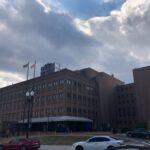
In the years that followed, D.C. built a new jail — the Central Detention Facility, which opened in 1976 and is still standing today (it’s commonly referred to as a D.C. Jail, and the newer Correctional Treatment Facility sits adjacent to it).
The new facility, in Goldfarb’s professional opinion, “didn’t change basic things. It kind of cleaned up a mess and replaced it with an institution that had many of the same problems.”
For the next three decades, the jail was under court oversight because of ongoing concerns about conditions. That court oversight was lifted in 2003 — but it wasn’t a sign that complaints about the facility had ceased. The same month oversight of the jail was lifted, a court report found that it was so crowded people were sleeping in hallways or on benches, and being kept in poorly ventilated cells, as well as cells where lights or toilets were broken.
In the decades since, complaints have persisted. The year after the end of court oversight, four people were shot at the D.C. Jail. Advocates said violence, “squalid” conditions, and a lack of medical care persisted.
Goldfarb says he hasn’t followed much of the recent news about the D.C. Jail and DOC — but there has been a lot. Last year, the U.S. Marshals Service inspected the jail and issued a scathing memo, stating that conditions were so unacceptable they would be moving hundreds of people in their custody out of the facility. They described abuse from corrections officers, cold and congealed meals, an overwhelming smell of human waste in the facility, and pervasive drug use.
For more than a year of the coronavirus pandemic, DOC officials instituted a 23-hour lockdown that experts called a grave human rights violation.
This year, seven people have died in DOC custody and two corrections officers have been arrested for allegedly smuggling drugs into the facility.
Last fall, during a D.C. Council hearing called after the release of the U.S. Marshals Service memo, attorneys from the D.C. Public Defender Service played audio recordings of their clients, speaking about the conditions they were confined in.
One man described how staff at the jail allowed human waste to remain on the wall of his cell for months without cleaning it. Others described being deprived of food, or being fed so little that it became painful to digest medication.
Like the men who had been in the city’s older jail 50 years before them, they described being treated like they weren’t human.
Davon Patterson, who at the time had been at the jail for nearly two years without a trial, said at the jail, “you feel like an animal.”
And just as it was in 1972, D.C. is in the process of trying to replace its jail. D.C. Mayor Muriel Bowser recently set aside funding for the District to build a new correctional facility. Her city administrator, Kevin Donahue, called it a “treatment and rehabilitation facility” when they were unveiling the budget proposal.
Goldfarb said that in general, he remains skeptical about efforts to reform jails, because even newly-built facilities tend to breed the same poor jail conditions.
“I can only say,” Goldfarb added, “that the reform of prison institutions, as a general rule, [is] very imperfect. What happens is there are flurries at times – sometimes it’ll be a prison riot, an official will be held ransom — all of the wrong reasons for changing things. And then, in some cases – and I think this was one of them – the court [gets] involved in it. But I think that as a general rule, the corrections [facilities] repeat the problems of the past.”