Amanda Michelle Gomez
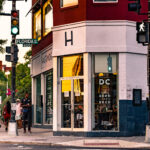
One of four grocery stores east of the Anacostia River, Good Food Markets, stopped selling produce and other groceries last Tuesday, leaving thousands of residents living in an area considered a food desert with one less option than before.
But the café inside the store, located in D.C.’s Bellevue neighborhood, will stay open and the ready-to-eat offerings will expand due to a partnership with DMV Black Restaurant Week, according to Philip Sambol, the executive director of the nonprofit behind Good Food Markets, Oasis Community Partners. Select members of DMV Black Restaurant Week are being invited to run their business at the café, which still attracts patrons due to the current restaurateurs. Sambol says the hope is for the café to attract enough business to be able to support reopening the market that sold fruits, vegetables, and shelf stable food.
Good Food Markets temporarily closed the market side of its operations due to various financial challenges associated with opening a grocery store in a food desert during a global pandemic, Sambol tells DCist/WAMU. The grocery store opened in November 2021, which is a lot later than anticipated due to delays in construction and other complications. The setback meant construction, licensing, and permitting happened during the COVID-19 pandemic. Then, when the store finally opened, inflation made supplies and inventory more expensive than they otherwise would have been. Opening with high prices and low profit margins is a recipe for disaster for any small business, says Sambol.
“When we opened this store, we had the best pricing we ever had in our history from our vendors, the lowest gross profit margins we’ve ever had in our history, and we were less competitive against the supermarkets,” he says. “The reality of the inflationary environment that we opened the store in made it even harder than it already was for us to compete on price. And kind of stacking all of these things has made operating very challenging.”
Good Food Markets decided against increasing prices because many neighbors couldn’t afford to shop there already, according to Sambol. He says the neighborhood has a higher income than Ward 8’s median, with government workers living in the area. Still, the average household income of Bellevue residents is $44,734, according to Niche.
“We came into this with our eyes open, like this is the challenge we signed up for,” Sambol says, alluding to the decision to keep the café open and not shutter the business entirely.
Good Food Markets also closed its first community in Ward 5, because of financial challenges. The grocer has another location in Prince George’s County, which also stopped selling groceries but kept the café open.
Good Food Markets in Ward 8 opened with great fanfare and support from the D.C. government. That’s because the business was expected to help alleviate a deep inequity: More than 75% of D.C.’s food deserts were in Wards 7 and 8 according to a 2017 report, and 85% of the approximately 160,000 residents of those two wards lived more than a mile away from a grocery store. Not only did Mayor Muriel Bowser and several councilmembers attend the groundbreaking for Good Food Markets in January 2019, but the local government provided some funding to support the project.
https://twitter.com/MayorBowser/status/1459635021522903045
Sambol says “every dollar” that both the District and the Bainum Family Foundation invested towards Good Food Markets went into the building. “It’s the stove that Kitchen Savages is using,” he says. “It’s the shelves where we’ll be popping up with Made In DC products later this year.” He says he didn’t use the money for things that would later become expensive, like labor or grocery inventory. He also admits that the grocer didn’t always make the right calls, like spending a lot on produce so patrons could see fresh product every time they visit. But sometimes the market ended up donating the produce because it was left unpurchased.
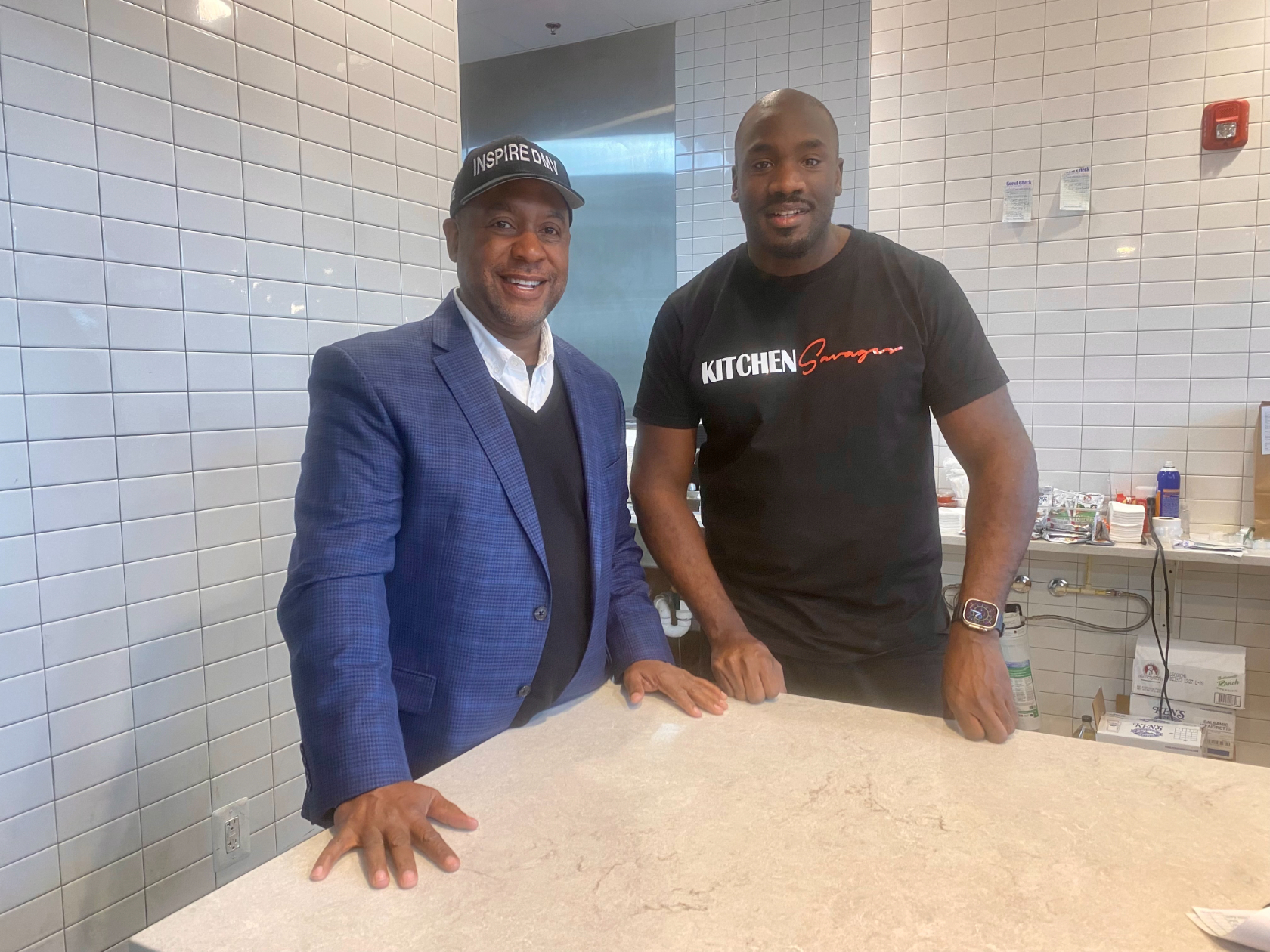
So, for now Good Food Markets is investing more into what appears to be working well – the café. In June, Sambol says he teamed up with Furard Tate, co-founder of Inspired Hospitality DMV Black Restaurant Week, who will then connect local businesses in need of support with Good Food’s commercial kitchen and retail space. Tate says not only will they offer businesses a space to cook and sell their food but will also facilitate training for owners. He argues that Good Food Markets is not alone in focusing on prepared meals, just look at what other supermarkets have done.
“We rely on the community to come back into the door and access the smaller makers because we’re here in this space,” says Tate.

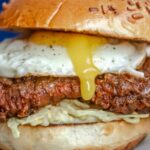
One of the current restaurateurs at the café is Kitchen Savages, which sells modern Southern comfort food like crab cake egg rolls, smothered fried chicken, and more (there are vegan options). The founder and chef, Darrell Gaston, says he created the business in 2018, after his godson Gerald Watson was killed. He says he initially started cooking out of his kitchen with his godson’s friends in order to prevent any retaliation. Kitchen Savages moved to the Good Food Markets along S Capitol Street SW a year ago, celebrating its one-year anniversary this Friday. He says he moved into the space because he wanted to open a business in Ward 8, where he was born and raised.
“The attraction was somebody took a chance on my community to open up a grocery store. Someone took a chance on me by giving me the opportunity to open up a restaurant,” Gaston says.
Gaston also aims to employ residents of the neighborhood. Two of three people working with him on Monday live in Bellevue, including the sales clerk Omar Whitties, who lives in an apartment in the same building as Good Food Markets. “So I used to see [Gaston] all the time. I used to buy food here as well, for me and my daughter,” Whitties says. “I was just real consistent about trying to work. He actually gave me the opportunity, which I truly appreciate.”
Gaston is not discouraged even though patrons can no longer purchase groceries while they pick up take out at the space. Even though he’s opening his own brick-and-mortar, he decided to continue to sell at the café within Good Food Markets, where he’s had roughly 30,000 patrons over a year’s time, a significant percent of whom purchased vegan cuisine. He believes the market struggled with sales because the community was still adjusting to something new. “Sometimes your first business model may need to go back to being reworked and re-twerked for your customer base,” Gaston says. “How do we continue to provide healthy, affordable options while also meeting the demands of a 7-Eleven?”
Wendy “Hope Dealer” Hamilton, who lives three blocks away from Good Food Markets and is running for Advisory Neighborhood Commission, called the closing a “travesty” on Twitter. “The sheer number of people who showed up out here last year & celebrated this location opening (and haven’t been back since) would have noticed that it wasn’t faring well and needed an intervention,” she tweeted.
In an interview with DCist/WAMU, Hamilton questioned whether Good Food Markets was even a good fit for the area to begin with. She says the neighborhood needs a full-service supermarket like Lidl, not Good Food Markets, which she calls a “boutique bodega.” The smallness of the market and the items sold there — including Amy’s Kitchen organic food and $9.99 salads in a jar — gave her that impression. While some neighbors might want that, she says the grocery store did not serve everyone in the community, particularly those struggling to make ends meet. She says it was especially inconsiderate because there is subsidized housing in the same building as Good Food Markets, and she doubts many tenants could even shop there. The other three grocery stores east of the river are over a mile away.
“Even if they were to reopen, unless they changed their entire model, it’s not really going to benefit the community. They’re not certainly going to start coming there again,” says Hamilton.
Sambol admits the store is much smaller than the average supermarket, but he says it was big enough to carry all the departments a patron would need. “The challenge we had was [to] develop an alternative model that can thrive where the supermarkets choose not even to try,” he says. “It doesn’t ever look the way you plan for it. But we’re planning and we continue to move forward and we’re going to get to that next phase.”
As for the $10 dollar salads? Sambol says he is proud to sell meals from Wellfound Foods, a local business founded by Sarah Frimpong. Tate echoed that sentiment, saying: “We have to stop thinking that outside brands are the savior to what our community needs. You have a lot of local makers who live in DC, who had nowhere to put their product on shelves.”
Sambol also says that the market sold cheaper salads but those may have been sold out the day Hamilton visited. “There’s thought and intention behind everything we’re doing here. And if we fail to communicate that, that’s our failure,” Sambol says. “Not the failure of the person who didn’t hear the message. It’s the failure of the person who’s supposed to be delivering it.”