Martin Austermuhle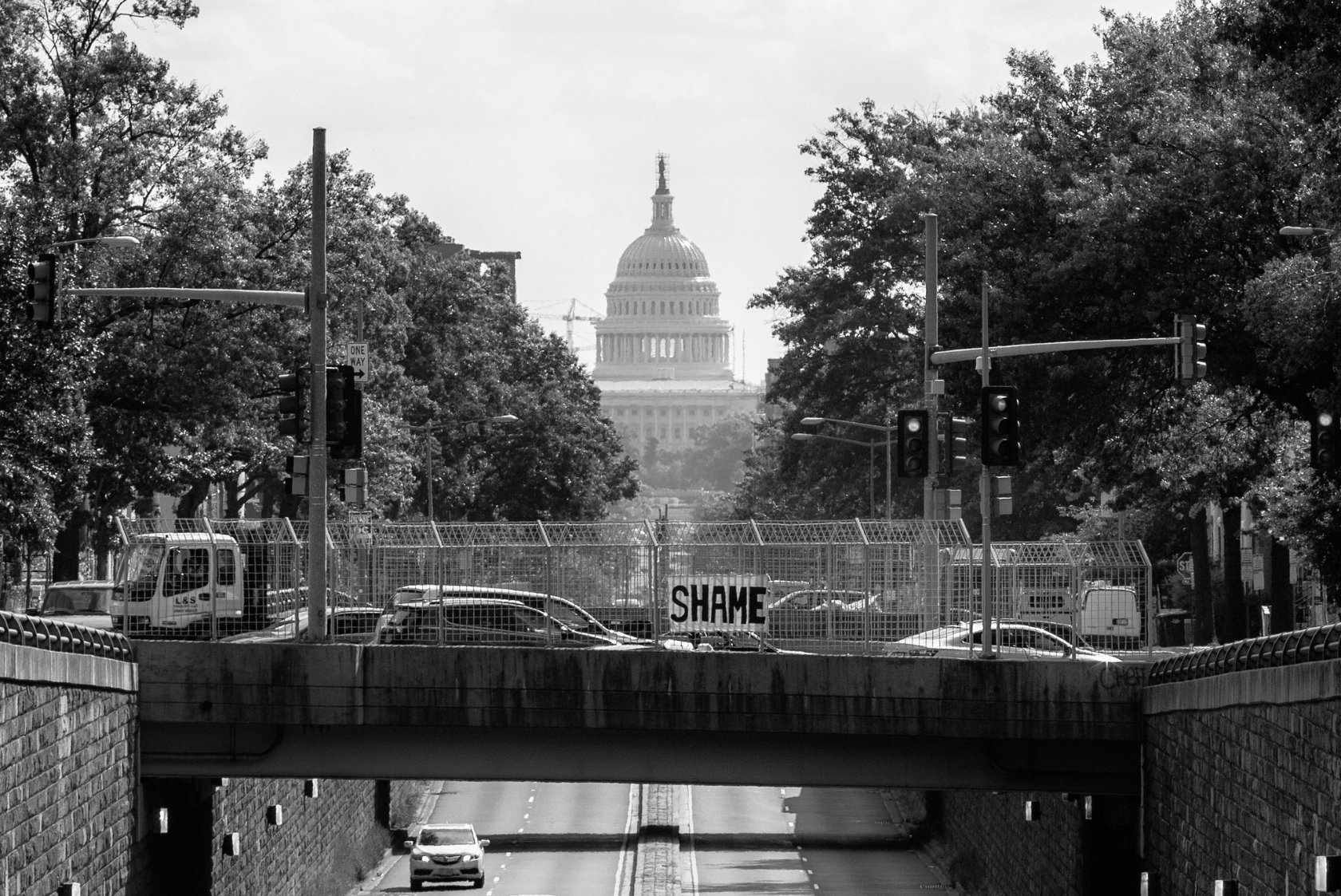
Below-grade portions of North Capitol Street could be decked over, parts of Interstate 295 that cleaved through neighborhoods east of the Anacostia River could be put underground, and broadband internet could reach further into low-income communities as part of a plan to spend an estimated $3 billion in federal funding from President Biden’s $1 trillion infrastructure bill.
Those proposals are included in a report released Thursday from a task force appointed by Mayor Muriel Bowser earlier this year to identify possible projects that could be paid for using the new federal funding. “They were asked to think big and prioritize transformative, equitable, sustainable, and achievable investments,” said Bowser at the report’s unveiling.
Among the 17 possible projects are energy retrofits of existing office buildings; the construction of multi-modal charging hubs across the city; the creation of a boathouse row along the Anacostia River and restoration of tidal wetlands next to Kenilworth Park; the deployment of sensors across D.C. to better measure heat, air quality, wastewater, and traffic; the expansion of broadband in wards 5, 7, and 8; and the creation of a Green Jobs Academy.
But Bowser put particular emphasis on three transportation projects that could be funded.
One would see North Capitol Street turned into an “urban boulevard” with more pedestrian crossings, bike and bus lanes, and park space that could be created by decking over below-grade portions of the roadway running from Bloomingdale down to NoMa. (Last year Bowser set aside money to start planning for such a promenade.)
Another possible project would be quick rebuilds of 29 high-crash and high-injury corridors as part of the city’s broader Vision Zero traffic-safety plans; the corridors include New York Avenue NW from downtown to the Maryland border, Pennsylvania Avenue SE, Minnesota Avenue SE and NE, K Street NW, Good Hope Road SE, Wisconsin Avenue, and more. Those rebuilds could include new traffic signals, raised crosswalks, curb extensions, redesigned bus stops, protected bike lanes, and more.
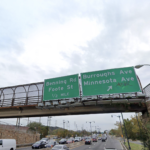
Maybe the most ambitious project the task force recommends is a wholesale redesign of D.C. 295/I-295, which physically separates majority Black neighborhoods like Kenilworth, River Terrace, and Eastland Gardens from other parts of Ward 7. The task force proposes either turning the freeway into an at-grade “complete street” or even putting portions of the freeway fully underground, all of which could reconnect neighborhoods and improve mobility. (Challenges to getting around were made even more evident in June 2021, when a pedestrian bridge over D.C. 295 collapsed after it was hit by a truck.)
Jenny Reed, Bowser’s budget director and a member of the task force, said Thursday that the city had already applied for a planning grant from the federal government to start work on the 295 project, which would take until 2040 to complete.
None of the task force’s proposals are certain to become reality: City officials say that the ultimate fate of any of the projects will come down to planning and how the sources of funding ultimately come together. “For a lot of these projects they will require some local funding or other federal funding to complete. But we took the mayor’s charge about recommending transformational projects. In order to do that, we’re going to take several years and be very creative with funding sources,” said Reed.
But officials say the $3.3 billion in federal D.C. is expected to get — along with any additional funding it gets through competitive grants — could help speed many projects along, all the while allowing D.C.-funded projects to remain on track.