 Jordan Pascale
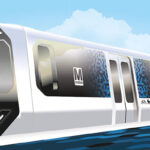
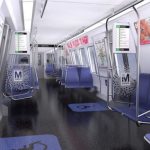
New concept renderings of Metro’s 8000-series train cars show the transit agency is switching up the trains’ seating configuration, moving forward with the open gangway concept, and adding a touch of D.C. flair to the design.
The new proposed designs, highlighting more space for bikes, wheelchairs, and luggage, were presented to Metro’s Rider Advisory Council last week for feedback. Lynn Bowersox, Metro’s Vice President for Rail Transformation, said the transit agency needs to make “structural decisions” on the configuration of the train cars soon. These designs are not yet final.
In an interview with WAMU/DCist, WMATA General Manager Randy Clarke said nothing is finalized yet, but they’re looking at a lot of options.
“We know the region is evolving and travel patterns are evolving and we want to be best in class,” he said, mentioning more bikes and luggage on Silver Line trains heading to Dulles. “I want to steal the best practices from around the world and the open gangway is clearly the best practice around the world for urban rail.”
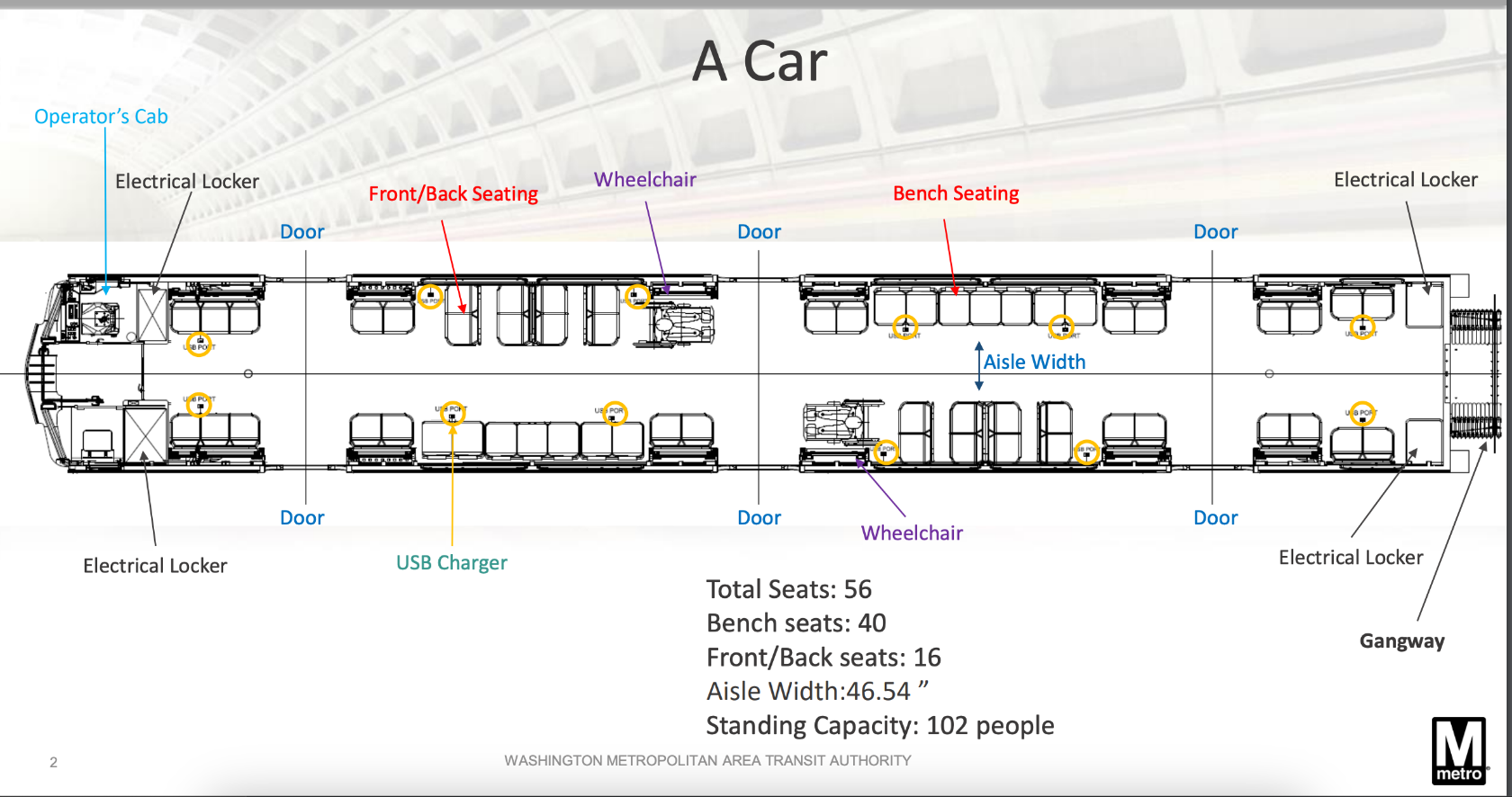
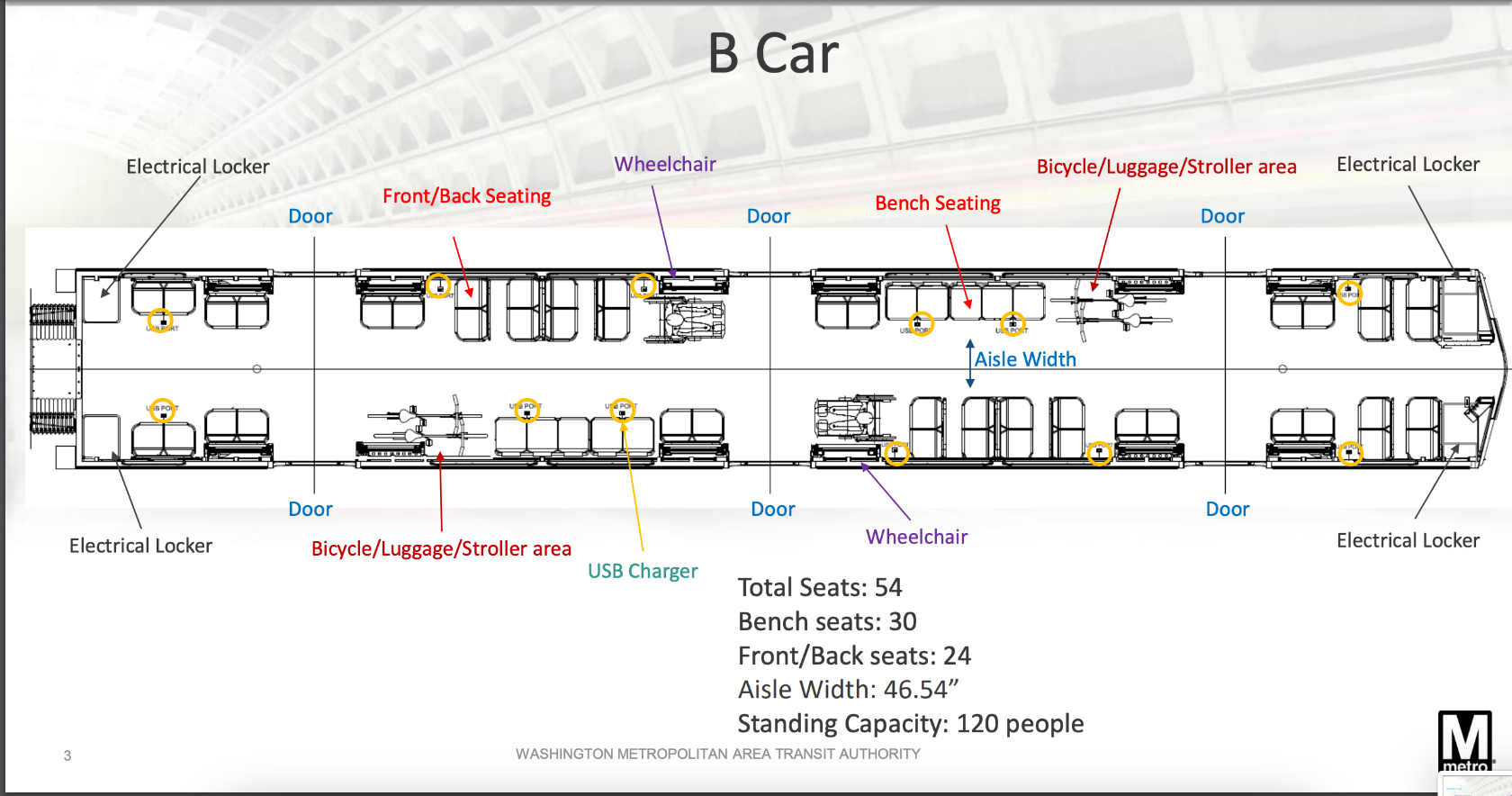
Seating configuration
Metro traditionally has built trains that mostly use back-to-back seats called “transverse seating.” About a third of the 7000-series train cars have along-the-wall horizontal bench seats at the end of cars and near doorways.
The 8000-series design uses more of that horizontal bench seating, creating a wider aisle and more space to stand. The 8000-series trains would have two-thirds horizontal bench seating and one-third transverse seating. Clarke said he’s not in favor of going fully horizontal bench seating like New York or Boston.
“I think our distances are too much for (entirely bench seating) because we still want to have some (more seating available for longer trips),” Clarke said. “But adding more horizontal seating is better for things like after a Nats or Caps game, those big types of events.
“We’re trying to make the space work for everyone versus just a pure typical commuter… I think that is really important for us as a system and better customer satisfaction.”
The configuration in one car also has a designated space for strollers, luggage, and bikes. Back in 2019, Metro allowed bikes on trains at all hours for the first time. Some seats will have USB ports, which the RAC questioned if it would be safe to use given data concerns.
Bowersox said the 7000-series train has a maximum capacity of 110 people per car seated and standing, while the 8000-series train can carry up to 130 people.
Some shorter riders said they would like to see more handholds in lower areas.

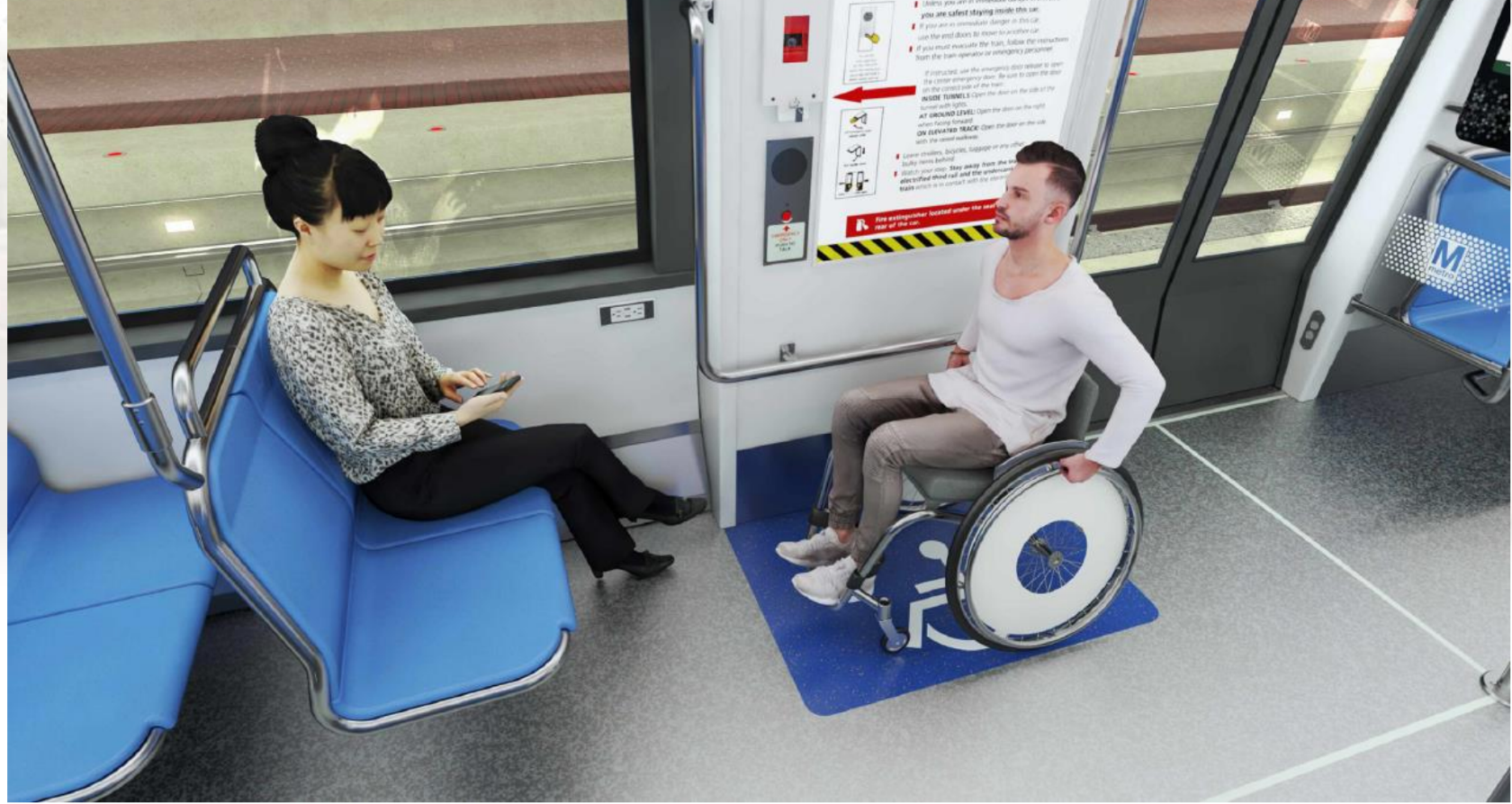
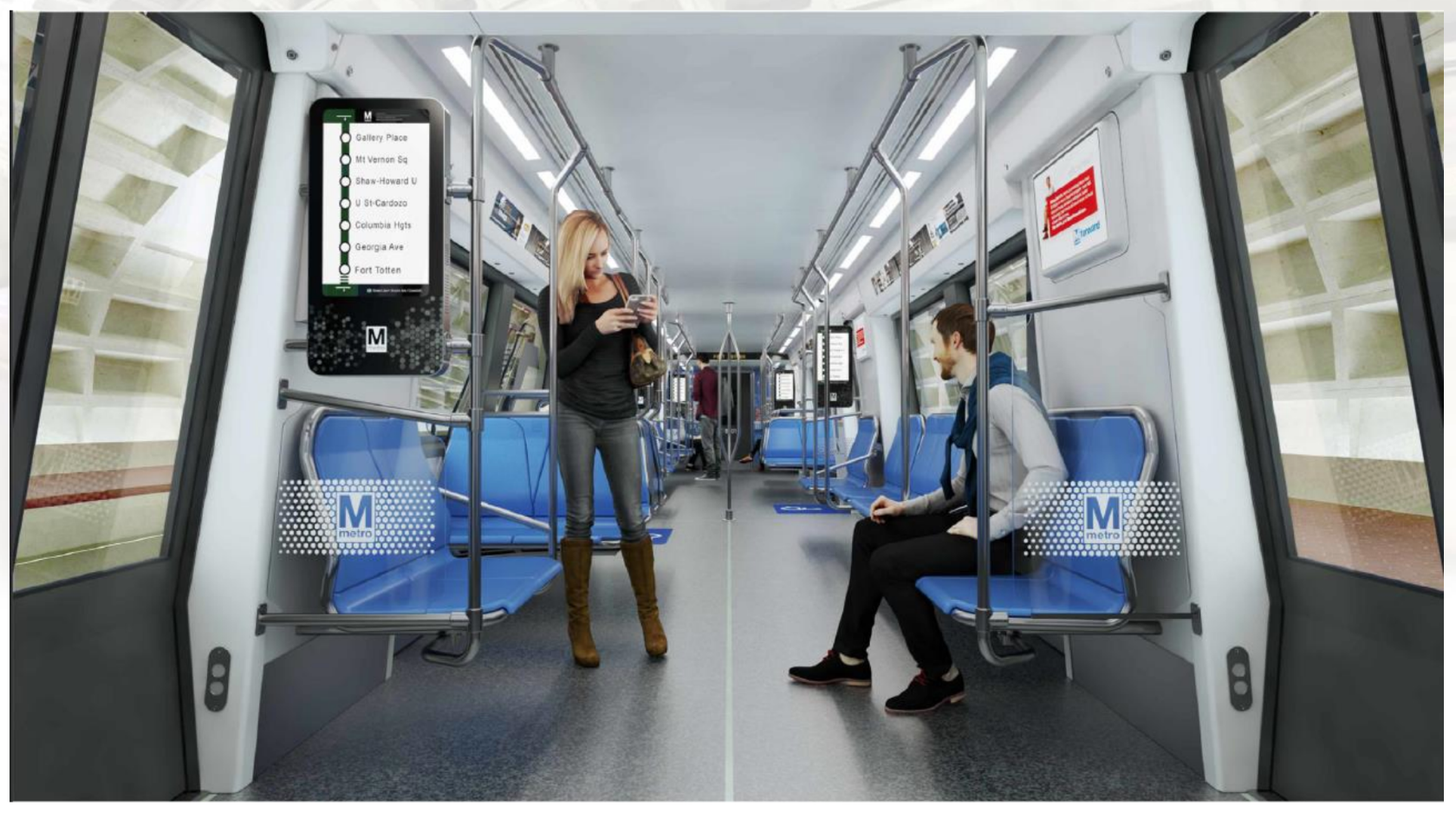
Design
The proposed concept design also gives the new trains a sense of place. Renderings tease a blue, white, and red D.C. motif on the inside of trains that includes the monuments, capital, and cherry blossoms at the end of train cars. Clarke also says WMATA could blend in local history, too, incorporating things like go-go music, local foods, historic figures like Duke Ellington, and celebrating the local sports teams.
Metro has introduced more exterior custom-designed wraps, like a holiday theme, a cherry blossom theme, and a Nationals theme, since Clarke arrived. He likes the idea of showcasing the region on the trains.
“I think we’re all pretty lucky to live in arguably one of the coolest regions in the world, I mean, we’re the national capital of America,” he said. “People from all over the world come here every day to see this place — it’s unique and special.
“I think we can integrate art and culture into our public spaces more. The idea of showing off our region to the world… we should all kind of lean into that.”
The new trains would also eliminate all paper advertisements and switch to all digital screens.
It would have more screens that show destination and system info.

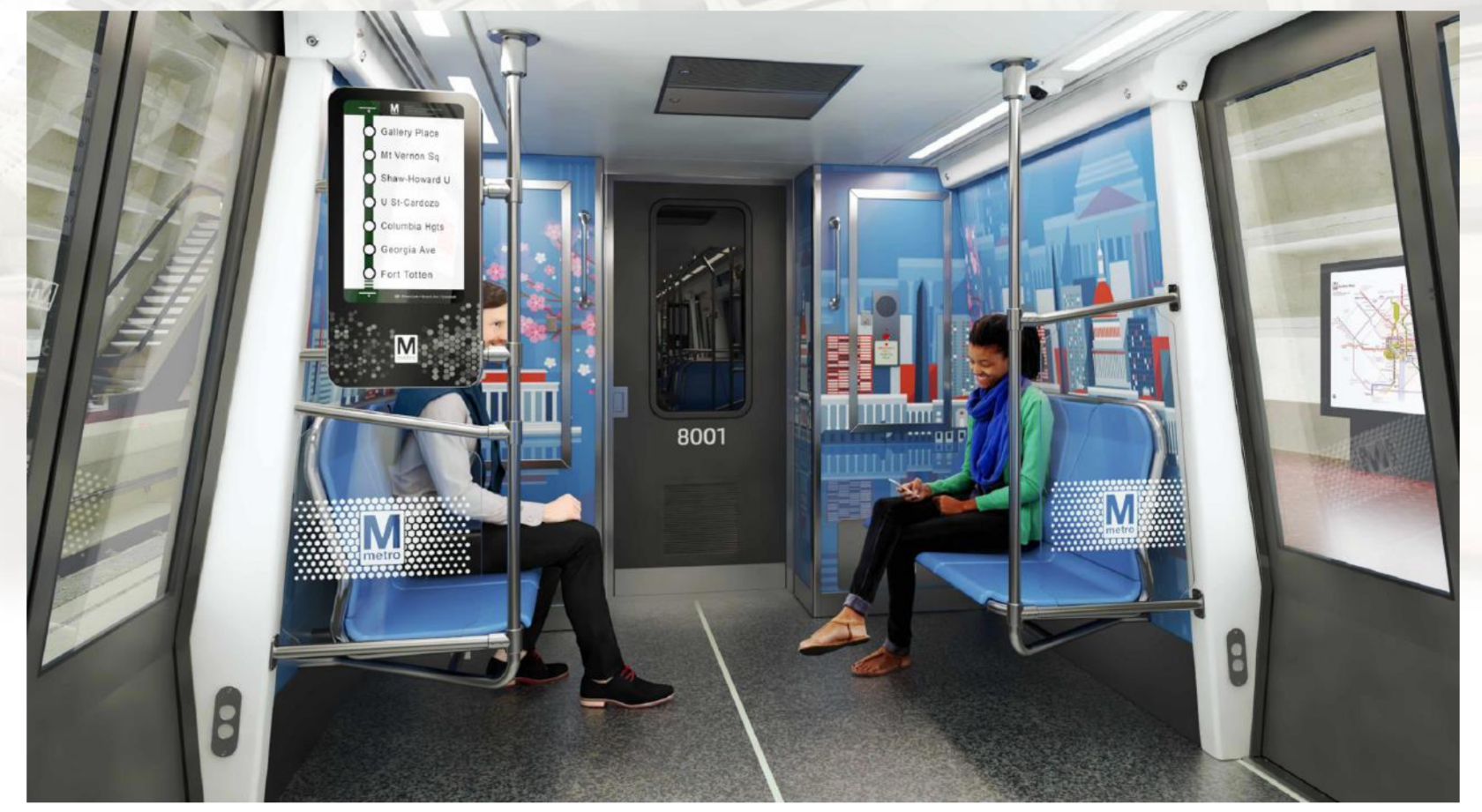
Open gangway
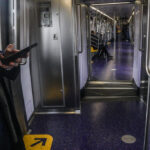
The proposed design also includes an open gangway between two cars, meaning trains would be made up of four of these longer cars.
Clarke says open gangway designs are safer as there are fewer gaps between trains for people with visual impairment to fall through. They also are easier to spread out in, have more room, and they give longer sightlines to transit police.
Members of the Riders Advisory Council and the Accessibility Advisory Committee went up to New York City earlier this week to look at the MTA’s new railcars and its open gangway designs.
Some riders say they like the ability to switch cars if something odd is happening in one car. They still would have that option.
Some transit operators have open gangways that go the full length of the train. WMATA has some structural issues, like space in the yards and maintenance shops, that would make that design not feasible here. Clarke says they don’t have the funding to reconfigure all the maintenance shops, so they’re trying to get the best benefit for a lower cost.
What’s next?
Metro is still gathering feedback from riders and will have a yet-to-be-scheduled pop-up event in May and will ask riders about the finishes, designs, and more, Bowersox says. The Board of Directors will also be briefed on the plans next month.
WMATA has ordered 256 cars, which cost about $2 million each. They have the option to buy up to 800 of them, which would help replace the older 2000 and 3000-series trains.
The train cars will be assembled in Hagerstown, Maryland and the first ones are tentatively scheduled to arrive in 2025, though Clarke has previously expressed doubt at the timeline giving supply chain challenges.