Dee Dwyer
 Morgan Baskin
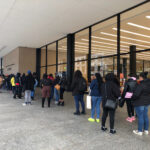
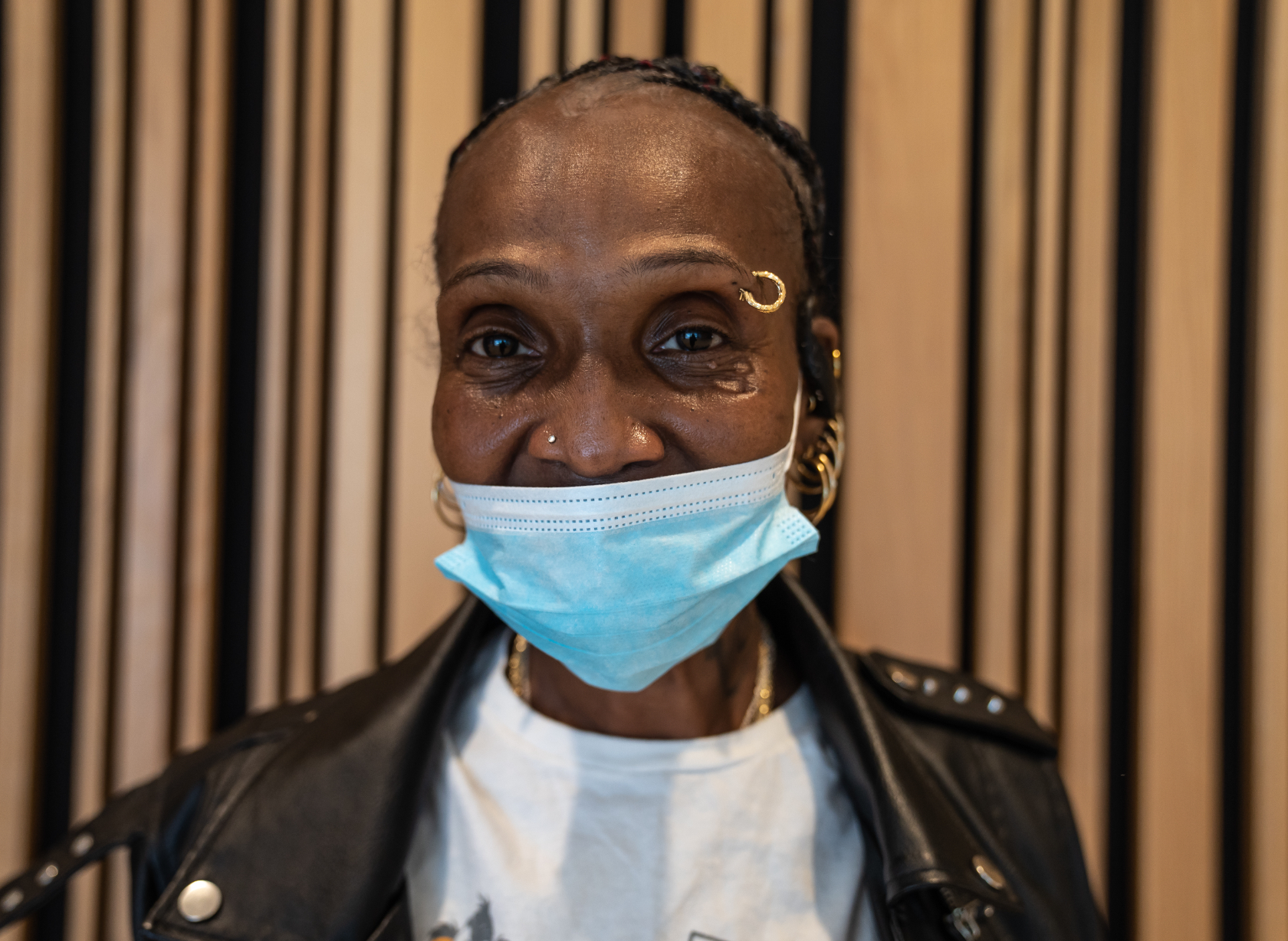
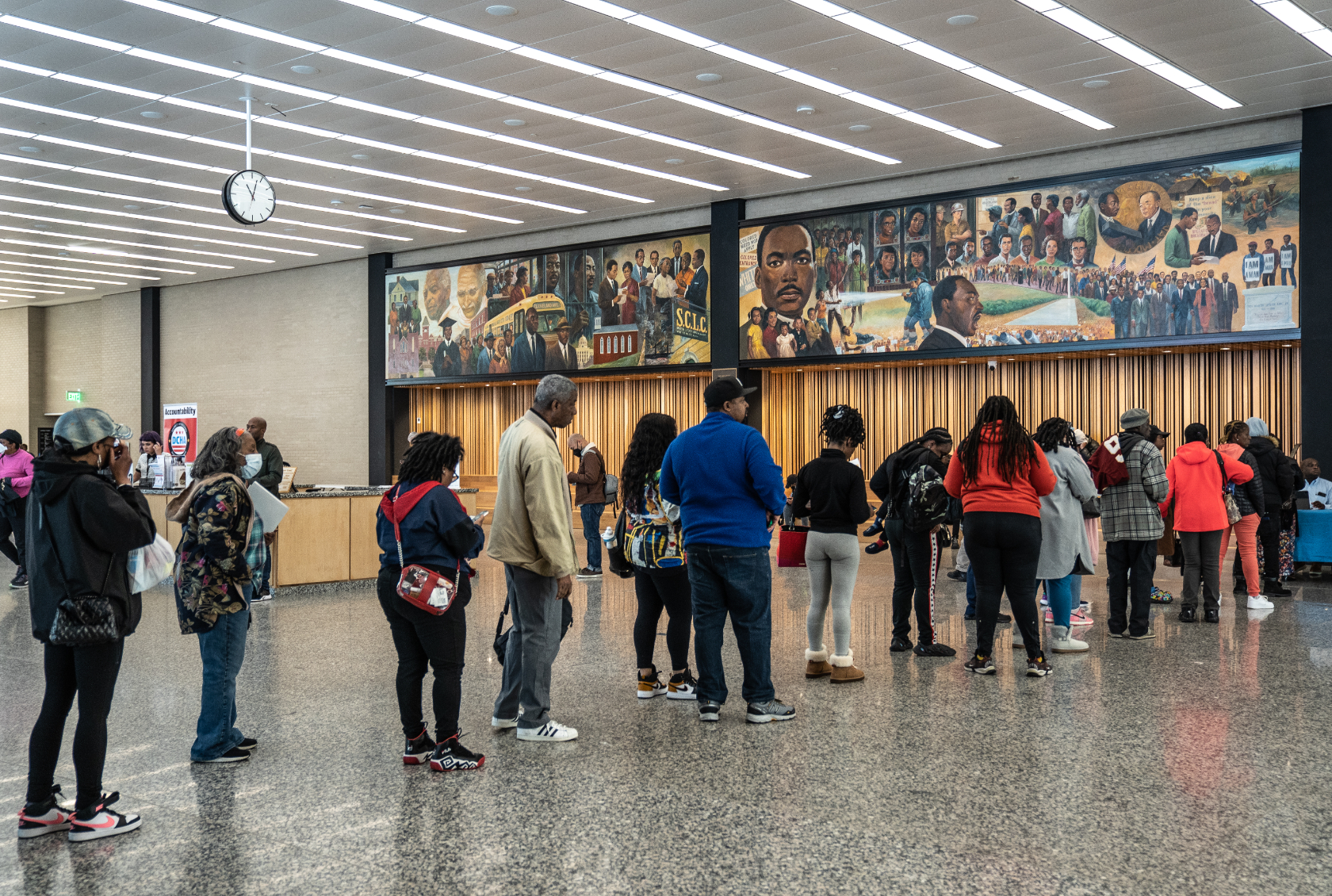
Two hours after the doors of Martin Luther King Jr. Memorial Library opened on Monday to residents on the city’s waiting list for public housing, 53-year-old Michelle Jennings was still inching along the first floor.
Jennings first put her name on the waiting list for public housing 32 years ago. A lifetime later, she says she is struggling with an apartment that is crawling with rats in a neighborhood where she and her son have both been shot. Jennings is hoping that this event is her ticket out.
“I’ve done been on this list for 32 years. Thirty-two. I’m not talkin’ about three [or] two, but thirty two years,” Jennings says.
The DC Housing Authority’s May 1 event was the last chance for many D.C. residents to check their eligibility for a public housing unit: the agency plans on sunsetting its current waiting list, which has been closed for a decade, and reopening a more modern version of it this summer.
Newer, site-based waiting lists, DCHA Director Brenda Donald has said, will more accurately reflect applicants’ needs, ideally allowing them to register for apartments of specific sizes at the housing complex of their choice. The transition is part of DCHA’s effort to boost its occupancy rate, which, in the low 70s, is the poorest of any large public housing authority in the country.
But on Monday, none of the half-dozen applicants DCist/WAMU spoke with said they cared much about where they would live; they just wanted to have a place to go.
Nathaniel Pickett, a soft-spoken 63-year-old wearing a Washington Nationals cap, has been on the waiting list since 2003. He’s currently unhoused and living in Anacostia. Sixty-five-year-old Sandra says she’s been on the waiting list for 15 years but didn’t receive an invitation to this event – only learning about it because an invitation for another applicant was erroneously sent to her home. “I called housing, and housing said, ‘take your chance and go down there,’” she says.
The agency sent out more than 22,000 invitations to Monday’s eligibility event, its chief operating officer Rachel Joseph told DCist/WAMU in an email. While the agency didn’t have an attendance tally by press time, the library was flooded with people on the waiting list, a line of applicants snaking out the front door and wrapping around the building’s rear. Those who didn’t respond to DCHA’s reach outs have 30 days to do so before their names are scrubbed from the list.
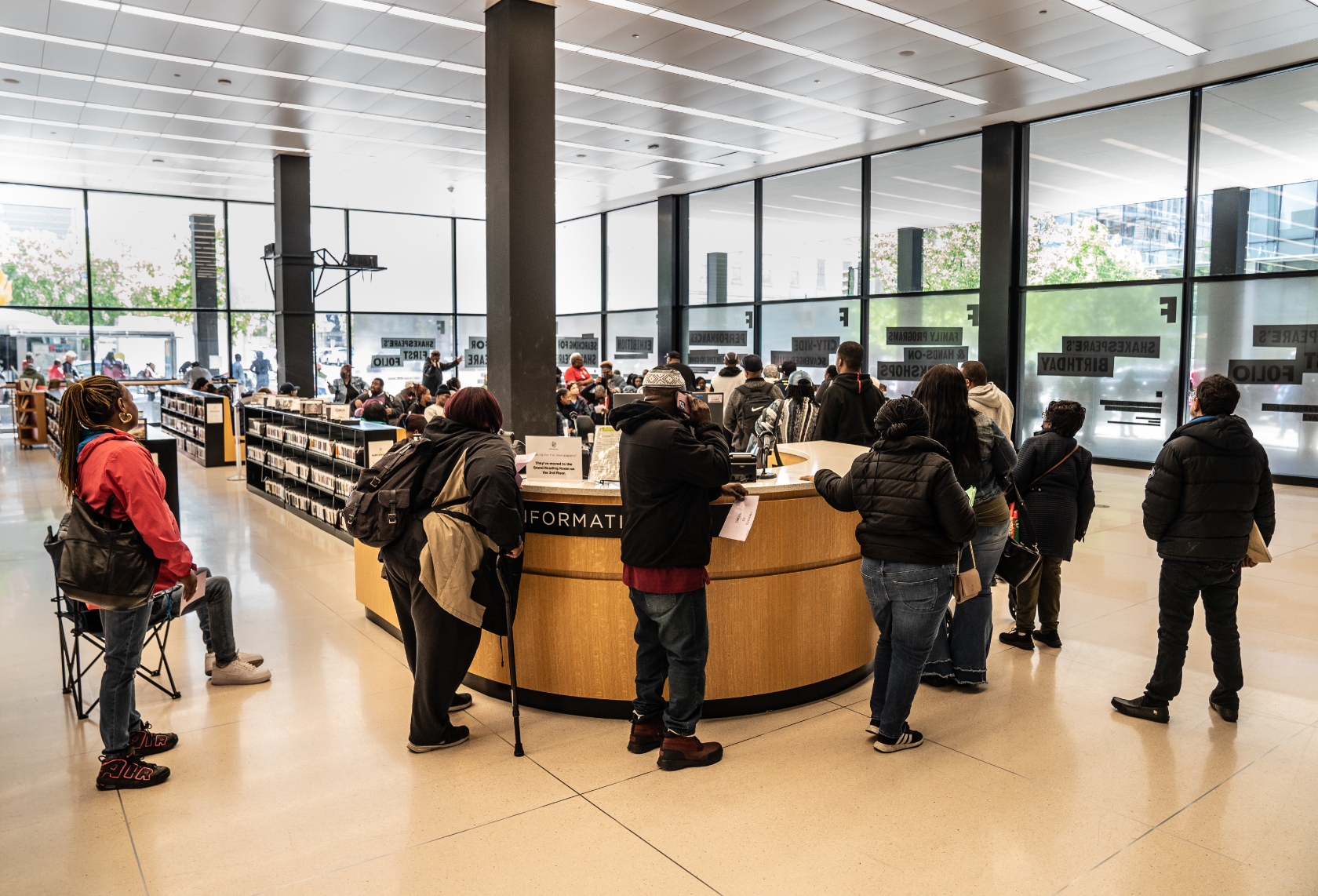
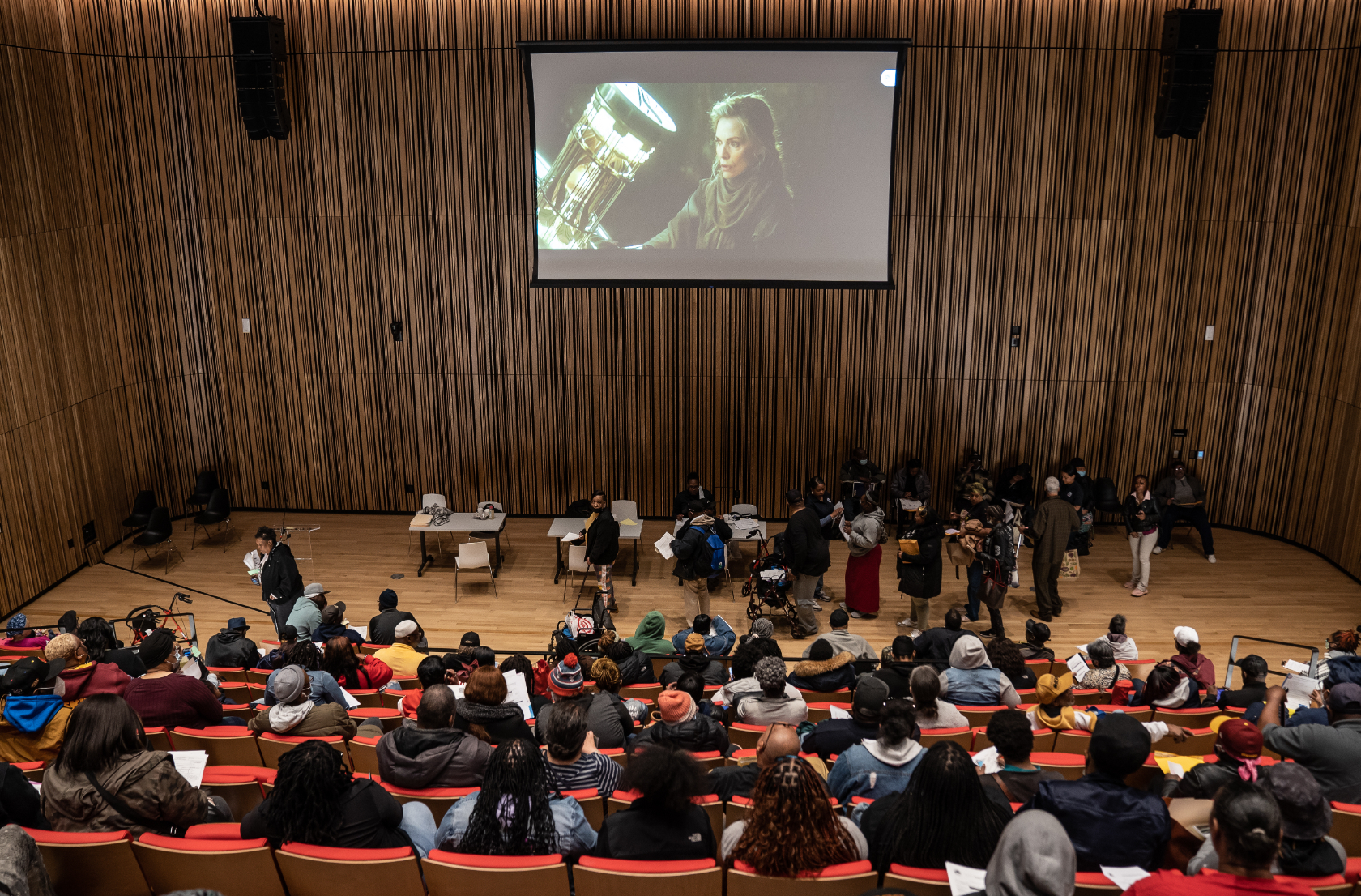
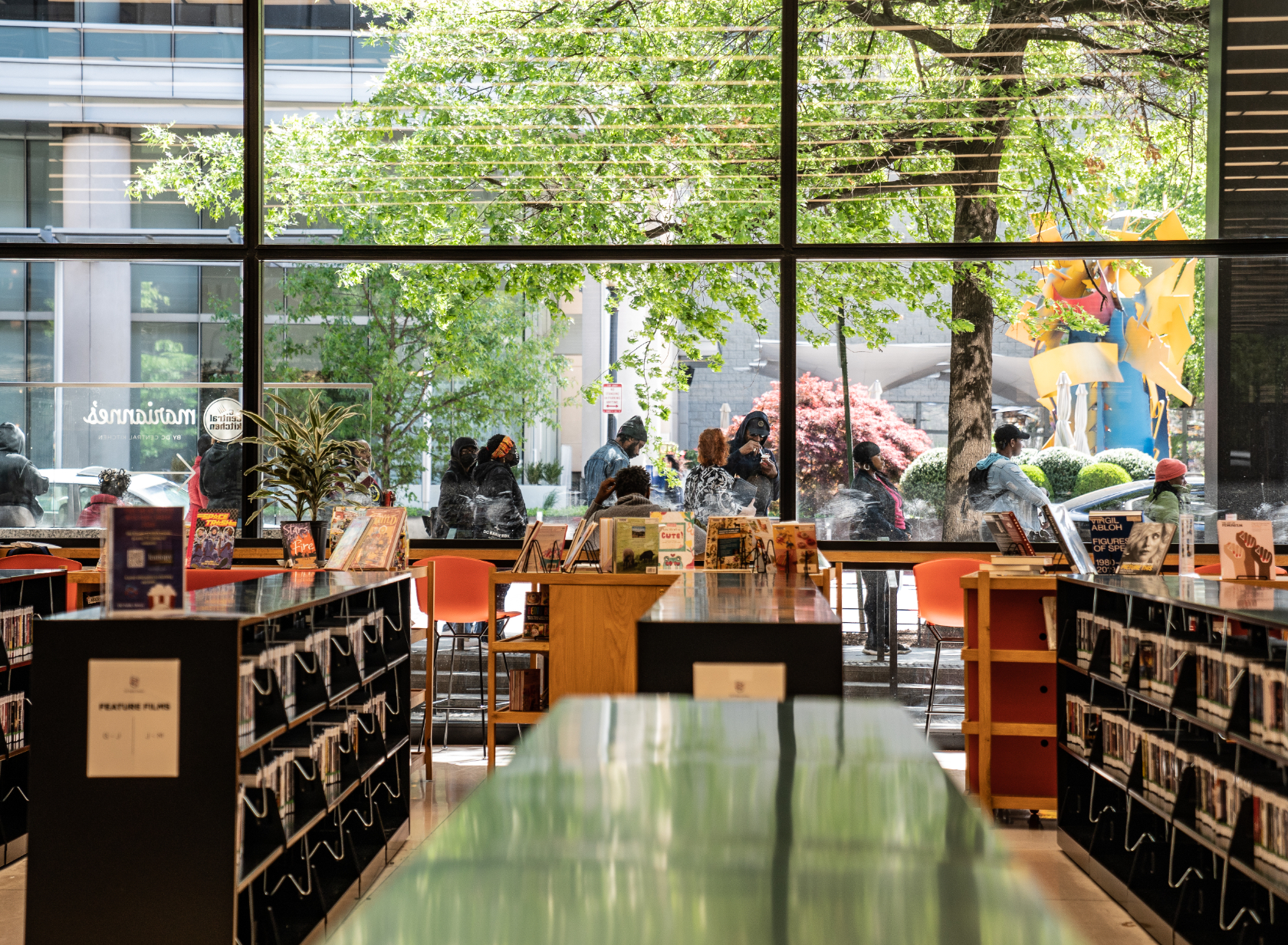
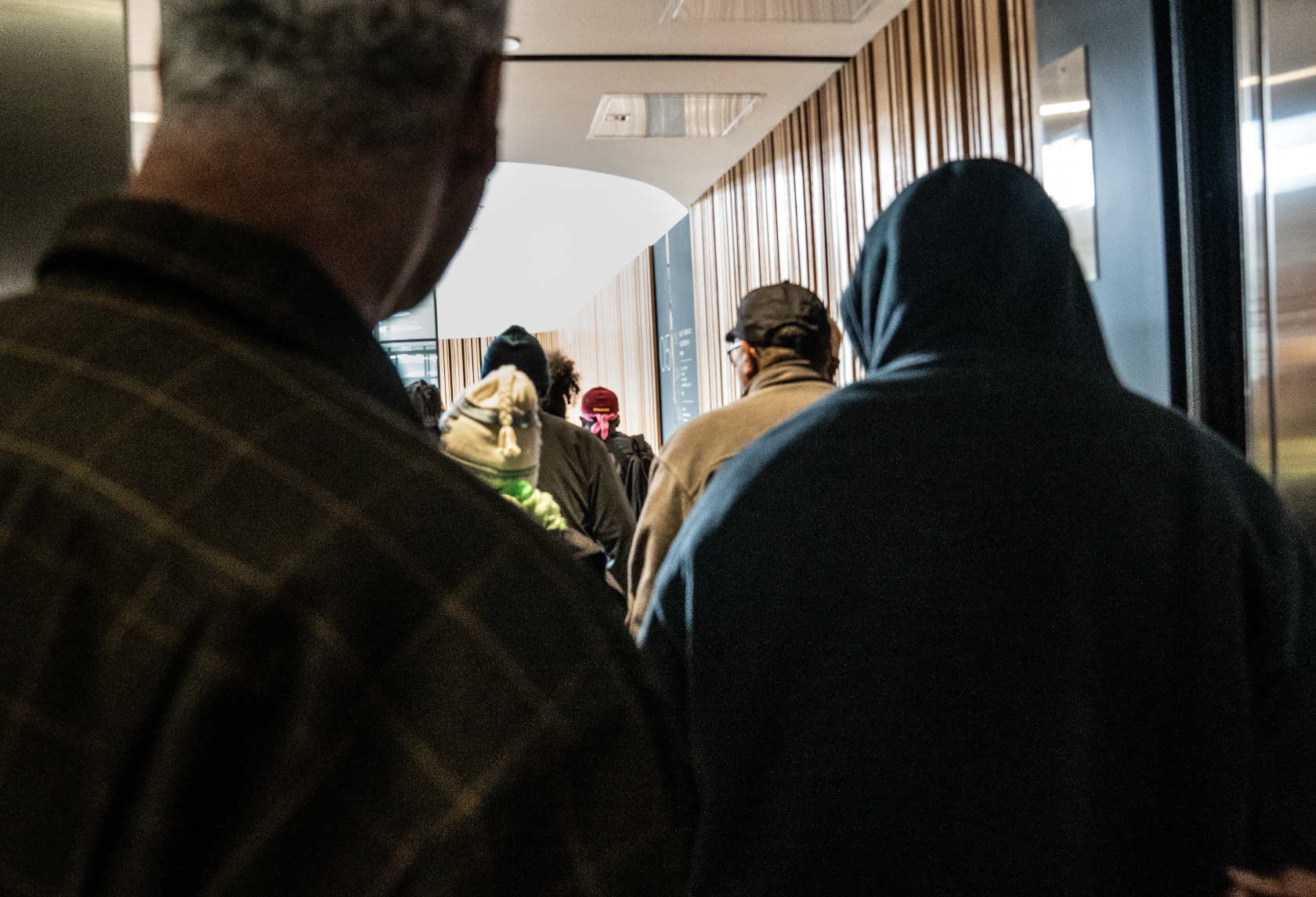
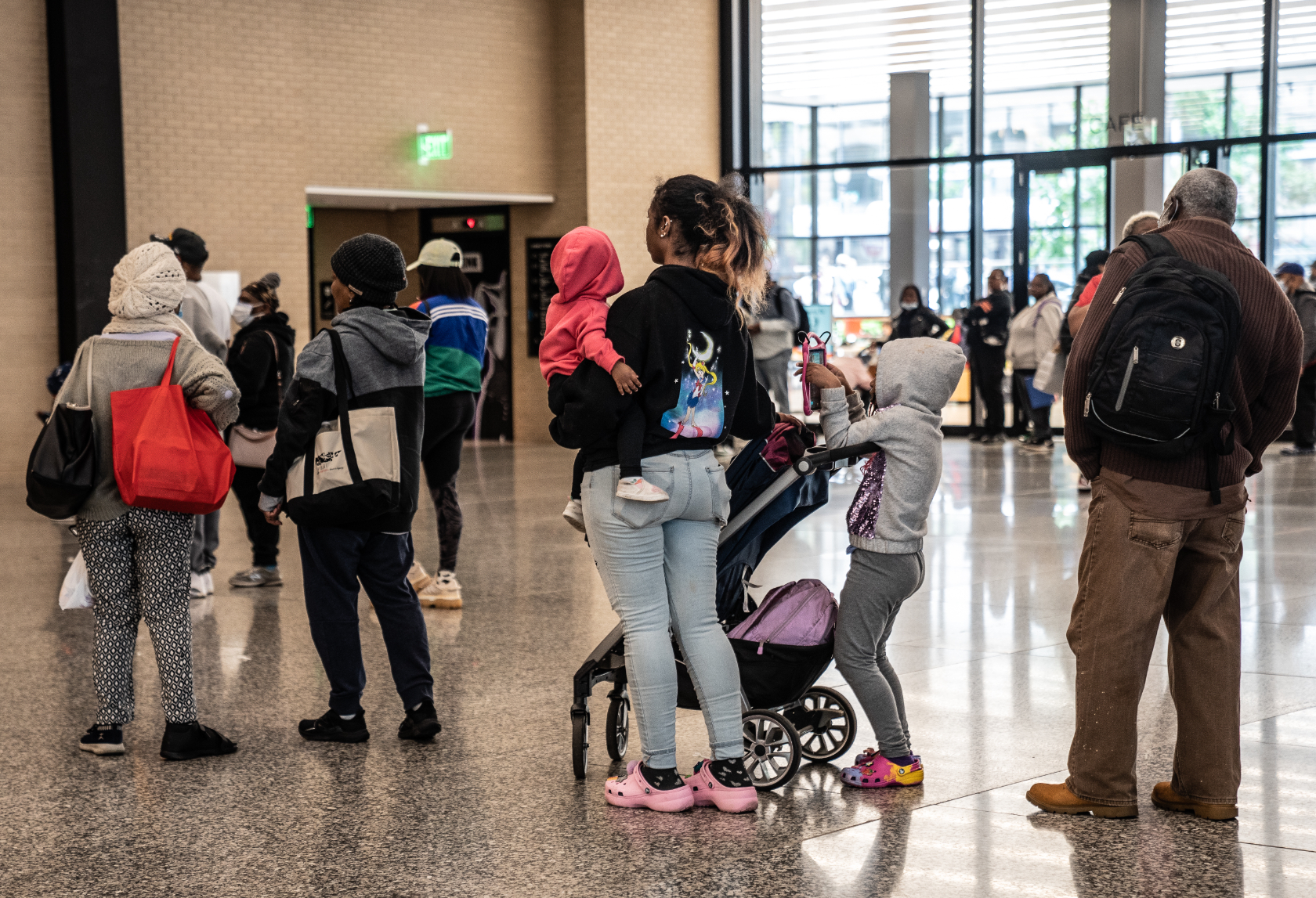
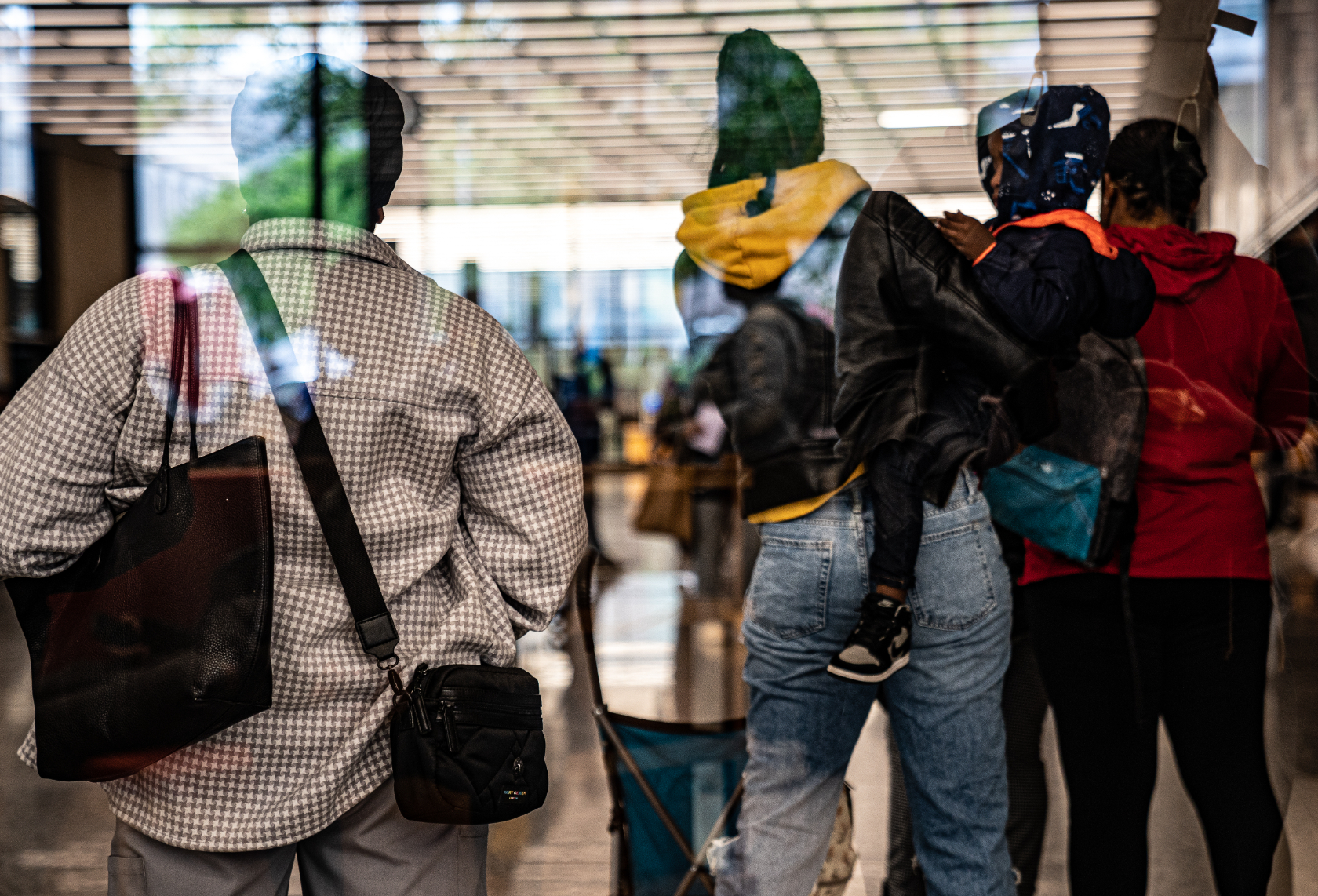
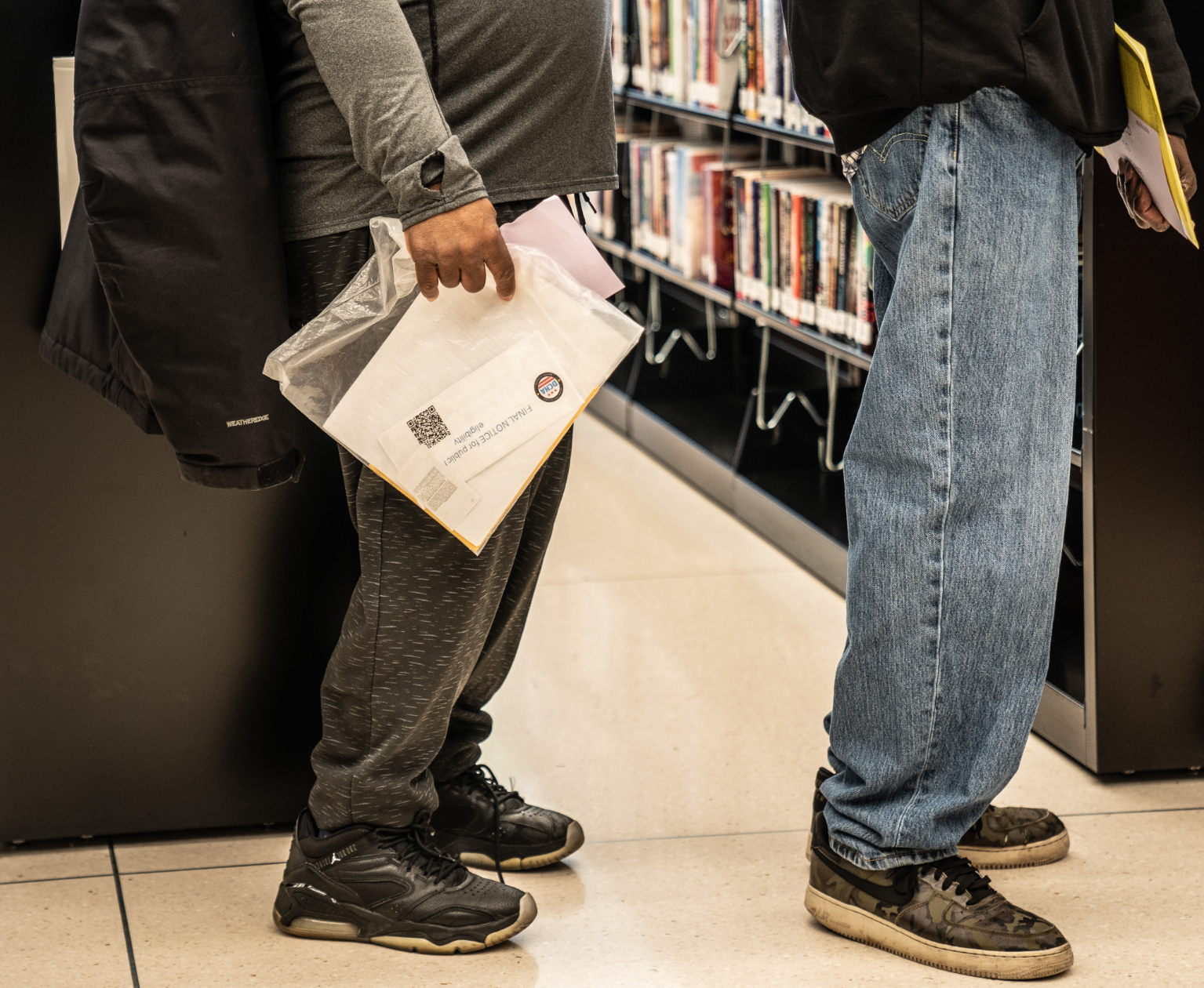
Families clustered together, clutching folders of paperwork and their toddlers’ hands. Although DCHA employees appeared to process the line at a speedy clip, many spent so long waiting they started Facetiming friends and family; others, including seniors and those with disabilities, sought chairs from attending staff.
If data from previous eligibility events are any indication, only a small fraction of those who attended on Monday will actually make their way into a new home. Of the 2,300 people invited to attend a February lease-up event, only 54 accepted offers to move into a unit. During a March event, none of the 6,000 invited did.
Jennings, the mother recovering from her gun injury, wasn’t discouraged: “I’m still fighting to try and get up out of here. And by the grace of god, if I have to be here all day every day, Imma be here.”
As she finished speaking, a DCHA employee called for her group to shuffle onward. Easing up from her chair in a ground floor reading room, she secured her face mask and squeezed into an elevator, heading to an auditorium upstairs. As soon as her cohort left, another fell in place behind them, the crowd rotating in an infinite loop.