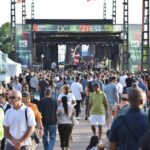
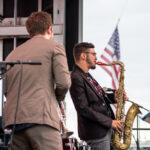
Since its inception, the DC Jazz Festival has had a goal of becoming a destination event that could attract jazz lovers from around the globe. This summer, DCJF president and CEO Sunny Sumter visited two internationally renowned jazz festivals in order to gain insight into how D.C.’s event could take a step to the next level. Her travels led Sumter to the Umbria Jazz Festival in Perugia, Italy and the Newport Jazz Festival in Newport, Rhode Island.
“They’re both pinnacle festivals. Both of them have been around for decades,” Sumter says of those events. “You feel the history when you walk in.”
Among Sumter’s lessons learned is that these festivals take full advantage of their locations. Perugia is a medieval town with performances taking place in dramatic settings. Newport’s festival is held on the grounds of a pre-Civil War fort. While DCJF does not have analogues for its presentation, it does have a vibrant city to take advantage of.
“We get to utilize the beauty that is D.C. and the different neighborhoods,” Sumter says. “As a jazz festival, it’s really important to get back to a city-wide presence.”
Before COVID, the festival took place over 10 days with performances taking place in all four quadrants, including many of the city’s small clubs. But the pandemic was a shock to the system for the festival, as it was for every aspect of civic life, and the jazz scene suffered. Several venues, such as Sotto and Twins Jazz, did not survive. The DCJF moved from early summer to Labor Day weekend, and reduced its run to just five days.
The truncated timeline will continue this year, but Sumter does have good news: the organization will be ready to return to a 10-day format next year, she says.
“There’s no way we could have included all the venues and partners in a five-day festival,” Sumter explains. “We definitely want to get back to some of the partnerships we had since the beginning.”
Despite the shorter festival, DCJF has made an effort to expand the number of venues participating, with performances taking place at the Kennedy Center’s Millennium Stage, Takoma Station, Rhizome, and the Kreeger Museum.
DCJF’s move to later in the year also presented some programming challenges. Jazz acts often use the summer to tour the festival circuit, and the result is that multiple festivals often have very similar lineups. To counter that, DCJF partnered with jazz festivals in Detroit and Chicago to prevent too much overlap between festival lineups.
“That’s something that [festival artistic director] Willard [Jenkins] and I collaborate on as partners. We work to make our festival distinctive,” Sumter says.
The local community can also look forward to a big announcement from festival organizers after the completion of this year’s performances. Sumter was unable to divulge into too much detail during her interview with DCist, but when the conversation turned to the lack of venues in the city that present jazz, she said that is an issue that DCJF aims to tackle.
“It’s something we are thinking about with great intention,” Sumter says. “We need an institution or safe haven or place where musicians can come to rehearse, record, and perform. We are working on the beginnings of that.”
DCist will update readers when the announcement is made. In the meantime, here’s a guide to the happenings at the 2023 DC Jazz Festival, taking place Aug. 30-Sept. 3.

Where is the kickoff?
Eaton DC is hosting the JazzDC All-Stars, a who’s who of the DMV’s best jazz musicians under the direction of local mainstay Allyn Johnson. Tickets to the 5 p.m. concert are free, but registration is required. Musicians in the ensemble include pianist Janelle Gill, trombonists Greg Boyer and Reginald Cyntje, saxophonist Tedd Baker, and others.
What’s happening at The Wharf?
As with past iterations of the DC Jazz Festival, the tentpole performances take place at The Wharf over Labor Day weekend. Revered musicians like saxophonists Charles Lloyd and Donald Harrison, drummer Terri Lyne Carrington, and bandleader Arturo O’Farrill play Saturday, Sept. 2. Rising star Samara Joy shares the bill with NEA Jazz Masters Dave Holland and Donald Harrison on Sunday. There are ticketed and free options for these concerts taking place at The Wharf’s main pier. In addition, Union Stage, a small music venue at The Wharf, is hosting a number of performances that weekend while The Anthem welcomes vocalist Greg Porter as a headliner.
Where can I find local musicians?
Area musicians are sprinkled throughout the schedule. Vocalists Landon Paddock and George V. Johnson are part of DCJF at Kennedy Center’s Millennium Stage while vibraphonist Warren Wolf and saxophonist Leigh Pilzer are among those leading bands at Union Stage. Pianist Mark Meadows is a featured performer at The Wharf. This list of local musicians performing this year is far from exhaustive — even with it’s larger aspirations, the DC Jazz Festival always makes an effort to do right by local musicians.
Are there cool things happening outside of The Wharf?
Absolutely; two concerts caught our eye. The Generations Series at Arena Stage on Aug. 31 brings together musicians of different eras to show how one period in jazz builds on those that came before it. Pianists George Cables, Benny Green and Orrin Evans, with emerging pianists Shamie Royston and Hope Udobi and vocalist Jazzmeia Horn, collaborate with a cross-generational rhythm section: drummer Jeff “Tain” Watts and local bassist Kris Funn. The Jazz Hop in Historic Anacostia on Sept. 1 is a day of performances and cultural offerings that culminate with a concert by DCJF favorite, The Brass-A-Holics, along with The JoGo Project, the go-go/jazz ensemble under the direction of area saxophonist Elijah Balbed.
The DC Jazz Festival takes place from Aug. 30-Sept. 3 at The Wharf and many other venues around the District. Many events are free, but some require tickets to be reserved in advance. Visit the festival website for full schedule and ticketing information.