 Charles Paullin
This story was produced by The Virginia Mercury and is republished here under a Creative Commons license.
The Metropolitan Washington Council of Governments passed a resolution this November that sets a goal of having solar panels installed on 250,000 rooftops in the Washington, D.C. metro region, an area encompassing the nation’s capital, Northern Virginia and parts of Maryland, by 2030.
Members of the energy industry say meeting the target will take some work given the number of rooftop arrays Virginians have installed so far, but programs are in place to help put panels on roofs as well as an increasing number of funding opportunities.
“We all read the papers, we all discuss with our constituents,” said Takis Karantonis, a member of the Arlington County Board and chair of MWCOG’s Climate, Energy and Environment Policy Committee. Climate change, he said, “is one of the number one concerns that people have right now, and they are asking us to lead.”
In 2020, MWCOG approved a Climate and Energy Action Plan that called for the region to reduce greenhouse gas emissions, one of the primary drivers of climate change, by 50% from 2005 levels. Last week, climate scientists reported that average global temperatures on Nov. 17 had exceeded the global average for the preindustrial 1850-1900 period by 2 degrees Celsius, an amount long seen by researchers as a key warming threshold.
Among other goals to reduce emissions, MWCOG’s climate plan calls for about 2% of the region’s energy to come from onsite renewables, those outside of large, centrally located power sources operated by utilities to power the grid.
Jeff King, MWCOG director of climate, energy, and air programs, said the council chose to translate that goal into rooftops because it’s easier for people to grasp than megawatts, the typical unit of measurement for electric capacity.
“People understand rooftops, but people don’t really understand what a megawatt is,” said King.
MWCOG hasn’t set specific targets for each of its member jurisdictions of Virginia, Maryland and D.C., but if responsibility for meeting the region’s goal were split evenly between them, Northern Virginia would need to install solar on roughly 9,900 rooftops per year from 2024 to 2030. That would include installations in the counties of Arlington, Fairfax, Loudoun and Prince William, as well as the cities of Alexandria, Fairfax, Falls Church, Manassas and Manassas Park. MWCOG has said it will count installations on residential, municipal and commercial properties as one rooftop, regardless of the size of the project.
MWCOG says there are currently about 72,000 rooftop solar installations in the region, meaning it needs about 178,000 more rooftop installs to meet its goal.
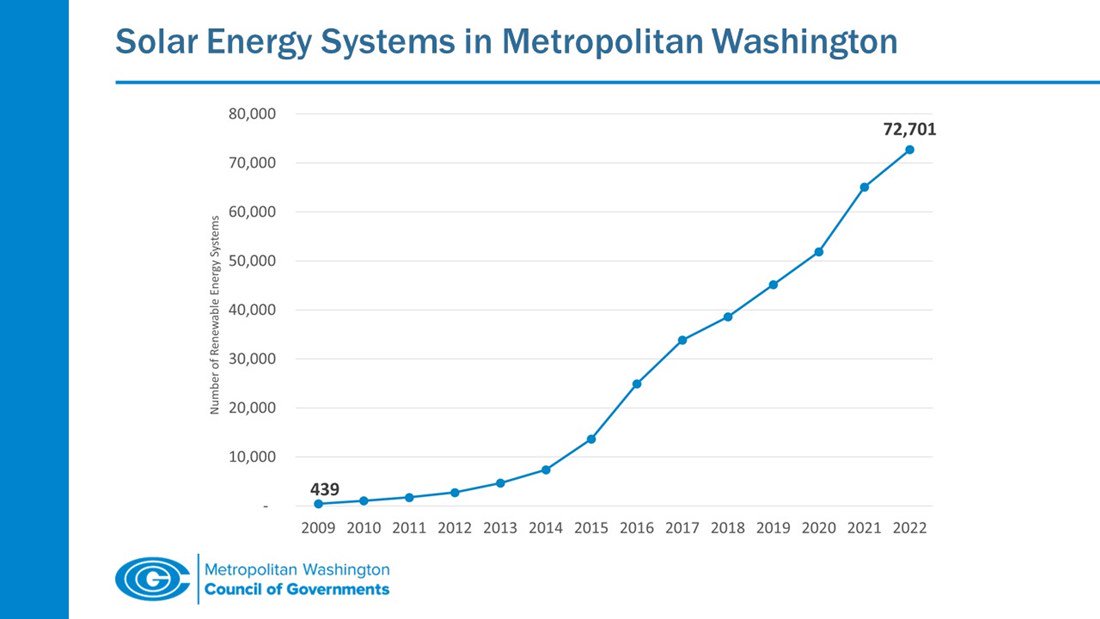
The almost 10,000 annual installs Virginia would need to achieve outstrip the rate at which solar has been installed in the region, according to numbers from Aaron Berryhill, solar program manager at the Virginia Department of Energy.
According to Berryhill, Virginia had 13,000 installations in 2022. With 29% of the state population coming from the D.C. suburbs, Berryhill noted, the current pace of installation in the region would equal a little under 4,000 installs a year. That number could undercount the true adoption rate, however, given Northern Virginia’s greater embrace of solar than some other parts of the state.
Additional data from Solar United Neighbors, a nonprofit that helps organize solar co-ops, shows installations in the region likely increased in 2023, given the roughly 19,500 that occurred throughout the state from January to August this year.
“”It is exciting to see that MWCOG is setting an ambitious goal for new rooftop solar systems in the region,” wrote Liz Veazey, the group’s policy and rural energy director, in an email.
King said the Virginia Clean Economy Act, which requires the state’s electric grid to rely on renewables and nuclear by midcentury, could help accelerate installations. The VCEA requires generation to come from rooftop solar.
In Northern Virginia, a variety of programs already exist to encourage homeowners to adopt rooftop solar. They include the Northern Virginia Regional Commission’s Solarize Virginia, which offers estimates for installation costs and a heat map to see how capable a rooftop is of harnessing sunlight to produce power. Northern Virginia Electric Cooperative has a similar program that works with a solar installer and credit union to help customers install panels.
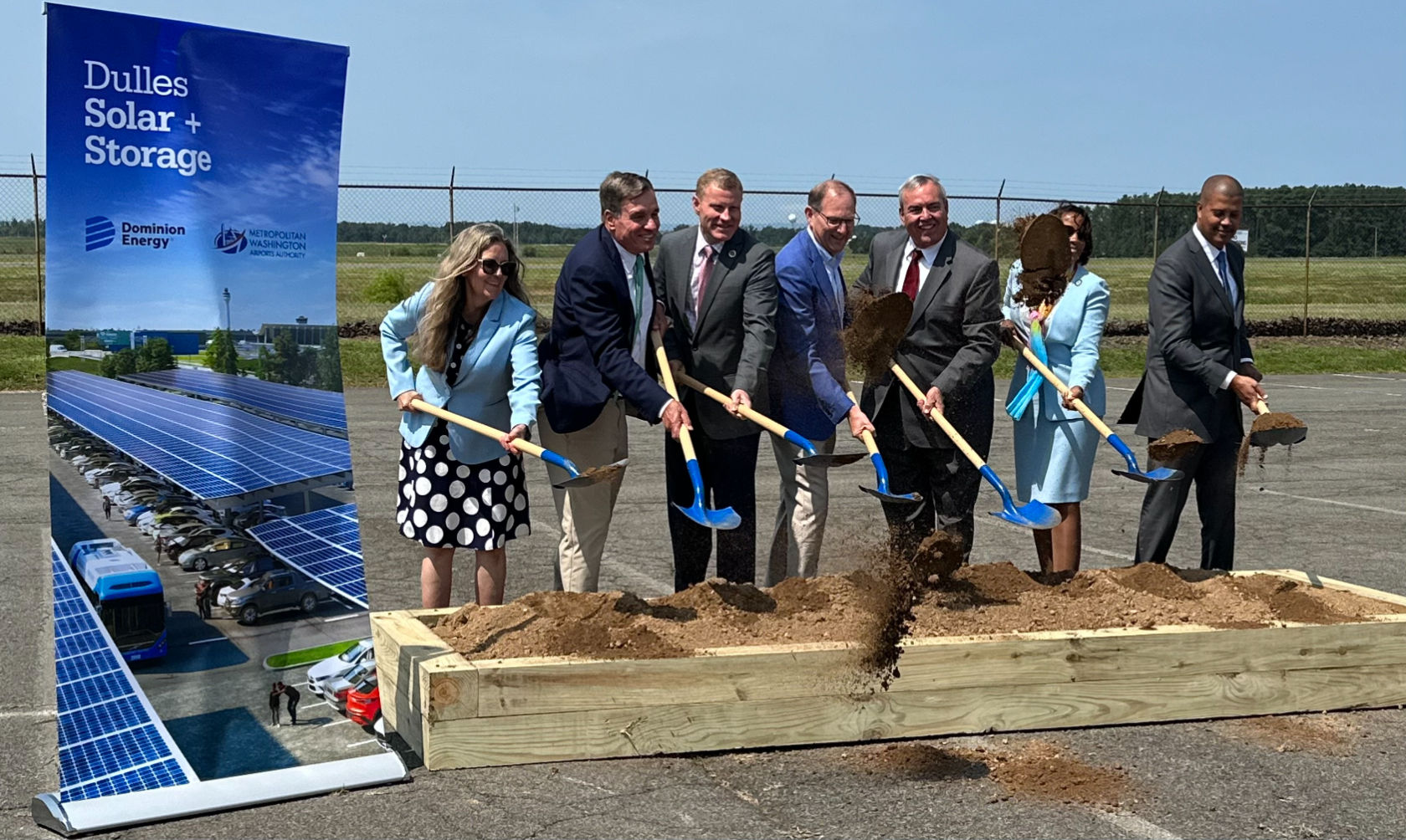
Dominion Energy, which serves much of the region, didn’t comment directly on whether it considers MWCOG’s goal realistic but said it “appreciates” the target.
The utility is “all in” on solar, a utility spokesperson said, pointing to several programs Dominion operates to advance the use of renewables, including a program that offers free installations for low-income and older customers.
“We look forward to working with residents, businesses and localities in the region to help achieve” solar goals, wrote Dominion spokesperson Aaron Ruby in an email. “Whether it’s utility-scale for our millions of customers, medium-sized for businesses or small-scale for homes, every type of solar plays a role in the clean energy transition.”
Taken together, King said the various efforts in the region can help get the installation rate up to where it’s needed.
One final question that came up during the board’s discussion on the resolution is how all the new rooftop panels will be paid for.
Karantonis said green banks could offer assistance, while Clark Mercer, director of MWCOG, added that incentives in the Inflation Reduction Act and Bipartisan Infrastructure Law could alleviate strain on people’s wallets.
However, Mercer said collaboration is needed to see projects through, because “this is really where we see things getting jammed up.”
Virginia also exempts rooftop solar from personal property tax. King added that solar co-ops, groups of people who harness bulk purchasing to secure discounts on solar installs, offer savings. These solar “Tupperware parties,” King said, give potential customers confidence to put panels on their roof by seeing other people do it.
“We just need more people to be aware of it,” King said.