Héctor Alejandro Arzate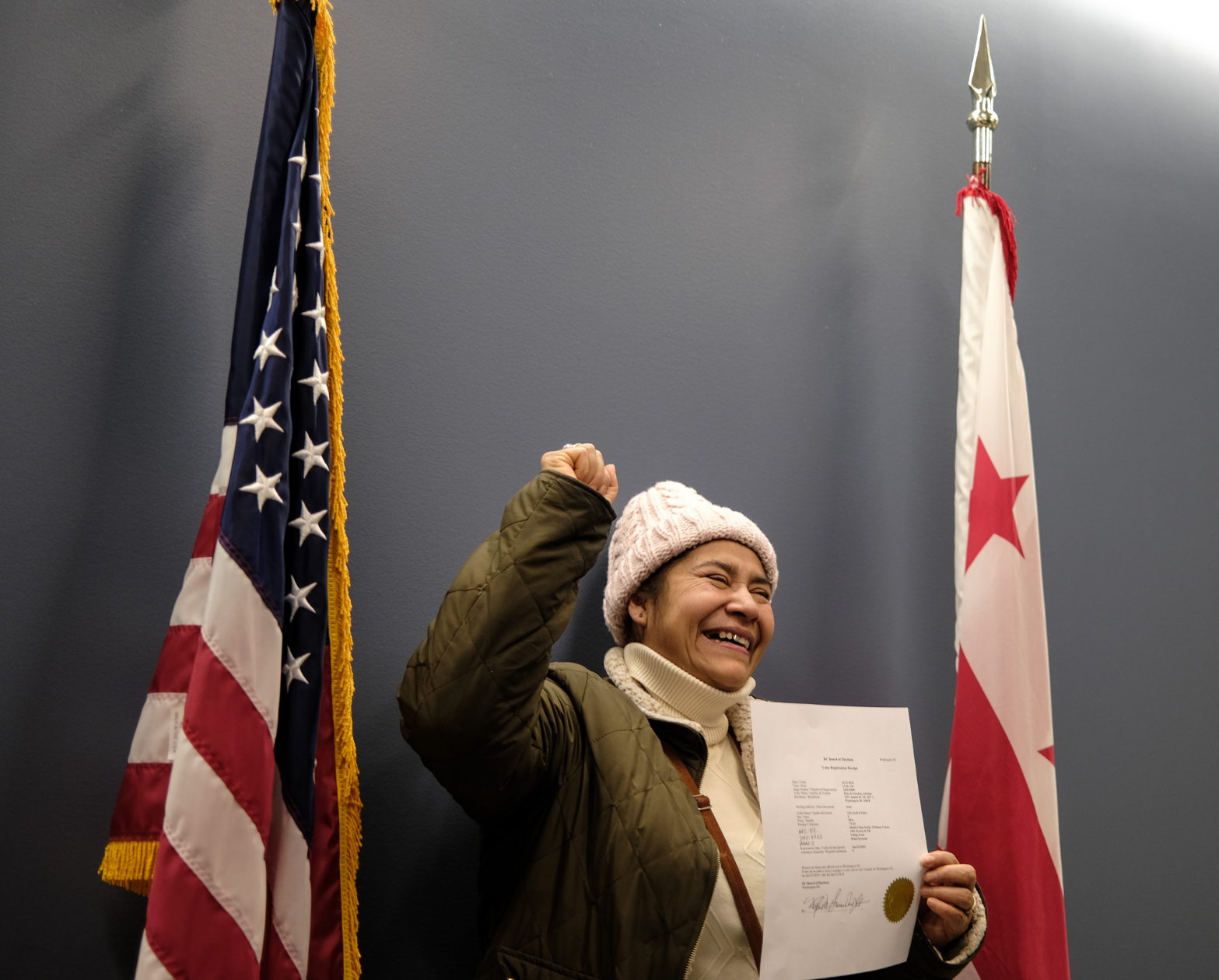
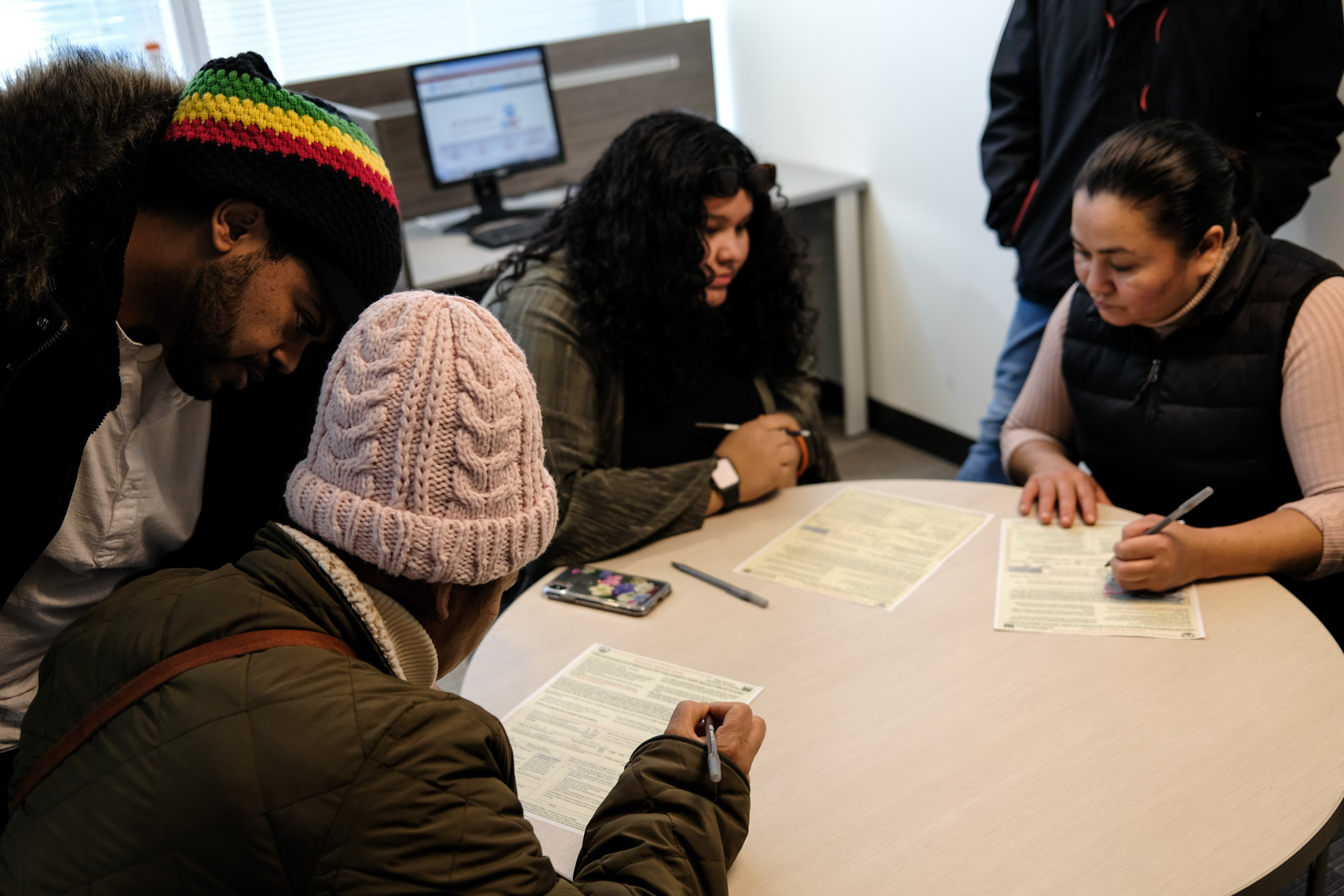
Antonia Diaz is filling out a voter registration form first-thing on a Monday morning at the D.C. Board of Elections. To her left is one of the advocates who brought her to the agency in southeast Washington, D.C. On her right, is an elections worker who translates and explains the paperwork required for her to take part in local elections.
It’s Diaz’s first time doing this, along with Ana Lemus and her daughter, Genesis. The three are among the first residents to take advantage of a new law that expanded local voting rights to non-citizens in D.C. They can now register to vote and cast their ballot in future elections for mayor, council, attorney general, state board of education, and more.
“Thank God, we are [being] taken into account,” says Diaz, who was born in Guatemala.
A District resident for about two decades now, Diaz says she raised her two children here. For many of those years, she worked as a street vendor with a food truck. She paid taxes and license fees, she says, until a $3,000 fine (for which she joined a lawsuit against the District) set her back financially during the pandemic. Since then, she’s attended council hearings and pushed for elected leaders to pass laws like the one that overhauled street vending last year.
“Many people are undocumented. They’d like to vote or do something, but there is no opportunity. One can only listen or hear,” says Diaz.
When she first learned that the new law was in effect – and that local advocates were helping people like her register to vote – Diaz says she had no choice but to attend the recent outing to the DCBOE’s offices.
Still, as first-timers, she and the others have questions for both the election workers and advocates when registering. Like what form of identification to use, whether they’ll receive their ballots in the mail, if they too can serve as an election worker, and how to choose their party affiliation.
“What is the difference between those political parties?” asks Diaz.
“Yes, what are the differences? Explain to her because I don’t understand. I get confused between [all of that],” says Ana Lemus, who was born in El Salvador and has lived in the District for more than 10 years.
They can choose ‘no party’ if they’re uncertain, explains the election worker. By doing so, they won’t be able to vote in the upcoming primaries for Democrats or Republicans, for example, but they can update their registration online up to 21 days before the next election if they change their minds.
Diaz decides that she’ll do her research later and, in the meantime, puts herself down as an independent. “We are going to see, or think, about who,” says Diaz. She signs her name over and hands it back to the worker.
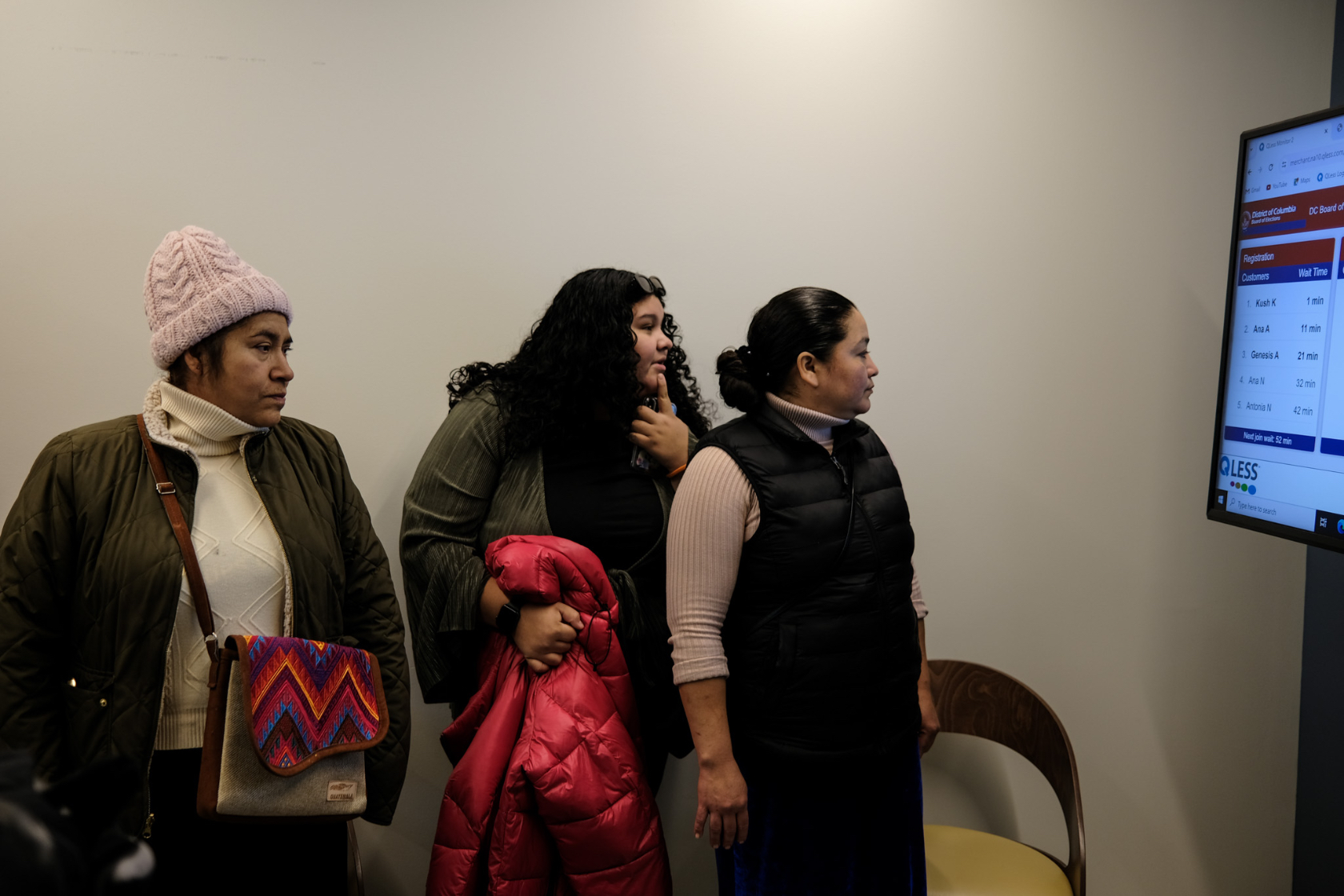
Save for the commute to the DCBOE’s office on Half Street SE, and waiting in a few lobbies, the task takes the group about an hour to get through. After a few more minutes to process their registration, one of the election workers returns to congratulate all three of the new voters.
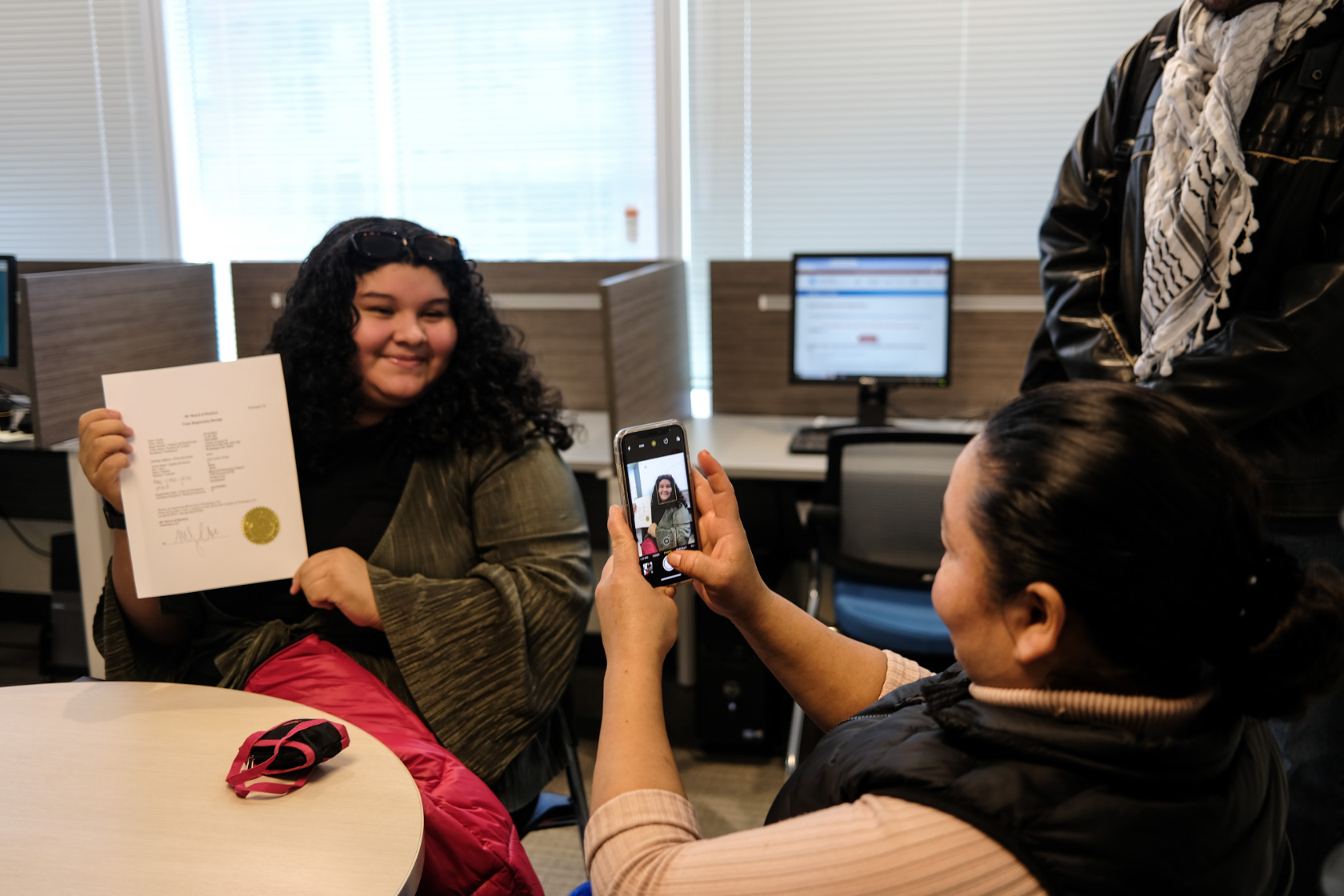
It’s a big moment for Ana and Genesis Lemus, who smile and take photos with their voter registration receipts. Lemus, another street vendor, was prompted into civic engagement following a 2019 police confrontation with her daughter. From there, the two have become leaders in their community and were regular voices in the push that decriminalized street vending without a license.
“This is going to make it so that the community comes out to vote,” says Lemus. “Because our vote is important.”
For 19 year-old Genesis, being a registered voter could open up future opportunities for her to continue supporting her community.
“It feels exciting to be a registered voter now,” says Lemus. “I guess I’m looking forward to maybe running one day for office – maybe ANC first – and now, I think being able to have the support of my community.”
Also there to congratulate them is Abel Amene, one of the advocates who organized the day’s registration. To everyone’s surprise, the election worker comes back with a registration receipt for Abel himself (who prefers to go by his first name due to his culture’s patronymic naming system).
“Look! I’m a non-citizen voter just like you,” says Abel, who was born in Ethiopia.
As an immigrant, Abel is also a longtime advocate for the effort to extend and implement voting rights for non-citizens in the District. So late last year, when registration finally opened, Abel says he became the first non-citizen to register to vote. He also became the first non-citizen elected into public office in D.C as the Advisory Neighborhood Commissioner for 4D02 in Brightwood Park. It’s a hyperlocal and voluntary post that was created out of the Home Rule Act, which gave D.C. residents the right to elect a mayor and council, among other things.
So far, about 23 people total have registered to vote in D.C. as non-citizens, according to a spokesperson for the DCBOE. For Abel, it’s not quite the 50,000 or so potential voters that advocates previously estimated, but is a hard-won number after years of failed bills and recent efforts in Congress to overturn the bill once it finally passed in D.C. Council.
Last February, the Republican-led House of Representatives (in which delegate Eleanor Holmes Norton had no vote for the District’s 700,000 residents) passed a measure to repeal the non-citizen voting law, with some arguing it would dilute the votes of citizens and potentially lead to foreign interference. In D.C., many called the move – which also sought to repeal a revision to D.C’s criminal code – an attempt to interfere in local affairs, a sentiment that some residents have felt for years. Former Fox News presenter Tucker Carlson, meanwhile, warned his viewers that such a law would be a threat to the United States – though, with little mention of the history of non-citizen voting, particularly in the D.C. region.
“We have tens of millions of illegal aliens… living in the United States, and our elections are determined by tens or hundreds of thousands of votes. So if they can all vote, we’re done,” said Carlson.
The Senate, however, chose not to follow the House’s move during the period of Congressional review. Ultimately, the bill to enfranchise non-citizens in D.C. became law, which Abel and its advocates say is a victory not just for immigrants but for the entirety of the District and its 50-year-old right to semi self-governance.
“So giving them at least the right to vote in local elections is part of that whole idea of no taxation without representation,” says Abel. “D.C. residents, more than anyone, understand this, right? And more than that, we want to make D.C. a welcoming place for anyone.”
Last July, Norton issued a statement condemning the House Committee on Oversight and Accountability for marking up another bill that sought to overturn the non-citizen voting law. She vowed to defeat the effort, calling it “anti-home rule.”
Today, she too sees non-citizen voting as a victory.
“What the District is trying to do is to just make sure nobody in the District is left without some say in the local government. So it goes as far as it can go, short of statehood,” Norton told DCist/WAMU.
Ward 1 Council member Brianne K. Nadeau, who introduced the bill and some of its previous iterations, says it was long overdue for longtime residents. She says many pay taxes and raise their children in local schools, and should have a say in the next election.
“I think if it’s a good idea the first time, it’s still going to be a good idea every subsequent time,” says Nadeau. “It really hits home because in the District of Columbia, we already don’t have a voice in our federal government. And so allowing for that participation locally can only strengthen our community and engagement and the outcomes of our elections.”
As far as the potential foreign interference that some opponents warned about the law, Nadeau says it “seems like it’s not coming to fruition,” given how few people have registered so far. She also counters that there are other examples that should take priority for Congress, such as the Facebook ads that were purchased by foreign governments during the 2016 election.
“We’re just not seeing the influx that those fear mongers said would come,” says Nadeau.
The voter registration form states that applicants must maintain residence in D.C. for at least 30 days prior to the election they’re trying to vote in, which is true for both U.S citizens and non-citizens. It’s also not allowed to claim voting residence or the right to vote in another U.S. state, territory, or country when registering to vote in D.C. Those who do “can be convicted and fined up to $10,000 and/or jailed for up to five years,” according to the DCBOE’s online registration form.
When asked if foreign interference was a concern, a representative for the DCBOE told DCist/WAMU that “the Board is charged with enfranchising all eligible voters, including eligible non-citizens.”
Other challenges to the law still remain, however. In May, a lawsuit was filed to try to stop the implementation of non-citizen voting. According to the DCBOE, the lawsuit is ongoing. The Immigration Reform Law Institute, which represents the plaintiffs, did not respond to an email request from DCist/WAMU for comment.
For now, advocates like Abel say the next steps should focus on voter outreach and to maintain registration accessibility for all non-citizens, regardless of their spoken language.
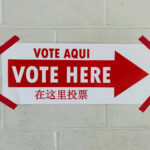
The DCBOE says it will continue working towards a similar goal. In the fiscal year 2024 for D.C.’s budget, the DCBOE says its allotted budget includes an overall increase of $1.483 million to support the implementation of the non-citizen voting law, which includes an earmark of $506,000 for outreach and education. As mandated by the Language Access Act, both the online and in-person voter registration forms are now available in English, Amharic, Chinese, French, Korean, Spanish, and Vietnamese. Applicants who use a language other than those seven can also have forms translated upon request, according to the DCBOE.
To that end, Abel says he wants to help “a few hundred people” get registered to vote.
“I’m hoping that this will mean that the immigrant experience is considered in how laws are passed, in how agencies are administered, and that we give a voice to many of these issues – like street vendors, like excluded workers, like domestic workers. All predominantly immigrant communities,” says Abel.
Diaz, meanwhile, says “it’s a blessing for me to be able to participate.”
Jacob Fenston contributed to this report.