 Sarah Y. Kim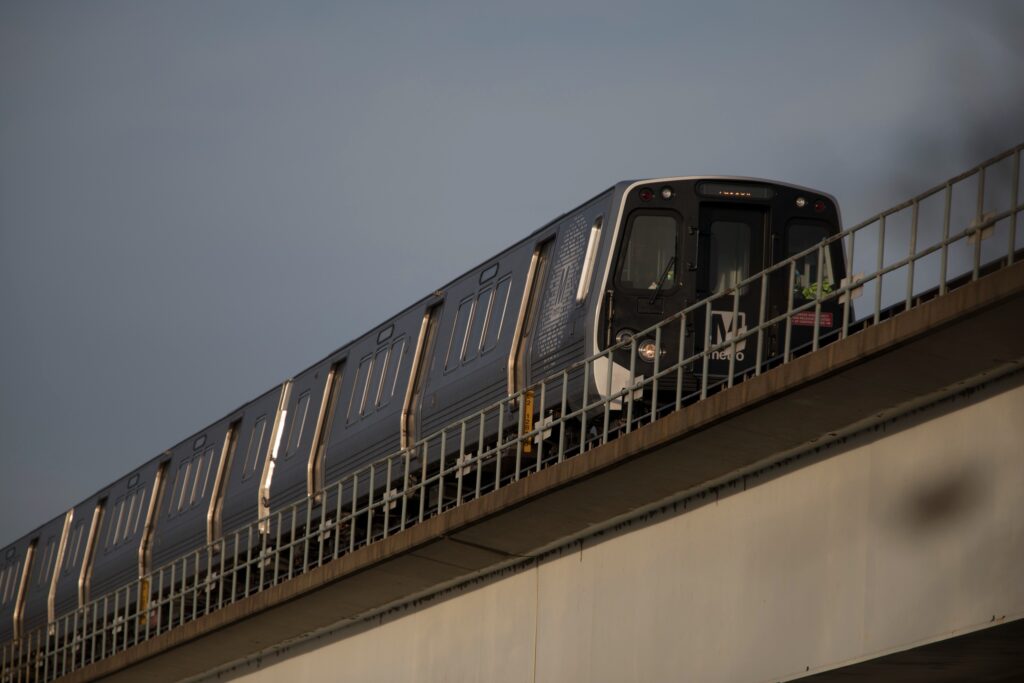
In a letter sent to Washington Metropolitan Area Transit Authority officials Thursday, D.C. leaders committed up to $200 million to help close Metro’s staggering budget deficit. The funds would bring WMATA significantly closer to averting an anticipated “transit death spiral” that would have catastrophic economic consequences for the region.
“We cannot let WMATA fail, nor can we allow Metro services to be downgraded to close a budget gap as to render it an unusable transit system,” reads the letter, signed by Mayor Muriel Bowser, D.C. Council Chairman Phil Mendelson, and Ward 6 Councilmember Charles Allen – who leads the council’s Committee on Transportation and the Environment.
The proposed number is not final, and won’t be until the District wraps up its budget as early as May. But City Administrator Kevin Donahue said he doesn’t expect the commitment to change.
“The mayor really wanted to make clear, before Maryland and Virginia finished their budgets, that the District was all-in on making sure we have a strong transit system,” he told DCist/WAMU.
Metro officials have warned that without sufficient additional funding from D.C., Maryland, and Virginia, WMATA would have to make drastic service cuts that would make the transit system “unrecognizable” – including the closure of about half of Metrobus routes, the closure of 10 train stations, and trains that stop running at 10 p.m. There would also be mass layoffs, of about 2,300 workers, and fare hikes.
Donahue said the District will not go over $200 million, and that they’re already contributing “more than our fair share.” Maryland and Virginia have proposed budget commitments of $150 million and $130 million respectively.
District officials said the combined $480 million would reduce most of the budget deficit. That deficit was projected to be $750 million as early as last June. However, D.C. officials said in their letter that the projected deficit is now $500 million. Donahue attributed the $250 million reduction to “internal efficiencies and one-time savings.” A Metro spokesperson said more information would be coming out next week.
Donahue expects Maryland and Virginia’s state legislatures to follow through on their proposed budget commitments. If they fail to, he said the District might cut back on its proposed funding.
WMATA General Manager Randy Clarke thanked District leaders, calling the $200 million a “significant financial commitment” and “a big step” to prevent major service cuts and layoffs.
D.C. leaders stressed that the additional funding is only a short-term solution and that WMATA and the jurisdictions would need to get back to the table this spring to work on long-term solutions. They also said WMATA’s funding formula is “seriously flawed” and that they would need to collaborate on a new formula for the 2026 fiscal year.
The proposed funding from D.C., Maryland, and Virginia would be in addition to yearly subsidies each jurisdiction already provides. Metro, unlike most major transit systems in the country, does not have a source of dedicated funding. Instead, it relies on a combination of local and federal funding and fare revenue. The funding system has long been considered unsustainable.
Metro, unlike most major transit systems in the country, does not have a source of dedicated funding. Instead, it relies on a combination of local and federal funding and fare revenue. The funding system has long been considered unsustainable.
While this one-time contribution is expected to prevent service cuts, it’s not clear whether layoffs would be off the table. The letter says that WMATA “must review staffing levels at Metrorail stations and surface operations system wide” in order to return to financial stability. It adds that “personnel costs are the largest share of WMATA’s operating budget and WMATA must slow the growth of these costs.”
ATU Local 689, which represents Metro workers, expressed concern that the current jurisdictional commitments are not enough to prevent lower quality service, layoffs, or cuts to benefits, and called for long term solutions that would include “robust dedicated funding.”
“This budget must not be balanced on the backs of working class people,” the union said in a statement.
Donahue said it’s up to WMATA leaders whether layoffs are the solution, and that curbing personnel costs may mean reduced wage increases or continuing an ongoing hiring freeze.
The mayor and councilmembers urged WMATA to minimize dipping into money set aside for preventative maintenance to cover its general operating budget. They also recommended freezing any new capital projects that “do not contribute to a state of good repair.”
Clark Mercer, executive director of the Metropolitan Washington Council of Governments, applauded the District’s proposal, calling it “the latest sign that the regional dialogue over the past several months is forging consensus on a path forward.” (MWCOG’s board of directors elected Councilmember Allen as its board chair last month.)
Metro officials will be holding a press briefing Monday to give updates on its Fiscal Year 2025 budget proposal.