Former Editor-in-Chief Ryan Avent writes a weekly column about neighborhood and development issues.
 Summer in Washington means the return of many familiar sights, some welcomed, others not as much. It means baseball, but also sticky heat and humidity. It means evenings at barbecues and bars with outdoor seating, but also children roaming the streets with backpacks full of cherry bombs and bottle rockets. It means, for many of us, time off. For others it means dodging packs of interns and tourists, and sweating it out in hot, crowded, and malodorous Metro cars heavy with the weight of added humanity.
Transit ridership is increasing all the time, it’s true, but only in the summer, when the city’s visitors add to the local crowds, does the impact of steady growth become really apparent. Each year, unremarkable days are added to the list of Metro’s top ten busiest; half of them now are from 2007 and another two from 2006. These totals are all around 800,000 trips per day, which is below the 1 million daily riders Metro was built to handle, but car shortages and three decades of wear have eroded the system’s top capacity. Many lines now carry as much as they can. When problems develop, the crush of riders and lack of redundancy quickly turn small problems into minor crises. And so we get new summer traditions for the city—problems and delays, and calls for investment in and improvements to Metro.
The situation is sure to get worse in the near future. It does seem that new funding will eventually be on its way, but the backlog of capital needs will probably absorb much of what has been allotted, limiting the potential for system expansion outside of what is already on the books. What is on the books—a spur through the heart of Fairfax County’s most populous areas—will add to the number of people riding Metro without adding capacity in the core, the hub that gives the hub and spoke design its valuable connectivity. Throughout the system, that connectivity has spurred growth in transit oriented development. Such growth allows the city to get denser without getting bogged down in congestion and pollution, but as development continues, it will also add new riders to the existing system. Without bold new expenditures, Metro will have to work hard just to continue to tread water.
That’s not acceptable for the District. With limited land available for dense growth, the city must be able to take full advantage of such space as it exists, and that means transit. Given the realities of Metro system planning, however, what’s a city to do? Fairfax County spent nearly two decades planning for its Silver Line through Tysons to Dulles, and for its trouble the county received a design it isn’t sure it wants. Making expansions happen is hard–maybe, it’s sad to say, impossible. Them’s the breaks. So now what?
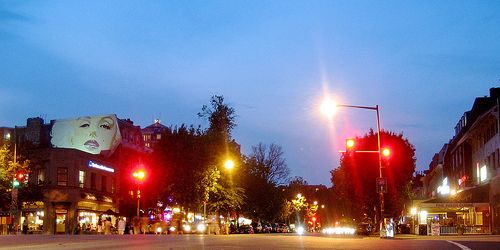
Picture taken by Eye Captain.