
Former Editor-in-Chief Ryan Avent writes a weekly column about neighborhood and development issues.
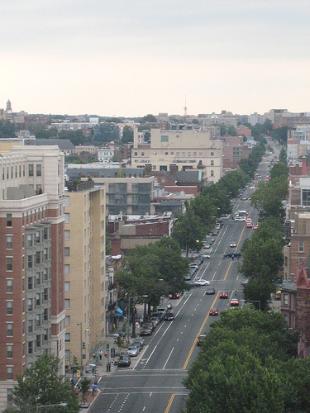 Not too long ago this site, along with the D.C. Council and much of the rest of the Washington area, was actively debating the incentive package for the new Washington Nationals stadium. At the time I was well aware of the questions about costs and benefits and was familiar with research on the subject suggesting that new stadia did not boost metropolitan economic performance (although baseball stadiums do tend to outperform those built for other sports, perhaps because they are in use more often). I nonetheless thought that the stadium might be a good idea, and one of the reasons, aside from my baseball fandom, was the role it might play in chasing metropolitan dollars—in shifting, that is, more suburban revenue into the District.
Whatever the arguments and outcomes of the stadium deal, it’s interesting to look at the position in which we found ourselves when we were still debating it. At a metropolitan level, the decision to build a stadium was probably, at least in strict economic terms, a wash, but when one introduces jurisdictional boundaries the chance to enhance the District’s relative position within the metro area suddenly makes the decision more rational.
The stadium deal is hardly the lone example of such a situation; at the moment, another is rising just outside the Capital Beltway in Oxon Hill, Maryland. The business Disneyland at National Harbor might end up being revenue gold for Prince George’s County, but it’s hard to imagine what more the developers might have done to offset the benefits of the project with regional costs. National Harbor promises to snarl traffic along the I-95/495 corridor, and the decision to build far away from Metro means that automobile alternatives are practically nil and that traveler trips and spending outside the compound will be sharply limited. (While a water taxi to Old Town is a great idea, it would take a second Miracle at Dunkirk to shift a meaningful amount of commerce over the river via boat).
Worst of all for the District, the National Harbor investment in convention space and hotels greatly limits the value of D.C.’s own new and expensive convention center and its associated hotels. It also increases the likelihood that the District and Prince George’s will waste valuable time and money throwing incentives after conventions, all in an effort to shift dollars from one side of the District line to the other.
These are just two small and discrete examples of one of the most serious planning problems facing Greater Washington: the failure to plan regionally. Other competitive actions operate continuously throughout the metropolitan area, leading to questionable distributions of people and jobs and causing an unfortunate amount of money to be spent on fights over the existing economic pie rather than on efforts to make the pie bigger.
Picture taken by iceman882.