
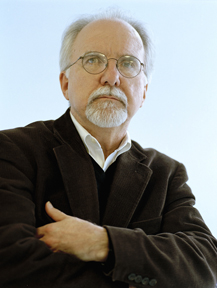
 John G. Hanhardt has been working as a consulting curator on film and media at the Smithsonian American Art Museum (SAAM). He’s had an influential career as one of the pioneering curators of media art in North America, helping shape the way museums look at and receive new media within their galleries and collections — all stemming from his perspective of film’s influence on art and culture in the 20th Century.
Hanhardt grew up in Rochester, NY and gained a love of film from frequenting the archives of the George Eastman House. At the University of Rochester he earned a B.A. studying linguistics, and nearly went to the University of Michigan to earn a masters degree in the emerging field of psycho-linguistics. Instead, his passion for film prevailed and took him to the University of Southern California to study film production. After a semester he returned east to study the history, theory, and criticism of film in NYU’s Department of Cinema Studies, where he earned an M.A.
DCist had the opportunity to sit down with Mr. Hanhardt to review his career, find out what brings him to Washington, and gain his perspective on certain issues facing new media in American art.
I read that your first job was at the Walker Arts Center in 1974.
The Walker is a great contemporary art museum. I had the opportunity to develop and run a program that established a film study collection and connected to the community at large.
How did you connect to the community at large?
We worked with the local film society and other people showing films. When filmmakers were brought to the community we’d plug them into the University or a high school to do a workshop and make them available to the community as a resource.