 Written by DCist contributor Morgan Hargrave
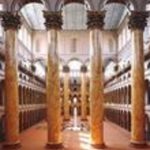
It is entirely possible that the only people who visit the National Building Museum are intrepid tourists who have strayed from the Mall, or perhaps those only there to count the ridiculous number of columns in the Great Hall. It would be a shame if this were actually true, since the NBM has plenty to offer. Of particular note for tourists and locals alike is an exhibit, Washington: Symbol and City, on how this fair city actually came to be. And, forgetting the overtones of finality associated with the word, “retrospective” is a fairly apt description.
Retrospectives are normally reserved for accomplished artists who are recognized as having achieved sustained greatness. They allow us to step back and examine a career in its entirety, and we are given a chance to appreciate the full catalog of work as it has evolved and been shaped by its historical and social context. Yet it is about time we apply this model to something outside of the realm of art, to a creation that is, in fact, still living and evolving.
Seemingly hidden away in two small rooms on the museum’s first floor, Symbol and City traces the city’s evolution from the days of the Continental Congress right through to the present. The main attractions lie in the first room, which holds models, historical anecdotes, and quotes from major players in the birth and infancy of the Federal City. Early drawings show that the vision of Pierre L’Enfant has held up remarkably, from the National Mall to the radiating avenues that dot the landscape.
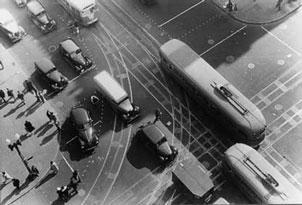
Aerial image of D.C. by photographer David Myers, U.S. Farm Security Administration, Courtesy Library of Congress, Prints and Photographs Division.