Former Editor-in-Chief Ryan Avent writes a weekly column about neighborhood and development issues.
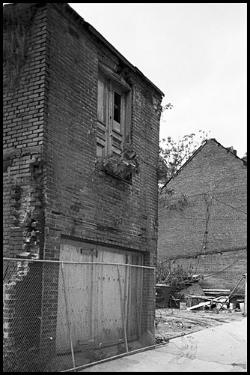 The Washington Highlands neighborhood of the District of Columbia is terra incognita for many Washingtonians. Tucked up against the District’s southeastern border with Maryland’s Prince George’s County, the area is walled off from the rest of the city by Oxon Run Park, the Anacostia Freeway, Bolling Air Force Base, and the Anacostia River, not to mention the yawning gap between its economic and demographic profile and that of the city at large. Overwhelmingly black, it’s nonetheless poorer and less employed than the District average for the black community–Ward 7 has a similar racial profile, but enjoys higher incomes, better education, less crime, and less poverty. In Washington Highlands, half of all children are born into poverty.
The neighborhood burst on to our consciousness this week, however, as the fallout from a confusing and tragic police drama focused the city’s attention on the world apart a mere four miles from the Capitol Dome. Last Monday night, DeOnté Rawlings allegedly stole a minibike from the home of a local police officer, located in a gated townhouse community just a few blocks from Rawlings’ residence in Condon Terrace. The officer, James Haskel, arrived home to find his bike gone, then left in his SUV with fellow officer Anthony Clay to try and find the stolen property. From there, details become hazy. The officers say they found Rawlings with the bike, and that the youth fired three times into the SUV before the men had a chance to identify themselves as police officers. Residents of the surrounding neighborhood suggest that the bullets may have come from another shooter entirely. Either way, Officer Haskel returned fire, and Rawlings ended up dead of a gunshot wound to the head.
The days since have been chaotic. Federal investigators have taken over the case. Mayor Fenty has held four press conferences on the incident, the last of which devolved into shouting as Rawlings’ sisters peppered officials with questions. District police officers have begun grumbling to the press off the record, expressing anger over the mayor’s deference to the relatives of young man they see as a would-be cop killer. Investigators allege that Fenty’s diplomacy might compromise their investigation. No less a personage than ex-police chief Charles “please-don’t-audit-my-crime-stats” Ramsey chided Fenty for speaking so often to the public.
And in many public forums, vitriol has swamped careful analysis of the situation, what went wrong, and what is at stake. Let’s be clear: the act of stealing the minibike was wrong and criminal and Rawlings deserved to be arrested and tried for that crime. He did not deserve to die for it. Others will argue that he did deserve to die for shooting at police officers. But one has to remember two things: first, it is not clear that Rawlings did fire on police, and second, he may not have known that his targets were police officers. This is important; in a neighborhood where beefs often result in gun battles and murders, the sight of an SUV cruising slowly around the neighborhood could have been terrifying. Rawlings may have felt that his life was in immediate danger.
Picture taken by e.teel.