 Photo by AWard Tour
The D.C. Public School System is ramping up its efforts to help teachers facilitate conversations about race, racism, and police brutality against black people in America.
The Black Lives Matter movement began after Trayvon Martin “was post-humously placed on trial for his own murder” and George Zimmerman, a neighborhood watch volunteer, “was not held accountable for the crime he committed” in 2012, as co-founder Alicia Garza puts it. The “call to action” grew after the fatal shooting of 18-year-old Michael Brown in 2014 by then-officer Darren Wilson in Ferguson, Missouri, in addition to several other cases across the country.
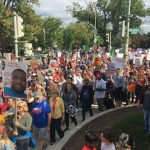
In D.C., the recent police-involved shooting of Terrence Sterling has ignited protests and demands for transparency. As District residents continue to receive more information regarding Sterling’s death, DCPS says “these tragic events are teachable moments” for students—64 percent of whom identified as black during the 2015-2016 school year.
DCPS announced yesterday that it has updated its resources designed “to help teachers prepare for and navigate difficult discussions with their students on race, racism, and police violence,” according to a release. The protocols were originally drafted after Michael Brown’s killing, and the system decided to enhance them after the deaths of Freddie Gray, Alton Sterling, Keith Scott, and Terence Crutcher, among other fallen black men.
A document titled Preparing to Discuss Race and Police Violence in the Classroom outlines 10 suggestions, adapted from the project Teachable Moment, for how teachers can integrate these topics into classroom discussions.
Among other points, the document suggests that teachers create safe atmospheres for conversations, educate themselves beforehand, help students make connections to incidents and their personal lives, be responsive to students’ feelings, and encourage them to research and investigate on their own.
DCPS is choosing to promote engagement around these issues because “school is a place where students should be able to express feelings, ask questions and seek to gain a better understanding of complex and challenging events happening in the world around them,” according to the release. “It is a responsibility of teachers to discuss difficult issues such as race and racism with our students.”
Preparing to Discuss Race and Police Violence in the Classroom by Christina Sturdivant on Scribd