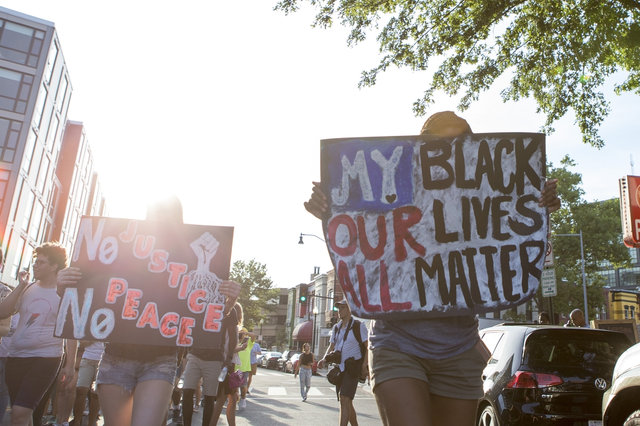
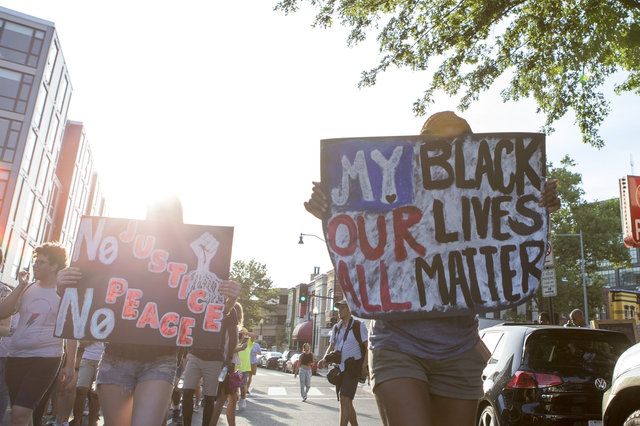
 Photo by Alex Edelman.
Several social justice organizations have come together to release a guide to help demonstrators in D.C. during inauguration weekend.
The two-page pamphlet, titled Demonstrations in D.C. Know Your Rights, includes logistical information about the city, but focuses largely on how people should interact with police.
“We wanted to publish this in light of our experiences, but also because we know protesters and demonstrators who are not from the community need to know information about their rights,” said Yolanda Rhonden, chair of the partnership committee for Law 4 Black Lives DC, at a D.C. public oversight roundtable this morning.
The hearing was organized by the D.C. Council’s Committee on Judiciary and Public Safety in preparation for inaugural activities. Rhoden was a witness at the roundtable alongside Monica Hopkins-Maxwell, president of the ACLU’s D.C. chapter, which partnered on the pamphlet with the lawyer’s group and Black Lives Matter DC, among others.
“First amendment activity is rarely convenient and rarely comfortable—especially during this inauguration with the heightened emotion,” Monica Hopkins-Maxwell said, before giving information about the history of policing during demonstrations.
The guide, which explains that the first amendment protects freedom of speech and the right to assemble, tells readers that they have “a constitutional right to demonstrate.” It also says that while police in the District “generally understand and respect that right… it pays to be prepared.”
The guide distinguishes the badges of police who could be on patrol from the Metropolitan Police Department and Metro Transit Police to Capitol Police and other federal agencies.
In preparation for encountering law enforcement, it details things that groups such as immigrants, people with disabilities, and gender non-conforming individuals should carry with them for identification and other purposes.
The guide also gives tips on how to interact with police from not making sudden movements or pointing at officers to feeling free to videotape interactions because “it’s legal as long as you’re not so close to them as to be interfering.”
And it gives more tips on what to do when being questioned, searched, and arrested.
In addition to addresses and phone numbers of local police stations, there’s also a National Lawyers Guild inauguration jail support line, which Rhoden says was set up in anticipation of arrests.
At the hearing, Hopkins-Maxwell also mentioned the Mobile Justice app for D.C., which the ACLU’s D.C. chapter launched in 2015. It allows people to record interactions with police and send the videos directly to the organization’s attorneys.
Guide To Demonstrating In D.C. by Christina Sturdivant on Scribd