 Rachel Sadon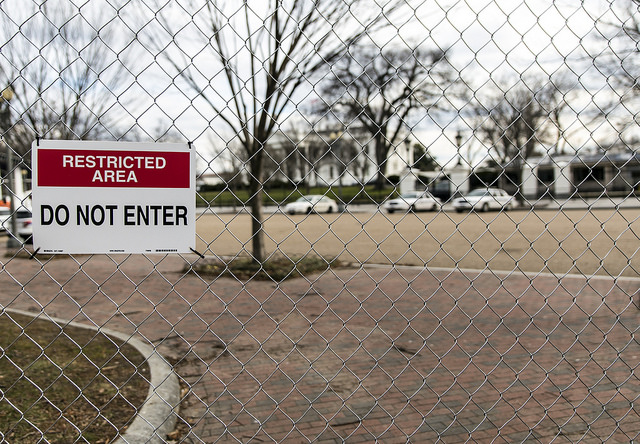
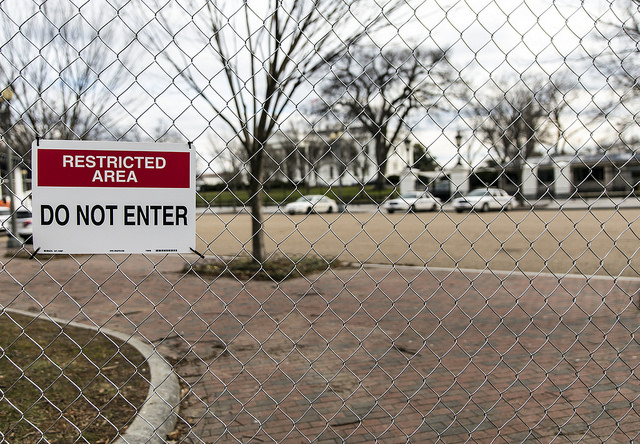 (Photo by Jarrett Hendrix)
Update 4/2: The fence came down as of 9:30 a.m. on March 1, according to NPS.
Original:
Protesters have headed for the White House on a near daily basis for the past month, but they haven’t gotten quite as close as they usually can. More than a month after Donald J. Trump took office, the chain link fence around Lafayette Park erected for the inauguration festivities remains in place—blocking direct access to the iconic view in front of the presidential residence.
While there is plenty unusual about the current occupant of 1600 Pennsylvania Avenue NW and the constancy of the protests outside his door, the fact that the fencing remains up is not, according to the National Park Service.
Work for the stands outside the White House began even before the country voted, and the permit runs from November 1 – March 1. The fenced off area is larger than in years past, but it is on track to come down on, or perhaps even a little before, schedule.
“None of that is related to protests or any trouble,” says NPS spokesman Mike Litterst. The permit is for the same length of time as that requested for the last set of inauguration festivities. It was even extended by a week in 2013 because rain hampered the work, which is managed by D.C.’s Department of General Services, and so the fence didn’t come down until March 8.
It takes roughly two and a half months to erect the presidential viewing stand and three-tiered media riser, and about a month and a half to take them down. “It is the most complex of the grandstands that need to be constructed,” Litterst says, and the fencing is necessary to keep people out of the active construction area as they take it down.
Now in the final stages of deconstruction, the only major work that remains is removing the vertical supports for the facilities and several on-site trailers. They are the last pieces of infrastructure from the massive effort to set the stage downtown to inaugurate the new president.
This post has been updated to reflect that the area fenced off is larger than it has been in years past.