Rachel Kurzius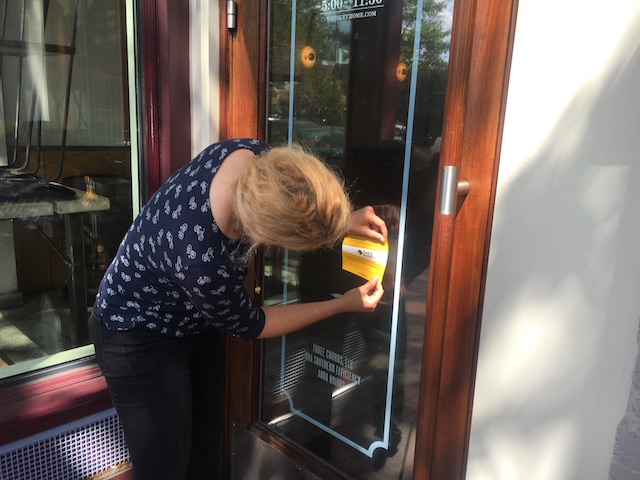
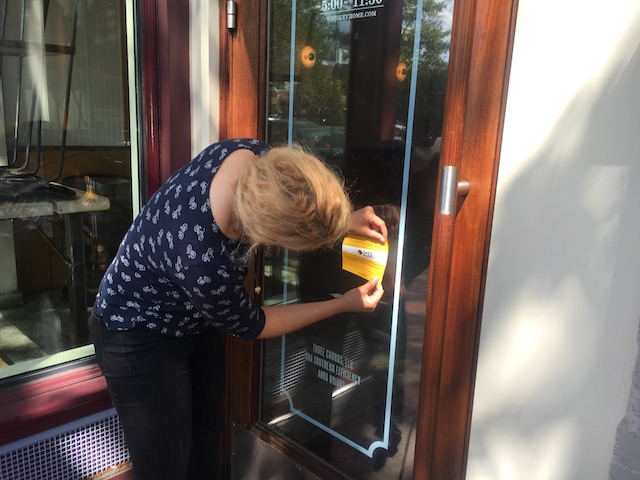 Angie Fetherston, CEO of Drink Company, puts up the Safe Bars decal after her staff was trained last summer. (Photo by Rachel Kurzius)
Even the founders of Safe Bars were surprised at how successful the program has been in its inaugural year, training the employees of nearly 30 local establishments in the best ways to intervene in instances of potential harassment and sexual assault.
But after evaluating their work, Safe Bars is now expanding its mission to include helping transgender people of color find and keep employment through the “Safe Bars Collective.”
Safe Bars co-founder Jessica Raven says the pilot program was inspired by the high unemployment rates for trans people of color in D.C., and the lack of trans workers who were working at the establishments they trained.
“We saw that as a huge problem because bars are only going to be safe for people who see themselves reflected in the bar staff,” says Raven, the executive director of Collective Action for Safe Spaces, which runs the newly formed Safe Bars Collective in a partnership with the Restaurant Opportunities Center.
Transgender applicants face significant discrimination in the hiring process in D.C., according to a first-of-its-kind study from the D.C. Office of Human Rights, which found that the restaurant industry has the highest discrimination rate at 67 percent. While it is illegal to discriminate against someone based on their sexual identity in D.C., trans folks say it happens to them all the time. About 14,550 people in the District of Columbia identify as transgender.
The new employment pilot trains trans workers of color with the Restaurant Opportunities Center of D.C. Then, it’s a matter of reaching out to the bevy of establishments that’ve already been trained by Safe Bars and boast a window decal.
“We have these amazing bars that are already clearly committed to safety and equity,” says Raven. “When trans people of color are hired, they’re likely to still experience harassment and discrimination on the job, so it’s important to place them in environments where they’ll be supported.” In addition to talking to the trained establishments about jobs, Raven says she’s in touch with them about supporting CASS initiatives like a bill that would train D.C. employees in stopping harassment.
Already, the group can lay claim to helping one person land a job. CJ, a trans man, was employed for more than three years as a cashier at a retail store, where “despite his work ethic, [he] watched and waited as other people were hired and promoted to manager positions,” according to a blog post from CASS. When he got sick, his boss fired him on the spot. Since then, he’d been unable to secure a new gig, leaving him homeless.
As of now, though, he’s been hired. Angie Fetherston, the CEO of Drink Company (think Columbia Room, and the three bars on 7th that are continually re-emerging as a new pop up bar), confirms that they’ve offered CJ a job, and emphasizes it was because he’s the best person for the job.
“We granted him an interview and put him through the same process that we put all of our employees through,” Fetherston says. “We were very excited like we would be for any new employee.”
He’ll be focused on prep for the bar, and then they will “build him up from there into other roles as needed,” says Fetherston. (CJ is working at the bars on 7th Street NW, which are becoming another pop up bar, with details coming in an announcement in the next few days, she says.)
CJ, along with the other pilot participants, will receive continued support from the Safe Bars Collective in the form of transportation assistance, toiletries, and “every other barrier that comes up,” says Raven. “It’s not just getting jobs that’s the problem, it’s keeping those jobs.”
Right now, there’s a total of five participants in the pilot, says Raven. They weren’t even planning on launching until this summer, but decided to get started early when they heard about the open jobs.
That’s not the only major change to Safe Bars. While the program initially focused on sexual harassment and assault, seeing nightlife employees as those “on the front lines” of where sexual misconduct happens, the trainings will now include a focus on hate-based incidents as well, after a reported rise in bias-related harassment and crimes.
Fetherston’s staff trained with Safe Bars last summer, and she says it has led to “a shift in attitude, having our staff feel like they’re citizens as well as employees.”
She says that “It’s worth it to us to make sure that people are safe and they feel comfortable. As a business person, that means they’re going to come back.” She adds that harassment in nightlife “has been a problem since forever and it’s finally coming out of the shadows.”
Raven sees that awareness at work in the quick condemnation against the bar Diet Starts decision on Monday to unveil a “Pill Cosby” drink. That restaurant’s managers swiftly apologized reached out to Raven for a meeting.
“I hope that the community’s response will push them to reflect and take action,” Raven says. “More than training, I would like to see them host a community conversation on sexual assault in D.C. nightlife, or do something to promote body positivity.”
She does not want restaurants facing scandals to use Safe Bars as a way to deflect criticism. “We can’t just be the Olivia Pope of D.C. nightlife—that’s not how this works.”
Updated to reflect that Safe Bars Collective is run in partnership by CASS and ROC.