Natalie Delgadillo
George Washington University Hospital has halted negotiations with the city to build a long-awaited new hospital east of the Anacostia river.
The deal was complicated by a series of objections raised in recent weeks—rival Howard University has said it will affect the viability of their own hospital and medical school while Foggy Bottom neighbors are opposed to a provision that allows for the expansion of GW’s existing hospital. It culminated in a heated debate at the D.C. Council on Tuesday, including the approval of four amendments that altered the terms of the arrangement. Ultimately lawmakers postponed the vote until their next meeting on December 18, leaving the legislation (and GWU Hospital’s deal with the city) in limbo until then.
Some of the amendments approved by the Council have “made [GW’s] continued participation potentially impossible and placed this project in jeopardy,” GWU Hospital CEO Kim Russo wrote in a letter to the City Administrator on Wednesday, which was attained by local reporter Cuneyt Dil. “We will be suspending any further negotiations toward completion of the definitive agreements…pending the resolution of the proposed legislation,” the letter reads.
News of the stalled negotiations was first reported by the Washington Business Journal.
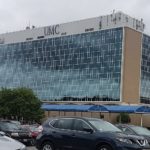
Mayor Muriel Bowser tapped GWU Hospital as a partner in building the new 150-bed hospital back in August. It would replace the beleaguered United Medical Center, which has operated for years under the shadow of accusations of mismanagement (UMC also no longer has an obstetrics unit, after medical errors endangered patients’ lives and forced a shutdown last year). The D.C. Council approved a preliminary $325 million in city funds to build the hospital earlier this year.
But the problems began when GWU Hospital came to the Council asking for a waiver for its “certificate of need” on the project, which requires hospital administrators to show that the beds it’s building are actually needed in the surrounding community. D.C. already has a lot of hospital beds, more than most other parts of the country per 1,000 people. But they’re geographically concentrated in certain parts of the city, while other parts—those generally suffering poorer health outcomes—have very few. GWU Hospital wanted to waive the certificate of need for its new St. Elizabeths campus, but also for 270 brand new beds at its existing Foggy Bottom location, which it says it needs in order to finance the Ward 8 hospital.
That request has faced opposition from several corners, including the Foggy Bottom-area ANC and even George Washington University itself, which is a separate entity from the hospital but owns the Foggy Bottom hospital land. Howard University has also taken issue with the plan, arguing that being locked out of the project endangers the financial solvency of their own hospital. The university also says that its medical school faculty and students should have the ability to train at the new facility. (For more on opposition to this request and the way this entire saga has unspooled, see here).
The Council voted to approve both of the waivers that GWU Hospital requested in November. But, like all Council legislation, it needs a second vote to officially pass. On Tuesday, several councilmembers seemed hesitant about the bill, and four amendments were eventually passed during discussion. Ward 7 Councilmember Vincent Gray, who co-introduced the bill and is its most ardent supporter on the Council, added on two: one moved 50 of the proposed 270 beds from the Foggy Bottom location to the east end hospital. The other proposed that 50 of the new beds proposed at the Foggy Bottom location be incorporated into the “existing campus,” instead of the new bed tower GW had proposed. (Several councilmembers commented that the amendments “do nothing,” and At-Large Elissa Silverman called them a “shell game,” but they passed anyway).
Councilmember Silverman proposed an amendment that would require GW to hire workers from United Medical Center and preserve their union labor protections (GWU’s Foggy Bottom staff is not unionized). Despite vociferous objection from Gray, who called the amendment a “poison pill,” that amendment also passed easily. Ward 8 Representative Trayon White’s amendment requiring that Howard University medical students be allowed to train and work at the east end hospital also passed (though several councilmembers said they don’t think this could be enforced, since it would likely require GWU Hospital to partner with Howard).
Silverman’s and White’s amendments are the two that GWU Hospital finds untenable. Councilmember Vincent Gray released a statement on Thursday confirming that GWU Hospital has suspended negotiations with the city, and again referring to both amendments as “poison pills.”
“I have always been a strong labor supporter and I previously committed to working to ensure that Howard University Hospital and its medical school remain viable,” Gray said in his statement. “As I indicated at Tuesday’s legislative session, both issues could have been worked out in the language of the definitive partnership agreement which must be submitted to the Council for its review and approval.” Gray urged other councilmembers to vote for legislation sans these amendments on December 18.
Russo, the GWU Hospital CEO, told DCist via email that although negotiations have been suspended, they remain “optimistic that the City Council of the District of Columbia can collaborate on solutions that will benefit all, most importantly—D.C. residents and patients.”