 Rachel Sadon
Love ’em or hate ’em, way more scooters and motorized bicycles will be whizzing around town in 2019.
D.C. currently has five scooter fleets (Skip, Spin, Bird, Lime, and Lyft) and one set of e-bikes (Jump) roaming around—under the current rules, that means there up to 2,400 such vehicles allowed on the roads.
Next year, though, the city may have as many as 11 electric scooter and five motorized bicycle operators. With a higher vehicle cap under a new set of rules, D.C. could have 9,600 scooters and e- bikes on the road right off the bat.
Should each of the operators meet performance goals, that could grow to 16,800 vehicles by the end of the year, according to the D.C. Department of Transportation.
Scooter companies moaned that the city’s new rules for dockless vehicles—which limit speeds to 10 mph for electric scooters and 20 mph for electric bikes, and the number of vehicles to 600 per operator—are too restrictive. But it doesn’t seem to be stopping them from trying to conquer the D.C. market.
Of the sixteen permits that had been applied for, DDOT has already given conditional approval to 10 of them—more than half of which are new fleets (in bold):
- Hopr: motorized bicycles
- Hopr: electric scooters
- Jump: motorized bicycles
- Lyft: electric scooters
- Razor: electric scooters
- Ridecell: motorized bicycles
- Ridecell: electric scooters
- Skip: electric scooters
- Spin: electric scooters
- Wind: electric scooters
DDOT is also giving further consideration to six other fleets, two of which are currently in operation in the District (in italics). The agency says that if they meet the requirements, permits would be issued no later than March 2, 2019:
- Bird (electric scooters)
- Jump (electric scooters)
- Lime (motorized bicycles)
- Lime (electric scooters)
- Riide (motorized bicycles)
- VeoRide (electric scooters)
Meanwhile, DDOT also recently submitted an official report on the state of the dockless vehicle pilot program, as first noted by Curbed.
The agency charted ridership using data submitted by the companies in operation and compared Capital Bikeshare to its new dockless competitors. CaBi continued to remain dominant throughout the period, while the usage of dockless bikes fell behind as scooters proliferated.
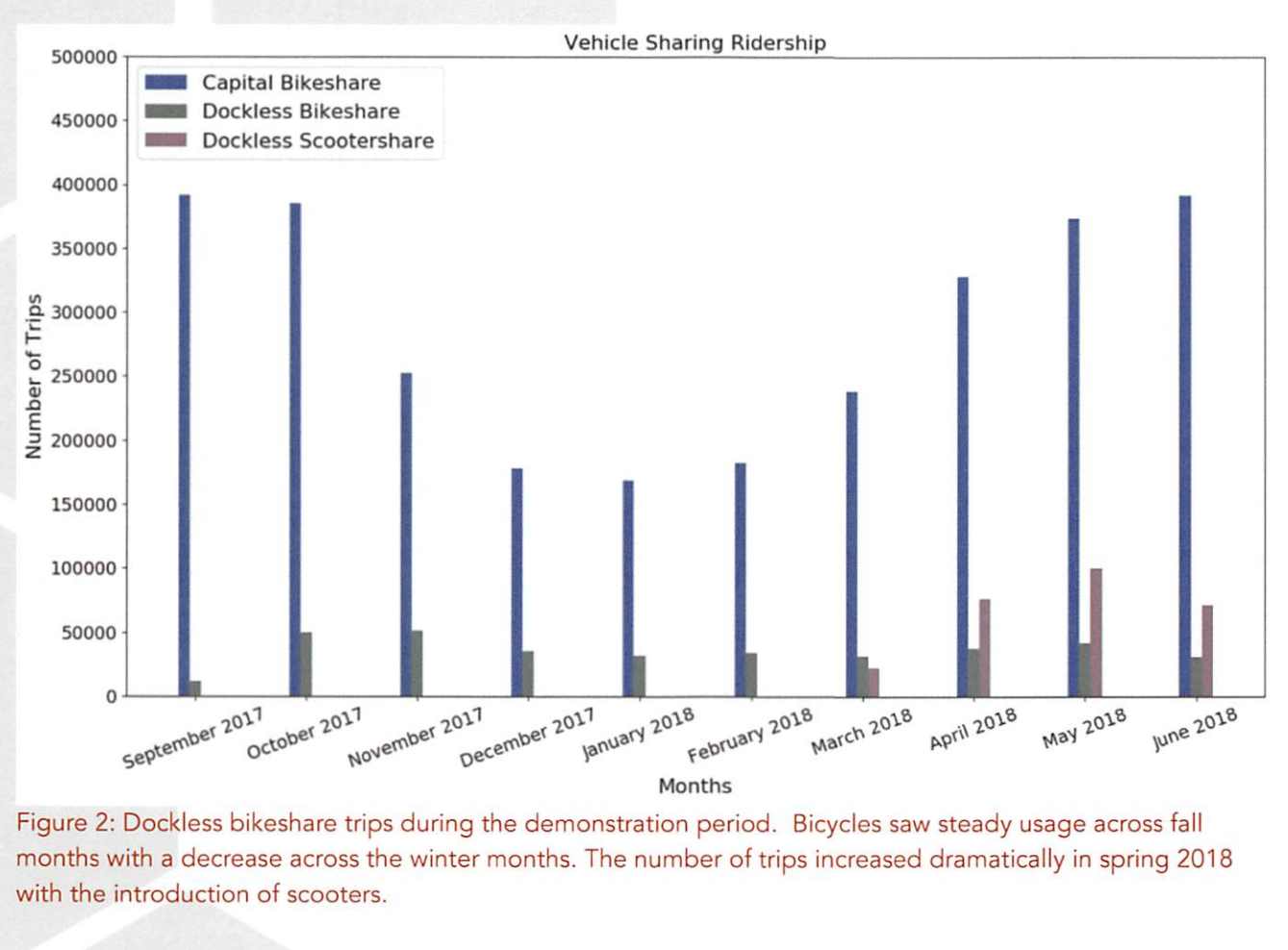
Although there have been anecdotal reports that dockless bikes have a more diverse ridership than Capital Bikeshare, the report found that trips for both have a very similar geographic footprint. “This seems to indicate that dockless operators have not significantly increased ridership among areas and residents that are underserved by Capital Bikeshare today,” the authors write.
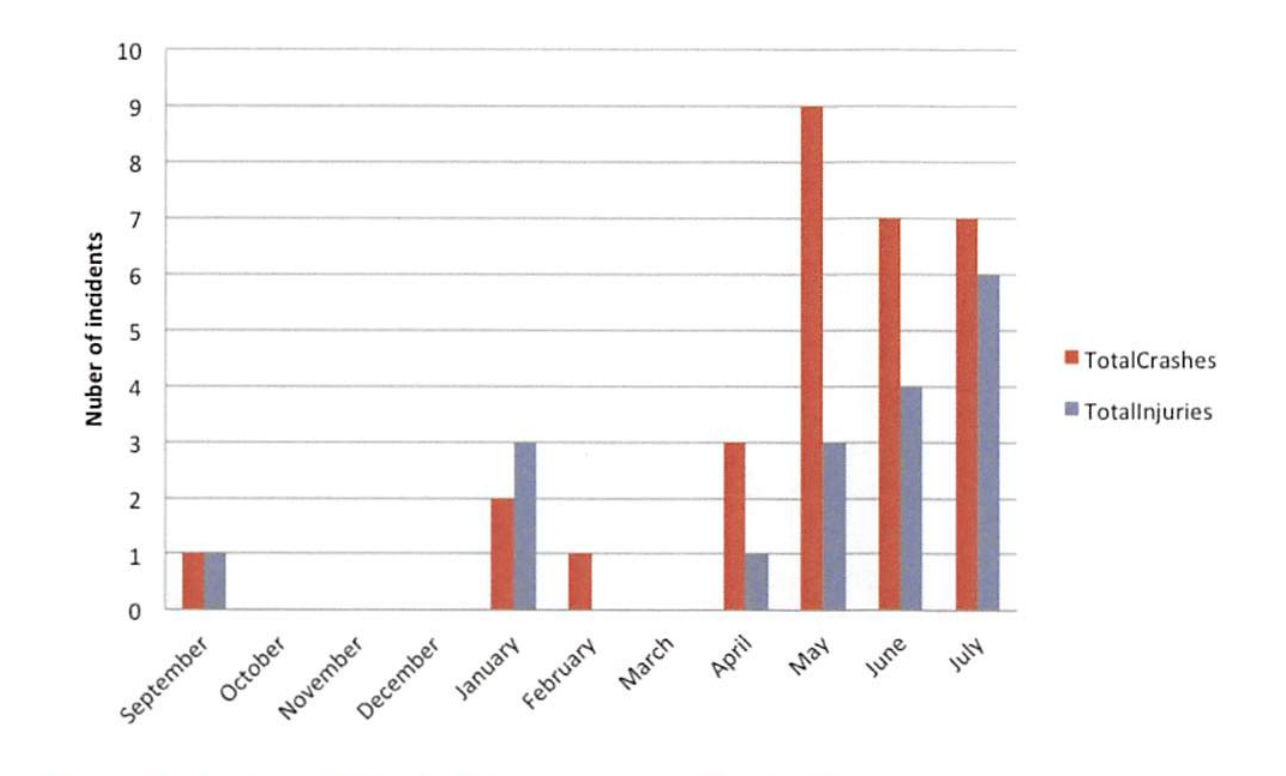
DDOT also reported that there were a total of 30 crashes involving dockless bikes and scooters from September through July. It curiously doesn’t break the data out by type of vehicle, but there was a clear increase in the latter half of the period, which corresponds directly to the rise in scooters.
By May of this year, the report found that more than 55,000 people a month were riding scooters or motorized bikes, taking a total of more than 140,000 trips that month. With significantly more electric vehicles expected to be on the road next year, it seems likely that those numbers will skyrocket, too.