 Dominique Maria Bonessi
Updated at 2:53 p.m. on July 8.
Governor Larry Hogan directed Maryland’s Board of Elections Wednesday to hold an in-person election in November, and to provide applications for absentee ballots for every eligible voter.
Hogan is demanding that the board promote early voting and absentee voting to make the elections as safe and efficient as possible amid the COVID-19 pandemic. The decision is based on the recommendations from the three Republican members on the state board, but runs contrary to the view of Democratic board members and the state’s association of election officials.
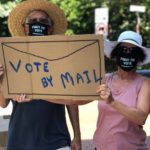
The association wrote in a statement that applications for absentee ballots would create “voter confusion.” Democrats have pushed for providing mail-in ballots to all eligible voters without making them file an application.
In a letter to board members on Wednesday, Hogan wrote that he remained concerned about the “serious failures” of the state’s June 2 primary and the resulting “disenfranchisement and suppression of primary voters.”
In the letter, Hogan addressed the debate between Democratic and Republican lawmakers, interest groups, and others about how to hold the November election.
“This discussion should not be subject to undue partisanship or political influence,” he wrote. “Providing citizens with accessible, accountable, and transparent ways to cast their ballot is an essential component of our democratic republic and your primary responsibility.”
However, local election officials are concerned about having sufficient staff, personal protective gear, and other resources to hold in-person voting. David Garreis, president of the election officials association, wrote to state board members and officials last week expressing concern about the lack of election judges willing to work during the pandemic.
“The local boards of election are concerned it is not possible to recruit, train, and retain 25,000 election judges for the November general election,” Garreis wrote.
Hogan replied to that concern in the letter, saying, “the state will encourage state employees to supplement election staffing needs and provide necessary personal protective equipment.”
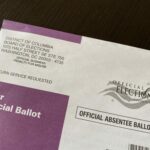
Maryland’s use of applications for mail-in ballots for the November election is the strategy the District used for its June 2 primary election. D.C.’s primary was marred by problems, including voters not receiving their ballots in the mail after applying for one.
In a reversal last month, the D.C. Board of Elections decided to send mail-in ballots to all eligible voters without making them apply and to expand in-person voting locations for the November election — essentially, taking the approach Maryland used for its June primary.
In a joint statement released on Wednesday afternoon, Senate President Bill Ferguson and House Speaker Adrienne Jones, both Democrats, wrote, “We are pleased the Governor finally made a decision that included early voting and election-day precinct level voting, but we share the concerns that local election officials will not have the staff or resources to process that many Vote By Mail applications in a timely manner. The Governor must provide the necessary resources to the local and state boards for personal protective equipment, additional staff and a robust awareness campaign.”
They added they hoped Hogan would “maintain maximum flexibility” to be able to pivot should the pandemic worsen or not enough election judges are found.
This article was updated to include a comment from Senate President Bill Ferguson and Speaker Adrienne Jones.