Martin Austermuhle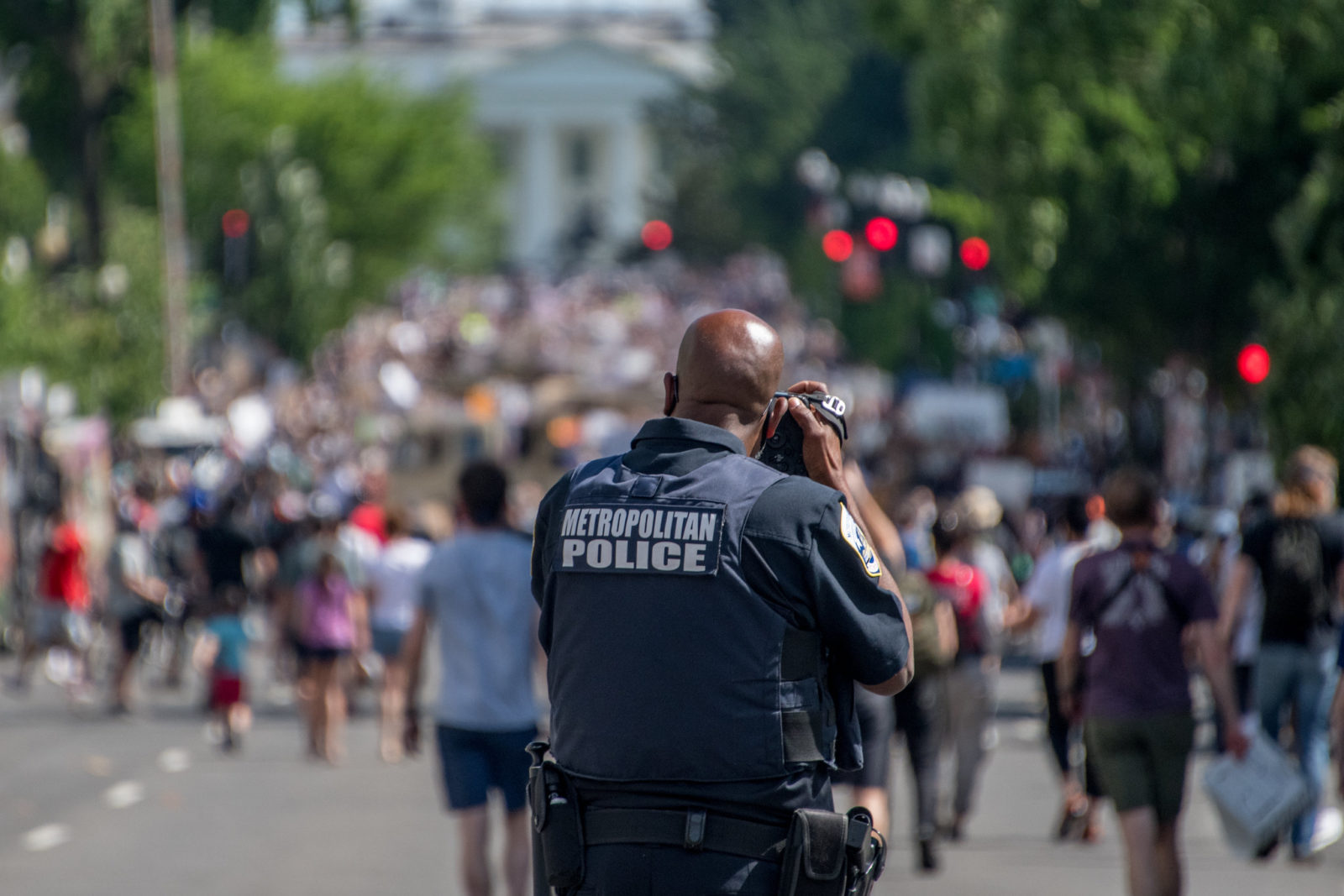
After 18-year-old Deon Kay was shot and killed by a D.C. police officer last September, something different happened: Within 24 hours, D.C. released body-camera footage of the fatal incident, showing a snapshot of the incident from the perspective of the officer who shot him.
Just weeks after George Floyd’s murder at the hands of former Minneapolis police officer Derek Chauvin — and the nationwide protests it spawned — the D.C. Council passed a package of emergency police reform measures, including one requiring that body-camera footage from any police encounter involving a serious use of force be made public within five days, unless the family of the victim objects. Before that, footage from the thousands of body-cameras used by officers often remained under lock and key, only made public under limited circumstances and usually after public pressure or open-records requests.
And D.C. wasn’t alone. Lawmakers in Maryland repealed the country’s oldest Law Enforcement Officers’ Bill of Rights as part of a landmark police reform package — overriding Gov. Larry Hogan’s veto in the process. In Virginia, lawmakers gathered in Richmond for a special legislative session, where they passed bills banning no-knock warrants (inspired by the police killing of Breonna Taylor in Kentucky), establishing statewide conduct standards for police, and prohibiting police from pulling someone over or searching them merely because of the smell of marijuana.
There were also a slew of local changes: Arlington County sped up its deployment of body cameras for officers, Montgomery County tightened its use-of-force policies and banned the use of chokeholds, and Prince George’s County will start reducing the use of police officers in schools.
But the sense of optimism over the initial burst of bills, reports, and task force recommendations has since mellowed, and many activists and advocates worry that lawmakers and elected officials aren’t up to the heavier lifting of what they say the moment needed: shrinking police budgets, cutting staffing, and more aggressively pushing criminal justice reforms. And they say that a number of recent incidents the region — the death of Karon Hylton-Brown after a police chase in D.C., the police stop of Second Lt. Caron Nazario in Virginia, body-camera footage of two Montgomery County police officers screaming at a 5-year-old outside a school in Jan. 2020 — prove that there is still work to be done to more profoundly change policing and bring about racial justice.
“Collectively, these reforms are promising,” wrote Rashawn Ray, a scholar at the Brookings Institute and professor at the University of Maryland, this week. “However, when it comes to the criminal justice system, policing is just the tip of the iceberg that needs transforming. From traffic stops and cash bail to prison culture and work opportunities after incarceration, it is clear the criminal justice pipeline is laced with racial inequalities. Reimagining and rebuilding the ecosystem, structure, and culture of law enforcement is the only way forward.”
D.C.
Lawmakers in the District were quick to act after Floyd’s murder, passing a first package of police reforms within two weeks.
The emergency measure imposed limits on when officers can use deadly force; banned the Metropolitan Police Department from buying military-style equipment from the federal government; reformed the independent office that investigates allegations of police misconduct; added legal protections for people who are asked by police to consent to searches; prohibited the use of tear gas and other chemical irritants against peaceful protesters; and restricted the D.C. Police Union’s bargaining power around disciplinary matters.
It also laid the groundwork for more changes to come, creating a 20-person Police Reform Commission that was given wide latitude to debate and propose more sweeping changes to how police operate in D.C.
The bill didn’t come without opposition from multiple fronts. Former MPD chief Peter Newsham accused the council of overlooking past efforts at reform within the department and of abandoning police officers. The union representing officers unsuccessfully sued to stop the quicker release of body-camera footage and to reinstate bargaining over discipline. And Black Lives Matter activists criticized lawmakers for what they saw as a lacking effort to defund MPD.
Many of those same activists pointed to Kay’s killing as proof that little in the culture and practice of policing has actually changed; protests also erupted after Hylton-Brown was killed late in 2020 during a police chase for a minor traffic infraction. There have also been complaints that MPD potentially violated the ban on the use of chemical irritants against peaceful protesters.
In April 2021, the 20-member Police Reform Commission released its 259-page final report, whose 90 proposals are likely to define coming efforts for police reform in the city. The commission said it hoped to “de-center” policing by limiting how many police officers there are, what they can do, what tactics they can use, and how they can be held accountable. It called for improvements in training for officers, strengthening the D.C. Office of Police Complaints, making officers’ disciplinary records public, ending qualified immunity for officers, banning no-knock warrants, increasing the use of citations in lieu of arrests for a broader range of low-level offenses, and more.
While many councilmembers have hailed the commission’s work, there is also opposition to its recommendations. Robert Bennett, a defense attorney who served on the commission, said an “anti-police bias at times pervaded the commission’s discussions.” Mayor Muriel Bowser has said she is implementing certain recommendations — she announced a pilot program to divert some 911 calls for mental health professionals — but is also critical of others, like fully removing police officers from schools and shrinking the overall size of the police department.
There is also the looming political reality that with the continuing increase in homicides in D.C., the public — and some elected officials — may slow down on further police reforms. Still, lawmakers are starting to move on some of the commission’s recommendations — including the bill to ban most police car chases, and another to do away with qualified immunity for officers. And for commission member Patrice Sulton, who is the director of the D.C. Justice Lab, those efforts show promise.
“What I’m really hoping for is a change in the latitude that police officers are afforded in terms of when they’re allowed to execute a search warrant, when they’re allowed to pull over a vehicle, when they’re allowed to conduct a pedestrian stop. Those recommendations are in some ways the clearest point of entry for the council to make a difference,” she says.
Sulton admits she’s impatient for more reforms to be made, but knows it will take time.
“We see hundreds, if not thousands, of bills get introduced and die in the council every year. And so that does feel slow, but it doesn’t feel slower than what we always feel,” she says. “It doesn’t feel to me like they’re dragging their feet more than they usually do. But I think the reforms should be handled with more urgency than they have been historically.”
This week, Bowser unveiled her proposed budget for 2022. In it, MPD’s budget decreased and funding for non-police public safety programs like violence interruption increased. Still, Bowser said she would continue increasing hiring for the department.
Maryland
Several high-profile police killings shook Maryland in recent years; in 2015, the killing of Freddie Gray by Baltimore police officers set off days of protests and unrest — and also proposals for reform. Many of those were fought by police, and challenges still remain in Baltimore.
The political moment after Floyd’s killing was different in Maryland in some respects, though. The General Assembly had a new Speaker of the House and Senate President for the first time in decades, both of whom helped navigate a package of police reforms during the legislative session earlier this year.
The package limits no-knock warrants; changes the standard for when an officer can use force; expands the use of body cameras; requires that when police officers pull someone over they provide their name, agency and reason for the stop; limits what surplus military equipment police departments can purchase; requires officer candidates disclose their disciplinary records before being hired; establishes an independent unit within the attorney general’s office to look into fatal police incidents; and makes more police disciplinary files eligible for public disclosure, a provision named after Anton Black, who died in 2018 during a struggle with police officers on the Eastern Shore.
Most notably, the package repealed Maryland’s Law Enforcement Officers’ Bill of Rights; the state was the first in the country to have such a bill of rights, and the first place to repeal it. The bill of rights gave police officers extensive legal protections that critics said made them immune from accountability for their actions. It will be replaced by a new process for imposing discipline.
“Maryland is leading the country in transforming our broken policing system,” tweeted Speaker of the House Adrienne Jones after the police reform package passed. “Now, for the first time in our nation’s history, the rights of officers will not be held above the rights of individuals, and policing in Maryland will be transparent and citizen-centered.”
The measures drew opposition from police unions, as well as vetoes from Hogan, who said they would “result in great damage to police recruitment and retention, posing significant risks to public safety throughout our state.” The Democratic General Assembly easily overrode him.
While advocates cheered some of the provisions — notably the Anton Black bill — they have been less enthused with the overall scope of the reforms.
“The bills that passed, I think, are objectively steps in the right direction. [But] it doesn’t go far enough. It’s not racial justice,” says Dayvon Love, director of public policy with Leaders of a Beautiful Struggle.
“We focus a lot on the importance of community oversight, like an external entity that the community controls and operates that would have the power to discipline officers who harm the community,” he says of the bill that repealed the Law Enforcement Officers’ Bill of Rights. “So that was something for us that’s essential. And that was what was missing from [the bill].”
Love, like other activists in D.C. and Virginia – and across the country – also says he doesn’t want to lose focus of one of the rallying cries of last summer’s protests: defunding the police.
“I think the conversation around funding is going to be an important conversation because a big part of the task now is for communities to develop what are some alternatives to law enforcement-centric approaches to public safety that actually can deliver safety,” he says.
That has been part of the discussions in Montgomery County, where Councilmember Will Jawando has introduced a bill to move traffic enforcement responsibilities out of the police department. (The D.C. Police Reform Commission made a similar recommendation.) There are also bills addressing training and body-camera footage; the county is also moving forward on removing officers from schools, and instead having them patrol beats around schools.
In Prince George’s County, earlier this year County Executive Angela Alsobrooks said she would be implementing 46 of the 50 recommendations made by a police reform task force created in the wake of Floyd’s murder. Those include requiring officers to intervene when they see other police using illegal force, updating the county’s use-of-force-policies, and creating a new independent inspector general to oversee police.
Virginia
When Virginia lawmakers gathered in Richmond last August, they had a full plate of issues to deal with, starting with the budget and the pandemic. But the Democrats who control the General Assembly also used the opportunity — and the political moment following a summer of protests — to move forward on a slew of police and criminal justice reforms.
They passed bills banning no-knock warrants, creating a statewide code of conduct for police that would “decertify” bad cops and prevent them from taking jobs at other departments, strengthening civilian review boards, downgrading a number of traffic offenses, transferring sentencing authority from juries to judges, and allowing the attorney general to investigate local police departments.
Legislators followed up with more bills at this year’s session, including a high-profile bill abolishing the death penalty and another to legalize the possession of marijuana. But they couldn’t come to terms on legislation to do away with mandatory minimum sentences for many crimes, and they failed to address what many advocates say is a critical element of police reform: getting rid of qualified immunity.
“We need to make sure when when police harm people through unconstitutional actions, that they’re held accountable. And right now, through this federal doctrine known as qualified immunity, it really stops most civil lawsuits from being successful,” says Ashna Khanna, legislative director for the ACLU of Virginia. “But lawmakers can allow people to sue police in state courts. It’s been something that’s been talked about and presented within Virginia’s legislature, both this previous legislative session and the last special session. Lawmakers, unfortunately, killed it both times.”
Khanna is more optimistic about changes to marijuana laws. Not only can police officers no longer search someone merely of the smell of marijuana, but marijuana possession will soon be legal — and legal recreational sales are expected in 2024.
“This tax revenue can be an opportunity where Virginia not only goes on the pathway to really reaching racial equity and reforming the criminal legal system, but has the funds and the resources to actually do so,” she says. “It all comes down to the budget.”
Police reforms are also taking place on the local level throughout Virginia. In Arlington County, a new police auditor and civilian mental health crisis response team have been funded. The county board is expected to debate the creation of a civilian review board, one of the recommendations from the Police Practices Work Group that was created after Floyd’s murder. In Alexandria, the city council voted earlier this month to remove police officers from schools.
But the future of police and criminal justice reforms could face challenges in Virginia. Glenn Youngkin, the Republican candidate for governor, says he is “partnering with law enforcement leaders across the commonwealth as he pushes forward with a strong, pro-police platform.” (Princess Blanding, on the other hand, is running on a police reform platform; her brother was killed by a Richmond police officer in 2018.) In Fairfax County, police union officials say low pay and morale are driving officers away. And Fairfax County’s new chief of police — Kevin Davis, who led the Baltimore Police Department — has gotten a critical reception from some activists.
In Prince William County, the police department also has a new chief — Peter Newsham, who for three decades served in MPD and eventually rose to the department’s top job. While his appointment was criticized by some activists, he said during a public event that changes in policing were inevitable.
“We’re not deaf and we’re not blind to the calls for reform,” he said. “I think in the coming years we’re going to see some pretty dramatic reforms in policing.”