 Dominique Maria Bonessi
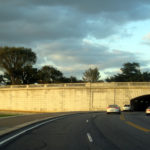
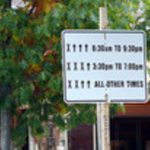
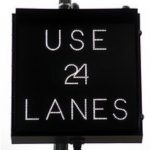
D.C. Mayor Muriel Bowser announced Wednesday that the reversible lanes on Connecticut Ave. NW will be removed after years of accidents and confusion over the direction of the lanes during morning and evening rush hours.
The road redesign will eliminate the chaos of the four lanes in one direction during the morning and evening rush hours and add one-way protected bike lanes on each side of the 2.7-mile stretch of street between Calvert St. and Military Road NW. The project could possibly include some parking areas, floating bus islands, and left-turn lanes. The final design for the road is expected to be completed in mid-2023, and it will be longer before drivers, bicyclists, and pedestrians can enjoy the new design.
“After considering several options, it was clear that this design best meets the needs of our city and moves us closer to a greener DC, a safer DC, and a DC that is less reliant on cars,” Bowser said in a statement.
The selection of the road redesign was supposed to be announced over the summer, but District Department of Transportation’s Acting Director Everett Lott told DCist/WAMU that they were trying to do their “due diligence.”
“We know how many people move up and down the corridor, so we wanted to make sure that we did our due diligence and make sure that we understood all of the pros as well as the cons that would be associated with any recommendations that we put out there,” Lott said.
The redesign comes after a study of the reversible lanes found that in a three-year period prior to the pandemic, there were 1,500 crashes, according to the District Department of Transportation. The report also found that removing the reversible lanes could reduce accidents by 17%, while adding protected bike lanes could “reduce crash severity and make the area safer for pedestrians.” The study of the lanes was the result of pressure from three local advisory neighborhood commissions in 2018.
The project is part of DDOT’s Vision Zero initiative aimed at eliminating traffic deaths and serious injuries by 2024. Since the release of an earlier traffic study in 2003, which noted that “drivers were observed driving against traffic on the reversible lanes,” the department has known about the dangers of the reversible lanes. In 2008, residents of Cleveland Park launched efforts to eliminate the lanes, but to no avail.
Since Bowser’s announcement Wednesday, the project has been getting pushback from some District residents, including David Krucoff, who is running for the Ward 3 seat on the D.C. Council.
Krucoff tweeted that eliminating the reversible lanes “is inconsistent with a working downtown,” noting that cyclists could “use the Park” instead.
But current Ward 3 Councilmember Mary Cheh tweeted her support for the redesign and said in a statement, “this decision marks a critical step in making the corridor a safer place for everyone, but, more importantly, it demonstrates the type of bold infrastructure planning that is needed across the District.”
Ward 3 Bike Advocates, a community organization that seeks to make Ward 3 safer for people to bike, Ward 3 ANC chairs, and the Washington Area Bicyclist Association also lauded the project.
“We are thrilled to see this project moving forward,” Collin Browne, communications director with WABA, said in a statement. “The project closes a large and critical gap in D.C.’s low-stress bike network.”
Lott told DCist/WAMU that the next step in the process is for the project to go through the city’s procurement process to select a design company to bid on the project. Once that’s done and a company is selected, DDOT can start implementing the project.
DCist/WAMU’s Jordan Pascale contributed reporting.